
Reviewed · TEMPLES AND RELIGIOUS SITES
Mumbai Markets and Temples Tour
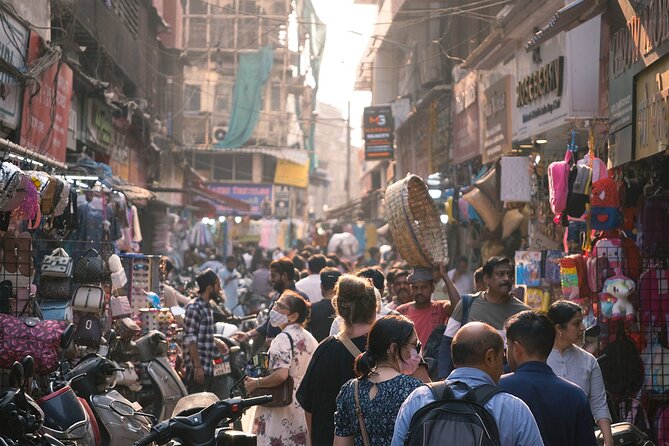
Mumbai’s everyday life unfolds in the market lanes. This 2-hour-15-minute walking tour takes you from Crawford Market to Mangaldas Market, then into Mumbadevi Temple and Bombay Panjrapole. I like the route’s mix of shopping, faith, and city life, and I like that a local guide helps you handle confusing streets and unwanted attention. The main drawback is pace: some groups move quickly, leaving little time to browse.
I also appreciate the sensible afternoon start at 3:30 pm and the finish near Charni Road Railway Station. Guides such as Sabina, Nilesh, Biju, Bipin, Cham, and Jaden have been praised for explaining local customs and adjusting to guest interests. Still, your experience can depend heavily on the individual guide, and a few outings have felt rushed or ended early.
In This Review
- Key points to know before you go
- Why this South Mumbai walk is worth considering
- Meeting at Regal Cinema and starting at 3:30 pm
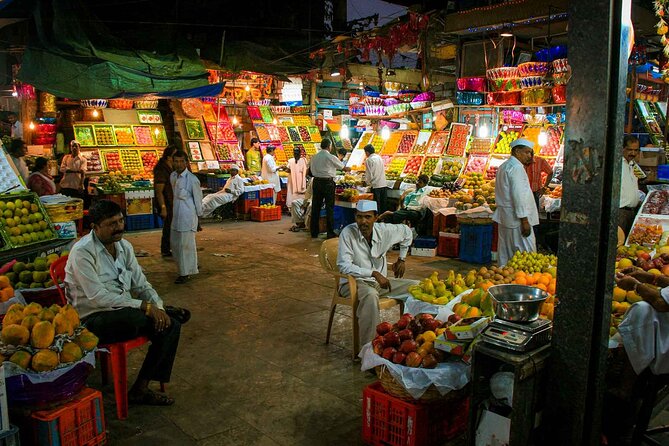
- Crawford Market: food, architecture, and hard-edged commerce
- Mangaldas Market: Mumbai’s fabric quarter
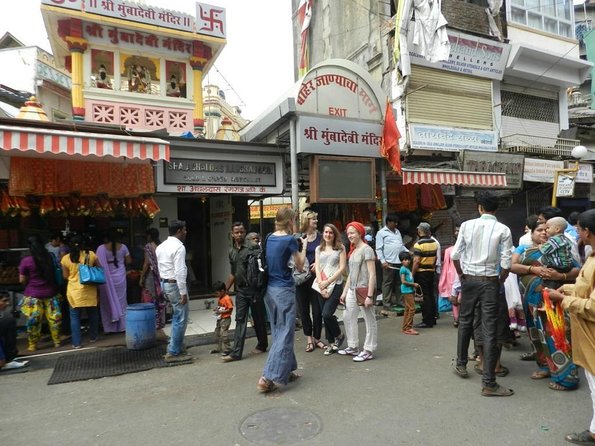
- Mumbadevi Temple and the religious heart of the route
- Bombay Panjrapole and the city’s sacred cows
- What the guides add to the experience
- Pace, walking, and practical comfort
- Is $27.97 good value?
- Who should book this walk?
- Should you book the Mumbai Markets and Temples Tour?
- FAQ
- How long does the Mumbai Markets and Temples Tour last?
- What time does the tour start?
- Where does the tour begin?
- Where does the tour end?
- What places are included?
- Is hotel pickup included?
- Is food included?
- What should I wear?
Key points to know before you go
- Crawford Market dates from 1871: You will see produce, meat, imported cheeses, chocolates, and household goods inside one of South Mumbai’s best-known market buildings.
- Mangaldas Market is a fabric-hunter’s stop: Hundreds of textile sellers and tailors supply cloth for weddings, Diwali, and fashion work.
- Mumbadevi Temple gives Mumbai its name: You may receive prasad and see Hindu devotees receive blessings from priests.
- Bombay Panjrapole cares for more than 350 cows: The sanctuary offers an unusual look at religious charity in the middle of the city.
- The route ends near public transport: Your guide can help arrange a taxi or train after the walk.
- The price is $27.97 per person: That is fair for a guided small-group introduction, especially if you are new to Mumbai’s market district.
Why this South Mumbai walk is worth considering
This is not a polished sightseeing circuit with grand monuments at every turn. It is a close look at how people shop, worship, work, and care for animals in central Mumbai. You move through commercial streets and narrow lanes where the city makes more sense with someone beside you.
I would choose this tour early in a Mumbai stay if you want help getting your bearings. The route links several places that can be difficult to connect on your own, especially if you are trying to watch traffic, read signs, judge prices, and avoid getting turned around at the same time.
The strongest part is the range of places covered in a short period. Crawford Market shows the business of food and household shopping. Mangaldas Market shifts the focus to cloth and tailoring. Mumbadevi Temple provides religious context, while Bombay Panjrapole offers a quiet and unusual ending.
The trade-off is that two hours and 15 minutes is not long. The market visits are listed at about 30 minutes each, the temple at 30 minutes, and the cow sanctuary at 20 minutes. Add walking and possible transport between areas, and you can see why some groups feel hurried.
More Markets and Bazaars in Mumbai
- Mumbai: Street Food and Night Markets Tour
★ 4.9 · 719 reviews - Mumbai Street Food & Night Markets
★ 5.0 · 225 reviews - Mumbai Street Food and Evening Bazaar Tour
★ 5.0 · 172 reviews
Meeting at Regal Cinema and starting at 3:30 pm
The meeting point is Regal Cinema on Colaba Causeway, opposite the Chhatrapati Shivaji Maharaj Vastu Sangrahalaya in Apollo Bandar. The tour begins at 3:30 pm, a useful time if you have spent the morning visiting museums or exploring Colaba.
You should arrive with water, comfortable walking shoes, and modest clothing. Cover your shoulders and knees, since conservative dress is expected in India and is especially important at the temple. Water or a cold drink is included, but food is not.
The group can have up to 25 people. That is not a tiny walking party, though some outings have been much smaller, including one with only four people and another with a single participant. A small group makes it easier to ask questions and stop briefly, while a full group may take longer to move through narrow market lanes.
The route does not include hotel or residence pickup. You need to reach Colaba on your own. If transport is needed during the walk, your guide helps with a taxi or train. One outing involved a 15-minute wait for a taxi willing to use the meter, so it is wise to allow some flexibility rather than planning a tight evening appointment.
Crawford Market: food, architecture, and hard-edged commerce
Crawford Market is the first major stop. Founded in 1871, it was the first building in India to receive electricity, and its Gothic and Romanesque design gives the market a more imposing look than you might expect from a working wholesale center.
Inside, you might see colorful vegetables, meat, imported cheeses, homemade chocolates, and household goods. The point is not simply to take pictures. Your guide can explain what the different sections sell and how the market fits into daily life in Mumbai.
This is also the place where you should keep your senses switched on. The lanes can be crowded, displays may be packed close together, and the mix of smells and sounds can feel intense. Keep your belongings secure and stay close enough to hear your guide.
The description of Crawford Market notes that some endangered and exotic animals are sold there. That is an important ethical caution. Do not assume every item or animal you see is acceptable to buy, and do not encourage illegal wildlife trade by purchasing such goods.
The scheduled time is about 30 minutes. That is enough for an introduction, but not enough for a relaxed shopping trip through every section. If you want to buy food, spices, or household items, ask your guide early how much time you can spare.
Some guides are especially helpful here. Sabina was praised for steering her group away from people trying to take advantage, while still handling the situation politely. That kind of local judgment is one of the clearest reasons to pay for a guided walk rather than simply arrive with a map.
Mangaldas Market: Mumbai’s fabric quarter
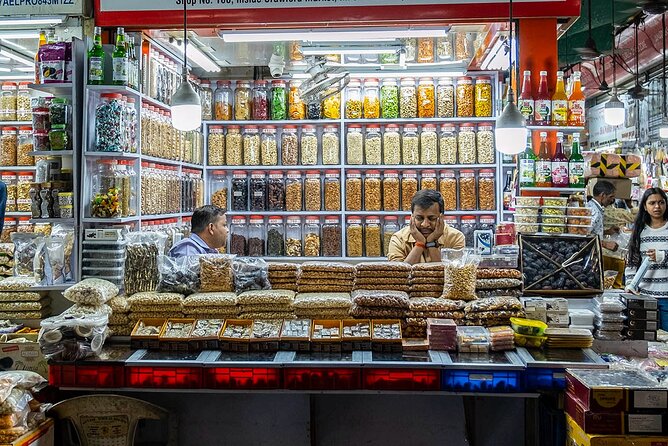
Mangaldas Market changes the mood. Opened in 1893, it is a large indoor wholesale textile market with hundreds of clothing vendors and tailors. Local shoppers come here for materials used at weddings, Diwali, and other special occasions.
This is a good stop if you care about textiles, clothing, or the practical side of Indian fashion. The market is also linked to Mumbai’s fashion trade, since well-known designers buy cloth here for their work. You get a look at the supply chain before fabric becomes a finished garment.
Do not expect a quiet showroom. This is a working market, and the tour gives you a guided introduction rather than a personal shopping appointment. Some outings have allowed time for several market sections, including food, flowers, jewelry, and garments. Other groups have moved from one area to the next with little chance to browse.
If you want fabric, tell your guide at the start. The tour structure may allow some shopping, but the scheduled half hour is short. You may not have time to compare every roll, discuss tailoring, and bargain at leisure.
This stop also shows why a local guide can matter. The streets and indoor lanes can make you lose your sense of direction quickly. Jaden was praised for helping a group through the market area and keeping the walk easy to manage. Another guide, Cham, asked what the group wanted to see or taste within the time available.
More Temples and Religious Sites in Mumbai
- Mumbai: Dhobi Ghat Laundry and Dharavi Slum Tour with Local
★ 5.0 · 469 reviews - Mumbai: Dharavi Slum and Dhobi Ghat Laundry Tour
★ 5.0 · 317 reviews - Private Guided Spiritual Walk in Banganga Hindu Temples
★ 5.0 · 271 reviews - Private Combo Tours Sightseeing + Dharavi Slum + Dhobi Ghat & Dabbawalas
★ 5.0 · 245 reviews
Mumbadevi Temple and the religious heart of the route
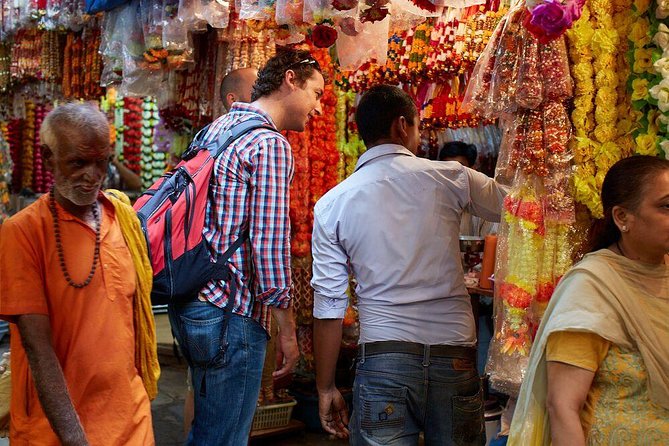
The next stop is Mumbadevi Temple, the historic Hindu temple that gave Mumbai its name. After the commercial noise of the markets, the temple provides a change of pace and a chance to ask basic questions about Hindu practice.
You might see devotees receiving blessings from Hindu priests. If you are comfortable doing so, you may receive prasad, a blessed offering. Your guide explains the basic ideas involved, but this is not a formal religious course. Think of it as a respectful introduction that helps you understand what you are seeing.
Dress matters here. Clothing that covers the shoulders and knees is the safest choice for the whole afternoon, not only for the temple. Follow your guide’s instructions about behavior and where to stand.
The temple visit is scheduled for about 30 minutes. That gives you time to look around and listen, but it is not intended as extended personal worship. Be respectful with photography, and ask before taking pictures of people engaged in prayer.
I like this part of the route because it prevents the market visits from becoming a simple shopping tour. Mumbai is not only commerce and traffic. The temple shows how religious practice sits within ordinary city life, often just a short walk from busy trading streets.
Bombay Panjrapole and the city’s sacred cows
The final main stop is Bombay Panjrapole, an animal shelter in the center of South Mumbai. It cares for more than 350 cows, which are sacred to Hindus. People visit the shelter and contribute to the animals’ welfare as an act connected with religious merit.
This is one of the most unusual stops on the walk. You are not simply looking at a temple or market that appears in every guidebook. You are seeing a working shelter and the relationship between faith, charity, and animals in an urban setting.
The visit lasts about 20 minutes. You may be able to feed the cows, depending on the conditions and the guide’s instructions. Keep your movements calm and follow directions around the animals.
The shelter is also a useful reminder that religious customs are lived practices, not just facts to memorize. Your guide can help explain why people care for the cows and how the sanctuary fits into the neighborhood.
For many people, this is the highlight. It is different from the markets and gives the tour a memorable finish. If you are uncomfortable around animals or prefer a strictly architectural sightseeing tour, this stop may not be your favorite. For most people seeking a broader view of Mumbai, it adds real value.
What the guides add to the experience
The quality of this tour depends more on the guide than on the route. The streets and markets are there every day, but a good guide helps you understand what you are seeing and keeps the walk manageable.
Sabina received praise for her calm local judgment and for making her group feel safe. Nilesh was appreciated for answering questions and adding places that were not on the group’s original list. Biju was praised for punctuality and for explaining the markets, temple, jewelry quarter, and cow shelter.
Bipin Kumar was noted for treating local beggars with respect while making sure his group was not harassed. His strong English and pleasant manner helped create a comfortable afternoon. Cham was flexible about group interests, and Jaden made the market walk feel easier to navigate.
One guide even added a quick street-food stop. That is not presented as a guaranteed part of every departure, so you should not book this tour expecting a food tasting. Still, it shows how the route can sometimes respond to the group.
There have also been weaker outings. One guide offered limited help with judging fabric quality or prices, and another group received little explanation while being led quickly through the markets. That variation is worth knowing before you book. The best way to improve your odds is to tell the guide what matters to you at the start: shopping, architecture, religion, photography, food, or simply seeing local life.
Pace, walking, and practical comfort
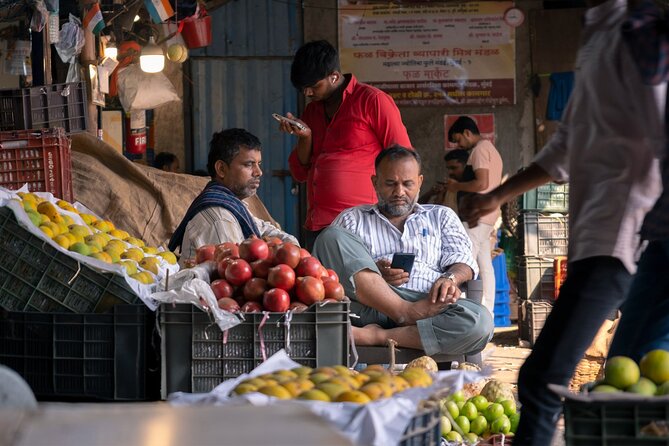
The tour is short, but it is not passive. You walk through streets and alleyways, enter active markets, and move between several districts of South Mumbai. Mumbai can be hot and sticky, and one participant found that the length was just right for those conditions.
Most people can take part, but you should be comfortable walking for the duration and handling uneven, crowded urban spaces. If you walk slowly, say so early. One guide was specifically praised for adjusting to a slower walker, while other groups felt pressed for time.
The start and end points are in different parts of South Mumbai. You finish at Charni Road Railway Station, where your guide can help with onward transport. This is useful if you are unsure about the train or need help finding a taxi.
Bring a small bag rather than bulky luggage. You will have more freedom in the market lanes, and it will be easier to stay with the group. Keep cash and valuables secure, especially when the streets become crowded.
Is $27.97 good value?
At $27.97 per person, the tour is reasonably priced for a guided introduction to four distinct places. Admission is listed as free at each stop, so you are paying mainly for the guide, route planning, local explanations, and help with transport and street navigation.
The value is strongest if this is your first visit to Mumbai or your first time in these markets. You could walk around Crawford Market and Mangaldas Market alone, but connecting them with Mumbadevi Temple and Bombay Panjrapole takes more local awareness than a quick map search suggests.
The price is less compelling if you want a long shopping session. Thirty minutes in each market is an orientation, not a dedicated buying trip. You may see excellent textiles and household goods without having enough time to compare prices or arrange tailoring.
A portion of the local operator’s proceeds supports community projects, including educational work. That gives the fee an added social benefit, though you should still judge the tour on the actual route and guiding quality.
The experience is rated 4.8 out of 5 from 59 ratings, with 93 percent recommending it. Those figures suggest strong overall satisfaction, but they do not remove the main caution: the guide sets the tone and the pace.
Who should book this walk?
I would recommend it to you if you want to see ordinary commercial life rather than only major landmarks. It suits first-time visitors, curious shoppers, people interested in Hindu traditions, and anyone who prefers a local guide in complicated market streets.
It is also a good fit if you want a compact afternoon activity before dinner. The 3:30 pm start leaves the earlier part of your day open, and the finish near Charni Road gives you a practical transport point.
I would hesitate if you need a slow, detailed shopping experience or dislike crowded markets. You may also prefer a different outing if your main interest is food, since meals are not included and the occasional street-food stop is not guaranteed.
Book at least a little ahead if possible. The experience is booked an average of 16 days in advance, which suggests that leaving it until the last minute may not be wise during a busy period. Free cancellation is available up to 24 hours before the start time. Changes or cancellations inside that window are not refunded.
Should you book the Mumbai Markets and Temples Tour?
Book it if you want a short, affordable introduction to the working side of Mumbai. The route gives you four very different windows into the city: food and household trade at Crawford Market, textiles at Mangaldas Market, Hindu worship at Mumbadevi Temple, and animal care at Bombay Panjrapole.
Go with realistic expectations. You are buying a guided orientation, not a leisurely shopping afternoon. Tell your guide what you want from the walk, wear modest clothing, keep your schedule flexible, and be prepared for a fast-moving city. With a strong guide such as Sabina, Nilesh, Biju, Bipin, Cham, or Jaden, the tour can show you corners of South Mumbai that would be difficult to find or understand alone.
FAQ
How long does the Mumbai Markets and Temples Tour last?
The tour lasts approximately 2 hours and 15 minutes. The experience is also described as about 2.5 hours, so you should allow a little flexibility.
What time does the tour start?
The tour starts at 3:30 pm.
Where does the tour begin?
It begins at Regal Cinema on Colaba Causeway, opposite the Chhatrapati Shivaji Maharaj Vastu Sangrahalaya in Apollo Bandar, Colaba, Mumbai.
Where does the tour end?
The tour ends at Charni Road Railway Station in Girgaon, Mumbai.
What places are included?
The route includes Crawford Market, Mangaldas Market, Mumbadevi Temple, and Bombay Panjrapole cow sanctuary.
Is hotel pickup included?
No. Hotel or residence pickup and drop-off are not included. Your guide can help with a taxi or train after the tour.
Is food included?
No. Food is not included. A quick street-food stop may occur on some outings, but it is not listed as a guaranteed inclusion.
What should I wear?
Modest clothing covering the shoulders and knees is recommended. This is especially important when visiting Mumbadevi Temple.
Just added in Mumbai
- Mumbai Airport to Mumbai Hotels : Private Transfers★ 5.0 · 13 reviews
- Mumbai Sightseeing Tour★ 5.0 · 11 reviews
- Mumbai Spice Markets and Bazaars Tour with Guide and Transport★ 5.0 · 42 reviews
- Mumbai 800 Year Worli Village: Talking Goddess, Old Fort & more★ 5.0 · 94 reviews
- Customize private tour with pickup★ 5.0 · 95 reviews
- Private Guided Bandra Half Day City Tour in AC Vehicle★ 5.0 · 72 reviews
- Gufran’s Slum Home Tour in the Mumbai Slums★ 5.0 · 19 reviews
- The Famous Bollywood Tour of Mumbai★ 5.0 · 97 reviews
Temples and Religious Sites, compared.
Dhobi Ghat Laundry and Dharavi Slum Tour with Local
Read our review →
Best of Mysore, UNESCO Somnathpur Temple & Srirangapatna Day Tour
Read our review →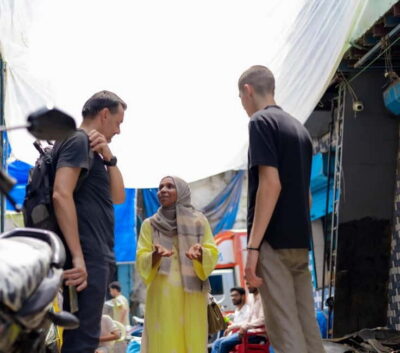

Old Delhi Food-Spice Market-Temples Tour Soon Featured on NETFLIX
Read our review →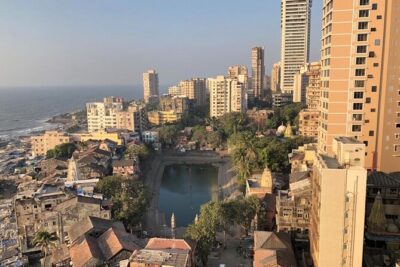
Private Guided Spiritual Walk in Banganga Hindu Temples
Read our review →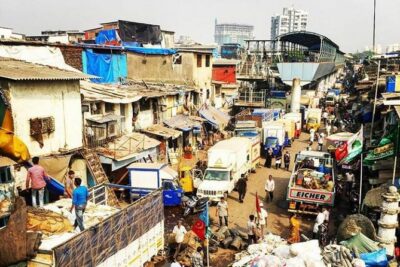
Private Combo Tours Sightseeing + Dharavi Slum + Dhobi Ghat & Dabbawalas
Read our review →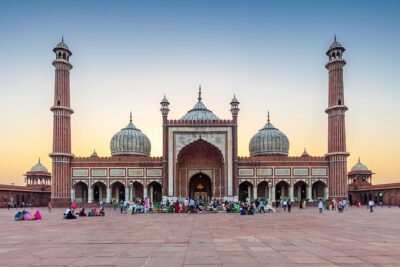
Private Delhi Temples and Spiritual Sites 6 Hours Tour
Read our review →
Tipu Palace + Koté Vishnu + Fort + KR Market + Jain Temple = Bengaluru Pété Walk
Read our review →Browse the lists this tour appears in