Reviewed · MUMBAI TOURS
Mumbai: Local Transport & Dabbawallah Tour
Mumbai reveals itself fastest from a train window. This 3.5-hour tour links CSMT, Dadar Flower Market, Dhobi Ghat, and Chor Bazaar by the same transport locals use every day. I like the honest look at working Mumbai, and I like the small groups, capped at six people. The main drawback is the pace: some stops can feel like quick photo calls rather than full visits.
I also like that the tour uses several kinds of transport, including the suburban train, a red public bus, and the classic black-and-yellow taxi. You should wear proper walking shoes and expect crowds, station stairs, short waits, and a little squeezing. One useful warning comes from the route itself: some taxi sections may be shared taxis rather than regular buses, which can reduce the public-transport feel.
In This Review
- Key points at a glance
- Why this tour shows the working city
- Starting near Regal Cinema and entering Mumbai’s transport system
- CSMT: a grand railway station in only ten minutes
- Dadar Flower Market and Mumbai’s early trade
- Dhobi Ghat from the outside
- Chor Bazaar: thirty minutes to browse and ask questions
- The final viewpoint and Churchgate finish
- How much explanation should you expect?
- The $31 price and what it really covers
- Comfort, crowds, and the right kind of preparation
- Who will enjoy this three-and-a-half-hour route?
- Should you book the Mumbai Local Transport and Dabbawallah Tour?
- FAQ
- How long does the Mumbai Local Transport and Dabbawallah Tour last?
- What transport is used during the tour?
- What sights are included?
- Is hotel pickup included?
- What is included in the price?
- Is this suitable for a stroller or pram?
Key points at a glance
- Mumbai by local transport: Ride a suburban train, public bus, and black-and-yellow taxi instead of watching the city from a private vehicle.
- The dabbawallah connection: See the famous lunch-box delivery system in the setting of Mumbai’s daily commuter rush.
- Four very different city sights: Move from the grand CSMT station to a flower market, open-air laundry, and crowded flea market.
- A compact small-group format: The maximum group size is six, with a private-group option available.
- Strong guide potential: English-speaking guides organize the route and explain local life, though the quality of commentary can vary.
- Good value at $31: Transport, a guide, and water or a cold drink are included, making this a useful introduction to Mumbai.
Why this tour shows the working city
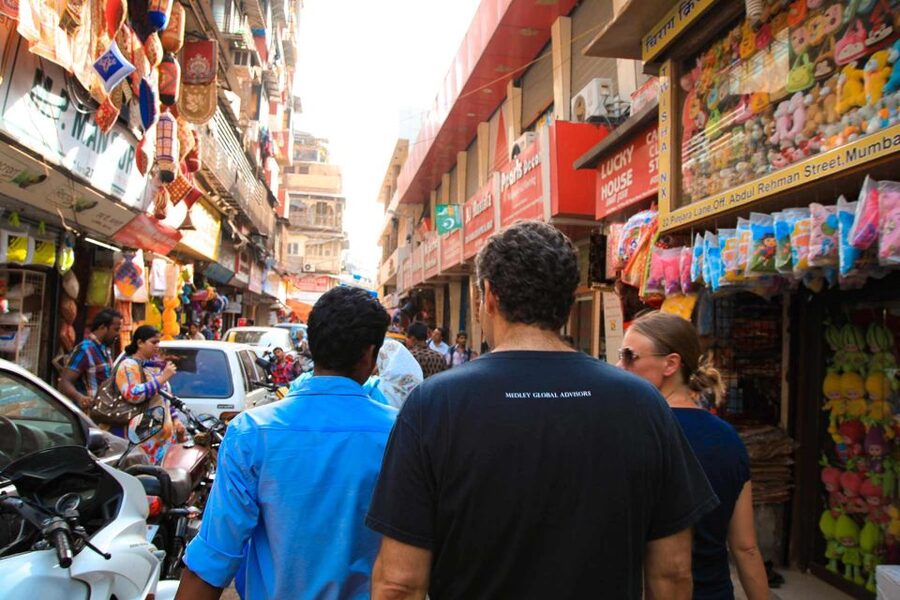
Many Mumbai sightseeing trips keep you on the familiar heritage circuit. This one gives you a more practical view. You see how people get to work, how flowers move through the city, how clothes are washed on a huge scale, and how lunch reaches office workers across town.
That matters because Mumbai is not only grand buildings and sea views. It is also a city of tight schedules and improvised systems. The train carries workers in huge numbers. The dabbawallahs move home-cooked meals from families to offices. Markets operate early, quickly, and with little room to spare.
I like this focus because it gives the city a human scale. You are not just checking off monuments. You are watching routines that keep Mumbai moving.
The route also provides a useful contrast. CSMT offers dramatic architecture and a sense of the city’s colonial-era railway importance. Dadar Flower Market is noisy and practical. Dhobi Ghat shows a large laundry operation in action. Chor Bazaar brings you into a crowded market where browsing is part of the entertainment.
The trade-off is time. In 3.5 hours, you cannot study each place at length. The tour works best as a first look, not as a detailed market or photography outing.
A few more options to weigh up in Mumbai
- Dharavi slum tour in Mumbai by Female tour guides of the slum
★ 5.0 · 1,976 reviews - Mumbai: Full-Day Sightseeing Tour of Mumbai
★ 4.9 · 1,822 reviews - Private Mumbai Sightseeing Tour (Traveller’s Choice Award Winner)
★ 5.0 · 1,565 reviews
Starting near Regal Cinema and entering Mumbai’s transport system
There are two listed starting options at Regal Cinema, though the exact meeting point can vary according to the option you book. Confirm the location before setting out, especially if you are arriving from another part of the city.
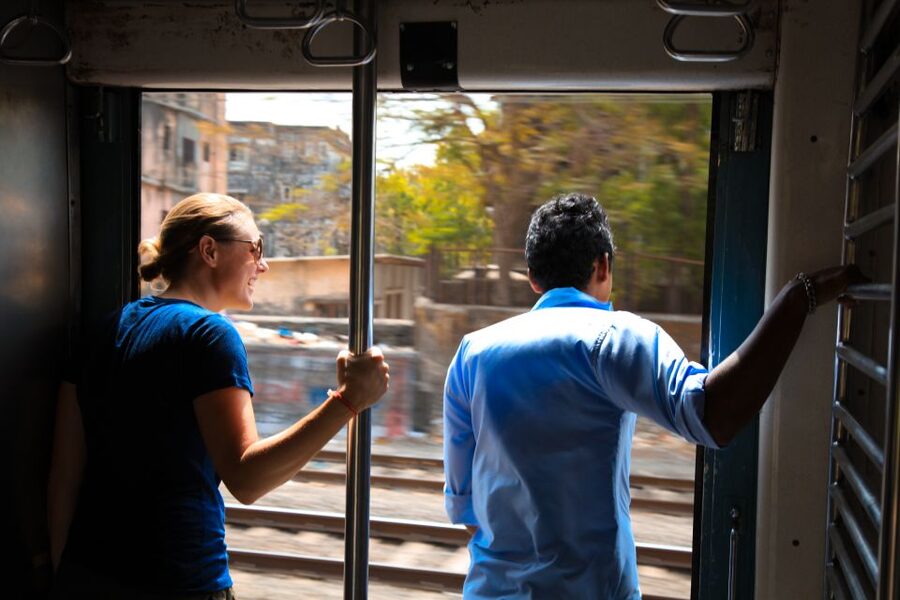
The opening section uses public transport for about 15 minutes. This is where the tour begins to feel different from a standard coach excursion. You have to pay attention, stay with the group, and follow the guide through a functioning transport network.
That small amount of navigation is part of the value. You get a taste of Mumbai’s daily movement rather than simply being delivered to each stop. If you are nervous about local transport, the guide handles the practical side while you watch how the system works.
The morning timing matters. The description places emphasis on seeing working people head out, and the dabbawallah system is tied to that daily rhythm. Starting times vary, so check the available departure when booking. Earlier departures should offer the clearest look at commuter activity, though the supplied details do not promise a specific start time.
CSMT: a grand railway station in only ten minutes
The first major stop is Chhatrapati Shivaji Maharaj Terminus, usually called CSMT. You have about ten minutes for sightseeing.
That is enough to admire the exterior and get a quick explanation, but not enough for a long architectural visit. CSMT is one of Mumbai’s most striking railway buildings, and its busy setting makes the stop more than a simple photograph. You see a grand landmark still serving ordinary commuters.
I would treat this as an orientation stop. Look up at the building, notice the movement around it, and listen to the guide’s explanation. If grand architecture is your main interest, you may wish you had more time. If you want a quick introduction before moving into the city’s everyday markets, the short visit fits the tour well.
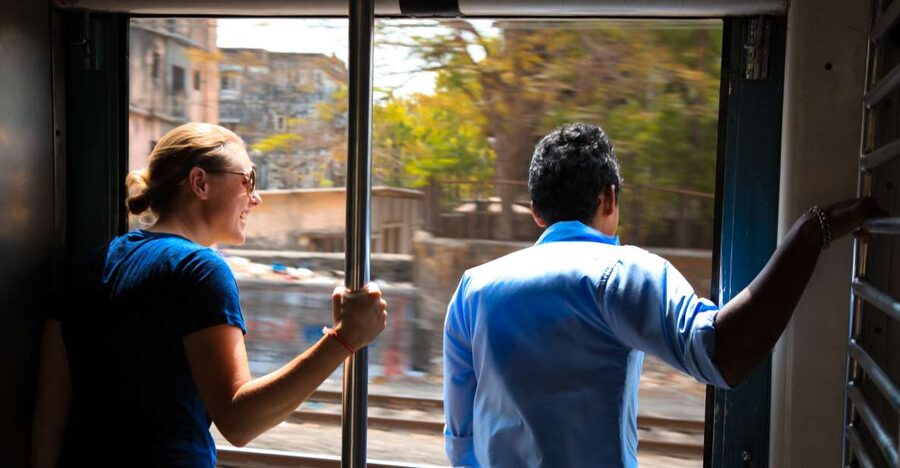
From here, you board a train for roughly 15 minutes. This is one of the most useful parts of the experience because the train is not a staged attraction. You are using Mumbai’s suburban rail network while the city gets on with its day.
Dadar Flower Market and Mumbai’s early trade
The Dadar Flower Market gets about 15 minutes, including a guided walk and sightseeing. That is brief, so expect a fast look rather than a slow wander through every lane.
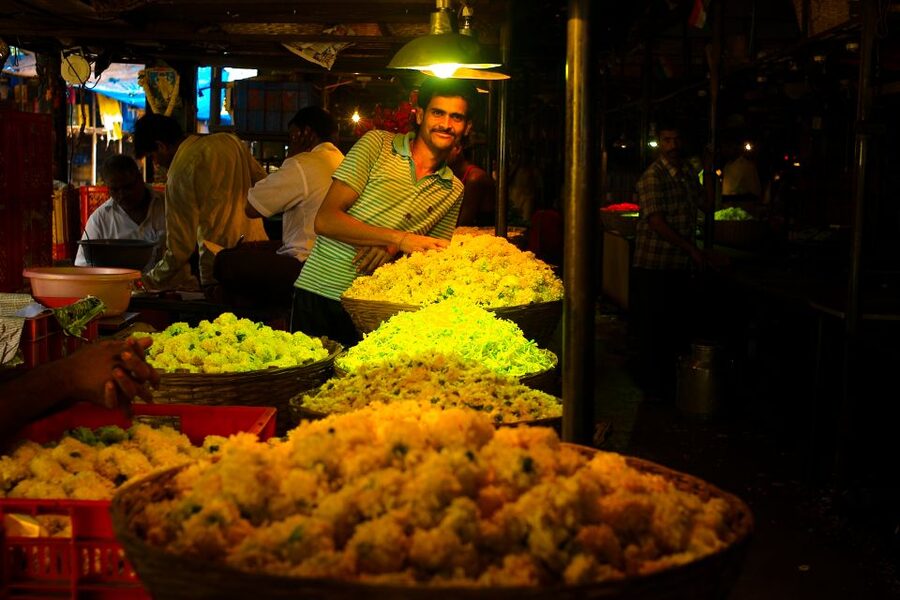
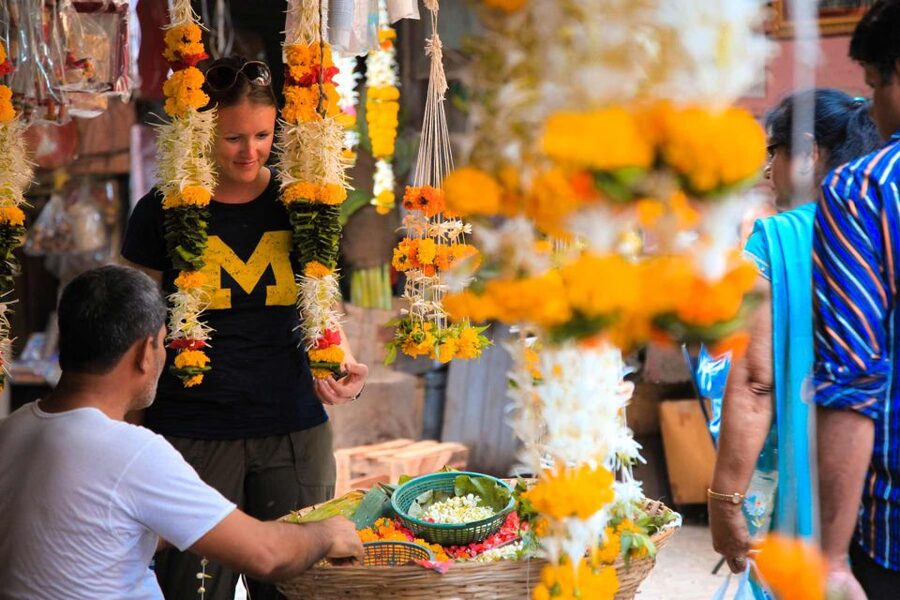
The market gives you a clear example of how goods move through Mumbai. Flowers are sold, carried, and arranged at speed. The setting is very different from a polished shopping street, and that is precisely why it is worth seeing.
I recommend staying close to the guide here. A market can be confusing even when you have plenty of time, and this visit is short. Use the minutes to watch the handling of the flowers, note the colors and activity, and ask focused questions about what you are seeing.
The tour then uses another train for about ten minutes. This second rail journey keeps the transport theme alive, but it also means the route has little spare time. A delayed train or a crowded platform could shorten the next stop.
A completely different kind of day out:
- Elephanta Caves & Island Guided Private Tour
★ 5.0 · 1,327 reviews - Group Guided Walking Tour in Fort and Colaba
★ 5.0 · 1,073 reviews - Mumbai: Elephanta Caves Half-Day Guided Tour with Expert
★ 4.8 · 1,032 reviews - Highlights of Mumbai Sightseeing Tour: TRAVELLERS CHOICE AWARDED
★ 5.0 · 915 reviews
Dhobi Ghat from the outside

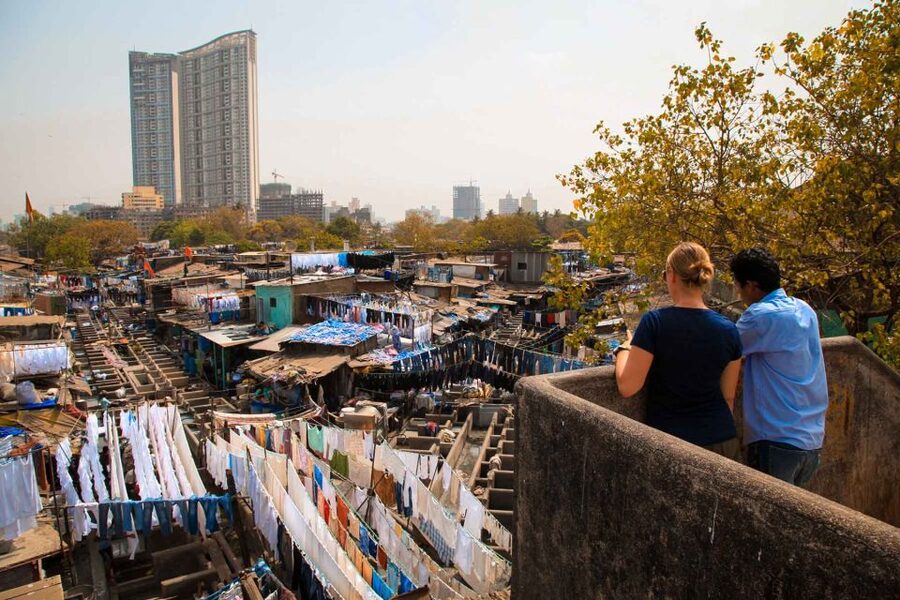
Dhobi Ghat is a ten-minute photo stop. The tour presents it as a large outdoor laundry area, and the visit is designed for viewing and explanation rather than a long walk through the operation.
This is an important stop because it connects the tour’s transport theme with the working systems that support the city. The laundry operation has become one of Mumbai’s best-known sights, but it remains a place tied to everyday work, not just tourism.
Expect to look, listen, and take photographs. Do not count on a detailed exploration during ten minutes. The guide can help explain what you are seeing, but the stop is necessarily limited.
After Dhobi Ghat, you take a black cab for about 15 minutes. One past participant specifically found that some shared taxi travel replaced part of the expected bus experience. Traffic is a practical reason for this kind of change, but you should know that the exact transport mix may not feel perfectly fixed.
Chor Bazaar: thirty minutes to browse and ask questions
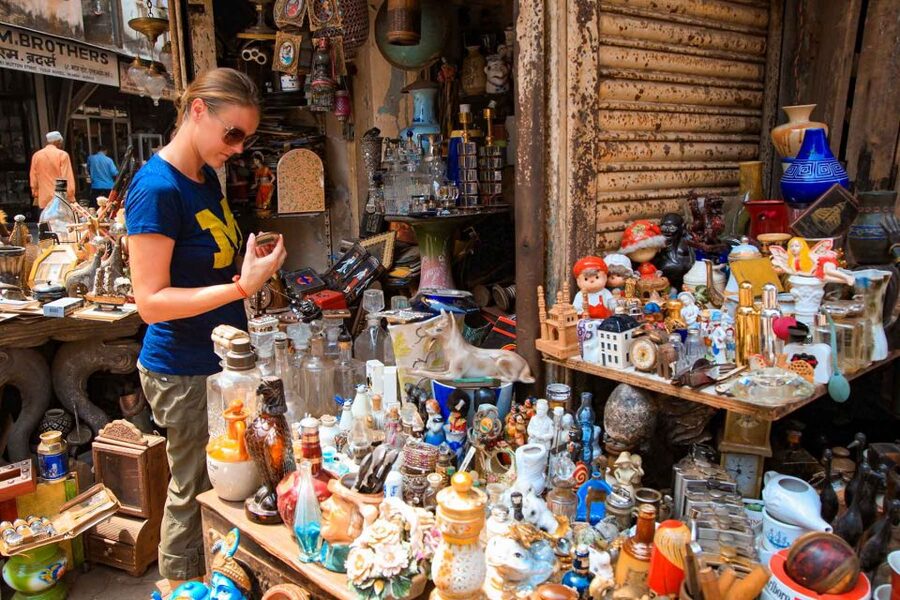
The tour gives Chor Bazaar 30 minutes, the longest single stop on the route. That makes sense. A flea market needs time for your eyes to adjust, and the market is more enjoyable when you can pause instead of being marched straight through.
The name is often linked with the idea of a thieves’ market, but you should not treat the tour as a treasure-hunting guarantee. It is a large, busy flea market where you can browse and get a feel for Mumbai’s informal commerce.
The guide leads the visit, which is useful in a place where the lanes and merchandise can seem confusing. I would ask about how the market operates, what kinds of goods are sold, and how to approach bargaining if you are considering a purchase. The supplied details do not specify what items will be available on the day, so keep your expectations open.
Thirty minutes is enough for an introduction and perhaps a little shopping. It is not enough for a patient search through every stall. If you love markets, you may want to return independently later with more time.
A second black-cab ride lasts about 20 minutes. Again, traffic can shape the timing. This is where the tour’s use of local transport becomes both its charm and its weakness. You get a real sense of city movement, but you do not get the predictability of a private vehicle.
The final viewpoint and Churchgate finish
The last listed stop is a viewpoint, reached with a guided walk of about ten minutes. The details do not name the viewpoint, so you should not book this section expecting a specific landmark or a guaranteed panoramic scene.
It functions as a short closing walk before the drop-off. The tour ends at either Churchgate Station or Churchgate Railway Station, which are listed as the two drop-off options. That location is practical if you plan to continue sightseeing or use the rail network afterward.
One account of the route also included a look at the dabbawallahs around Churchgate, along with extra religious and coastal sights such as Haji Ali, Mahalaxmi Temple, and Marine Drive. Those additions are not listed as fixed stops in the supplied route, so consider them possible variations rather than promised parts of every departure.
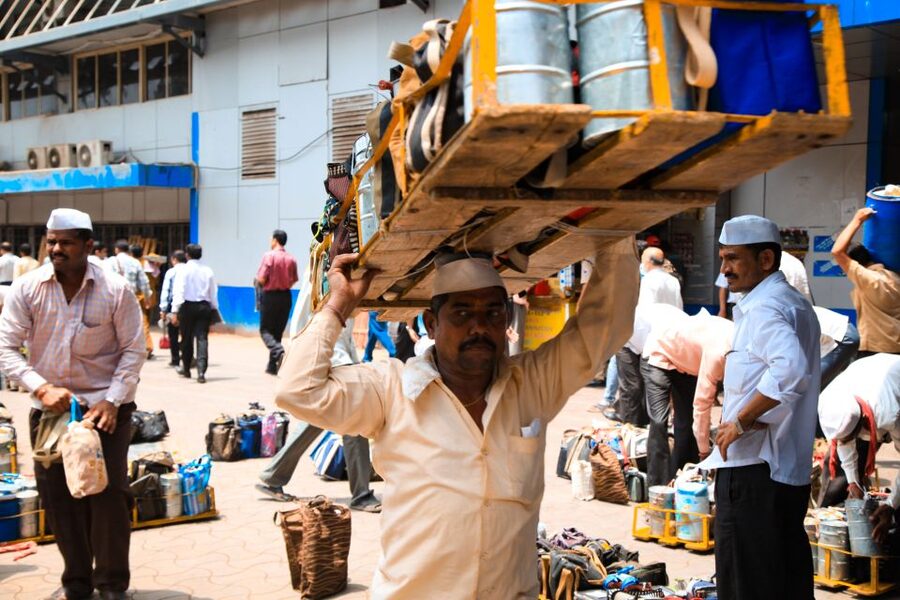
The dabbawallah theme is still central to the experience. You learn about the lunch-box delivery system and may see it in action during the city’s working day. The value lies less in a formal presentation and more in seeing how this delivery network fits into Mumbai’s commuter life.
How much explanation should you expect?
The guide is central to the quality of this tour. A strong guide can turn a quick look at a market or station into a useful lesson about work, transport, and city life.
Several ratings praise the organization and English communication. One guide named Hitesh was singled out for giving clear, detailed explanations and for making the train and bus sections interesting. Another account described a friendly guide with very good English who organized the day well and even helped the group try food at a small snack bar.
That said, the experience is not guaranteed to be equally strong every time. One lower rating described a rushed route, limited explanations, and a guide distracted by a mobile phone. This is worth taking seriously because the itinerary moves quickly. If the guide does not add context, you may feel as if you are only being transported from one short stop to another.
You can improve your experience by asking questions early. Ask what you are seeing, why the place matters, and how it fits into Mumbai life. A small group makes that easier, and the maximum of six people gives the guide a fair chance to respond.
The $31 price and what it really covers
At $31 per person, the tour offers solid value if you want local transport and a guide in one package. The price includes the English-speaking guide, all transport during the tour, and water or a cold drink.
That removes several small decisions. You do not have to work out each train, bus, or taxi connection, and you do not need to negotiate the route on your own. For a first visit to Mumbai, that convenience has real value.
Food is not included, and the tour does not include hotel pickup or drop-off. One past experience included lunch at a snack bar, but you should not assume that food is part of the standard package. Bring money if you want to eat or shop, and do not arrive expecting a meal.
The price is less attractive if you want long visits at each sight, extensive shopping time, or a fully private vehicle. It is a good buy for access, orientation, and a guided introduction to ordinary Mumbai.
Free cancellation up to 24 hours before departure and the option to reserve now and pay later add useful flexibility. These are practical booking features, but the real decision is still whether you enjoy moving at a quick pace.
Comfort, crowds, and the right kind of preparation
Wear comfortable shoes. You will walk through stations and markets, move between vehicles, and keep up with a short timetable. One German-language rating offered the simplest useful advice: comfortable shoes are essential.
This is not a good match for prams or strollers. The route includes public transport, market streets, and station movement, so bulky equipment would make the day harder for you and the group.
A small group helps, but it does not remove the basic nature of the experience. You will still use busy transport and visit crowded public places. Keep your belongings close and follow the guide’s instructions at stations and markets.
Bring water if you prefer to drink often, even though water or a cold drink is included. Since food is not included, a small snack may also be sensible if you need regular meals. These are simple preparations that let you focus on the city instead of logistics.
Who will enjoy this three-and-a-half-hour route?
I would choose this tour if you want a strong first look at Mumbai beyond the standard monuments. It suits you if public transport feels like part of the trip, rather than an inconvenience.
It is especially useful for:
- First-time visitors who want help getting oriented.
- People interested in working life, markets, and local systems.
- Visitors who prefer small groups to large coach tours.
- Anyone curious about the dabbawallah lunch delivery network.
- Photographers who want quick access to varied urban scenes.
I would be more cautious if you need a relaxed schedule. The route includes several short stops, and one rating found it rushed. It may also frustrate you if you want guaranteed bus travel, because shared taxis can be used when traffic or timing makes that more practical.
Market lovers may enjoy the introduction but want to return to Chor Bazaar independently. Architecture fans may find ten minutes at CSMT too short. Families with prams should choose another outing.
Should you book the Mumbai Local Transport and Dabbawallah Tour?
Book it if your ideal Mumbai experience includes trains, markets, street-level work, and a guide who can explain how the city functions. At $31, the included transport and small-group format make it a sensible way to cover several distant sights in a short morning.
Skip it if you want slow photography, extended shopping, or a polished sightseeing bus. Also think twice if a rushed schedule makes you unhappy.
My advice is to book this early in your Mumbai stay, when the city’s transport system and neighborhoods still feel unfamiliar. Use it as an orientation ride, ask plenty of questions, and return later to any place that deserves more time. With a good guide, it offers one of the clearest short introductions to everyday Mumbai.
FAQ
How long does the Mumbai Local Transport and Dabbawallah Tour last?
The tour lasts 3.5 hours.
What transport is used during the tour?
The experience includes a suburban train, a public bus, and a black-and-yellow taxi. Some taxi sections may be shared taxis.
What sights are included?
The route includes CSMT, Dadar Flower Market, Dhobi Ghat, Chor Bazaar, and a viewpoint. The tour also focuses on the dabbawallah lunch delivery system.
Is hotel pickup included?
No. Hotel pickup and drop-off are not included. The tour has starting options near Regal Cinema and ends at Churchgate Station or Churchgate Railway Station.
What is included in the price?
The $31 price includes an English-speaking local guide, all transport during the tour, and water or a cold drink. Food is not included.
Is this suitable for a stroller or pram?
No. The activity is not suitable for prams or strollers. Comfortable shoes are recommended, and the maximum group size is six people.
Just added in Mumbai
- Mumbai Airport to Mumbai Hotels : Private Transfers★ 5.0 · 13 reviews
- Mumbai Sightseeing Tour★ 5.0 · 11 reviews
- Mumbai Spice Markets and Bazaars Tour with Guide and Transport★ 5.0 · 42 reviews
- Mumbai 800 Year Worli Village: Talking Goddess, Old Fort & more★ 5.0 · 94 reviews
- Customize private tour with pickup★ 5.0 · 95 reviews
- Gufran’s Slum Home Tour in the Mumbai Slums★ 5.0 · 19 reviews
- Private Guided Bandra Half Day City Tour in AC Vehicle★ 5.0 · 72 reviews
- The Famous Bollywood Tour of Mumbai★ 5.0 · 97 reviews
Mumbai Tours, compared.

Dharavi slum tour in Mumbai by Female tour guides of the slum
Read our review →
Private Mumbai Sightseeing Tour (Traveller’s Choice Award Winner)
Read our review →


Elephanta Caves Half-Day Guided Tour with Expert
Read our review →
Highlights of Mumbai Sightseeing Tour: TRAVELLERS CHOICE AWARDED
Read our review →