
Reviewed · INDIA
Marine Trail
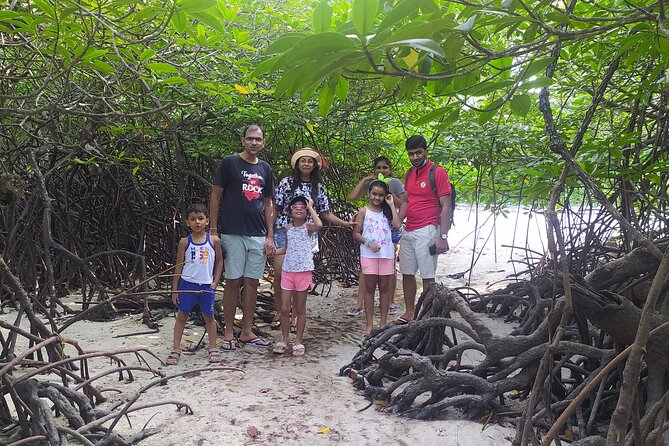
The sea floor comes alive at low tide. This two-hour Marine Trail on Havelock Island gives you a close look at mangroves, seagrass, coral reefs, and shallow coastal lagoons, all with a local guide explaining what you find. It is a hands-on nature walk, not a standard beach outing.
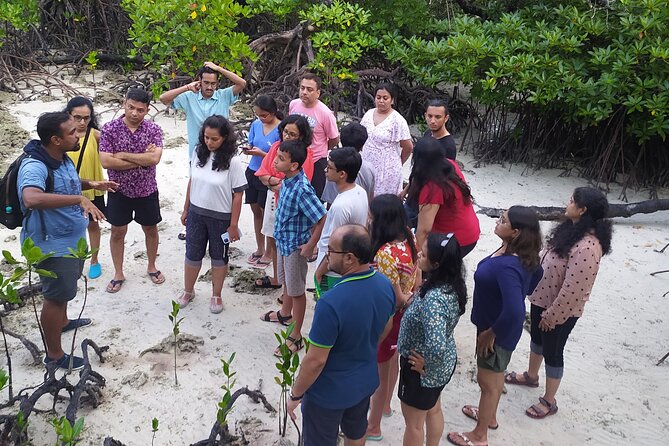
I like the small group of up to 20 people, which makes it easier to hear the guide and spot small creatures. I also like the unusual focus on animals many beachgoers miss, including sea cucumbers, brittle stars, pipefish, mantis shrimps, and decorator crabs. The main consideration is physical: you need good balance and the ability to walk through uneven, ankle-deep water.
In This Review
- Key things to know before you book
- Starting with Havelock’s low-tide world
- Walking through mangroves, seagrass, and coral
- The animals you may see
- Why the night trail feels different
- What the two-hour format gives you
- The guide makes the difference
- Is $33.55 good value?
- Who should book this activity?
- Practical details that affect your visit
- My take on the Marine Trail
- Should you book the Marine Trail?
- FAQ
- Where does the Marine Trail begin?
- Where does the activity end?
- How long does the Marine Trail last?
- How deep is the water?
- How many people can join the group?
- Is the Marine Trail suitable for children?
- Is there a night version of the Marine Trail?
- Can I cancel for a full refund?
Key things to know before you book
- The tide controls the experience: The walk begins at low tide, when mangrove, seagrass, coral, and lagoon habitats are exposed.
- You stay mostly dry: This is a walking activity through water that reaches no higher than the ankle.
- The night option is rare: Around a full moon or new moon, you may be able to join a darker, more unusual version of the trail.
- UV torches reveal glowing marine life: Corals and sea anemones can show biofluorescence under ultraviolet light.
- The guide shapes the experience: The best part is learning how small marine animals fit into this fragile coastal system.
- Families can take part: The activity is suitable for children and adults who can manage the walking conditions.
Starting with Havelock’s low-tide world
The Marine Trail begins at Swaraj Dweep, the official name of Havelock Island, and returns to the same meeting point. The exact route depends on the exposed coastal habitats and the tide, so this is not a fixed sightseeing circuit with a series of formal stops.
Instead, the guide leads you across shallow areas where the retreating sea leaves behind small lagoons and channels. You may move between mangrove edges, patches of seagrass, coral areas, and sandy stretches. Each section supports different forms of life, so the setting changes even when you are only walking a short distance.
I like this format because it rewards patience. A casual walk along the beach might reveal a crab or shell. A trained naturalist can point out the animal hiding beneath it, explain how it moves, and show you why the habitat matters.
The timing is important. Low tide exposes the habitats that are normally covered by seawater, but it also means the activity cannot be treated like a standard morning or afternoon tour. Confirm your start time carefully, since the tide is the reason this experience works at all.
Other trips worth a look in India:
- Old & New Delhi City Tour – Half or Full Day Options Available
★ 5.0 · 4,811 reviews - Old & New Delhi City Tour – Choose Half or Full Day Experience
★ 5.0 · 4,513 reviews - Same Day Taj Mahal, Agra Fort & Baby Taj Tour from Delhi by Car
★ 5.0 · 4,304 reviews
Walking through mangroves, seagrass, and coral
Mangroves are among the most useful parts of the coastal ecosystem, and this walk gives you a chance to see them at close range. Their roots create shelter for small marine animals and help form the quiet lagoons and muddy edges where crabs, shrimps, and other creatures live.
The seagrass areas have a different feel. They may look simple at first, but they provide cover and feeding grounds for marine life. The guide can help you notice movement that would otherwise blend into the water, sand, or plant cover.
Coral areas add another layer. You are not visiting an aquarium where every animal is placed in clear view. You may need to pause, look carefully, and follow the guide’s instructions before a small creature becomes visible.
This is where the guide’s explanations matter most. The activity is less about collecting a long list of sightings and more about understanding how corals, fish, crustaceans, molluscs, and mangroves connect. The naturalist-led format turns a wet shoreline into an outdoor classroom without making it feel like a school lesson.
The animals you may see
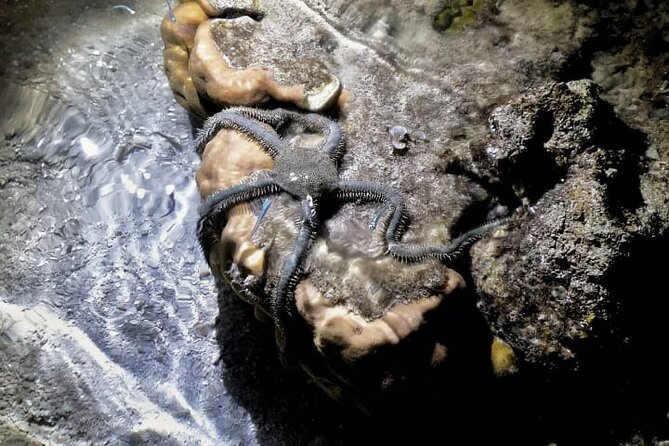
The range of possible sightings is impressive for a two-hour walk. The experience can include sea urchins, sea cucumbers, crabs, shrimps, sponges, corals, brittle stars, sea anemones, and pipefish.
Pipefish are a particularly nice find. They are close relatives of seahorses, and their narrow bodies can make them hard to notice in shallow water. You might also find creatures that sit still and blend into the bottom, which is why the guide’s trained eye is more useful here than simply walking on your own.
The list can also include molluscs and other small marine animals. Since this is a wild habitat, no sighting is guaranteed. That uncertainty is part of the appeal, but it also means you should not judge the activity only by how many animals you see.
I would approach it with the expectation of learning how to look. Some of the best moments may be small: a crab moving sideways beneath cover, a brittle star tucked into a crevice, or a pipefish appearing among the vegetation.
Why the night trail feels different
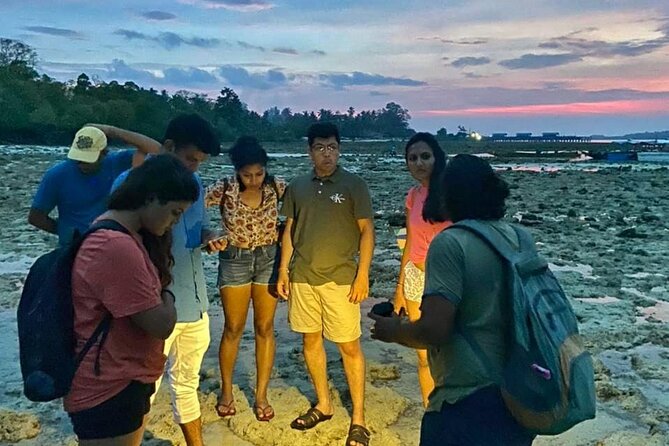
If you visit around a full moon or new moon, a night version may be available. This is the most unusual form of the Marine Trail, and it changes the mood completely.
As daylight fades, different marine animals may become active. Possible sightings include squids, sea slugs, cone snails, mantis shrimps, and decorator crabs. These are not the creatures most people expect to find while walking along a beach at night.
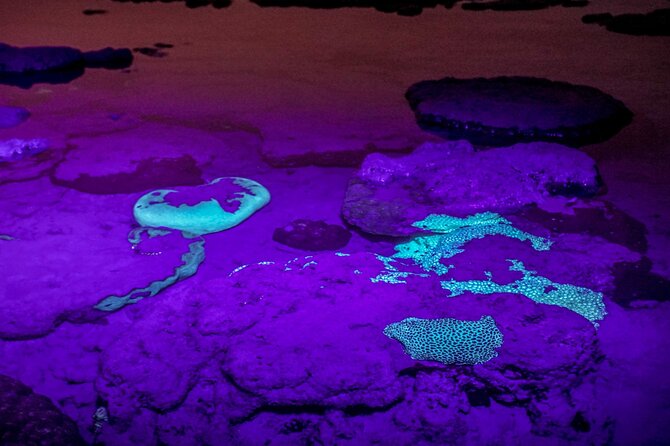
The guides also carry UV torches. Under ultraviolet light, some corals and sea anemones can show biofluorescence, appearing in bright neon colors. That effect is a natural response in the animals, not a lighting trick added to the habitat.
The night version does require extra care. Darkness, shallow water, and uneven ground make balance more important than during the day. One person described the need for good balance and no injuries, a useful warning for anyone with a mobility concern.
I would choose the night walk only if you feel steady on your feet and comfortable moving slowly in dark conditions. The payoff can be extraordinary, but the setting is less forgiving.
A completely different kind of day out:
- Taj Mahal Day Tour from Delhi by Superfast Train – TOP RATED TOUR
★ 5.0 · 4,166 reviews - Full Day Taj Mahal, Agra Fort & Baby Taj Tour from Delhi by Car
★ 5.0 · 3,647 reviews - From Delhi: Taj Mahal & Agra Private Day Trip with Transfers
★ 4.9 · 3,181 reviews - Taj Mahal Tour from Delhi by Express Train (Viator Award Winner)
★ 5.0 · 2,849 reviews
What the two-hour format gives you
At about two hours, the Marine Trail is long enough to feel substantial without taking over your day. You can fit it alongside other activities on Havelock Island, yet you still have time to stop and examine the animals rather than rushing from one point to the next.
The small group limit of 20 helps here. A large crowd would make it harder to gather around a small lagoon or listen while the guide explains a creature at your feet. With fewer people, you have a better chance of seeing what the guide has found.
The group size is not tiny, so you should not expect a private walk. Children may also need reminders to stay close and move carefully. The natural setting calls for attention, not speed.
The activity ends where it begins at Swaraj Dweep. Public transportation is nearby, and a mobile ticket is accepted, which keeps the practical side simple.
The guide makes the difference
The tour includes a trained naturalist who explains the marine life and the role of each habitat. That is more valuable here than a guide who simply points out attractive animals.
A good explanation can help you understand why mangroves matter, how seagrass supports marine life, and where to look for creatures that are easy to miss. It can also help you avoid disturbing the habitat as you walk.
One especially strong part of the experience is the guide’s enthusiasm for the subject. The most praised feature is not a grand viewpoint or a dramatic ride. It is the quality of the explanations and the ability to spot wildlife in very shallow water.
The activity center is managed by Anurag Karekar, listed as the Activity Center Manager. The supplied information does not identify every guide by name, so you should not assume Anurag personally leads each departure.
Is $33.55 good value?
At $33.55 per person, this is not the cheapest way to spend two hours on Havelock. You could walk along a beach for free. The value comes from access to a habitat most people would pass without understanding, plus the trained guidance that helps you notice small animals.
The price makes more sense if you enjoy nature, photography, marine life, or family activities with an educational side. It is also a useful choice if you have already done the island’s major water activities and want something quieter and more unusual.
The value is less clear if you want a fast-paced outing, guaranteed sightings, or a traditional sightseeing tour. The Marine Trail depends on tide, weather, and wildlife behavior. Some moments may feel slow, especially if your group spends several minutes examining one small creature.
I would consider the night version especially good value if your timing allows it. UV-lit corals and sea anemones, along with nocturnal animals such as squids and mantis shrimps, offer something quite different from a normal beach walk.
Who should book this activity?
This is a strong match for families with children who enjoy animals and do not mind walking carefully. It also suits adults who like learning the names and habits of small marine species rather than simply taking in a view.
You should be reasonably comfortable on your feet. The activity is not recommended for anyone who has difficulty walking, and the shallow water does not remove the need for balance. Uneven surfaces, wet areas, and night conditions can all make the walk more demanding.
The Marine Trail is also a good choice for curious visitors who have never studied coastal ecosystems. You do not need a specialist background. The guide provides the context, while the setting gives you something real to examine.
I would not choose it for someone seeking a relaxed stroll with no physical challenge. It is gentle in terms of water depth, but it still requires careful footing and attention.
Practical details that affect your visit
The activity operates daily between 7:00 AM and 7:00 PM during the stated operating period, from November 27, 2021, through January 16, 2027. Your actual departure time should match the tide, so the broad opening hours do not mean you can arrive at any time and expect the same route.
Confirmation is provided when you book, and the ticket is mobile. The meeting point is Swaraj Dweep, Andaman and Nicobar Islands 744211, and the activity returns there.
Most people can participate, but walking difficulty is a clear concern. Good balance becomes even more important for the night trail. Since the activity requires suitable weather, poor conditions can lead to a different date or a full refund.
You can cancel for a full refund up to 24 hours before the start time. Changes or cancellations inside that 24-hour window are not accepted for a refund. The cut-off uses local time.
My take on the Marine Trail
I like the Marine Trail because it offers a close, quiet look at Andaman’s coastal life without requiring a full-day excursion. The walk is simple in structure, but the habitats are varied, and the guide’s ability to explain what you are seeing gives the experience its real value.
The strongest choice is to plan around the right conditions. For a daytime walk, look for a low-tide departure that suits your schedule. For the night version, check the full-moon or new-moon timing and be honest about your balance and walking ability.
The 4.9 rating from 93 reviews, along with a 100 percent recommendation rate, fits the activity’s strongest qualities: unusual wildlife, clear explanations, and a family-friendly format. The high praise should not make you forget the practical limits. Wildlife is never guaranteed, and the walk can be difficult for anyone with mobility problems.
Should you book the Marine Trail?
Book it if you want to see Havelock from the water’s edge, one small creature at a time. It is especially worthwhile for families, nature fans, and anyone intrigued by the night option with UV torches.
Skip it if you want a guaranteed spectacle, a completely dry and effortless walk, or a tour built around major sights. For the right person, $33.55 buys more than a shoreline stroll. It buys a better understanding of the living coast.
FAQ
Where does the Marine Trail begin?
The activity begins at Swaraj Dweep, Andaman and Nicobar Islands 744211.
Where does the activity end?
The walk ends back at the same meeting point.
How long does the Marine Trail last?
The experience lasts approximately two hours.
How deep is the water?
This is a dry activity with walking in water no deeper than about ankle depth.
How many people can join the group?
The maximum group size is 20 people.
Is the Marine Trail suitable for children?
Yes. The experience is described as suitable for the whole family and for children with an interest in nature.
Is there a night version of the Marine Trail?
Yes. Around a full moon or new moon, a night version may be available. It can include nocturnal marine animals and UV torches for viewing biofluorescence.
Can I cancel for a full refund?
Yes. You can cancel at least 24 hours before the start time for a full refund. Cancellations or changes made less than 24 hours before the start time are not accepted for a refund.
Just added in India
- Five Days Golden Triangle Tour with Ranthambore Delhi Agra Jaipur★ 5.0 · 11 reviews
- 5 Days Golden Triangle Tour with Ranthambore India★ 5.0 · 10 reviews
- 5 Days Golden Triangle Tour with Ranthambore Delhi Agra Jaipur★ 5.0 · 11 reviews
- 5-Day Private Luxury Golden Triangle Tour From Delhi★ 5.0 · 45 reviews
- Delhi, Agra, Jaipur & Ranthambhore Tiger Safari 5-Day Tour★ 5.0 · 47 reviews
- 5-Day Private Delhi, Agra and Jaipur with Ranthambhore Tiger Tour From Delhi★ 5.0 · 44 reviews
- 5-Day Private Golden Triangle Tour: Delhi, Agra, and Jaipur★ 5.0 · 62 reviews
- Private 5 Days Golden Triangle Tour – Visit Delhi Agra and Jaipur★ 5.0 · 26 reviews