Reviewed · MUMBAI TOURS
Local Transport & Dabbawallah Tour
Mumbai works best when you ride it. This half-day tour leaves the tourist bus behind and uses trains, buses, and taxis to show you how the city moves. I like the practical help with public transport, and I like the mix of major sights and working neighborhoods, from Chhatrapati Shivaji Terminus to Dhobi Ghat. The main drawback is that public transport can feel crowded and the tour may be shortened on holidays, when dabbawallahs are not working.
I also like the small taste of local life built into the route, including flowers, laundry, street markets, and a vegetarian dabbawallah lunch. Guides such as Bipin Kumar have earned especially warm praise for being patient and helpful. Allow for a busy morning, though, and remember that you must reach the starting point at Regal Cinema in Colaba yourself.
In This Review
- Key points to know before booking
- Why this Mumbai tour is different
- Starting at Regal Cinema and reaching CST
- Flowers at Shyam Stall and the Dadar market area
- Dhobi Ghat and Mumbai’s working city
- Chor Bazaar, sweets, pickles, and the pleasure of looking
- Churchgate and the dabbawallah system
- The guide makes or breaks the transport
- Timing, group size, and what to bring
- Who will get the most from this tour
- Is $32.45 good value?
- Should you book the Local Transport and Dabbawallah Tour?
- FAQ
- Where does the tour start?
- Where does the tour end?
- How long does the experience last?
- Is hotel pickup included?
- Are transport fares included?
- What is the cancellation policy?
Key points to know before booking

- Public transport is the main attraction: You travel by train, bus, and taxi with a guide who handles the practical details.
- Dhobi Ghat gives you a working view of Mumbai: See washermen cleaning sheets for hospitals and hotels in the world-famous open-air laundry.
- The route mixes famous sights with ordinary city life: CST, Dadar Flower Market, Chor Bazaar, Churchgate, and the Oval Maidan all appear in one morning.
- Dabbawallahs are part of the finale: At Churchgate, you see the lunchbox delivery system and eat a vegetarian lunch nearby.
- The tour is good value at $32.45: Transport fares, a local guide, and bottled water or a cold drink are included.
- Plan around the fixed schedule: It starts at 8:30 a.m., lasts about three and a half hours, and ends at Churchgate rather than Regal Cinema.
Why this Mumbai tour is different
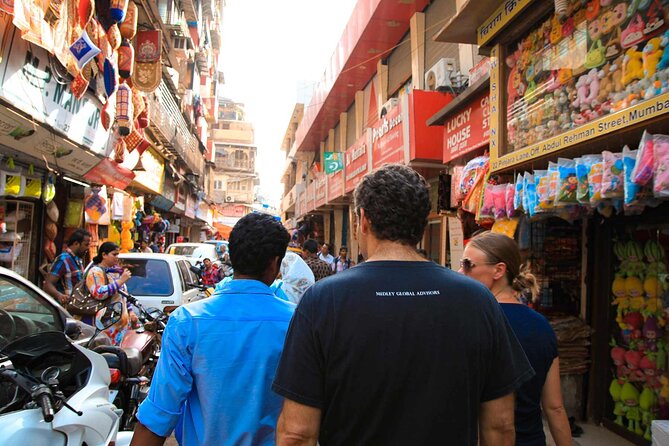
Many city tours keep you inside a vehicle, pointing out landmarks through glass. This one asks you to move as Mumbai residents do. That means walking between stops, riding local transport, watching stations fill and empty, and trusting your guide to get the group through the city.
The route begins in South Mumbai and finishes at Churchgate Railway Station. That is useful if you want to continue sightseeing afterward or need access to other parts of the city. It is less convenient if you expect hotel pickup or a round trip to your starting point.
The price is $32.45 per person. For that fee, your transport fares are covered, along with a guide and bottled water or a cold drink. You are not paying for a long list of grand admissions. You are paying for someone to explain how Mumbai functions and to make public transport easier to handle.
That is where the value lies. A first train ride in Mumbai can feel confusing, especially when stations are crowded and the route includes several transport changes. The guide provides structure, takes care of fares, and explains what you are seeing. One participant said the tour gave them the confidence to use a Mumbai train alone later in the trip. That is a useful souvenir, and it costs nothing to pack.
The group can include up to 25 people. That is still manageable, but it is not a private tour. At crowded stations or when taxis are needed, you may need to stay alert and keep close to the guide.
A few more options to weigh up in Mumbai
- Dharavi slum tour in Mumbai by Female tour guides of the slum
★ 5.0 · 1,976 reviews - Mumbai: Full-Day Sightseeing Tour of Mumbai
★ 4.9 · 1,822 reviews - Private Mumbai Sightseeing Tour (Traveller’s Choice Award Winner)
★ 5.0 · 1,565 reviews
Starting at Regal Cinema and reaching CST
Meet at 8:30 a.m. outside Regal Cinema on Colaba Causeway, opposite the Chhatrapati Shivaji Maharaj Vastu Sangrahalaya. Regal is one of Mumbai’s oldest movie theaters, so the meeting point has a little character rather than being an anonymous street corner.
The first major sight is Chhatrapati Shivaji Terminus, usually called CST. You get about ten minutes to see one of India’s busiest railway stations during the morning rush. The station is Mumbai’s only UNESCO World Heritage Site, and its ornate architecture has also appeared in popular film.
The short stop works well as an introduction. You see the contrast between grand stonework and the daily pressure of commuters moving through the building. Do not expect a long architectural tour. The purpose here is to watch the station in use and understand why rail travel is central to Mumbai.
A guide is especially helpful at this point. You can watch the flow of people from a safe position rather than trying to force your way into the crowd. One account described trains arriving and releasing a sea of humanity while the group watched from a walkway. That is the right mindset: observe the rush, do not treat it as a challenge to conquer.
Flowers at Shyam Stall and the Dadar market area
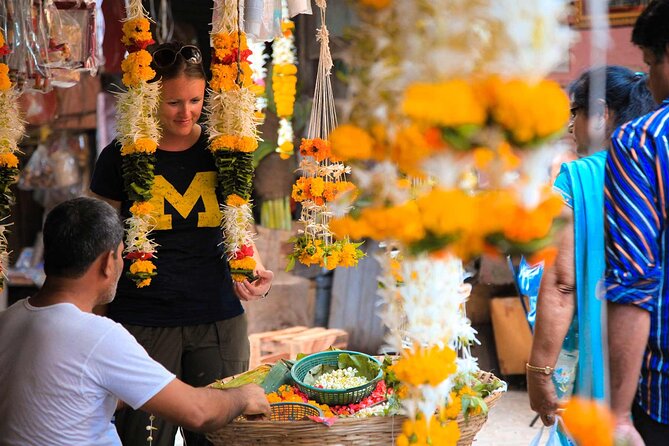
The stop at Shyam Stall lasts about 15 minutes. It focuses on flowers, which appear throughout Indian daily and religious life. They are used in temples, taxis, homes, women’s hair, and worship.
You may find more color and fragrance here than you expect from a short market visit. The appeal is not a formal display or a polished attraction. It is the chance to see an everyday trade that connects with many parts of Mumbai life.
This is also a good place to listen to your guide’s explanations. Without context, a flower stall can seem like a quick photo stop. With context, you begin to understand why flowers are sold in such volume and why they matter to people across the city.
The stop is brief, so you may not have time for a long browse. Keep your camera ready, but pay attention to the sellers and customers too. The point is the working scene, not simply a colorful backdrop.
Dhobi Ghat and Mumbai’s working city
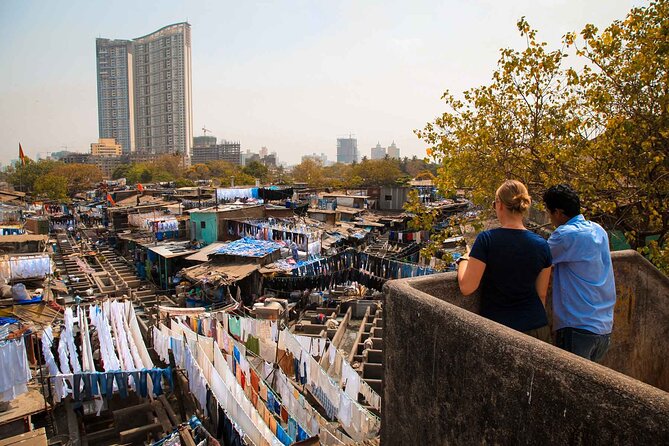
Dhobi Ghat is the most memorable stop for many people. You spend around 30 minutes looking at the open-air laundry area, where dhobiwallahs, or washermen, scrub sheets connected with Mumbai hospitals and hotels.
This is one of those places where the city’s scale becomes easier to grasp. Laundry is not being handled for one family in one courtyard. Large quantities move through a specialized system, and the work is done in full view.
Your guide helps explain the people and jobs behind the scene. That human context matters. The stop is not just about photographing rows of washing areas. It is about seeing how services are organized for a city of millions.
You should also keep your expectations sensible. The tour gives you a viewing stop, not a hands-on workshop. You will have time to observe and take photos, but the schedule continues, so do not count on wandering through every corner.
The open-air setting can be intense. You are looking at real labor, not a staged attraction. I see that as a strength, provided you remain respectful and avoid treating the workers as scenery.
A completely different kind of day out:
- Elephanta Caves & Island Guided Private Tour
★ 5.0 · 1,327 reviews - Group Guided Walking Tour in Fort and Colaba
★ 5.0 · 1,073 reviews - Mumbai: Elephanta Caves Half-Day Guided Tour with Expert
★ 4.8 · 1,032 reviews - Highlights of Mumbai Sightseeing Tour: TRAVELLERS CHOICE AWARDED
★ 5.0 · 915 reviews
Chor Bazaar, sweets, pickles, and the pleasure of looking
Chor Bazaar, known as the Thieves Market, receives about 30 minutes. It is one of the country’s largest flea markets and sells an enormous range of goods.
This is the least predictable stop. You might find local sweets, homemade pickles, chutneys, or items worth taking home. The tour gives you enough time to look around, but not enough to turn the market into a serious shopping expedition.
The name can create the wrong impression. You should treat the market as a place to browse and taste rather than assume every item is a bargain or suitable for luggage. If you buy food, ask your guide for help choosing something that travels well.
The short visit is valuable because it gives you a different side of Mumbai from the grand station and organized laundry. Markets show how people shop, negotiate, eat, and move through the city. They also reward curiosity more than a fixed checklist.
Do not expect a quiet pause. The market is busy by nature, and the group may need to stay together. If you dislike crowded commercial areas, this may be the part of the morning you enjoy least.
Churchgate and the dabbawallah system
The tour finishes at Churchgate Railway Station, where you see dabbawallahs at work. These delivery workers organize the movement of about 200,000 lunchboxes each day, carrying home-cooked meals to offices across Mumbai.
The system is famous because it depends on careful sorting, timing, and coordination. Seeing the workers at the station gives you a useful link between the city’s trains and its working day. Lunchboxes are not an abstract business story here. They are moving through the same rail system you have just used.
You then enjoy your own vegetarian dabbawallah lunch at the nearby Oval Maidan. This makes the final stop more than a quick photo opportunity. You get a small taste of the service you have been learning about.
The exact experience can depend on the date. On Republic Day, January 26, the dabbawallahs were off and one tour had to be shortened. If this part matters most to you, check the date before booking and keep the possibility of a changed program in mind.
Churchgate is a practical ending point. You can continue through Mumbai by train, arrange a taxi, or return to your hotel. One guide helped a participant organize a taxi after the tour, which is a useful touch if you are still finding your bearings.
The guide makes or breaks the transport
The strongest comments focus on the guides, especially Bipin Kumar. He has been praised for patience, warmth, and clear explanations, with one person describing the experience as similar to being shown around by a friend.
That personal care matters on a transport tour. The guide is not only delivering facts. They are helping you board the right vehicle, stay with the group, understand local customs, and feel safe in unfamiliar places.
The tour uses more than one mode of transport. You ride a train, bus, and taxi, and the included fares mean you do not need to search for exact change. That is a small convenience, but it reduces friction during a fast-moving morning.
There is one practical concern. If the group splits between two taxis, the guide cannot ride in both vehicles. One person found this unsettling, even though everything worked out. Stay with your assigned group, confirm the destination, and make sure you know where you are going before the taxi moves.
The public transport element is not a gimmick. It is the reason to book this experience. If you want a private vehicle, air conditioning, and door-to-door service, choose a different tour. If you want to learn how to move around Mumbai, this format is much more useful.
Timing, group size, and what to bring
The tour begins at 8:30 a.m. and runs for about three and a half hours, normally finishing around noon. Morning timing is important because CST and Churchgate are tied to the working day, while the dabbawallah activity depends on the movement of office lunches.
You need to reach Regal Cinema on your own. Hotel pickup and drop-off are not included. The ending at Churchgate is convenient, but it is not the same as returning to Colaba, so plan your next move before the tour starts.
Wear comfortable shoes and keep your belongings secure. The route involves public transport, markets, and walking between sights. You will want a small bag that leaves your hands free.
A phone with the mobile ticket is accepted, and confirmation is received at booking. Bottled water or a cold drink is included, but you should still dress for a full morning out and bring anything you personally need.
Most people can take part, and the activity is near public transportation. The maximum group size is 25. That makes the tour more social and affordable than a private outing, but it also means you must listen for instructions and keep track of the group.
It is booked, on average, 142 days ahead. That suggests you should reserve early if your Mumbai dates are fixed, especially if you want a particular morning.
Who will get the most from this tour
I would choose this tour for a first visit to Mumbai, particularly if you want practical help before exploring alone. It gives you a quick education in trains, taxis, markets, working neighborhoods, and the city’s lunchbox network.
It also suits anyone who prefers ordinary life to a string of monuments. You still see CST and major South Mumbai landmarks, but much of the morning is spent watching people work.
This is a good fit for:
- First-time visitors who feel unsure about Mumbai’s public transport
- People interested in local jobs and daily routines
- Film fans who want to see CST in person
- Curious eaters who would like a vegetarian lunch connected to the dabbawallah theme
- Visitors staying in South Mumbai who can reach Colaba early
- Cruise passengers who can get to the meeting point on time
I would hesitate if you have mobility concerns that make trains, buses, taxis, or crowded areas difficult. The information says most people can participate, but it does not promise a private vehicle or a low-effort route.
I would also skip it if your top priority is a slow architectural tour. The stops are short, with about ten minutes at CST and Churchgate, and the focus is on movement and city life.
Is $32.45 good value?
For $32.45, I think the tour offers strong value if you use the included transport and take full advantage of the guide. You receive a three-and-a-half-hour introduction to several parts of Mumbai, transport fares, bottled water or a cold drink, and a vegetarian dabbawallah lunch.
The value is less about ticket savings and more about access. Dhobi Ghat, Chor Bazaar, flower sellers, railway stations, and public transport can all be visited independently, but fitting them together in one morning takes planning. A guide also gives you cultural context that a map cannot provide.
The 4.8 rating from 40 reviews and 95 percent recommendation indicate a very positive record, but the weaker experiences point to real issues. One person was not met at the pickup point and needed the booking rearranged. Another found the guide less enthusiastic when they were the only person on the tour. A third had the dabbawallah portion shortened because of Republic Day.
Those cases do not erase the good value, but they tell you what to watch. Confirm the meeting point, arrive early, and check whether your date falls on a public holiday. If the experience does not operate as planned, free cancellation is available up to 24 hours before the start time. Changes or cancellations inside that window are not accepted for a refund.
Should you book the Local Transport and Dabbawallah Tour?
Book it if you want Mumbai explained from street level. The best parts are the confidence you gain using public transport, the view of real working systems at Dhobi Ghat and Churchgate, and the care shown by guides such as Bipin Kumar.
It is especially useful early in your stay. After one morning of trains, buses, taxis, and station routines, you may feel ready to try a short trip on your own.
Skip it if you want hotel pickup, a private car, long stops, or a return to Colaba. This is a moving, social tour with a fixed route and a few unavoidable uncertainties. For the right person, those are not flaws. They are the reason the experience feels like Mumbai rather than a city seen through a tour bus window.
FAQ
Where does the tour start?
It starts at 8:30 a.m. at Regal Cinema on Colaba Causeway, opposite the Chhatrapati Shivaji Maharaj Vastu Sangrahalaya in Apollo Bandar, Colaba.
Where does the tour end?
The tour ends at Churchgate Railway Station in Mumbai. The station provides access to other parts of the city.
How long does the experience last?
The tour lasts approximately three hours and 30 minutes, usually finishing around noon.
Is hotel pickup included?
No. Hotel pickup and drop-off are not included. You must make your own way to Regal Cinema for the start.
Are transport fares included?
Yes. The tour includes transportation fares for the public transport used during the experience, along with a local guide and bottled water or a cold drink.
What is the cancellation policy?
You can cancel up to 24 hours before the experience starts for a full refund. Cancellations and changes made less than 24 hours before the start time are not accepted for a refund.
Just added in Mumbai
- Mumbai Airport to Mumbai Hotels : Private Transfers★ 5.0 · 13 reviews
- Mumbai Sightseeing Tour★ 5.0 · 11 reviews
- Mumbai Spice Markets and Bazaars Tour with Guide and Transport★ 5.0 · 42 reviews
- Mumbai 800 Year Worli Village: Talking Goddess, Old Fort & more★ 5.0 · 94 reviews
- Customize private tour with pickup★ 5.0 · 95 reviews
- Gufran’s Slum Home Tour in the Mumbai Slums★ 5.0 · 19 reviews
- Private Guided Bandra Half Day City Tour in AC Vehicle★ 5.0 · 72 reviews
- The Famous Bollywood Tour of Mumbai★ 5.0 · 97 reviews
Mumbai Tours, compared.
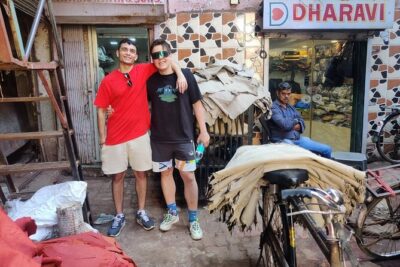
Dharavi slum tour in Mumbai by Female tour guides of the slum
Read our review →
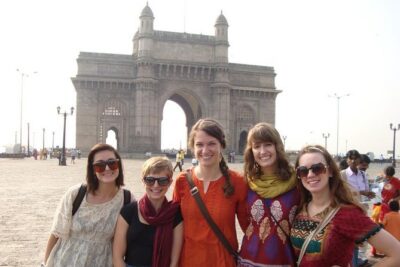
Private Mumbai Sightseeing Tour (Traveller’s Choice Award Winner)
Read our review →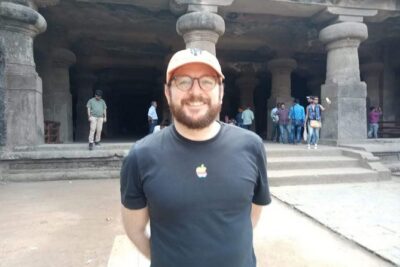

Elephanta Caves Half-Day Guided Tour with Expert
Read our review →
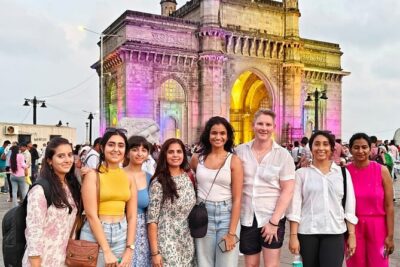
Highlights of Mumbai Sightseeing Tour: TRAVELLERS CHOICE AWARDED
Read our review →