
Reviewed · COOKING CLASSES
Jodhpur Private Cooking Class With Family
Recipes make better souvenirs. This private Jodhpur cooking class brings you into a local family home, where you learn vegetarian dishes from family recipes and then eat what you prepare. I like the small private setting and the chance to cook food you can repeat at home, especially dal, vegetables, rice, roti, and chai.
I also like the warm family contact provided by Reena, Ram, and their daughters. The main consideration is that the session appears to be more of a guided demonstration with hands-on work than a formal culinary school lesson, so you should not expect a professional kitchen or a highly structured chef-led class.
In This Review
- Key points to know before booking
- Entering a Jodhpur family kitchen
- Starting with masala chai and papadam
- Jodhpuri jeera rice and the role of spices
- Two vegetable dishes, dal, and Indian cheese
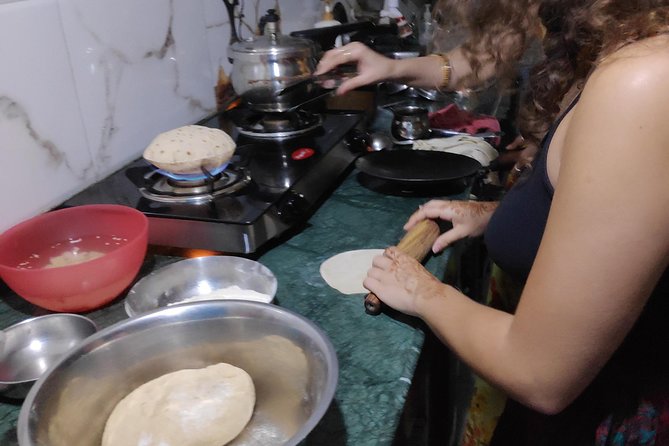
- Learning roti and traditional bread
- Sitting down to eat what you made
- Why the private format is worth the price
- Who will enjoy this Jodhpur cooking class
- My booking advice
- FAQ
- Where does the cooking class begin?
- Where does the activity end?
- How long does the cooking class last?
- Is the cooking class private?
- Is the meal vegetarian?
- What food will you learn to prepare?
- Are food and drinks included?
- Is the experience suitable for beginners?
- Can you cancel for a full refund?
Key points to know before booking
- A private family-home setting: Only your group takes part, creating a relaxed way to meet a Jodhpur family.
- A complete vegetarian menu: The class covers masala chai, roasted papadam, Jodhpuri jeera rice, two vegetable dishes, dal, Indian cheese, and roti or chapati.
- Recipes you can use at home: The focus is on traditional family methods, spice layering, and simple techniques rather than restaurant tricks.
- A meal at the end: Lunch or dinner, along with snacks and tea or coffee, is included after the cooking.
- About two hours and 15 minutes: The timing gives you enough room for several dishes without taking an entire day from Jodhpur sightseeing.
- Excellent guest satisfaction: The experience has a 5 out of 5 rating from 68 reviews, with 100 percent recommending it.
Entering a Jodhpur family kitchen
The class begins at the operator’s meeting point in Khichiyon ka Nohra, near Bagar Chowk and Gulab Sagar in Jodhpur. The activity ends at the same meeting point, and no hotel transfer is listed, so you should plan your own way there and allow a little extra time to find the address.
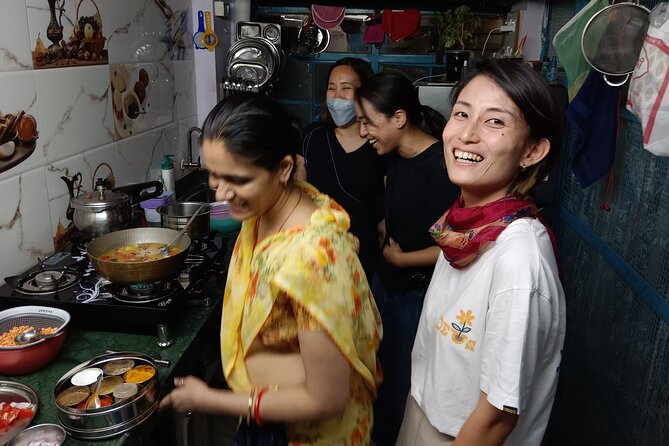
The setting matters. You are not simply watching someone prepare a plate in a restaurant kitchen. You are visiting a local vegetarian family home and learning how household cooking is done. That gives the experience a more personal feel than a standard food demonstration.
Reena is the main host named in the descriptions and feedback, and Ram and their daughters are also part of the welcome. The most consistent praise centers on the family atmosphere. The tone is friendly and social, with time for chatting, joking, and getting to know one another while the food is prepared.
That warmth is a major part of the value. Jodhpur has grand forts, blue-painted streets, and busy markets, but a family kitchen offers a different view of the city. You get a small look at daily life, family food, and the role of shared meals in Rajasthan.
The home is described as clean and hygienic. That is useful to know if you are cautious about food preparation while abroad. Still, this remains a home experience rather than a commercial cooking studio, so the surroundings and work surfaces may feel informal.
More Cooking Classes in Jodhpur:
- Private Cooking Class in Jodhpur With Pick Up & Drop Off
★ 5.0 · 84 reviews - Jodhpur 9 Dishes Cooking Class Experience pickup and drop
★ 5.0 · 56 reviews - Private Cooking Class in Jodhpur With Pick Up & Drop Off
★ 5.0 · 37 reviews
Starting with masala chai and papadam
The cooking begins with familiar Indian staples. You learn how to prepare Indian masala tea at home, including the basic process behind the spiced drink that appears in homes and cafés across the country.
Chai is a good opening lesson because it is approachable and useful. You can watch how the ingredients come together, ask questions, and leave with a recipe that is easier to recreate than a complicated restaurant dish. The class description also includes coffee or tea, so a hot drink is part of the refreshments as well as the lesson.
Roasted papadam is another early item. It is quick to prepare and gives you an immediate taste of the meal ahead. Papadam is thin and crisp, making it a simple way to learn how a small snack can be served alongside a larger vegetarian spread.
The class is designed for people with different cooking backgrounds. If you rarely cook, the hosts say they will guide you through the process. If you already know your way around a kitchen, you can focus more closely on the spice combinations and family methods.
Jodhpuri jeera rice and the role of spices
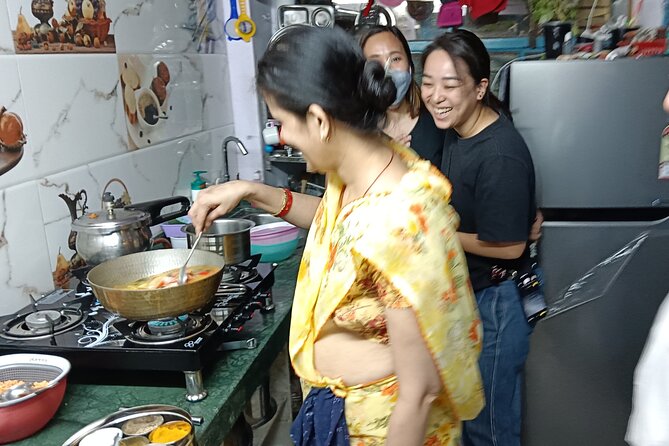
One of the specific dishes included is Jodhpuri jeera rice. This traditional rice preparation uses cumin as a key flavor, and it gives the meal a clear regional connection rather than presenting only generic Indian food.
Rice looks simple, but small details matter. The timing, seasoning, and handling can change the final texture. A family cook may explain these steps in a practical way, using the kind of method that has been passed from one generation to the next.
Several descriptions emphasize family recipes from the host’s grandmother and mother. That does not mean every dish will be unique to Jodhpur, but it does suggest that the class focuses on home cooking rather than a standard restaurant menu.
You should pay attention to the spice layering. One particularly enthusiastic account describes learning basic chai preparation, more complex curries, and the order in which spices are added. That is the kind of useful lesson that helps you cook better at home, even if you do not have every Indian ingredient available after returning home.
Two vegetable dishes, dal, and Indian cheese
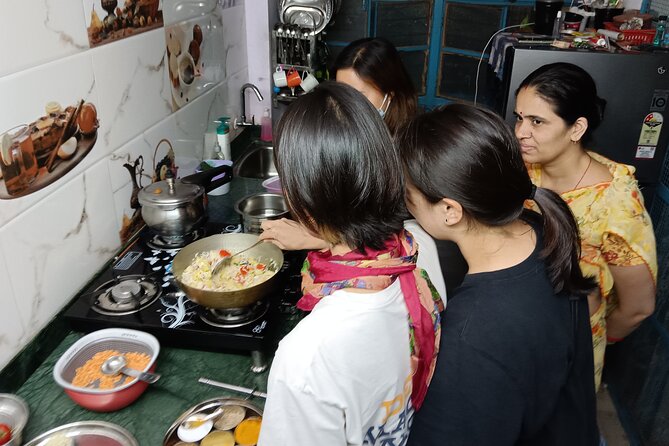
The main part of the session covers two vegetable dishes and lentils. The broader description also lists dal and paneer, or another Indian cheese preparation, as part of the meal.
This is where the class has its strongest appeal for vegetarians. You are not receiving one token meat-free dish beside a larger menu. The meal is vegetarian from start to finish, reflecting the host family’s own cooking tradition.
The exact vegetable dishes are not specified in the available details, so you should be ready for a menu chosen by the family rather than a fixed list of named recipes. That can be a plus if you enjoy local surprises, but it is worth asking ahead if you have a particular ingredient you cannot eat.
The class also gives you a chance to see how a few everyday components become a full meal. Dal supplies a hearty lentil dish, the vegetables add variety, and the rice and bread make the food filling. Indian cheese adds another texture and gives you a recipe to try at home when you want something more substantial than a simple vegetable curry.
The instruction appears to focus on practical home cooking. You are not just handed a printed recipe and sent away. You can watch the preparation, help where appropriate, and ask why an ingredient is used or when it should be added.
A few more options to weigh up in Jodhpur
- Private Jodhpur Blue City Tour with Hotel Pickup and Drop-off
★ 5.0 · 461 reviews - Blue City Heritage Private Walking Tour With Pickup and Drop-Off
★ 5.0 · 441 reviews - Private Jodhpur Blue City Walking Tour with Guide
★ 5.0 · 321 reviews - Jodhpur Blue City Heritage Walking Guided Tour
★ 5.0 · 240 reviews
Learning roti and traditional bread
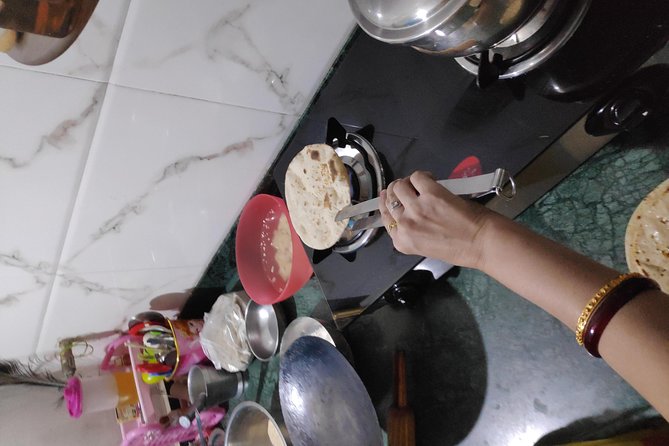
Indian roti, also called chapati, is included in the cooking session. The general description also mentions paratha as a possible bread, so the bread preparation may include one of these traditional styles.
Bread is often the most entertaining part of an Indian cooking lesson. The dough must be prepared, shaped, and cooked with care, and small changes in pressure or thickness affect the result. Even if your first attempt is not perfectly round, you will understand the process better by making it yourself.
This part can also expose the difference between a demonstration and a fully hands-on workshop. The class description promises a hands-on lesson, while one detailed account characterizes it as more of a demonstration. In practice, you may spend some time watching Reena prepare a technique before trying it yourself.
That is not a serious flaw for most people. A family host can produce the finished bread more quickly and clearly than a beginner, and you still get the chance to practice. If you want every dish prepared entirely by you, ask how much active cooking time your group will have.
Sitting down to eat what you made
After the preparation, you sit down for the meal. Lunch or dinner is included, along with snacks and coffee or tea, so the experience is not just a lesson followed by a quick taste.
Eating together is central to the appeal. The class descriptions and feedback repeatedly emphasize feeling welcomed into the household, and the shared meal gives that welcome a natural finish. You have something to talk about immediately because you have prepared the food together.
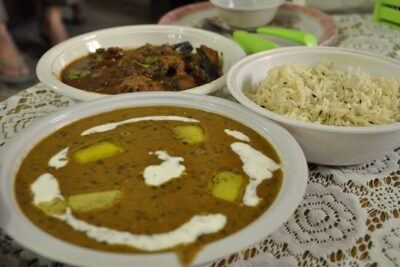
The meal may include the masala chai, roasted papadam, Jodhpuri jeera rice, two vegetable dishes, dal, Indian cheese, and roti or chapati. The overview also mentions dessert, although the more detailed menu does not name a particular sweet, so do not book this expecting a specific dessert unless the host confirms it.
The social side can be as memorable as the cooking. The class is suitable for couples, families, and small private groups who want conversation as well as food. Several accounts describe spending the afternoon or evening laughing and talking with Reena, Ram, and their daughters.
If you prefer a quiet, tightly timed lesson, this may feel less predictable. The family welcome is part of the experience, and the pace may include conversation and informal interaction. For most people, that is exactly why the class feels different from a cooking school.
Why the private format is worth the price
At $27.96 per person, this is reasonably priced for a private two-hour-and-15-minute experience that includes instruction, food, snacks, and the final meal. The value is not only in the number of dishes. You are also paying for personal attention and access to a family setting.
A private booking is especially useful if your group has different skill levels. Someone who cooks often can ask about spice balance or bread technique, while a beginner can receive slower guidance. You do not have to fit into a large class moving at one fixed pace.
The price also compares well with the practical souvenir you take home. A photograph of a meal disappears into your phone. A workable recipe for dal, jeera rice, roti, vegetable dishes, or chai can become part of your regular cooking.
Still, you should judge the value based on your interest in food and conversation. If you only want to eat and have little interest in preparation, a restaurant meal will be simpler. If you enjoy learning by watching and trying, the private format makes more sense.
The activity is booked an average of 11 days ahead, which suggests you should reserve before arriving in Jodhpur if your schedule is fixed. Confirmation is provided at booking, and free cancellation is available up to 24 hours before the start time. Cancellations inside 24 hours are not refunded, and weather-related cancellations offer a different date or a full refund.
Who will enjoy this Jodhpur cooking class
I would recommend this class most strongly to people who want contact with a local family rather than a polished tourist production. The family welcome, the home setting, and the shared meal receive the greatest praise.
It is also a good choice for:
- Vegetarians who want a full Indian meal rather than one meat-free substitute
- Couples looking for a relaxed evening activity
- Families who want an accessible cultural experience
- Beginners who need patient help with basic Indian cooking
- Home cooks interested in spice layering, rice, bread, and lentils
- Visitors who want a break from forts, markets, and sightseeing
You should think twice if you need a precise professional syllabus, a guaranteed list of named dishes, or a long advanced cooking session. The experience is short, social, and home-based. Its strength is personal contact, not technical culinary training.
The class is also not a full-day food tour. At roughly 2 hours and 15 minutes, it fits neatly into a Jodhpur itinerary. You can schedule it around sightseeing, though the available information does not specify exact start times or transportation.
My booking advice
I like this experience because it gives you two things that are hard to find in a standard restaurant: instruction from a family and time to share a meal in their home. Reena, Ram, and their daughters appear to be the heart of the activity, and the strongest praise focuses on their warmth rather than on fancy equipment or showy presentation.
The food list is broad enough to feel like a proper meal, with chai, papadam, jeera rice, vegetables, dal, cheese, and bread. Just remember that some details, including the exact vegetables and any dessert, may depend on the family’s menu.
Book it if you want an intimate, friendly introduction to vegetarian Indian home cooking and a recipe-based souvenir from Jodhpur. Skip it if you want a formal chef course or a tightly scripted demonstration with guaranteed dishes. At this price, the combination of private attention, a meal, and genuine family contact makes it a strong choice for food-focused visitors.
FAQ
Where does the cooking class begin?
It begins at Cooking Class in Jodhpur, Tour Operator and Travel Agent, at Khichiyon ka Nohra, Bagar Chowk, Gulab Sagar, Jodhpur, Rajasthan 342001, India.
Where does the activity end?
The activity ends back at the meeting point.
How long does the cooking class last?
The experience lasts approximately 2 hours and 15 minutes.
Is the cooking class private?
Yes. This is a private activity, and only your group participates.
Is the meal vegetarian?
Yes. The host family is vegetarian, and the class focuses on traditional vegetarian Indian recipes.
What food will you learn to prepare?
The listed menu includes masala chai, roasted papadam, Jodhpuri jeera rice, two vegetable dishes, dal, Indian cheese, and Indian roti or chapati. Paratha and dessert are also mentioned in the general description.
Are food and drinks included?
Yes. Coffee or tea, snacks, lunch, and dinner are included.
Is the experience suitable for beginners?
Yes. The host says no cooking skill is required and that help is provided during the session.
Can you cancel for a full refund?
Yes. You can cancel at least 24 hours before the experience start time for a full refund. Cancellations or changes made less than 24 hours before the start time are not accepted or refunded.
Just added in Jodhpur
- Private Walking Tour in Blue City Jodhpur★ 5.0 · 36 reviews
- Jodhpur Experience with bantu private tour★ 5.0 · 14 reviews
- Jodhpur to Udaipur via Ranakpur Jain Temple & Kumbhalgarh Fort★ 5.0 · 21 reviews
- Discover blue city 2hrs★ 5.0 · 28 reviews
- Private Transfer From Jodhpur To Udaipur Via Ranakpur Jain Temple★ 4.5 · 35 reviews
- Private Jodhpur Tuk Tuk Tour★ 5.0 · 18 reviews
- Private Jodhpur City Sightseeing Tour By Car with Tour Guide★ 5.0 · 18 reviews
- Jodhpur City & Blue City Tour By Car With Guide★ 5.0 · 80 reviews
Cooking Classes, compared.
Veg and Non veg : Private Cooking Class in Delhi home (7 meal)
Read our review →
Indian Cooking Class in an Authentic Local Home – Learn 6 Dishes
Read our review →
Jaipur Market Tour & Vegetarian Rajasthani Home Cooking Class
Read our review →
Cooking Class in Jaipur – Family Experience with Meal & Transport
Read our review →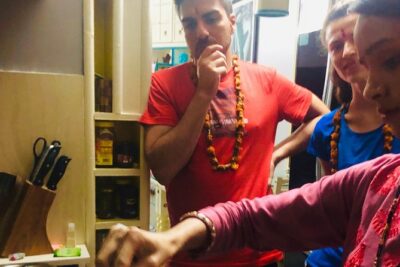
Interactive Cooking Class with a Local Family in Jaipur
Read our review →Browse the lists this tour appears in