
Reviewed · GOLDEN TRIANGLE TOURS
Golden Triangle of India : Delhi | Agra | Jaipur
India’s greatest hits fit into five busy days. This private Golden Triangle tour links Delhi, Agra, and Jaipur by air-conditioned car, with local guides at the main sights, hotel stays, entrance fees, and transfers included. It is a practical way to see three major cities without arranging every road journey yourself.
I especially like the private chauffeured vehicle, which gives you more control than a large coach tour. I also like the mix of famous monuments and smaller stops, from an Old Delhi rickshaw ride to Chand Baori stepwell. The main drawback is the pace: long road transfers and several major sights each day leave little room for wandering or rest.
The tour costs $769 per person, based on two people sharing a room. That is a serious sum, but it covers four nights of accommodation, private transport, guides, monument admissions, transfers, and daily bottled water. Meals, tips, visas, flights, insurance, and personal purchases remain extra, so your final cost will be higher.
In This Review
- Five details that shape the experience
- How the five-day route works
- Day one: Jama Masjid and Old Delhi by rickshaw
- Day two: the Taj Mahal and Agra Fort
- Day three: Fatehpur Sikri and Chand Baori
- Day four: Jaipur’s royal core and market time
- Day five: the five-hour return to Delhi
- What the $769 price really buys
- Who will get the most from this tour
- Practical advice before you book
- Should you book the Golden Triangle route?
- FAQ
- Where does the Golden Triangle tour begin?
- How long does the tour last?
- Which cities are included?
- Is transportation private?
- Are guides included?
- Is the Taj Mahal entrance fee included?
- Are meals included?
- Is hotel accommodation included?
- Does the tour include the Old Delhi rickshaw ride?
- Can I cancel for a full refund?
Five details that shape the experience
- Private car from Delhi to Jaipur: You avoid sharing transport with strangers and travel between cities by air-conditioned vehicle.
- A guide at the principal monuments: The Taj Mahal, Agra Fort, Fatehpur Sikri, and Jaipur’s major sights are not left to your own guesswork.
- Old Delhi by rickshaw: The Jama Masjid and Chandni Chowk portion adds a local-style ride to a day of grand monuments.
- Four hotel nights included: Accommodation is arranged on a twin-sharing basis, including stays in Delhi, Agra, and Jaipur.
- A strong overall rating: The experience has a 4.9 rating from 33 ratings, with 97 percent recommending it.
- Shopping and meal caution: One Italian-language review praised the guides, driver, and hotels but objected to shopping stops and a costly restaurant recommendation, with a reported bill of 3,200 rupees for two.
How the five-day route works
This is not a slow India holiday. It is a carefully packed introduction to the country’s most famous northern sights. You begin in Delhi, move to Agra, continue through Fatehpur Sikri and Abhaneri to Jaipur, then return to Delhi on the final day.
The private format matters here. India’s roads, city traffic, and busy monument entrances can make independent planning tiring, particularly on a first visit. A driver handles the intercity movement while a guide explains the major sites. You still need energy, patience, and a willingness to spend several hours in the car.
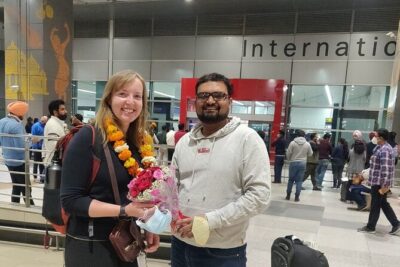
The start time is listed as 9:00 am. On arrival in Delhi, you complete customs formalities and meet an MTA representative outside Gate 5, holding a name placard. The exact airport or hotel transfer arrangement should be confirmed before you go, especially if your arrival time does not fit the stated start.
More Golden Triangle Tours in New Delhi:
- 3-Days Private Golden Triangle Tour: Delhi, Agra & Jaipur by Car
★ 5.0 · 1,107 reviews - 3-Days Private Golden Triangle Tour: Delhi, Agra & Jaipur by Car
★ 5.0 · 1,098 reviews - 3-Day Delhi, Agra and Jaipur Private Tour – India Golden Triangle
★ 5.0 · 812 reviews
Day one: Jama Masjid and Old Delhi by rickshaw
Your first major stop is Jama Masjid, one of Old Delhi’s best-known landmarks. The visit lasts about an hour and includes admission. This is a strong opening because it places you in Shahjahanabad, the historic old city, before the route moves toward newer Delhi.
After Jama Masjid, you ride a cycle rickshaw through the lanes of Chandni Chowk Market. The ride lasts about an hour and is included in the price. It gives you a quick look at the crowded streets, shops, food stalls, and everyday movement of Old Delhi without asking you to navigate the area alone.
You should treat this part as a sensory introduction rather than a detailed market visit. The schedule gives you a fixed ride, not unlimited time to browse. If shopping is not your priority, tell the guide early and keep the focus on the sights and the ride.
Raj Ghat follows. This memorial marks the cremation site of Mahatma Gandhi and offers a quiet change of mood after Old Delhi. The stop is scheduled for about an hour, so you have time to pause and consider India’s modern independence story.
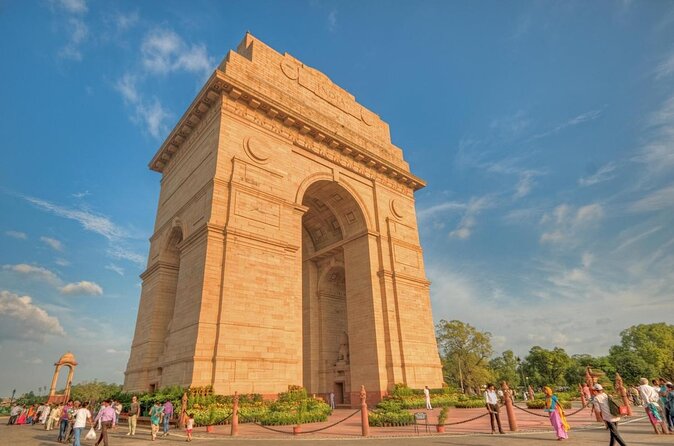
The drive along Rajpath brings you past India Gate, Parliament House, and the President’s House. It is a sightseeing drive rather than a formal guided visit, but it helps connect Delhi’s Mughal-era quarters with its colonial and national-government districts.
The day ends at Qutub Minar, a UNESCO World Heritage Site. The planned visit lasts about two hours, which is useful because the complex deserves more than a quick photograph. Afterward, you go to your Delhi hotel for the night.
Day one covers a lot of ground. Jama Masjid, the rickshaw, Raj Ghat, the government district, and Qutub Minar represent different periods of Delhi in a single day. The tradeoff is that you will probably feel ready for dinner and bed by the end.
Day two: the Taj Mahal and Agra Fort
The second day takes you from Delhi to Agra, followed by the Taj Mahal and Agra Fort. The timing of the Delhi to Agra drive is not specified, so you should expect this to be a substantial road day rather than a short transfer between attractions.
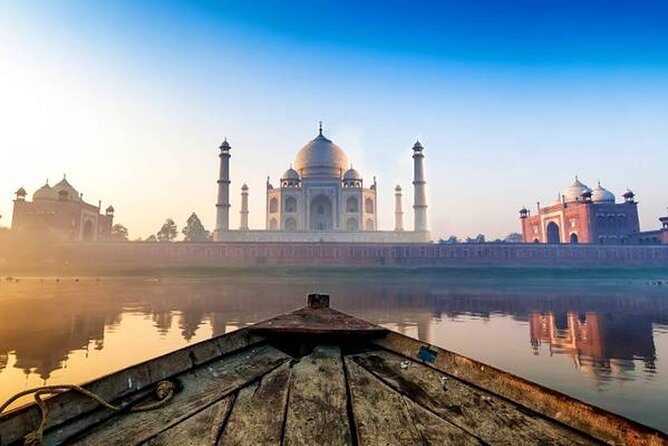
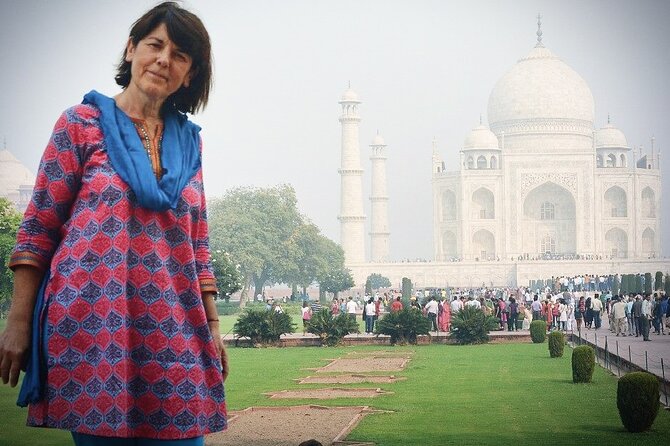
The Taj Mahal receives about two hours. That is enough for the main visit, photographs, and a basic explanation of its design and purpose. Built by Shah Jahan in memory of Mumtaz Mahal, it is the sight most people picture when they think of the Golden Triangle, and the guided visit helps you understand more than its famous white marble façade.
The private vehicle is particularly useful on this day. You can leave your main luggage at the hotel or in the car as arranged, then focus on the monument without dealing with public transport between the two Agra stops. Monument entry is included, so you do not need to budget separately for the listed admissions.
Agra Fort follows, with about an hour inside the riverside complex. Built by Akbar in 1565 and expanded by later Mughal rulers, it gives you a larger political and architectural setting for the Taj Mahal. The fort is not simply a second photo stop. Its courtyards and royal spaces help explain how the Mughal court functioned.
Accommodation is included in Agra. Hotel standards are not specified in the tour details, but one published response specifically praised the hotels and singled out the Golden Tulip Agra. Do not assume that exact hotel for every departure. Confirm the property and room arrangement if accommodation quality is important to you.
This is also the day to set clear boundaries about shopping and meals. One Italian-language rating praised the first Italian-speaking guide, the driver, and the hotels, but complained that the guide encouraged visits to shops and recommended a restaurant where two people paid 3,200 rupees. Shopping visits are not listed among the included highlights, and meals are not included, so you are entitled to ask what is optional and see the menu before ordering.
Day three: Fatehpur Sikri and Chand Baori
The road to Jaipur includes two worthwhile stops. First comes Fatehpur Sikri, about two hours from the schedule. Known as the Ghost City, it was built in red sandstone by Emperor Akbar and abandoned after 12 years.
The stop adds variety after two major Delhi and Agra monuments. Its buildings are presented as a preserved Mughal-era citadel, and the red sandstone gives the visit a distinct look from the Taj Mahal’s marble and Agra Fort’s large defensive complex.
Next is Chand Baori in Abhaneri, with about 45 minutes planned. This ninth-century sandstone stepwell is one of the route’s most unusual sights. Its repeating steps create a striking geometric pattern, and the visit breaks up the long drive to Jaipur.
The schedule leaves less than an hour at Chand Baori, so think of it as a focused stop. You will have time to see the structure and take photographs, but not to linger at length. Comfortable shoes and water are sensible for the road days, although two bottles per person per day are included.
You then continue to Jaipur and check into your hotel. This is another long day, but it is well designed for someone who wants to connect the cities by road rather than fly between them. The stops make the transfer feel like part of the sightseeing rather than dead time.
A few more options to weigh up in New Delhi
- Old & New Delhi City Tour – Half or Full Day Options Available
★ 5.0 · 4,811 reviews - Same Day Taj Mahal, Agra Fort & Baby Taj Tour from Delhi by Car
★ 5.0 · 4,304 reviews - Taj Mahal Day Tour from Delhi by Superfast Train – TOP RATED TOUR
★ 5.0 · 4,166 reviews - Full Day Taj Mahal, Agra Fort & Baby Taj Tour from Delhi by Car
★ 5.0 · 3,647 reviews
Day four: Jaipur’s royal core and market time
Jaipur’s main sightseeing day begins at the City Palace. The visit lasts about an hour and includes the palace complex, royal chambers, and a museum with carpets and miniature paintings. This is your clearest look at Jaipur’s former royal household.
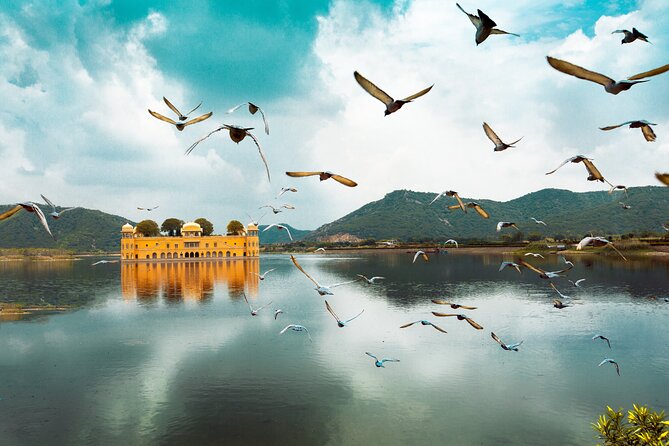
Jantar Mantar follows, with around 30 minutes listed. The observatory contains large instruments for measuring astronomical positions and includes a 27-meter sundial. The short visit means your guide’s explanation is important. Without context, the instruments can look like abstract stone sculptures.
The itinerary then allows time for Jaipur markets, known for textiles and other goods. This is where your interests matter. If you enjoy shopping, ask the guide to explain what you are seeing and compare prices before buying. If you would rather spend your time on architecture and street life, say so plainly.
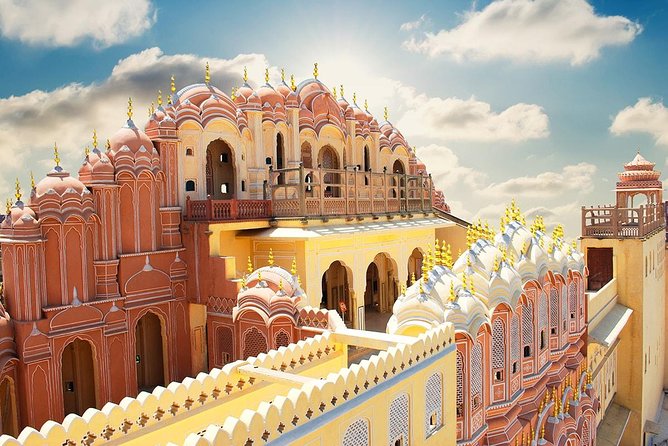
Hawa Mahal is a 15-minute photo stop. The Palace of Winds is famous for its ornate façade and lattice windows, but the schedule does not provide a full interior visit. That is useful to know in advance. You will get the classic exterior view, not an extended palace tour.
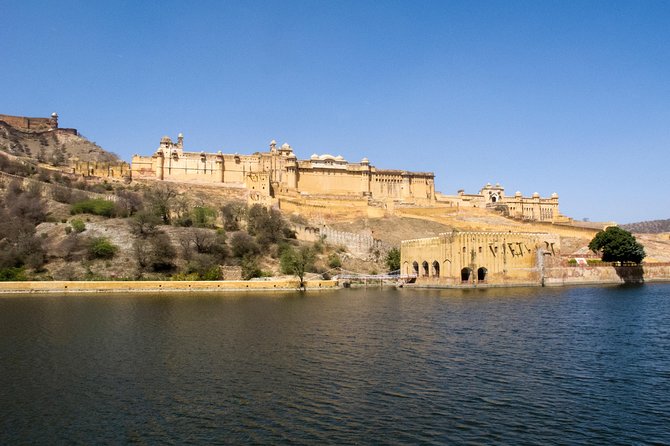
The itinerary supplied for Jaipur does not include Amber Fort, even though the overall description highlights it as a major attraction. That is an important point to clarify before booking. Ask the operator if Amber Fort is included on your departure, offered as an adjustment, or simply mentioned in error. Do not assume it forms part of the guaranteed day-four schedule.
Day five: the five-hour return to Delhi
After breakfast, you leave Jaipur for Delhi. The return transfer is listed at about five hours, ending at your Delhi hotel or the airport.
This final day is mainly transportation. It can work well if your flight leaves later or if you want the tour to finish at your Delhi accommodation. It is less suitable if you have a tight international departure, since road conditions and traffic can affect the journey.
Tell the operator your exact drop-off needs in advance. The tour includes hotel and airport pickup and drop-off, but the practical value depends on matching the final transfer with your flight time.
What the $769 price really buys
At $769 per person, the package is not a budget rail trip. It is paying for convenience, private transport, and a ready-made route. Four nights of twin-sharing accommodation, a private air-conditioned vehicle, English-speaking guides, monument tickets, the Old Delhi rickshaw ride, transfers, taxes, and two bottles of water per person per day are included.
That bundle can represent good value if you would otherwise hire a driver, book guides separately, and purchase each entrance ticket. It also removes much of the negotiation and planning that can make a first visit to northern India tiring.
The price does not include international flights, visas, travel insurance, meals and drinks not specified, tips, laundry, telephone calls, or shopping. Set aside extra money for those items. Most importantly, do not treat the included restaurant guidance as prepaid dining. Meals are your responsibility, and the reported 3,200-rupee bill shows why you should check prices first.
The rating of 4.9 from 33 ratings and a 97 percent recommendation rate suggest a consistently positive experience, with the strongest praise directed toward the private driver, guides, and hotel arrangements. Still, the shopping complaint is specific enough to take seriously.
Who will get the most from this tour
I would choose this experience if you want the Golden Triangle’s main monuments but do not want to arrange Indian trains, private cars, local guides, and hotels one piece at a time. It suits couples, families, and small private groups who value a car reserved for their own party.
It also suits first-time visitors who want help at the biggest sights. The guide can provide context at Jama Masjid, Qutub Minar, the Taj Mahal, Agra Fort, Fatehpur Sikri, City Palace, and Jantar Mantar, rather than leaving you with only a ticket and a map.
The pace may not suit you if you prefer late mornings, long museum visits, or unplanned time in each city. The route is efficient, but Delhi, Agra, and Jaipur each deserve more than one full day. This tour gives you a strong first look, not a leisurely study of Rajasthan and Mughal India.
The private format also helps if your group has its own rhythm. You can ask questions, request a short pause, or discuss shopping preferences directly with the guide and driver. That flexibility is one of the main reasons to pay more than a large-group coach tour.
Practical advice before you book
Confirm the hotel names, especially the Jaipur and Delhi properties. The accommodation is included, but the category and exact hotels are not fully detailed. Also ask specifically about Amber Fort because it is highlighted in the general description but absent from the day-four stop list.
Ask which language your guides will speak. English-speaking guides are included, and an Italian-language guide was praised in the available feedback, but language availability may depend on the date and request.
Use the private format to set expectations. Tell the guide that shopping is optional for you, and ask for restaurant prices before sitting down. Tips and gratuities are not included, so plan to reward good service separately.
The tour offers free cancellation up to 24 hours before the start time. Changes made inside that period are not accepted, and poor weather or failure to meet the minimum number of participants can lead to a date change or full refund. Confirmation is provided when you book, and the activity is private, meaning only your group participates.
Should you book the Golden Triangle route?
Book it if you want the essential Delhi, Agra, and Jaipur sights handled in one private five-day package. The combination of a dedicated car, monument guides, included admissions, four hotel nights, and airport or hotel transfers gives you a clear route with fewer moving parts.
Pause before booking if you want a slow schedule, dislike long drives, or are uncomfortable with possible shopping suggestions. Confirm Amber Fort, hotel names, guide language, and meal arrangements first.
For a first visit, I see this as a solid convenience-focused choice rather than a deeply relaxed holiday. You will see an impressive range of India in five days, and the private setup gives you a better chance to enjoy it on your own terms.
FAQ
Where does the Golden Triangle tour begin?
The tour begins in New Delhi, India. The listed start time is 9:00 am, and an MTA representative meets arriving participants outside Gate 5 after customs formalities.
How long does the tour last?
The experience lasts approximately five days and includes four nights of accommodation.
Which cities are included?
The route covers Delhi, Agra, and Jaipur, with stops at Fatehpur Sikri and Abhaneri along the road between Agra and Jaipur.
Is transportation private?
Yes. A private air-conditioned vehicle is provided for transfers and sightseeing, and only your group participates in the activity.
Are guides included?
Yes. Professional English-speaking guides are included for sightseeing at the principal monuments.
Is the Taj Mahal entrance fee included?
Yes. Monument entrance fees listed in the program are included, including the Taj Mahal and other scheduled sights.
Are meals included?
No. Meals and beverages are not included unless specifically stated in the itinerary.
Is hotel accommodation included?
Yes. Four nights of accommodation are included on a twin-sharing basis.
Does the tour include the Old Delhi rickshaw ride?
Yes. A rickshaw ride through Chandni Chowk is included, with about one hour scheduled for the activity.
Can I cancel for a full refund?
You can cancel for a full refund if you cancel at least 24 hours before the experience start time. Cancellations or changes made less than 24 hours in advance are not refunded or accepted.
Just added in New Delhi
- Old Town Delhi Walking Tour (2 Hours Guided Tour with Local)★ 4.5 · 22 reviews
- Yoga class in Delhi★ 5.0 · 29 reviews
- Private Taj Mahal & Agra Fort Tour, Dine with a View★ 5.0 · 27 reviews
- Unveil Old Delhi’s Food, Spice Market & Heritage Walk★ 5.0 · 26 reviews
- Vegetarian : Private Cooking Class in Delhi home ( Learn 7 meal)★ 5.0 · 58 reviews
- Tour to Akshardham temple with Guide and Delhi Transfer★ 5.0 · 26 reviews
- Private Tour of Taj mahal from Delhi by Train in 90 Min★ 5.0 · 46 reviews
- Private 2-Day Agra & Delhi Tour by Car–Includes Taj Mahal Sunrise★ 5.0 · 11 reviews
Golden Triangle Tours, compared.
3-Days Private Golden Triangle Tour: Delhi, Agra & Jaipur by Car
Read our review →3-Days Private Golden Triangle Tour: Delhi, Agra & Jaipur by Car
Read our review →
3-Day Delhi, Agra and Jaipur Private Tour – India Golden Triangle
Read our review →
Four-Day Private Luxury Golden Triangle Tour to Agra and Jaipur From New Delhi
Read our review →
5 Nights 6 Days Private Golden Triangle Tour – Delhi Agra Jaipur
Read our review →
Private Car and Drive for Golden Triangle (4N/5D)
Read our review →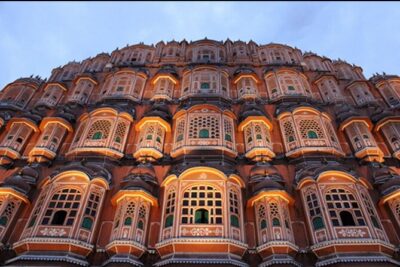
Private Golden Triangle Tour Delhi Agra Jaipur ( Top Rated )
Read our review →Browse the lists this tour appears in