
Reviewed · GOLDEN TRIANGLE TOURS
From Delhi: Private 3-Day Golden Triangle Luxury Tour
Three cities, three very full days. This private Golden Triangle tour gives you a quick, well-organized route through Delhi, Agra, and Jaipur, with the Taj Mahal at sunrise as its emotional center. I like the private car and driver arrangement, and I like that the plan includes lesser-known stops such as Panna Meena ka Kund and Itimad-ud-Daulah’s Tomb.
The main trade-off is time. You cover a great deal in only three days, so Delhi and Jaipur can feel like a highlights reel rather than a slow introduction. Still, the $154 per person starting price offers strong value if your priority is seeing northern India’s most famous monuments with hotels, guides, and transport arranged for you.
In This Review
- Key points at a glance
- Why this Golden Triangle route works
- Day 1: Delhi’s monuments before the drive to Agra
- Choosing your Agra hotel
- Day 2: The Taj Mahal at sunrise and Agra’s quieter monuments
- Choosing your Jaipur hotel
- Day 3: Jaipur forts, stepwells, and royal buildings
- Drivers, guides, and the private format
- Price, comfort, and what to watch
- Should you book this three-day tour?
- FAQ
- Where does the tour begin?
- Where can the tour finish?
- Is the tour private?
- What type of vehicle is used?
- What happens if the tour starts on a Thursday?
- Is the Lotus Temple open every day?
- Are monument tickets included?
- How are the hotel rooms arranged?
Key points at a glance
- Sunrise at the Taj Mahal: Start early for cooler air, softer light, and a memorable first look at Agra’s great monument.
- A private car from Delhi: Your driver handles the long road sections, city traffic, hotel transfers, and airport or railway station pickups.
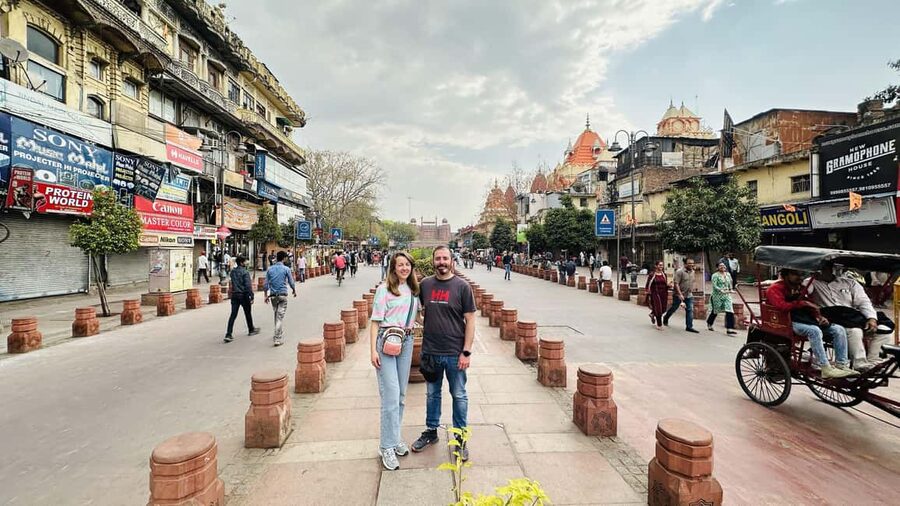
- Old Delhi by rickshaw: Jama Masjid, Chandni Chowk, and the Red Fort area give you a close look at the city’s crowded, energetic streets.
- Three different guide experiences: You receive local guiding in Delhi, Agra, and Jaipur rather than one guide covering the whole route.
- Useful Jaipur stops: Amber Fort, Panna Meena ka Kund, Jal Mahal, Gatore ki Chhatriyan, Hawa Mahal, Jantar Mantar, and City Palace make Day 3 especially packed.
- Flexible private touring: The route can be adjusted around your interests, and the group remains private rather than mixed with strangers.
Why this Golden Triangle route works
India’s Golden Triangle connects Delhi, Agra, and Jaipur in a rough triangle across northern India. Each city offers a different look at the country: Delhi brings imperial and religious landmarks, Agra centers on Mughal architecture, and Jaipur introduces the royal traditions of Rajasthan.
The strength of this tour is its simple design. You begin in Delhi, spend the night in Agra, continue to Jaipur, and return to Delhi or finish at Jaipur Airport. You are not wasting time changing trains or trying to match hotel check-in times with local transport.
A private trip also changes the feel of the journey. You can ask to spend more time at a favorite monument, adjust the sightseeing order, or set priorities with the local guides. This matters in India, where traffic can turn a short city transfer into a slow one.
The price is particularly attractive for solo visitors and small groups. At $154 per person, the starting rate covers private transportation, guiding, and two hotel nights, with 3-star, 4-star, and 5-star options. The final price will depend on the hotel level and booking details, so check exactly which category you are selecting.
More Golden Triangle Tours in New Delhi:
- 3-Days Private Golden Triangle Tour: Delhi, Agra & Jaipur by Car
★ 5.0 · 1,107 reviews - 3-Days Private Golden Triangle Tour: Delhi, Agra & Jaipur by Car
★ 5.0 · 1,098 reviews - 3-Day Delhi, Agra and Jaipur Private Tour – India Golden Triangle
★ 5.0 · 812 reviews
Day 1: Delhi’s monuments before the drive to Agra
Pickup is available from a hotel, airport, railway station, or another preferred location in Delhi, Noida, or Gurugram. You travel in an air-conditioned private vehicle. One or two people use a 4-seat sedan, three or four people use a 6-seat vehicle, and groups of five to ten use a 10-seat minibus.
That arrangement gives you personal space, but remember that much of Day 1 is spent in the car or walking through monuments. The private vehicle is less about luxury in the grand sense and more about practical comfort. Your driver keeps the route moving and waits near the sightseeing stops.
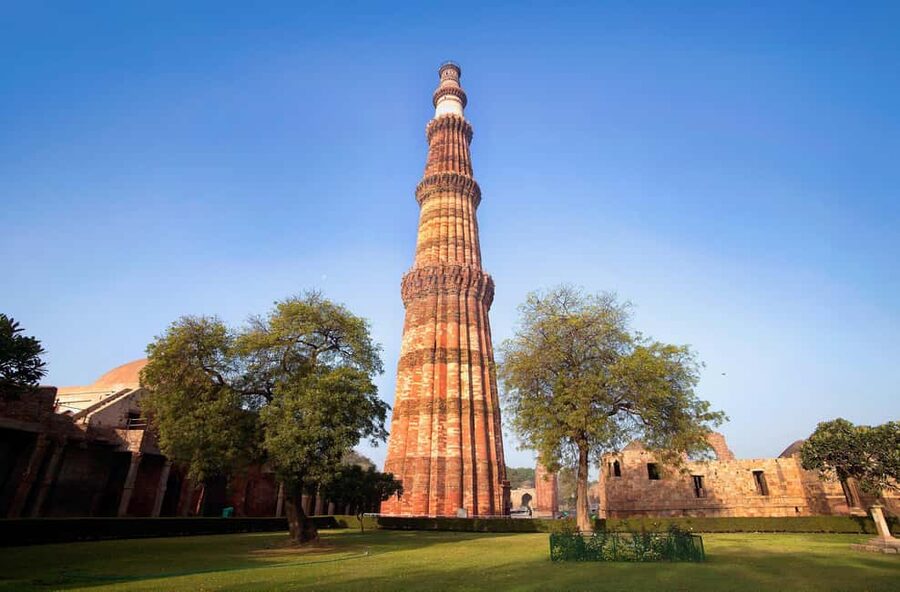
Your first major stop is Qutub Minar, the tall medieval minaret built by Qutub-ud-din Aibak. It is a UNESCO World Heritage Site and an impressive introduction to Delhi’s long mix of Islamic and Indian architectural traditions. Give yourself time to look beyond the tower at the surrounding complex, where carved stone details make the visit more than a quick photograph.
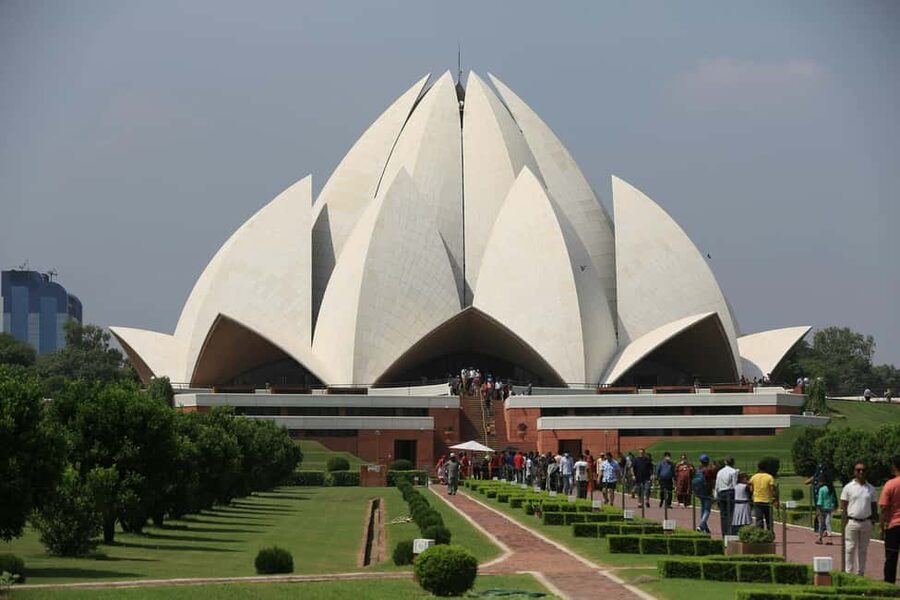
The Lotus Temple offers a very different mood. Its white petal-shaped design is striking from the outside, and the setting provides a quieter break from Delhi’s traffic. The temple is closed on Mondays, so the schedule may need adjusting if your tour begins then.
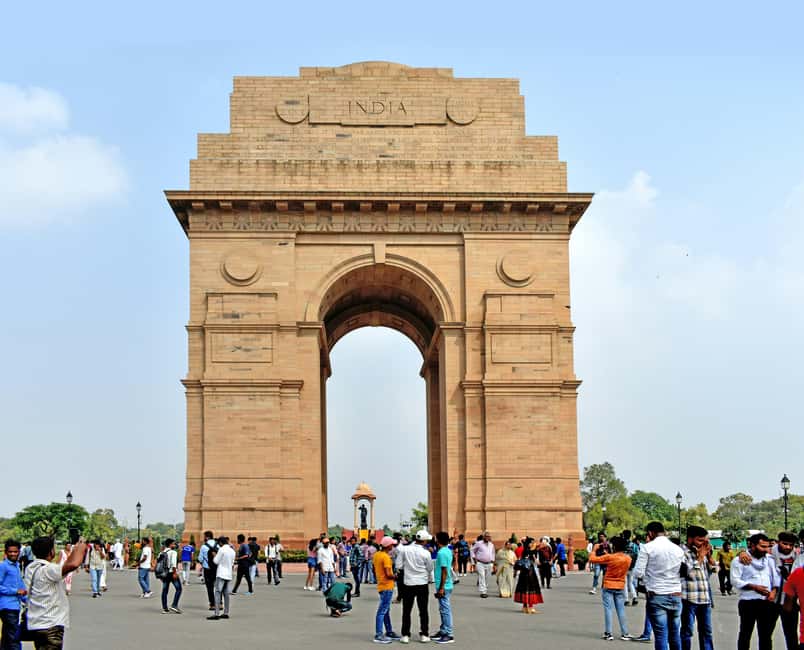
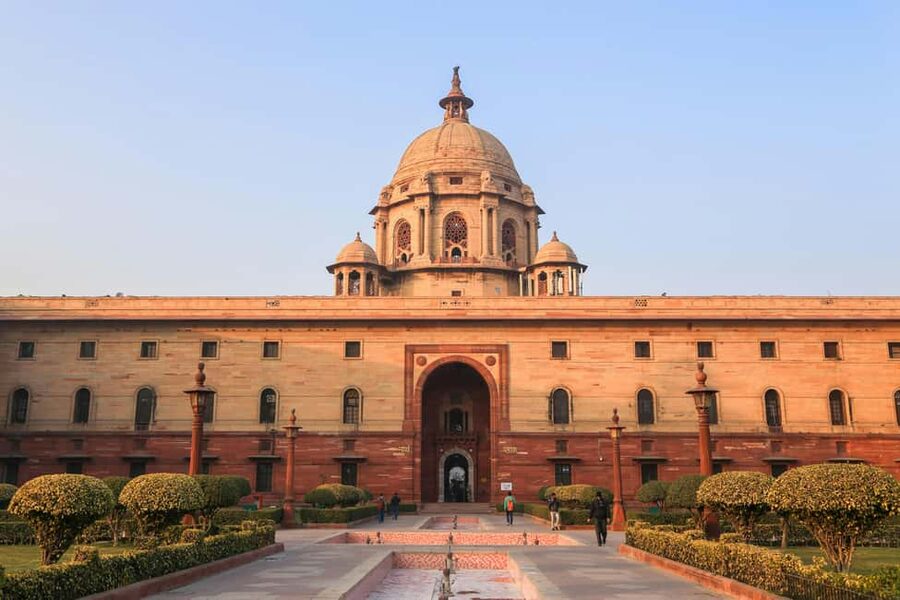
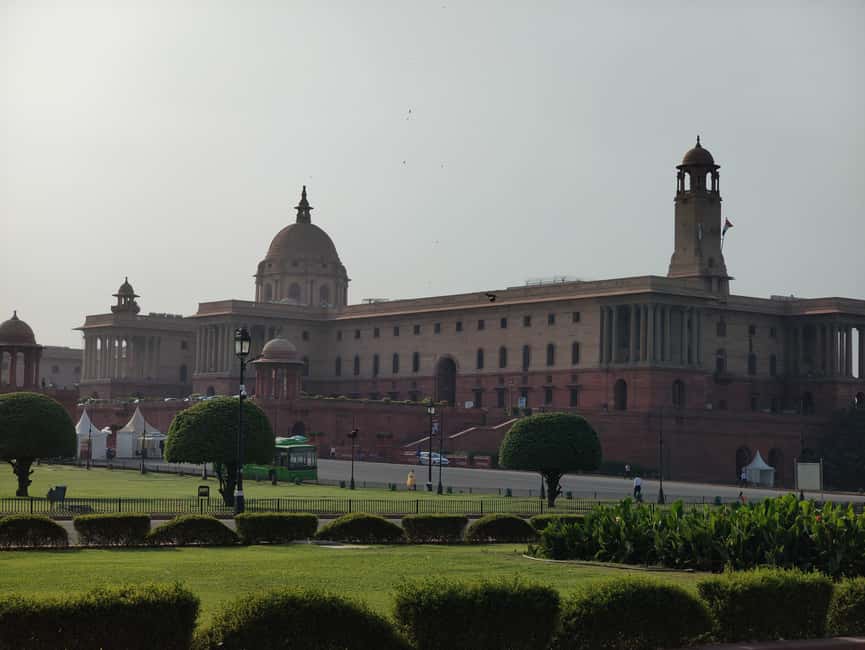
India Gate follows, along with views of Parliament House, Rashtrapati Bhavan, and the Secretariat buildings. These drive-by sights help you understand New Delhi’s planned government district. You may not spend long at each one, but they are useful for seeing the contrast between colonial-era planning and the older city.
Agrasen Ki Baoli is one of the most appealing stops for people who enjoy unusual urban sites. This historic stepwell drops below street level through a series of stone steps. It is a compact visit, but the geometry makes it memorable and gives you a different view of Delhi than the major monuments.
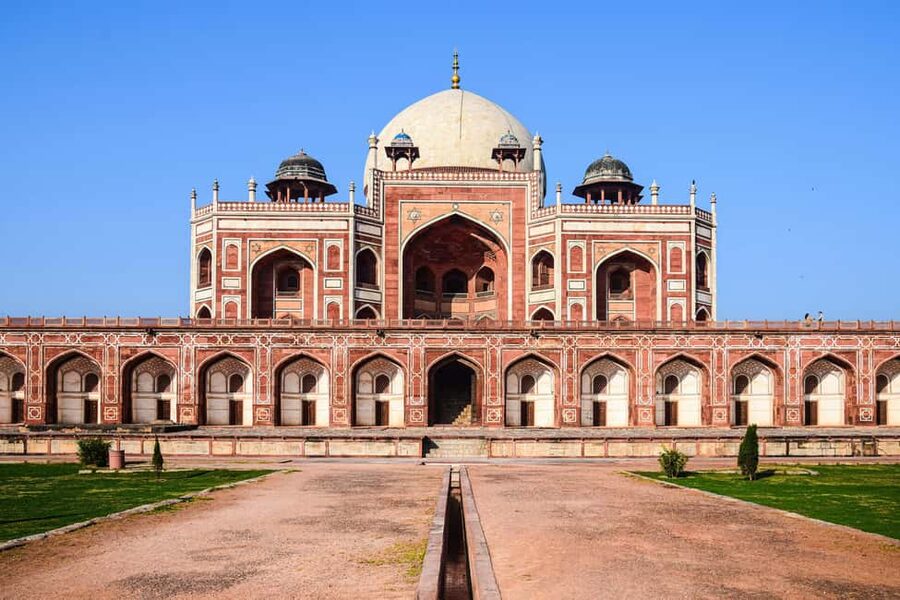
Humayun’s Tomb is one of the day’s most important stops. This UNESCO-listed Mughal tomb is often linked to the later design of the Taj Mahal. Its formal gardens, red sandstone, and pale marble details help you see how Mughal architecture developed before reaching its most famous expression in Agra.
Old Delhi changes the pace completely. At Jama Masjid, one of India’s major mosques, you see a grand religious complex tied to the Mughal period. Modest clothing is appropriate, and your guide can help explain the customs and practical details of the visit.
Then comes a rickshaw ride through Chandni Chowk. This is not a polished sightseeing circuit. Streets are crowded, movement is close, and the ride gives you a quick, direct look at one of Delhi’s oldest commercial areas. Keep your belongings secure and expect a lively, noisy experience rather than a calm tour.
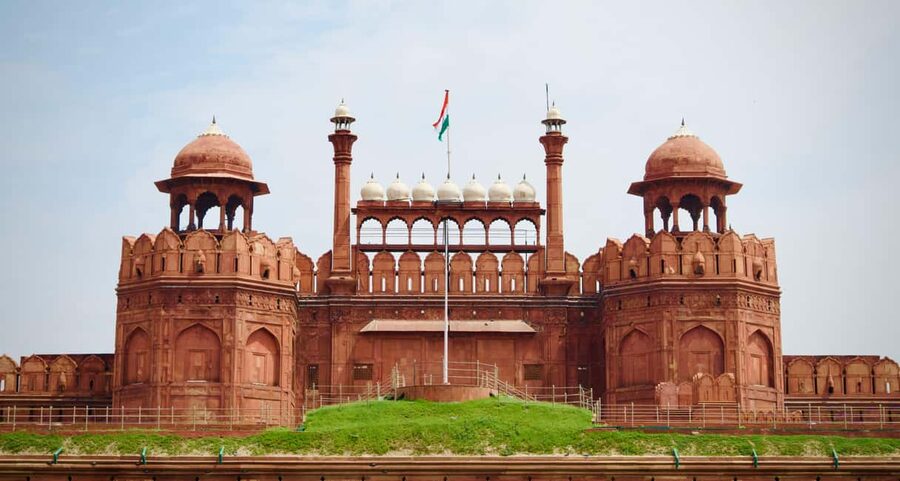
You pass the Red Fort before stopping for lunch at a local restaurant. The Red Fort itself is not listed as a full interior visit on this day, so clarify with your guide if you want extra time there.
After lunch, the expressway carries you toward Agra. The drive takes about three to four hours, depending on road conditions. By the time you reach your hotel, the free evening is welcome. Use it to rest rather than force in another major sight.
Choosing your Agra hotel
The 3-star choices include Howard Plaza The Fern, Golden Tulip, or a similar property. The 4-star level includes Royale Sarovar Portico or a similar hotel. The 5-star choices include Jaypee Palace, Courtyard Marriott, or Grand Mercure.
These categories give you a useful way to control the budget. If you mainly need a clean base before the early Taj Mahal visit, the lower category may be enough. If you value a larger hotel, more facilities, and a more comfortable evening after the Delhi tour, the 4-star or 5-star option may make sense.
Rooms are generally arranged as twin-sharing rooms. A booking for three people normally uses triple sharing. If three people want two rooms, an extra payment applies, so settle that point before departure.
Day 2: The Taj Mahal at sunrise and Agra’s quieter monuments
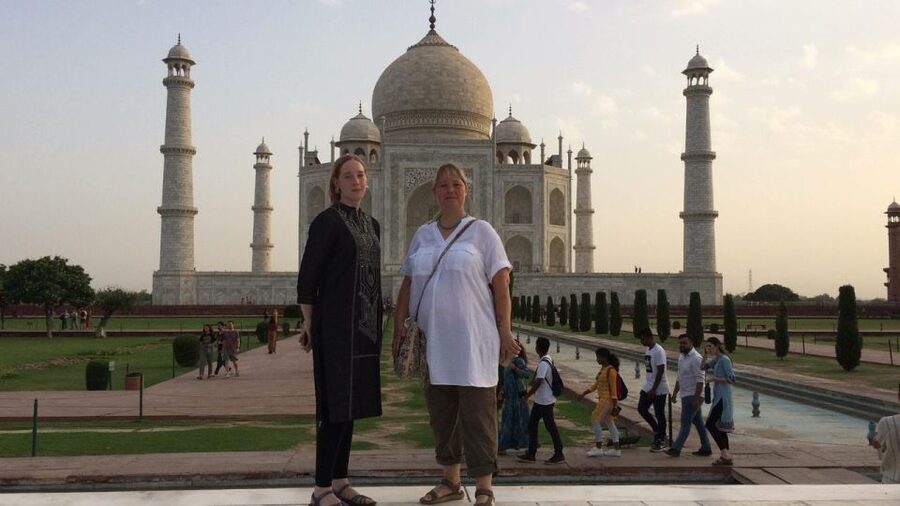
The early start is the heart of the tour. You visit the Taj Mahal at sunrise with a local guide, then return to the hotel for breakfast. Morning conditions can be cold or foggy, especially in winter. Fog can partly obscure the monument, so sunrise is the best available choice, not a guarantee of perfect visibility.
The timing is still worthwhile. Early light changes the marble from cool gray to warmer tones, and the monument feels less exposed to the strong midday sun. Your guide can also help you find good photo positions and manage the ticket process. Skip-the-line access is included, while the guide assists with buying the monument tickets.
The Taj Mahal is more than a famous photo stop. Look closely at the marble inlay, the balanced design, and the way the building is framed by the gardens and reflecting pool. You will get more from the visit if you pause for the architectural details instead of rushing from entrance to exit.
After breakfast and checkout, you visit Agra Fort. The red sandstone fort was a royal residence and defensive complex, with courtyards, audience halls, and views toward the Taj Mahal. It helps place the Taj in its political setting, showing the power and wealth of the Mughal court.
Itimad-ud-Daulah’s Tomb is often called the Baby Taj. I like its smaller scale because it allows you to focus on the decorative work without the crowds and visual drama of the main monument. The white marble panels and delicate inlay show an important step in Mughal design.
The route then turns toward Jaipur. The drive takes much of the day, so do not expect a long Jaipur sightseeing session on Day 2. After hotel check-in, the evening is free.
A few more options to weigh up in New Delhi
- Old & New Delhi City Tour – Half or Full Day Options Available
★ 5.0 · 4,811 reviews - Same Day Taj Mahal, Agra Fort & Baby Taj Tour from Delhi by Car
★ 5.0 · 4,304 reviews - Taj Mahal Day Tour from Delhi by Superfast Train – TOP RATED TOUR
★ 5.0 · 4,166 reviews - Full Day Taj Mahal, Agra Fort & Baby Taj Tour from Delhi by Car
★ 5.0 · 3,647 reviews
Choosing your Jaipur hotel
The 3-star option is Golden Tulip Essential or a similar hotel. The 4-star choice is Sarovar Portico or The Fern Residency, or a similar property. At the 5-star level, options include Intercontinental, Hilton, Holiday Inn Jaipur City Centre, or a similar hotel.
The hotel level matters here because Day 3 begins with a full morning and afternoon of sightseeing. A comfortable room can make the short schedule more manageable. If your booking includes dinner, confirm the arrangement and the selected hotel directly, since meal inclusions should not be assumed from the standard tour description.
Day 3: Jaipur forts, stepwells, and royal buildings
Jaipur’s sightseeing begins after breakfast, and this is the most crowded day in terms of landmarks. The route starts near Amber Fort, with a stop for views of Panna Meena ka Kund.
Panna Meena ka Kund is a stepwell built around repeated flights of symmetrical stairs. It is one of the tour’s most distinctive stops because it shows practical water architecture in a visually precise form. You may find the visit fairly short, but it breaks up the usual palace circuit and gives you a memorable photograph.
Amber Fort sits on a hill above the former royal capital. Its courtyards, gateways, walls, and palace rooms show the scale of Jaipur’s courtly world. Wear shoes suited to uneven surfaces, and expect walking between the vehicle drop-off area and the fort sections.
Jal Mahal is viewed near the road, with the palace set in the middle of Man Sagar Lake. The stop is mainly about the view and the unusual setting. It is a good place to pause, but do not expect a full interior tour based on the stated route.
Gatore ki Chhatriyan is a quieter royal cenotaph complex. The carved domes and open setting give you a calmer contrast to Amber Fort and the city center. This stop is especially useful if you want more than Jaipur’s most photographed buildings.
Hawa Mahal, the Palace of Winds, is one of Jaipur’s signature sights. Its honeycomb-like facade was designed with screened windows, allowing royal women to observe street life while remaining unseen. The main view is from outside, so your guide can explain how to position yourself for the facade without spending too much time there.
Jantar Mantar is a remarkable collection of large astronomical instruments. It can look abstract at first, but a guide makes the site easier to understand by explaining how the structures track time and celestial positions. This is one place where interpretation adds real value.
The City Palace completes the central Jaipur circuit. The complex combines royal courtyards, gateways, decorative rooms, and museum displays. It is a fitting final major stop because it brings together the artistic and political themes introduced at Amber Fort.
Lunch is at a local restaurant before the return journey. You can finish in Delhi or transfer to Jaipur Airport. The Delhi drive is another long road section, so a late flight from Jaipur may be the more comfortable choice if your plans allow it.
Drivers, guides, and the private format
The driver is one of the most important parts of a Golden Triangle tour. You spend hours on the road, and the driver also manages pickup points, hotel arrivals, and waiting near monuments. Names praised in individual bookings include Vinod, Sonu, Surinder, and Jarnail.
Several guides also received specific appreciation. Ragu in Jaipur was noted for strong photography help, while Dilip in Delhi, Rasheed in Agra, and Kamal in Jaipur were singled out for friendly service, local knowledge, and good photo spots. Guide quality can vary from person to person, but having a separate guide in each city gives you local focus.
The private format is particularly helpful for solo women and small groups who want a more controlled trip. One solo visitor described feeling well cared for from coordination through driving and guiding. That does not remove the need for normal awareness, but it does mean you have a known driver and tour contact throughout the route.
You can request changes based on your interests and sightseeing priorities. Use that flexibility wisely. If architecture matters most, protect time at Humayun’s Tomb, Agra Fort, and Jantar Mantar. If photography matters most, ask your guides to help with the best viewpoints and allow time at the Taj Mahal.
Price, comfort, and what to watch
At $154 per person, this is strong value for a private three-day route with two hotel nights, a private air-conditioned car, local guides, and pickup from a wide range of locations. The value improves for two or more people sharing the vehicle and room.
The price does not mean every cost is automatically covered. Monument tickets may need to be purchased separately with help from the guide. Some sites may not accept credit cards, so carry cash. If you do not have enough, the driver can help you find an ATM.
The main weakness is the compressed schedule. Delhi receives a long list of stops on Day 1, then Agra and Jaipur are handled in quick succession. You will see the major sights, but you will not have much unplanned time for markets, museums, or slow meals.
The tour is wheelchair accessible, and the vehicle size is matched to group size. Still, ask the operator about the exact route at specific monuments if mobility support is important, since historic forts and stepwells can involve uneven ground and stairs.
Free cancellation up to 24 hours before departure and reserve-now, pay-later booking add useful flexibility. The most important date issue is Thursday. Since the Taj Mahal is closed on Fridays, a Thursday start changes the route to Delhi, Jaipur, Agra, and Delhi so the Taj visit can still happen.
Should you book this three-day tour?
I would choose this tour if you have limited time in northern India and want the major sights handled in a private, structured way. It is especially suited to first-time visitors, solo guests who prefer a dedicated driver, couples, families, and small groups that want hotel choices without arranging every transfer themselves.
I would not choose it if you prefer slow travel. Three days leaves little room for missed turns, long lunches, extra shopping, or a second visit to a favorite monument. If you can add another day, you will have more breathing room, but this itinerary does a good job with the time it has.
Check your starting day, hotel category, room-sharing arrangement, monument ticket costs, and final drop-off before booking. If those points suit you, the combination of the sunrise Taj Mahal, private transport, local guides, and Jaipur’s stepwell and fort circuit makes this a practical introduction to the Golden Triangle.
FAQ
Where does the tour begin?
Pickup is available from an airport, railway station, hotel, or preferred location in Delhi, Noida, or Gurugram.
Where can the tour finish?
You can return to Delhi or transfer to Jaipur Airport at the end of Day 3.
Is the tour private?
Yes. It is operated as a private group tour, not a shared group departure.
What type of vehicle is used?
One or two people travel in a 4-seat sedan. Three or four people use a 6-seat vehicle, and groups of five to ten use a 10-seat minibus.
What happens if the tour starts on a Thursday?
The route changes to Delhi, Jaipur, Agra, and Delhi because the Taj Mahal is closed every Friday.
Is the Lotus Temple open every day?
No. The Lotus Temple is closed on Mondays.
Are monument tickets included?
The guide helps you buy the tickets, but some monuments may require separate payment. Carry cash because not every site accepts credit cards.
How are the hotel rooms arranged?
Rooms are generally twin-sharing. A booking for three people normally receives triple sharing, while two rooms for three people require an additional payment.
Just added in New Delhi
- 5 Days Golden Triangle Tour with Ranthambore Delhi Agra Jaipur★ 5.0 · 11 reviews
- Five Days Golden Triangle Tour with Ranthambore Delhi Agra Jaipur★ 5.0 · 11 reviews
- 5 Days Golden Triangle Tour with Ranthambore India★ 5.0 · 10 reviews
- 5-Day Private Luxury Golden Triangle Tour From Delhi★ 5.0 · 45 reviews
- Delhi, Agra, Jaipur & Ranthambhore Tiger Safari 5-Day Tour★ 5.0 · 47 reviews
- Private 5 Days Golden Triangle Tour – Visit Delhi Agra and Jaipur★ 5.0 · 26 reviews
- 5-Day Private Delhi, Agra and Jaipur with Ranthambhore Tiger Tour From Delhi★ 5.0 · 44 reviews
- 5-Day Private Golden Triangle Tour: Delhi, Agra, and Jaipur★ 5.0 · 62 reviews
Golden Triangle Tours, compared.
3-Days Private Golden Triangle Tour: Delhi, Agra & Jaipur by Car
Read our review →3-Days Private Golden Triangle Tour: Delhi, Agra & Jaipur by Car
Read our review →
3-Day Delhi, Agra and Jaipur Private Tour – India Golden Triangle
Read our review →
Four-Day Private Luxury Golden Triangle Tour to Agra and Jaipur From New Delhi
Read our review →
5 Nights 6 Days Private Golden Triangle Tour – Delhi Agra Jaipur
Read our review →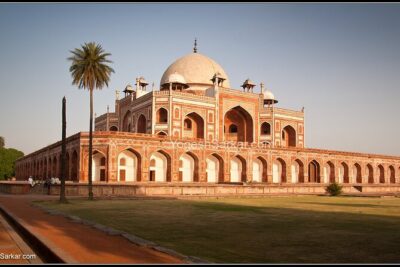

Private Car and Drive for Golden Triangle (4N/5D)
Read our review →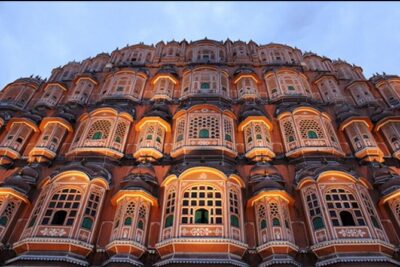
Private Golden Triangle Tour Delhi Agra Jaipur ( Top Rated )
Read our review →Browse the lists this tour appears in