
Reviewed · INDIA
Exploring the Skies with Newtonian Telescope
Look up after sunset. Havelock offers more than beaches and forest. This small-group astronomy session moves away from the brighter main street, then uses a Newtonian telescope to bring planets, moons, and star patterns closer. I like the clear beginner-friendly format and the patient storytelling from guides such as Aditya and Harshal. I also like that the group is limited to 15 people, so you are not lost in a large crowd.
The main catch is weather. Clouds can stop the session, and one poor experience involved a last-minute failure to run the activity. You should also expect to stand or sit informally for much of the evening, since recliner chairs are not provided. If you need constant action, a long look at the night sky can feel slow.
In This Review
- Key points before you book
- Leaving Havelock’s brighter streets behind
- Starting with the telescope, not just the stars
- Finding constellations with your own eyes
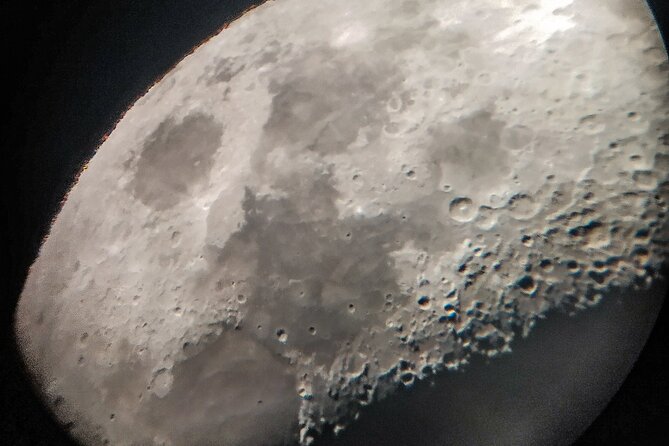
- What you might see through the Newtonian telescope
- Stories make the science easier to remember
- The group size and pace matter
- Comfort in the dark
- Is $33.71 a fair price?
- A few practical booking choices
- Who will enjoy this Havelock night?
- Should you book it?
- FAQ
- Where does the activity meet?
- Where does the stargazing session begin?
- How long does the activity last?
- What can I see through the telescope?
- Is the activity suitable for beginners?
- What happens if the weather is poor?
Key points before you book
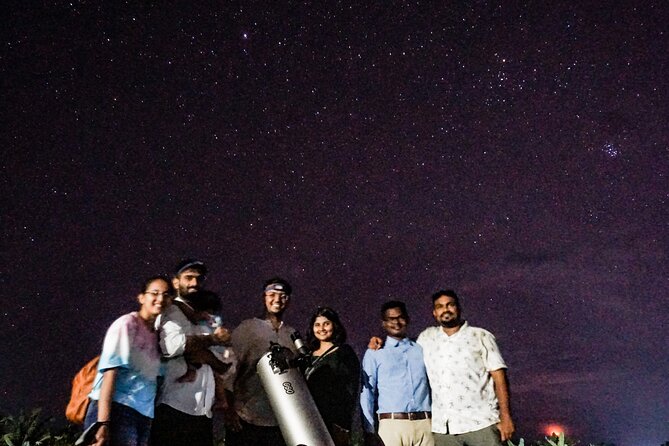
- The session begins 500 metres from the meeting point, in a darker area with less street light.
- You first learn the basics, including how the telescope works and how to identify constellations with your eyes alone.
- Planet views can include Saturn, Jupiter, and Jupiter’s four visible moons, depending on the date and sky conditions.
- Guides such as Aditya and Harshal make the science easy to follow, using stories alongside facts.
- The experience costs $33.71 per person and usually runs for about 1 hour 30 minutes, though you should allow close to two hours.
- Weather controls the evening, with a new date or full refund offered if poor conditions cancel the session.
Leaving Havelock’s brighter streets behind
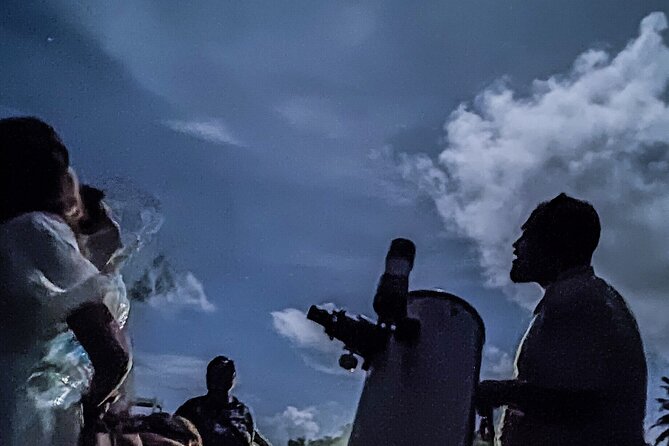
You meet at SeaShell, Havelock No-02, Swaraj Dweep, Beach, Govind Nagar. The actual astronomy session starts about 500 metres away. That short move matters because street lighting can wash out faint stars, especially near the main road.
This is not a grand observatory with a domed roof and rows of equipment. The appeal is simpler. You walk to a quieter outdoor spot, away from some of the stronger lights, and look up at the same sky that is easy to miss during a busy beach holiday.
The meeting point is useful if you are staying near Govind Nagar or already know the SeaShell property. The experience ends back at the meeting point. Public transport is nearby, and service animals are allowed. You do not need advanced mobility or astronomy skills to take part, but the session is outdoors and may involve standing for long periods.
The advertised operating window is 8:00 PM to 10:00 PM, every day from October 3, 2022, through February 17, 2027. The booked activity itself lasts about 90 minutes. In practice, I would keep the full two-hour window free. One evening account described the session as lasting close to two hours, and astronomy does not always run on a tight timetable.
Other trips worth a look in India:
- Old & New Delhi City Tour – Half or Full Day Options Available
★ 5.0 · 4,811 reviews - Old & New Delhi City Tour – Choose Half or Full Day Experience
★ 5.0 · 4,513 reviews - Same Day Taj Mahal, Agra Fort & Baby Taj Tour from Delhi by Car
★ 5.0 · 4,304 reviews
Starting with the telescope, not just the stars
The first stage is an introduction to the Newtonian telescope. That is a sensible place to begin. Instead of handing you an eyepiece and hoping you understand what you are seeing, the guide explains the instrument before pointing it at the sky.
For a beginner, this makes a real difference. A bright dot in the eyepiece can look unimpressive if you do not know whether it is a planet, star, moon, or optical effect. The opening explanation gives you a frame for the rest of the evening and helps you understand why the view changes as the telescope is adjusted.
This portion is likely to suit you if astronomy is new territory. The activity is aimed at people curious about the universe, not at experienced observers who already know how to operate a telescope or identify a long list of celestial objects.
The guide-led format also keeps the evening social. You can ask basic questions without feeling out of place. The best accounts of the session praise the hosts for making complex ideas understandable, while keeping the mood relaxed rather than turning the hour into a classroom lecture.
Finding constellations with your own eyes
Before using the telescope, you look at the sky without magnification. This naked-eye section is easy to underestimate. The telescope gives you the memorable close views, but learning to recognize constellations helps you understand where those objects sit in the wider sky.
The discussion includes the stories and science behind visible formations. Topics raised during the session can include why the Moon shows the same face to Earth, how sailors and other navigators used stars, and why the familiar zodiac has 12 signs even though many more constellations exist.
That mix is one of the strongest parts of the experience. You are not only waiting for your turn at the eyepiece. You are learning how people have used the sky, how patterns became stories, and how those patterns relate to basic astronomy.
The naked-eye portion also gives the guide something to do when a particular object is not in a good position. Celestial viewing changes with time, season, and cloud cover. A thoughtful explanation of the sky keeps the session worthwhile even if the telescope target list has to change.
What you might see through the Newtonian telescope
The headline attractions are Saturn and Jupiter. Several accounts describe seeing Saturn’s rings and Jupiter, with one session also showing four of Jupiter’s moons. Those views are not guaranteed every night because the visible sky changes, but they explain why this experience can be far more memorable than simply looking at stars from a hotel garden.
Saturn’s rings are the kind of sight that works well for first-time telescope users. You already know the planet from photographs, but seeing the ringed shape through an eyepiece gives it a different presence. Jupiter and its moons offer another useful lesson: you can see that the solar system is not just a diagram in a book, but a set of bodies moving in relation to one another.
You should keep expectations sensible. A small telescope does not produce the bright, detailed images seen in professional observatory photographs. The view may be small, and you may need patience to position your eye correctly. That is normal, not a sign that the activity has failed.
You may also wait while the guide points the telescope at a target or adjusts it for the next person. With a maximum of 15 people, the group is fairly manageable, but you will still share the eyepiece. If you want uninterrupted viewing, a private astronomy setup would be a better fit, though it would likely cost more.
A completely different kind of day out:
- Taj Mahal Day Tour from Delhi by Superfast Train – TOP RATED TOUR
★ 5.0 · 4,166 reviews - Full Day Taj Mahal, Agra Fort & Baby Taj Tour from Delhi by Car
★ 5.0 · 3,647 reviews - From Delhi: Taj Mahal & Agra Private Day Trip with Transfers
★ 4.9 · 3,181 reviews - Taj Mahal Tour from Delhi by Express Train (Viator Award Winner)
★ 5.0 · 2,849 reviews
Stories make the science easier to remember
The guides are the heart of this activity. Aditya is repeatedly praised for his warm approach, patient explanations, and ability to keep beginners interested. Harshal is also singled out for explaining the night sky in detail. The session works best when the guide connects a visible object to a simple idea or story.
That method suits Havelock particularly well. You may have spent the day swimming, snorkeling, or sitting on the sand. At night, the guide gives you a different way to read the island, not through its coastline or forest, but through the sky above it.
I like the balance between fact and storytelling. You can learn why only one side of the Moon faces Earth, how stars helped with navigation, and how constellations were organized. Then you can return to the telescope and see a planet or moon with a clearer sense of what it is.
This is also why the activity has value for people who do not think of themselves as astronomy fans. You do not need to arrive with a star chart or a list of questions. Curiosity is enough. The guide supplies the structure.
The group size and pace matter
The maximum group size is 15 people. That is not a private experience, but it is small enough for a guide to speak to the whole group and give each person a chance at the telescope.
The pace is unhurried. You begin with the equipment, move to naked-eye constellations, then take turns observing celestial objects while talking through what you see. This creates a natural rhythm, but it can feel too slow for a child who is not interested in space.
If you are bringing children, think about their attention span. One account described a child losing interest and affecting the atmosphere for the group. The provider may be able to make the session more engaging for young children, but no shorter child-focused format is stated. I would choose this for older children who already enjoy science, stories, or looking at the Moon and stars.
Adults who want a calm evening should find the pace comfortable. Couples, solo visitors, and small groups of friends can use it as a change from the usual Andaman activities. It is a particularly good option if you have already spent several days on the water and want something that does not involve swimming or equipment.
Comfort in the dark
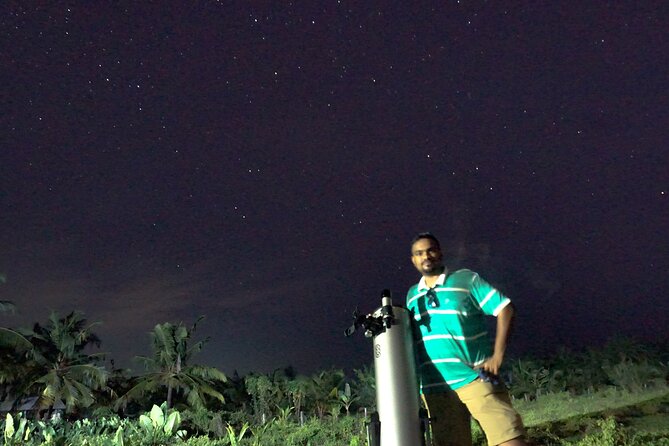
The activity description does not promise recliner chairs or fixed seating. One useful suggestion from an attendee was to provide reclining chairs, since looking upward for a long time can become uncomfortable.
That is worth taking seriously. You may spend part of the evening standing, bending toward the eyepiece, or craning your neck. Wear comfortable clothing and shoes, and do not assume the experience will feel like sitting in a planetarium.
The outdoor setting is part of the charm, but it also brings ordinary weather concerns. A cloudy sky can hide the very objects you came to see. The activity requires good weather, and if the provider cancels because of poor conditions, you are offered another date or a full refund.
This weather policy is fair, but it makes planning important. If you have only one night left on Havelock, do not wait until the end of your trip to book. The experience is often booked about 13 days in advance, so popular dates may fill before you arrive.
Is $33.71 a fair price?
At $33.71 per person, this is not the cheapest way to spend an evening in Havelock. You can look at the stars for free from many outdoor spots. The price pays for the telescope, the guide’s time, the explanations, and the chance to view planets and moons that you may not locate on your own.
For a first astronomy experience, I consider the price reasonable if the sky is clear and the guide is actively teaching. The added value is not simply putting your eye to an eyepiece. It is learning what you are seeing and why it matters.
The value drops if you expect a professional observatory, a private session, or guaranteed views of Saturn and Jupiter. The available targets depend on conditions, timing, and visibility. You are paying for a guided introduction to the night sky, not a fixed list of celestial sights.
The maximum of 15 people helps protect the value. A much larger group would mean more waiting and less access to the telescope. The 4.8 rating from 31 published ratings and a 97 percent recommendation rate suggest that the format works well for most people, though the weather and scheduling complaint shows that no outdoor activity is risk-free.
A few practical booking choices
Free cancellation is available if you cancel at least 24 hours before the start time. Cancellations made less than 24 hours ahead are not refunded, and changes inside that period are not accepted. The cut-off follows local time.
Book early enough to leave room for bad weather. If your schedule allows, choose an earlier evening in your stay rather than the final night. That gives you a chance to accept a new date if clouds cancel the first attempt.
Confirmation arrives when you book, and the ticket is mobile. You can show it on your phone rather than carrying a printed voucher. The meeting point is at SeaShell in Govind Nagar, but remember that the session itself begins a short walk away.
It is also wise to confirm the session on the day, particularly if clouds have been moving across the island. One disappointing scheduling incident involved repeated waiting for clearer conditions, followed by a failure to run the private booking. That does not define every session, but it is a good reason to keep communication clear and avoid leaving the activity until your last available evening.
Who will enjoy this Havelock night?
I would choose this activity if you want a quiet, guided experience after a day of beach time. It suits beginners, couples, solo visitors, families with older children, and anyone curious about planets but unsure where to start.
You will get the most from it if you enjoy listening, asking questions, and waiting your turn. The session rewards patience. It is less suitable if you need constant movement, dislike standing outdoors, or want guaranteed close-up images of a particular planet.
It is also a good alternative to the standard Andaman schedule. Havelock is famous for the sea, yet the night sky offers a different kind of attraction. The telescope provides the hook, but the stories about navigation, the Moon, constellations, and planets give the evening its lasting value.
Should you book it?
Book it if you want to see Havelock from a different angle and are happy to let weather guide the plan. The strongest reasons are the friendly teaching, the beginner-level explanations, and the chance to see Saturn, Jupiter, or Jupiter’s moons through a real telescope.
Skip it if you want luxury seating, a private guide, or a guaranteed target list. For everyone else, $33.71 is a fair price for a well-paced introduction to astronomy, especially if you reserve early in your stay and leave enough time for clear skies.
FAQ
Where does the activity meet?
You meet at SeaShell, Havelock No-02, Swaraj Dweep, Beach, Govind Nagar, Havelock Island, Andaman and Nicobar Islands 744211, India.
Where does the stargazing session begin?
The activity begins about 500 metres from the meeting point, in an area with less light pollution than the main street.
How long does the activity last?
The stated duration is about 1 hour 30 minutes. The operating window is from 8:00 PM to 10:00 PM, so you should allow up to two hours.
What can I see through the telescope?
Depending on sky conditions and visibility, you may see objects such as Saturn, its rings, Jupiter, and four of Jupiter’s moons. The session also includes naked-eye observations of constellations.
Is the activity suitable for beginners?
Yes. The session begins with an explanation of the telescope and includes basic discussions about the observable sky. Most people can participate, and no advanced astronomy experience is required.
What happens if the weather is poor?
The activity requires good weather. If it is canceled because of poor conditions, you are offered a different date or a full refund. You can also cancel for a full refund if you do so at least 24 hours before the start time.
Just added in India
- Five Days Golden Triangle Tour with Ranthambore Delhi Agra Jaipur★ 5.0 · 11 reviews
- 5 Days Golden Triangle Tour with Ranthambore India★ 5.0 · 10 reviews
- 5 Days Golden Triangle Tour with Ranthambore Delhi Agra Jaipur★ 5.0 · 11 reviews
- 5-Day Private Luxury Golden Triangle Tour From Delhi★ 5.0 · 45 reviews
- Delhi, Agra, Jaipur & Ranthambhore Tiger Safari 5-Day Tour★ 5.0 · 47 reviews
- Private 5 Days Golden Triangle Tour – Visit Delhi Agra and Jaipur★ 5.0 · 26 reviews
- 5-Day Private Delhi, Agra and Jaipur with Ranthambhore Tiger Tour From Delhi★ 5.0 · 44 reviews
- 5-Day Private Golden Triangle Tour: Delhi, Agra, and Jaipur★ 5.0 · 62 reviews