Reviewed · MUMBAI TOURS
Essence of Mumbai : The Cultural Experience Tour
Mumbai works best up close. This half-day experience takes you beyond the usual monuments, with time among the Koli community, a train ride connected to the city’s famous dabbawallas, and an inside visit to Dhobighat. I like the way the tour connects daily work, faith, food, and city life instead of treating Mumbai as a string of photo stops. I also like that a dedicated English-speaking guide and private car keep the day practical.
The main consideration is pace. You are fitting several very different experiences into about four to five hours, with the start time changing by hotel location. Dhobighat and the train ride can also feel active and crowded, so this suits you best if you want direct contact with city life rather than a slow, polished sightseeing circuit.
In This Review
- Key points at a glance
- Why this tour shows a more useful side of Mumbai
- Meeting the Koli community before the city rush
- Following the dabbawallas to the railway station
- Taking the train to Dhobighat
- Going inside Dhobighat, not just viewing it
- Lunch at an Indian restaurant
- Understanding the gaushala visit
- Private transport and a flexible finish
- Is $54 a fair price?
- Who will enjoy this experience most?
- Booking, cancellation, and useful preparation
- Should you book the Essence of Mumbai tour?
- FAQ
- How long does the Essence of Mumbai tour last?
- What time does the tour start?
- Where can pickup take place?
- Is lunch included?
- Is this a private tour?
- Can I cancel for a full refund?
Key points at a glance
- Meet Mumbai’s Koli community: Spend time with members of the city’s first inhabitants and hear about daily life in a fast-changing metropolis.
- See how dabbawallas work: Visit a train station and learn about Mumbai’s famous tiffin carriers, a service that has operated for about a century.
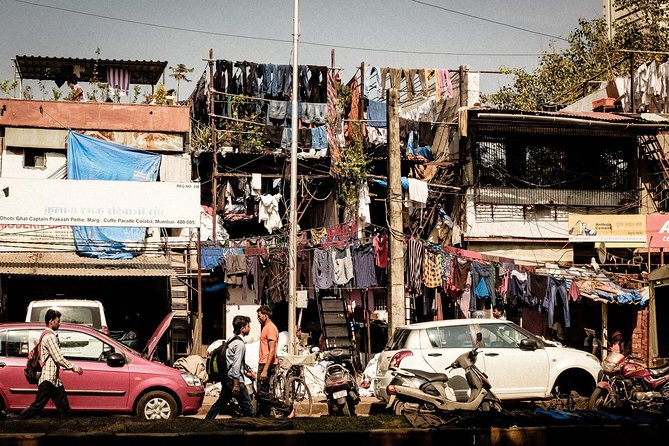
- Enter Dhobighat: Go inside the open-air laundromat with a guide rather than viewing it only from above.
- Visit a gaushala: See a protective shelter for cows and learn why cow welfare carries strong religious and cultural importance in India.
- Eat lunch at an Indian restaurant: A meal is included, giving the tour a useful break between visits.
- Keep transport simple: Hotel, airport, or train station pickup and drop-off come with a private vehicle, driver, and guide.
Why this tour shows a more useful side of Mumbai
Mumbai can be hard to understand from a taxi window. The city moves quickly, yet many parts of daily life still depend on old systems, close neighborhoods, family trades, and religious customs. This tour gives you several ways to see that contrast.
You begin with people, not buildings. The Koli community lived in the area before Mumbai became the huge commercial city you see today. Spending time with local community members gives you a human starting point. You are not simply told that Mumbai has changed. You get a chance to consider what that change means for the people who were here first.
The tour then shifts to work and transport. Dabbawallas carry home-cooked meals to office workers, using an organized delivery system that has been operating for roughly a century. The visit to a train station helps place that work in its proper setting. Mumbai’s rail network is not just a way to move around. It is part of how the city functions each day.
From there, you take a train to Dhobighat. That small piece of public transport matters. You are not being driven between sealed-off attractions. You are using one of the systems that millions of people depend on, even if the train ride itself is brief.
A few more options to weigh up in Mumbai
- Dharavi slum tour in Mumbai by Female tour guides of the slum
★ 5.0 · 1,976 reviews - Mumbai: Full-Day Sightseeing Tour of Mumbai
★ 4.9 · 1,822 reviews - Private Mumbai Sightseeing Tour (Traveller’s Choice Award Winner)
★ 5.0 · 1,565 reviews
Meeting the Koli community before the city rush
The Koli section gives the tour its strongest cultural purpose. Mumbai is often presented through grand colonial buildings, seaside roads, markets, and film connections. Those places have their appeal, but the Koli community offers a different starting point.
Your guide introduces you to local people and helps explain life in a city that keeps expanding and changing. The point is not just to take photographs. It is to listen, ask questions, and see how older community traditions fit into modern Mumbai.
This part will work best if you approach it with respect and patience. The supplied details do not promise a formal performance or a museum-style presentation, so expect an interaction guided by conversation rather than a scripted show. That can be more rewarding, but it also means the quality of the exchange depends on your guide, the people you meet, and the time available.
A strong guide matters here. Alan is specifically praised for combining cultural and historical understanding with patience and helpfulness. That comment comes from a longer two-day experience, so it does not guarantee that he will lead every half-day departure, but it gives you a useful name to request when arranging the tour.
Following the dabbawallas to the railway station
The dabbawalla visit adds a practical layer to the day. These tiffin carriers move homemade meals through Mumbai, and their work has continued for about a hundred years. You will go to a train station to see how this system fits into the city’s wider transport network.
I like this stop because it turns an often-repeated Mumbai fact into something you can place in context. Instead of hearing only about efficiency or tradition, you see the station environment where people and goods move together.
The tour does not promise a private meeting with dabbawallas or a behind-the-scenes work session, so keep your expectations measured. You are learning how the system works as part of a larger city experience. The guide’s explanation is likely to be more valuable than a quick glance at a worker carrying lunch boxes.
The station and train ride also require flexibility. Mumbai’s rail system is busy by nature, and this is not the same as riding in a private car. If you prefer total comfort and quiet, this section may feel demanding. If you want to understand the city through ordinary routines, it is one of the most useful parts.
Taking the train to Dhobighat
After the station visit, you take a train to reach Dhobighat, Mumbai’s famous open-air laundromat. This is a smart choice for a cultural tour because the journey itself becomes part of the lesson. You move through the city in a way that local residents do, rather than simply arriving at a viewing platform.
The train ride may be short, but it helps you connect the city’s working systems. The dabbawallas rely on transport. Laundry workers rely on organized movement of clothing. Commuters rely on trains. These are separate subjects, yet they all point to the same fact: Mumbai operates through millions of carefully timed daily tasks.
The practical downside is that train travel can be less predictable than private transport. The provided information does not promise reserved seating, a quiet carriage, or a specific route. Wear comfortable clothes, keep your belongings secure, and stay close to your guide. Those are sensible habits for any train ride in a major Indian city.
A completely different kind of day out:
- Elephanta Caves & Island Guided Private Tour
★ 5.0 · 1,327 reviews - Group Guided Walking Tour in Fort and Colaba
★ 5.0 · 1,073 reviews - Mumbai: Elephanta Caves Half-Day Guided Tour with Expert
★ 4.8 · 1,032 reviews - Highlights of Mumbai Sightseeing Tour: TRAVELLERS CHOICE AWARDED
★ 5.0 · 915 reviews
Going inside Dhobighat, not just viewing it
Dhobighat is one of the tour’s most distinctive stops. Many city outings let you see the laundromat from above or from the edge. This experience includes an insider visit, allowing you to go inside and see people working at close range.
That difference matters. From a distance, Dhobighat can look like a colorful pattern of washing, drying, and stacked clothing. Inside, the work becomes more immediate. You can better understand the physical effort and organization behind a service that supports households and businesses across Mumbai.
This is also the point where good manners matter most. You are entering a workplace, not a stage set. Follow your guide’s instructions about where to stand, when to take photographs, and how to speak with workers. The information does not state the exact photography rules, so ask before using your camera.
One of the strongest comments about the experience specifically praises being allowed inside the laundry rather than seeing it only from above. That access is a real advantage, but it should not be mistaken for unlimited access. Conditions may vary, and the work must continue around your visit.
Lunch at an Indian restaurant
Lunch is included at an Indian restaurant after Dhobighat. This is more than a small perk. A meal gives you a proper pause after the community visit, station, train ride, and laundry stop.
The details do not specify the restaurant, menu, or dietary arrangements. If you have dietary restrictions, ask when booking rather than assuming the meal will match your needs. The tour description confirms lunch, but it does not promise a particular regional cuisine or a set number of courses.
I like having lunch built into the schedule because it keeps the day straightforward. You do not need to stop and search for food while trying to fit in the remaining visit. It also gives you a chance to ask your guide about what you have seen so far.
Food was important in the longer experience praised by one customer, who specifically valued Alan’s suggestions for good places to eat. That does not establish the exact lunch arrangement on this tour, but it suggests that food is treated as part of the cultural experience, not merely fuel between stops.
Understanding the gaushala visit
After lunch, you visit a gaushala, a protective shelter for cows in India. These facilities focus on caring for cows, whose religious significance in Hinduism makes their welfare a sensitive cultural subject.
This stop helps you understand a belief system that can otherwise be reduced to simple tourist explanations. Your guide can explain why cows receive special treatment and how religious values affect everyday choices and public attitudes.
The available information does not describe the size of the shelter, the number of cows, or any feeding activity. You should therefore expect a visit and explanation, not assume that you will handle animals or take part in a formal ceremony.
The gaushala also creates a useful contrast with the working energy of Dhobighat and the railway station. Mumbai is not only commerce and motion. Faith and animal welfare are part of the city’s public life, too.
Private transport and a flexible finish
The tour includes hotel pickup and drop-off in an air-conditioned car with a driver and dedicated English-speaking guide. Pickup can also be arranged from Mumbai airport or a train station. For a city as spread out as Mumbai, this is valuable because you avoid arranging several separate rides.
The listed start time is 10:00 am, but the actual pickup depends on your location. If your hotel is near Mumbai Airport, the start time is 9:45 am. If you are staying in central South Mumbai, pickup is listed as 10:30 am. Confirm the timing carefully, since a fifteen-minute difference can matter when the tour includes public transport.
The ending is flexible in a useful way. You are normally returned to your hotel, but the operator can also drop you at another place you want to visit. The information does not promise that every extra stop will fit, so ask before the day begins if you hope to continue sightseeing afterward.
This is a private activity, meaning only your own group participates. That makes it easier to ask questions and adjust the conversation to your interests. It also means the $54 price is not simply paying for a seat on a large bus. You are paying for private transport, a driver, a guide, bottled water, lunch, and a four to five-hour itinerary.
Is $54 a fair price?
At $54 per person, the tour offers solid value if you want several cultural stops handled in one booking. You receive hotel transport, an air-conditioned car, an English-speaking guide, bottled water, lunch, the train portion, and access to places that are difficult to organize independently.
The private format improves the value for couples, families, or small groups. You are not following a large crowd, and your guide can spend more time explaining the Koli community, dabbawallas, Dhobighat, and the gaushala to your group.
The price is less compelling if you want a relaxed schedule focused on one neighborhood. Four or five hours is a compact window for this many stops. You are paying for range and convenience, not long visits at each site.
Group discounts are listed, but no discount amount is provided. Ask for the current price if you are booking for several people. Since the activity is private, the per-person cost may make more sense as your group grows.
Who will enjoy this experience most?
I would choose this tour if you are visiting Mumbai for the first time and want to understand how people work, travel, eat, and practice faith in the city. It is especially useful if you have already seen the main landmarks or prefer neighborhood life to a standard monument route.
It also suits cruise passengers and people arriving by air or train because pickup is available from those locations. The private car removes much of the usual transport planning.
Families may appreciate the mix of movement and short visits, though the train and Dhobighat require children to stay close and follow instructions. Anyone with limited mobility should ask the operator for practical details before booking, since the tour includes a train ride and an inside visit to a working laundry, and the provided information does not describe accessibility arrangements.
You may want a different experience if you dislike public transport, workplace visits, or culturally sensitive subjects. This is not a polished food tour or a simple sightseeing drive. It asks you to observe real working environments and listen carefully.
Booking, cancellation, and useful preparation
Confirmation is provided when you book, and cancellation is free if you cancel at least 24 hours before the local start time. Cancellations or changes made less than 24 hours ahead are not refunded or accepted.
Wear comfortable clothing and shoes suitable for walking and a train ride. Bring a little patience for schedule changes, and ask your guide before photographing people at the Koli community, railway station, or Dhobighat.
Because the tour includes lunch but gives no menu details, tell the operator about dietary needs in advance. Also confirm your pickup point and time, especially if you are near the airport or staying in South Mumbai.
Should you book the Essence of Mumbai tour?
Book it if you want a personal, people-centered introduction to Mumbai and value private transport. The inside Dhobighat visit, Koli community meeting, dabbawalla context, train ride, and gaushala create a broad picture of the city in a short time.
I would be cautious only if you need a slow pace, guaranteed accessibility details, or a tightly scheduled sightseeing route. For most curious first-time visitors, the $54 package is a practical deal, and the option to request a guide such as Alan may add real value. Go with an open mind, keep your camera secondary to respectful observation, and you will get a more useful sense of Mumbai than a car window can provide.
FAQ
How long does the Essence of Mumbai tour last?
The experience lasts approximately four to five hours.
What time does the tour start?
The listed start time is 10:00 am. Pickup is listed as 9:45 am for hotels near Mumbai Airport and 10:30 am for hotels in central South Mumbai.
Where can pickup take place?
Pickup is available from your hotel, Mumbai Airport, or a train station. Hotel drop-off is included at the end.
Is lunch included?
Yes. Lunch at an Indian restaurant is included in the tour fee, along with bottled water.
Is this a private tour?
Yes. Only your group participates in the private activity.
Can I cancel for a full refund?
Yes, if you cancel at least 24 hours before the experience start time. Cancellations and changes made less than 24 hours ahead are not accepted or refunded.
Just added in Mumbai
- Mumbai Airport to Mumbai Hotels : Private Transfers★ 5.0 · 13 reviews
- Mumbai Sightseeing Tour★ 5.0 · 11 reviews
- Mumbai Spice Markets and Bazaars Tour with Guide and Transport★ 5.0 · 42 reviews
- Mumbai 800 Year Worli Village: Talking Goddess, Old Fort & more★ 5.0 · 94 reviews
- Customize private tour with pickup★ 5.0 · 95 reviews
- Gufran’s Slum Home Tour in the Mumbai Slums★ 5.0 · 19 reviews
- Private Guided Bandra Half Day City Tour in AC Vehicle★ 5.0 · 72 reviews
- Twilight in Mumbai: Discover the City by Night with Food Options★ 5.0 · 24 reviews
Mumbai Tours, compared.
Dharavi slum tour in Mumbai by Female tour guides of the slum
Read our review →
Private Mumbai Sightseeing Tour (Traveller’s Choice Award Winner)
Read our review →
Elephanta Caves Half-Day Guided Tour with Expert
Read our review →
Highlights of Mumbai Sightseeing Tour: TRAVELLERS CHOICE AWARDED
Read our review →