
Reviewed · GOLDEN TRIANGLE TOURS
7-Day Golden Triangle & Ranthambore Tiger Safari from Delhi
Tigers and the Taj in one week. This seven-day private tour packs North India’s essential sights into a clear route from Delhi through Jaipur and Ranthambore to Agra, then back to Delhi. I like the combination of major monuments and wildlife, especially the two Ranthambore safari outings and the sunrise visit to the Taj Mahal. I also like that local guides are included in Jaipur and Agra, where good explanations add real value.
The main consideration is pace. You cover long distances by road, and several days run for five hours or more. Park entry and monument tickets are extra, and the safari gives you a chance to see a tiger, not a promise. Still, for a first visit, the route covers an impressive amount without requiring you to arrange hotels, drivers, and transfers yourself.
In This Review
- Key points to know before booking
- Why this route works for a first visit
- Day 1: A simple Delhi arrival
- Day 2: Jaipur’s royal center and pink-stone streets
- Day 3: Amber Fort, hill views, and Jal Mahal
- Day 4: Into Ranthambore National Park
- Day 5: Sunrise safari and Fatehpur Sikri
- Day 6: Sunrise at the Taj Mahal and Agra’s Mughal monuments
- Day 7: Old Delhi, New Delhi, and the airport
- Hotels, meals, and what the $550 covers
- Who should book this seven-day route?
- Should you book it?
- FAQ
- Is this a private tour?
- Where does the tour begin?
- How many nights of accommodation are included?
- Are breakfasts included?
- How many Ranthambore safaris are included?
- Are monument entrance tickets included?
- When is Ranthambore National Park closed?
Key points to know before booking

- Two wildlife outings in Ranthambore: The package includes one canter safari with the three-star hotel option and two canter safaris with the four-star option.
- A sunrise Taj Mahal visit: You see Agra’s famous white-marble monument early, before returning for breakfast.
- Private transport throughout: Your group has its own car, driver, fuel, tolls, parking, and driver allowances covered.
- Jaipur and Agra guides included: Guided touring is provided in these two cities, but not listed for Delhi or Ranthambore.
- Six hotel nights and breakfast: Accommodation is based on double, twin, or triple sharing, with seven breakfasts included.
- Season matters in Ranthambore: The park is usually closed from July 1 through September 30, although opening can depend on weather conditions.
Why this route works for a first visit
The Golden Triangle links Delhi, Agra, and Jaipur, three places that give you very different views of North India. Delhi brings Mughal monuments, British-era planning, national memorials, and modern religious architecture. Agra centers on the Taj Mahal and the Mughal court. Jaipur adds palaces, hill forts, astronomy, and the colorful identity of Rajasthan.
Ranthambore changes the rhythm. Instead of another city stop, you spend time in a former royal hunting ground now known for tigers, leopards, and marsh crocodiles. That contrast is the best idea in the program. After several monuments and busy roads, the park offers open space and the suspense of watching for wildlife.
At $550 per person, the value comes mainly from the bundled transport and accommodation. You are not paying only for sightseeing. The price also covers six hotel nights, daily breakfasts, tolls, parking, fuel, local taxes, and national park fees. A private car and driver across this route can make the price reasonable, particularly if you are sharing the vehicle with family or friends.
You still need to budget for monument admissions, food beyond breakfast, drinks, insurance, tips, laundry, phone calls, and personal purchases. The price also depends on the room category and safari arrangement. Confirm exactly which three-star or four-star hotel option you are selecting, since the number of canter safaris changes with that choice.
More Wildlife and Tiger Safaris in New Delhi
- Private 4-Day Golden Triangle Tour with Ranthambore Tiger Safari
★ 5.0 · 248 reviews - Private 5-Day Ranthambhore Tiger Tour from Delhi including the Taj Mahal, Agra and Jaipur
★ 5.0 · 197 reviews - 4 Day Golden Triangle with Ranthambore Tiger Safari Tour from Delhi
★ 5.0 · 110 reviews
Day 1: A simple Delhi arrival
Your tour begins at Indira Gandhi International Airport in New Delhi. A representative meets you on arrival and transfers you to the hotel for the night.
This is a practical first day rather than a sightseeing day. That is a good thing if your flight arrives after a long journey. You get a room, a shower, and time to adjust before the road portion begins.
The arrival transfer is included, but you need to provide passport details for every participant at booking, including passport name, number, expiry date, and country. Keep your current passport with you on the day of the tour.
Day 2: Jaipur’s royal center and pink-stone streets
After breakfast, you drive to Jaipur, known as the Pink City. The listed drive and city touring take about five hours, though road conditions and traffic can affect the day. Once you check in, the city tour includes the City Palace, Jantar Mantar, and Hawa Mahal.
The City Palace of Jaipur remains one of the clearest introductions to the city’s royal past. Maharaja Sawai Jai Singh II founded Jaipur in 1727 and moved his court here from Amber. The palace complex mixes courtyards, decorated gateways, royal rooms, and museum collections. Allow about an hour, and remember that admission is not included.
At Jantar Mantar, the subject changes from royalty to science. The site contains nineteen large astronomical instruments, completed in 1734. Their size makes the old calculations easier to understand than a textbook would. A guide can help explain how the instruments measured time and tracked celestial positions. The ticket is extra, and the visit is scheduled for about an hour.
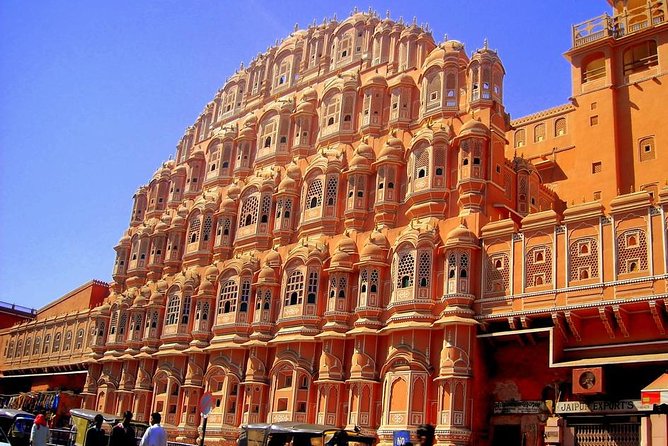
Hawa Mahal, or Palace of the Wind, is Jaipur’s most recognizable facade. Built from red and pink sandstone, it was connected to the City Palace and the women’s quarters. The honeycomb of windows allowed women of the royal household to observe street life without appearing in public. The stop lasts about an hour and does not include admission.
The schedule gives you a useful first look at Jaipur, but it is not a slow city walk. You will see the main sights with limited time for shopping or wandering. I would wear light, comfortable shoes and keep water close, since the tour involves palace courtyards and monument grounds.
Day 3: Amber Fort, hill views, and Jal Mahal
Day three focuses on Jaipur’s forts and the Aravalli Hills. You visit Amber Palace, also called Amer Fort, for about three hours, followed by Nahargarh Fort for roughly two hours. Jal Mahal is also included as a city stop.
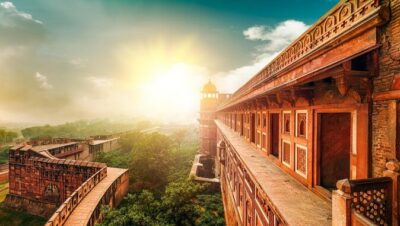
Amber Fort is the day’s major attraction. It sits on a hill about 11 kilometers from Jaipur and combines defensive walls with courtyards, audience halls, and ornate palace spaces. Give yourself time to notice the setting as well as the buildings. The fort’s position above the surrounding area explains why it was such a strong royal seat.
Admission is not included. The three-hour visit is generous compared with the shorter palace stops, but the fort is large and involves walking. Comfortable shoes are more than a polite suggestion here.
Nahargarh Fort follows on the edge of the Aravalli Hills. Along with Amber Fort and Jaigarh Fort, it formed part of Jaipur’s defensive system. Its main appeal is the view over the city, so this stop works best when visibility is good. The listed visit is two hours, and admission is extra.
Jal Mahal is a palace in the middle of Man Sagar Lake. The palace and lake were enlarged and renovated in the 18th century under Maharaja Jai Singh II. The stop is mainly about the view and the unusual setting. The schedule does not give a specific duration or state an admission charge, so treat it as a photo and sightseeing stop rather than a full interior visit.
Jaipur is one of the tour’s strongest sections because the visits build on one another. You see how the city’s rulers lived, measured the heavens, defended their territory, and designed dramatic water and hill settings. The drawback is another full day of sightseeing after the previous day’s drive.
More Golden Triangle Tours in New Delhi:
- 3-Days Private Golden Triangle Tour: Delhi, Agra & Jaipur by Car
★ 5.0 · 1,107 reviews - 3-Days Private Golden Triangle Tour: Delhi, Agra & Jaipur by Car
★ 5.0 · 1,098 reviews - 3-Day Delhi, Agra and Jaipur Private Tour – India Golden Triangle
★ 5.0 · 812 reviews - Four-Day Private Luxury Golden Triangle Tour to Agra and Jaipur From New Delhi
★ 5.0 · 807 reviews
Day 4: Into Ranthambore National Park
The route then heads to Ranthambore National Park. The planned park visit is about five hours, and the national park fee is included. This is where the tour leaves the usual Golden Triangle pattern and adds its most unpredictable element.
Ranthambore was once a royal hunting ground. Today it is known for tigers, leopards, marsh crocodiles, and other wildlife. The park’s appeal is not a guaranteed animal checklist. It is the chance to watch a large natural area with a guide and wait for signs of movement.
The included safari uses a canter, an open vehicle shared with other safari participants. If you choose the three-star hotel option, one canter safari is included. The four-star option includes two canter safaris. That difference matters. A second outing gives you another chance to be in the park at a different time and to experience changing conditions.
Your accommodation category also affects the wildlife portion, not only the room. If seeing a tiger is a central reason for booking, compare the two options carefully before paying. The park is closed for part of the year, listed as July 1 through September 30, although weather can affect the exact opening period.
Day 5: Sunrise safari and Fatehpur Sikri
Day five begins with another Ranthambore visit at sunrise, listed at about three hours. Early starts are part of the point. Wildlife is never scheduled like a museum, and the cooler morning hours may make the outing more comfortable.
The sunrise safari is one of the most praised parts of the experience. A Finnish family traveling with children aged 12, 14, and 16 described the safari at sunrise as a special moment. That detail matters for families: the wildlife outing adds excitement and variety after several formal monuments, and the age range suggests that older children and teenagers can take part.
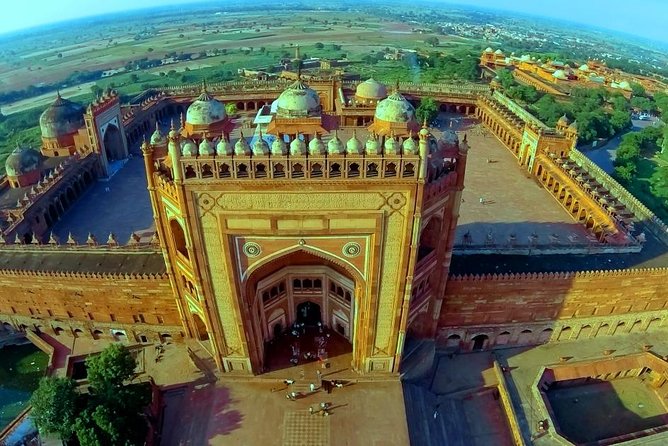
After the park, the route continues toward Agra with a stop at Fatehpur Sikri. Plan about two hours here. Emperor Akbar founded this red-sandstone city in the 16th century, and its central buildings include the Buland Darwaza gate and Jama Masjid mosque.
Fatehpur Sikri is worth seeing because it feels different from the white marble of Agra. Its red sandstone courtyards and large gateways show the scale of Mughal imperial planning. Admission is listed as free for this stop, though the day still includes the cost of transport and the effort of another long road journey.
This is a demanding day. You have an early park outing, a transfer, and a major historical site. If you tire easily, the tight sequence is the part to consider most carefully. The private format helps because your own group can travel together, but the route itself remains long.
Day 6: Sunrise at the Taj Mahal and Agra’s Mughal monuments
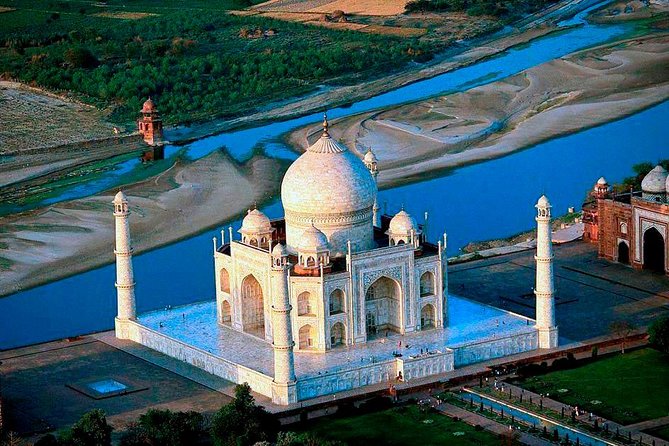
The Agra day begins before breakfast with a sunrise visit to the Taj Mahal. This is the tour’s signature moment. The white-marble monument was built by Emperor Shah Jahan in memory of his beloved wife, and its setting and changing morning light are a major reason to arrive early.
The Taj visit is scheduled for about two hours, and admission is not included. You should allow extra time in your thinking for entry procedures and walking, even though the official stop is two hours. The early visit also means you need to be ready before the normal hotel breakfast period.
Next comes Agra Fort, another UNESCO World Heritage site. Emperor Akbar began building the huge red-sandstone fort in 1565. Inside are palaces, audience spaces, and elegant buildings connected to the Mughal court. The listed visit lasts about an hour, with admission extra.
Agra Fort gives useful context to the Taj Mahal. The Taj is a mausoleum made for love and memory, while the fort shows the political and military world of the emperors who commissioned it. Seeing both in one morning prevents Agra from becoming a single-monument stop.
Itmad-ud-Daula, often called a draft or early model for the Taj Mahal, provides a smaller and more intimate comparison. Its marble and stone inlay work rewards close attention. The stop lasts about an hour, and admission is not included.
The day ends with an Agra bazaar visit, known for marble and soft-stone inlay handicrafts. This can be a useful chance to see how local artisans connect modern products with Mughal decorative traditions. You do not have to buy anything, and the tour does not include personal shopping expenses, so set your own budget and be clear about what you want.
The program describes this as a five-hour Agra sightseeing day, but the individual stops add up to several hours before accounting for transfers and meals. Confirm the exact order and departure time with the local provider, especially if the Taj visit is scheduled before breakfast.
Day 7: Old Delhi, New Delhi, and the airport
The final morning returns to Delhi sightseeing before your airport transfer. The schedule is ambitious, with seven listed stops, so this is a highlights tour rather than a leisurely exploration.
At Jama Masjid, you see one of India’s largest mosques, built by Shah Jahan between 1644 and 1656. The visit is planned for an hour, and admission is extra. Dress and conduct should suit a working religious site.
The nearby Red Fort was the main residence of Mughal emperors for almost 200 years, until 1856. Its museums and red-sandstone walls give you a final look at Mughal power. Allow an hour, with admission not included.
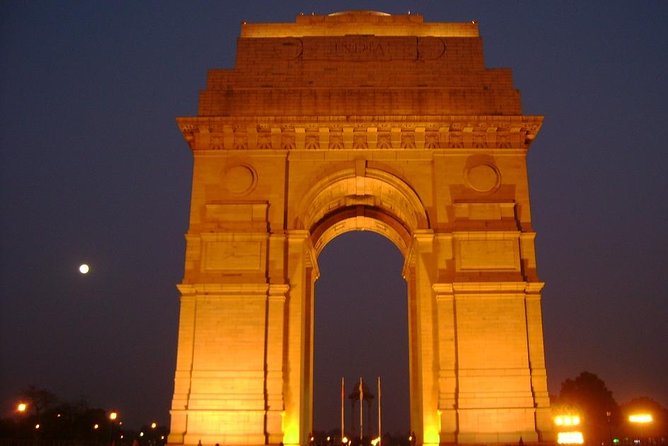
Raj Ghat, a memorial to Mahatma Gandhi, is a shorter thirty-minute stop. It offers a quiet change of pace after the fort and mosque. India Gate, a war memorial on New Delhi’s ceremonial axis, is listed as a free thirty-minute visit.
You then visit Humayun’s Tomb, commissioned by Empress Bega Begum in 1569 to 1570 for Emperor Humayun. The one-hour stop is important for understanding the development of Mughal tomb design, and the admission fee is extra.
The final attraction is the Lotus Temple, a Bahá’í House of Worship dedicated in 1986. Its flower-shaped structure is one of Delhi’s most recognizable modern buildings, and admission is free. The day closes with Qutub Minar, a UNESCO World Heritage site and tall minaret in the Qutb complex. Admission is not included, and the listed visit takes an hour.
Because the airport transfer follows this sightseeing, do not book a tightly timed onward flight without confirming the schedule. Departure times can vary slightly. The provider also notes that minimum numbers apply, although this is described as a private activity for your own group.
Hotels, meals, and what the $550 covers
Six nights of accommodation are included on double, twin, or triple sharing. Seven breakfasts are also included, which should cover the morning meals listed across the route. Lunches, dinners, snacks, and drinks are your responsibility.
The private transport package is a major part of the value. Fuel, tolls, parking, local taxes, and driver allowances are included, so you avoid many small costs that can quickly add up on a multi-city road trip. You also receive local guides in Jaipur and Agra, but the provided details do not list a local guide for Delhi or Ranthambore.
The tour is recommended by 100 percent of the 18 recorded ratings and has a 4.9 rating. One couple described it as their first trip to India and praised the organization and the way the route included major sights in each city. That matches the tour’s strongest use: it gives first-time visitors a support structure without turning the trip into a large group coach tour.
Who should book this seven-day route?
I would consider this a strong match if you want to see the Golden Triangle but also want a wildlife stop. Families with older children and teenagers may especially like the change between forts, palaces, and safari vehicles. Couples on a first visit can also benefit from having a driver and local contacts in the busiest sightseeing cities.
You should think twice if you want slow mornings, long meals, or several free afternoons. The itinerary is packed, road travel is a major part of the week, and monument tickets are extra. You also need to plan around the Ranthambore closure period and accept that tiger sightings are never certain.
This is a private tour, so only your group participates. That gives you more personal attention than a standard shared tour, but it does not remove the fixed distances between Delhi, Jaipur, Ranthambore, Agra, and Delhi.
Should you book it?
Book this tour if your priority is seeing the Taj Mahal, Jaipur’s forts, Delhi’s major monuments, and Ranthambore in one organized week. The best value comes from the private car, six hotel nights, breakfasts, included park fees, and the help of guides in Jaipur and Agra.
Before booking, confirm your hotel category, the number of canter safaris, the exact monument admission costs, and the final airport transfer timing. If you can travel outside the July to September park closure period and are comfortable with early starts and long drives, this is an efficient first introduction to North India. If you want more time in each city, choose a longer itinerary instead.
FAQ
Is this a private tour?
Yes. Only your group participates in the activity.
Where does the tour begin?
The meeting point is Indira Gandhi International Airport in New Delhi.
How many nights of accommodation are included?
The tour includes six nights of accommodation in double, twin, or triple-sharing rooms.
Are breakfasts included?
Yes. Seven breakfasts are included. Other food and drinks are not included unless specified.
How many Ranthambore safaris are included?
The three-star option includes one canter safari. The four-star option includes two canter safaris.
Are monument entrance tickets included?
No. Admission is listed as extra for several attractions, including the City Palace, Jantar Mantar, Hawa Mahal, Amber Fort, Nahargarh Fort, Taj Mahal, Agra Fort, Itmad-ud-Daula, Jama Masjid, Red Fort, Humayun’s Tomb, and Qutub Minar. India Gate, Lotus Temple, and Fatehpur Sikri are listed as free stops.
When is Ranthambore National Park closed?
The park is listed as closed from July 1 through September 30, although opening can depend on weather conditions.
Just added in New Delhi
- Old Town Delhi Walking Tour (2 Hours Guided Tour with Local)★ 4.5 · 22 reviews
- Yoga class in Delhi★ 5.0 · 29 reviews
- Vegetarian : Private Cooking Class in Delhi home ( Learn 7 meal)★ 5.0 · 58 reviews
- Private Taj Mahal & Agra Fort Tour, Dine with a View★ 5.0 · 27 reviews
- Unveil Old Delhi’s Food, Spice Market & Heritage Walk★ 5.0 · 26 reviews
- Tour to Akshardham temple with Guide and Delhi Transfer★ 5.0 · 26 reviews
- Private Tour of Taj mahal from Delhi by Train in 90 Min★ 5.0 · 46 reviews
- Private 2-Day Agra & Delhi Tour by Car–Includes Taj Mahal Sunrise★ 5.0 · 11 reviews
Golden Triangle Tours, compared.
3-Days Private Golden Triangle Tour: Delhi, Agra & Jaipur by Car
Read our review →3-Days Private Golden Triangle Tour: Delhi, Agra & Jaipur by Car
Read our review →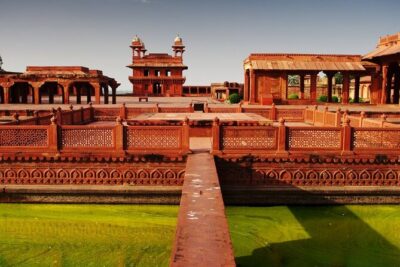
3-Day Delhi, Agra and Jaipur Private Tour – India Golden Triangle
Read our review →
Four-Day Private Luxury Golden Triangle Tour to Agra and Jaipur From New Delhi
Read our review →
5 Nights 6 Days Private Golden Triangle Tour – Delhi Agra Jaipur
Read our review →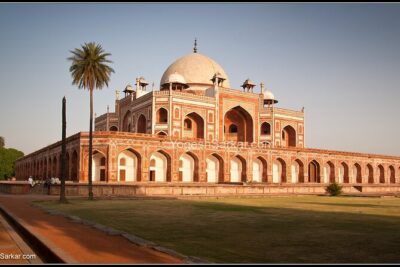

Private Car and Drive for Golden Triangle (4N/5D)
Read our review →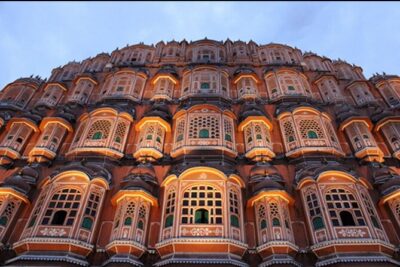
Private Golden Triangle Tour Delhi Agra Jaipur ( Top Rated )
Read our review →Browse the lists this tour appears in