
Reviewed · GOLDEN TRIANGLE TOURS
5 Days Private Golden Triangle Tour
India’s grand introduction starts here. This five-day private circuit links Delhi, Agra, and Jaipur in a Toyota Innova Crysta, giving you major Mughal, Hindu, and colonial sights without the work of arranging each transfer yourself. I like the private format and the wide mix of places, from the Taj Mahal and Amber Palace to Gandhi Smriti and Mehtab Bagh.
I also like the strong attention to driving and timing associated with Amit, along with guides Rahul and Krishna. The main drawback is the pace: Delhi alone includes seven stops, and several admission fees are extra, so your final cost and energy level will rise beyond the advertised $220 per person.
In This Review
- Key points at a glance
- Why the private format matters on the Golden Triangle
- Day 1: Delhi’s monuments from the Red Fort to Qutub Minar
- Day 2: Agra Fort and the Yamuna view from Mehtab Bagh
- Day 3: The Taj Mahal and the former capital at Fatehpur Sikri
- Day 4: Jaipur’s palaces, observatory, lake, and hill fort
- Day 5: A short final visit at Birla Mandir
- What the $220 price really covers
- Who should book this five-day route?
- Should you book it?
- FAQ
- How long is the Golden Triangle tour?
- Which cities are included?
- Is this a private tour?
- Is pickup available?
- What vehicle is used?
- Are admission tickets included?
- Is the Lotus Temple open every day?
- Which attractions are listed as free?
- Can most people participate?
- What is the cancellation policy?
Key points at a glance
- A private Toyota Innova Crysta gives your group its own vehicle rather than placing you on a shared coach.
- Delhi receives a full first day, with the Red Fort, Humayun’s Tomb, India Gate, Lotus Temple, Qutub Minar, Gandhi Smriti, and Jama Masjid.
- Agra is split across two days, allowing time for Agra Fort, Mehtab Bagh, the Taj Mahal, and Fatehpur Sikri.
- Jaipur’s best-known sights arrive on Day 4, including Hawa Mahal, Jantar Mantar, City Palace, Jal Mahal, and Amber Palace.
- Amit, Rahul, and Krishna are named members of the service team, with particular praise for driving, punctuality, respect, and help with navigation.
- The $220 price has real convenience value, but monument tickets are not all included, so budget for extra entrance costs.
Why the private format matters on the Golden Triangle
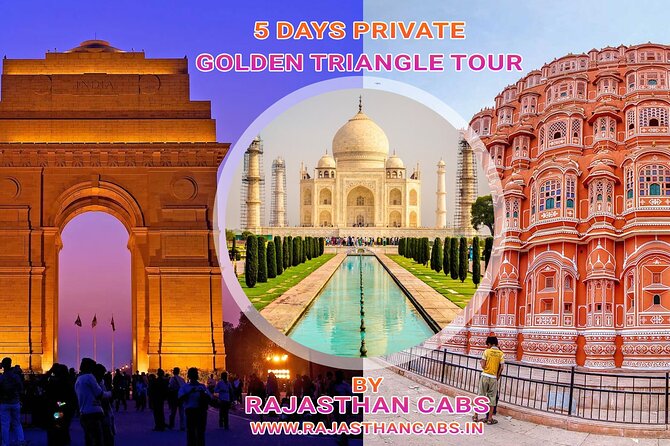
The Golden Triangle is a classic route because Delhi, Agra, and Jaipur offer three different views of northern India. Delhi brings imperial capitals and national memorials. Agra focuses on Mughal architecture and the Taj Mahal. Jaipur shifts to royal Rajasthan, with hill forts, palaces, and an old city built in a striking grid.
Five days is enough to cover the main sights, but it is not a slow trip. You will spend substantial time in the car between cities and may begin some days early. That is the trade-off for seeing so much in one short holiday.
I see the private vehicle as the tour’s biggest practical advantage. A Toyota Innova Crysta offers your own space for your group, and private travel makes it easier to manage stops, questions, luggage, and the inevitable moments when you need a short rest. The booking information also lists pickup, mobile tickets, and group discounts.
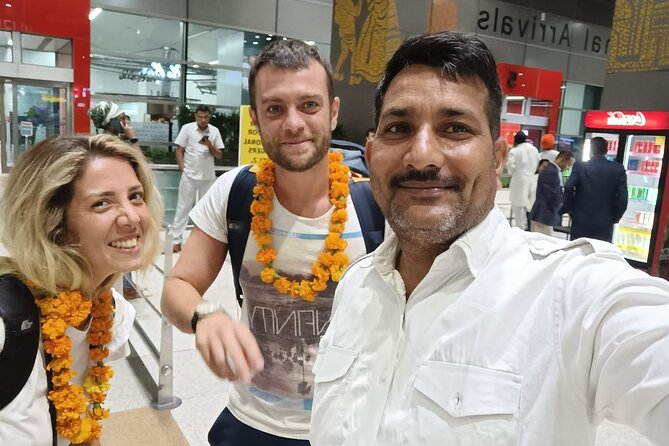
The service team receives particularly strong praise for professional conduct. Amit is associated with the driving and overall service, while Rahul and Krishna are named as guides. The most useful details are not grand promises, but punctuality, respectful treatment, and help with navigation. Those qualities matter on a route where traffic, busy monument areas, and unfamiliar streets can quickly consume time.
More Golden Triangle Tours in New Delhi:
- 3-Days Private Golden Triangle Tour: Delhi, Agra & Jaipur by Car
★ 5.0 · 1,107 reviews - 3-Days Private Golden Triangle Tour: Delhi, Agra & Jaipur by Car
★ 5.0 · 1,098 reviews - 3-Day Delhi, Agra and Jaipur Private Tour – India Golden Triangle
★ 5.0 · 812 reviews
Day 1: Delhi’s monuments from the Red Fort to Qutub Minar
The first day packs in a remarkable amount of Delhi. You begin with the Red Fort, or Lal Qila, a UNESCO World Heritage Site in Old Delhi. Its red sandstone walls introduce you to the Mughal rulers who shaped much of the region’s architecture and politics.
Allow about an hour here. The admission ticket is not included, so plan for that extra charge. The fort is large enough to reward a proper visit, but the one-hour schedule suggests that this is an overview rather than a leisurely wander through every section.
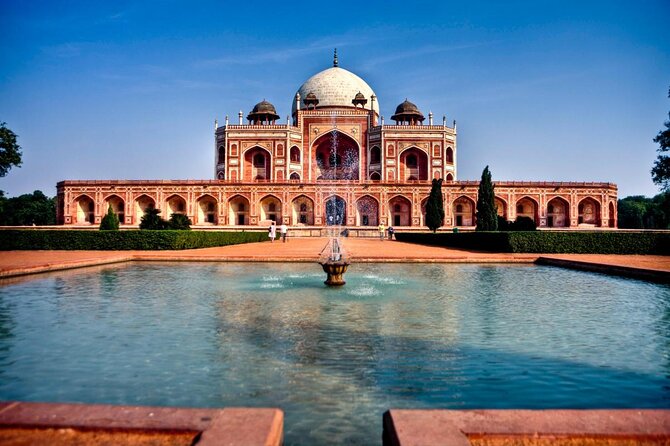
Humayun’s Tomb follows, with about 90 minutes set aside. This UNESCO-listed monument is one of Delhi’s finest examples of Mughal architecture, and its formal garden setting gives it a calmer feel than the Red Fort. I would give this stop your full attention. It helps you understand the design ideas that later reached their most famous form at the Taj Mahal.
India Gate receives about 30 minutes and has free admission. This New Delhi war memorial honors Indian Army soldiers who died in World War I. It is a brief, open-air stop, useful for seeing the ceremonial side of the capital and contrasting it with Old Delhi’s Mughal monuments.
The Lotus Temple is another 30-minute visit, with free admission. Its white, lotus-inspired design belongs to the Bahá’í faith and offers a sharp change in mood and appearance. The important planning note is that the temple is closed every Monday. If your Delhi day falls on a Monday, you should confirm how the stop will be handled.
Qutub Minar, listed under the Mehrauli area, gets about an hour. At 72.5 meters, this red sandstone tower is an impressive example of Indo-Islamic design, with carved surfaces and inscriptions. Admission is listed as free in the tour details, though the schedule still leaves little room for lingering beyond the main complex.
Gandhi Smriti provides a quieter historical pause. The museum and memorial are dedicated to Mahatma Gandhi and occupy a place in New Delhi connected with his final days. Thirty minutes is brief, but the stop adds a human and political dimension to a day otherwise dominated by grand buildings.
Jama Masjid is included at the end, but only one minute is assigned. I would treat this as a photo or drive-by stop unless your guide adjusts the plan. A major mosque deserves more time than the schedule gives it, and the admission ticket is not included.
The key issue on Day 1 is not a shortage of sights. It is the opposite. Seven stops can feel rushed, especially with Delhi traffic. The private vehicle helps, but you should ask at the start of the day which places are priorities if time begins to slip.
Day 2: Agra Fort and the Yamuna view from Mehtab Bagh
Agra Fort receives 90 minutes on Day 2. This UNESCO World Heritage Site was a major Mughal stronghold and residence, built in red sandstone with later marble additions. The fort is more than a single viewpoint. Its courtyards, halls, and walls explain how Mughal power worked in practice.
The admission ticket is not included. Since Agra Fort is one of the most substantial visits on the route, I consider the extra ticket worthwhile. You get architecture, royal history, and views toward the Yamuna River in one stop.
Mehtab Bagh follows for about an hour. This historic garden sits across the Yamuna from the Taj Mahal and is known for its view toward the monument. It gives you a different way to appreciate the Taj, with distance providing a sense of its setting and symmetry.
Admission is not included here either. The garden is especially valuable because it slows the visual rhythm of the trip. Instead of walking through another palace or fort, you look across the river and see the Taj Mahal as part of Agra’s wider setting.
The schedule places the Taj Mahal on the following day, which can work well. Day 2 gives you time for the fort and the garden, then Day 3 can focus on the world-famous monument before the transfer toward Fatehpur Sikri and Jaipur. Even so, confirm the exact overnight arrangements and departure times when booking, because the supplied plan does not specify hotels or precise road schedules.
Day 3: The Taj Mahal and the former capital at Fatehpur Sikri
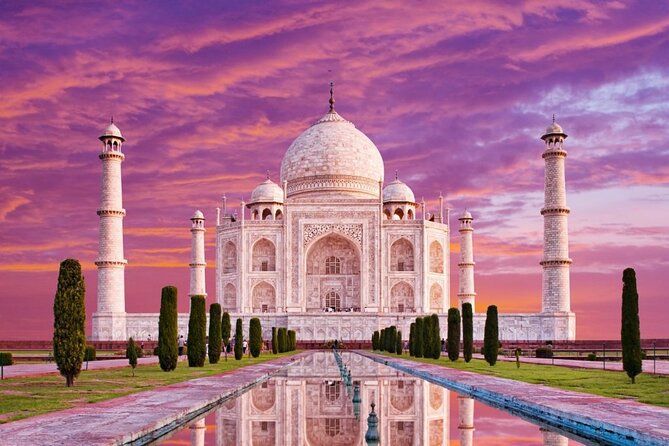
The Taj Mahal gets two hours, the longest single allocation on the trip. That is sensible. This is the monument most people build the Golden Triangle around, and rushing it would undermine the point of coming to Agra.
The Taj Mahal is widely known for its white marble, symmetry, gardens, and connection with Mughal Emperor Shah Jahan. You can expect a major architectural visit rather than a quick roadside photograph. The admission ticket is not included, so account for it separately.
Two hours allows a reasonable first visit, though the exact experience will depend on entry conditions and crowd levels. I would keep your camera ready, but do not spend the whole stop looking through it. The scale, stonework, and changing views across the complex are worth seeing directly.
Fatehpur Sikri follows with about 90 minutes. Founded by Emperor Akbar in the late sixteenth century, the city served as the Mughal capital for a period. Its red sandstone buildings create a strong contrast with the Taj’s pale marble.
Admission is listed as free in the tour details. The stop is useful because it shows a different side of Mughal planning and court life. Instead of one perfect mausoleum, you see a former capital with several buildings and a larger sense of how an imperial center was organized.
Day 3 is likely to be one of the route’s longer transfer days, since Fatehpur Sikri lies between Agra and Jaipur. This is where reliable driving becomes important. The praise directed toward Amit for being on time, respectful, and helpful with navigation is especially relevant on a day that combines a major monument with an intercity move.
A few more options to weigh up in New Delhi
- Old & New Delhi City Tour – Half or Full Day Options Available
★ 5.0 · 4,811 reviews - Same Day Taj Mahal, Agra Fort & Baby Taj Tour from Delhi by Car
★ 5.0 · 4,304 reviews - Taj Mahal Day Tour from Delhi by Superfast Train – TOP RATED TOUR
★ 5.0 · 4,166 reviews - Full Day Taj Mahal, Agra Fort & Baby Taj Tour from Delhi by Car
★ 5.0 · 3,647 reviews
Day 4: Jaipur’s palaces, observatory, lake, and hill fort
Jaipur brings a new architectural mood. The city is associated with Rajasthan’s royal courts, and the itinerary moves through several of its most recognizable sights.
Hawa Mahal, the Palace of the Winds, receives 30 minutes. Its elaborate facade is designed with many small openings, giving the building its distinctive appearance. This is a short stop, best suited to viewing and photographing the exterior rather than exploring a large interior.
Jantar Mantar receives an hour and is one of the more unusual places on the route. This UNESCO-listed observatory contains large instruments built to measure astronomical positions and time. If you enjoy places that explain how people once used science in daily and royal life, give this stop your attention.
The City Palace follows for an hour. The complex, also known as Chandra Mahal, reflects Jaipur’s royal administration and court life. The one-hour allocation should let you see the main areas, though admission is not included.
Jal Mahal is scheduled for 30 minutes. The Water Palace sits in Man Sagar Lake and is best understood as a scenic viewing stop. The itinerary does not indicate an interior visit, so expect to see the palace from the lakeside rather than explore the building itself.
Amber Palace, also called Amer Palace, receives an hour. Built on a hill near Jaipur, this fort and palace complex is one of the day’s major visits. Its position, courtyards, and royal rooms give you a stronger sense of Rajasthan’s defensive and ceremonial architecture.
Admission is not included at Amber Palace, as with Hawa Mahal, Jantar Mantar, and City Palace. These costs can add up, so I would ask for a full ticket estimate before departure. The tour price is attractive, but the headline figure is not the complete sightseeing budget.
Day 4 is another full day. The stops are varied, which helps, but you will still be walking, standing, and moving between sites. Comfortable footwear and a willingness to keep a steady pace will make the day easier.
Day 5: A short final visit at Birla Mandir
The final stop is Birla Mandir, also known as the Laxminarayan Temple, in New Delhi. The Hindu temple is dedicated to Lord Vishnu, or Laxminarayan, and Goddess Lakshmi. Admission is free, and the visit is scheduled for about 30 minutes.
This is a modest ending compared with the Taj Mahal or Amber Palace, but it gives the route a religious and contemporary Delhi note. It also works as a final stop for a group that wants one more cultural sight without committing to another long museum visit.
Because no departure time or onward travel details are provided, you should confirm how Day 5 fits your flight or train plans. The short temple visit may leave room for onward arrangements, but you should not assume that without checking the pickup and drop-off timing.
What the $220 price really covers
At $220 per person, the tour offers good value for a private five-day route if you are sharing the vehicle with other members of your own group. You receive a coordinated circuit through three major cities, private transport, pickup, and a service team praised for punctual driving and respectful help.
The price is less simple if you are traveling alone, since the per-person cost is higher than it would be for a larger private group. Group discounts may improve the value, so ask how the rate changes with your party size.
The biggest financial detail is that many major admission tickets are not included. The Red Fort, Humayun’s Tomb, Agra Fort, Mehtab Bagh, Taj Mahal, Hawa Mahal, Jantar Mantar, City Palace, Jal Mahal, and Amber Palace are marked as having tickets not included. Other stops are listed as free, including India Gate, Lotus Temple, Qutub Minar, Gandhi Smriti, Fatehpur Sikri, and Birla Mandir.
I would compare the price with the time and effort saved, not just with the cost of a car. The tour removes the need to coordinate transport between Delhi, Agra, and Jaipur, and it gives you guides at important monuments. That convenience is valuable on a first visit, especially if you do not want to manage the route yourself.
Who should book this five-day route?
I would recommend it to a first-time visitor who wants the classic northern India highlights in a compact schedule. It also suits families and private groups that value their own vehicle and prefer not to share a coach with strangers.
The tour works well for people who want a strong overview rather than long, slow visits at every site. You see major monuments, several religious buildings, an observatory, a war memorial, a royal complex, and a garden view of the Taj Mahal.
I would be more cautious if you dislike early starts, long drives, or tightly planned sightseeing. The first Delhi day is particularly ambitious, and the one-minute Jama Masjid allocation suggests that some stops may be brief. You should also confirm the guide arrangements, entrance costs, and hotel details before paying.
The positive service record matters here. Amit, Rahul, and Krishna are named in connection with the experience, and the strongest praise focuses on professional service, good driving, punctuality, respect for visitor needs, and navigation help. Those are exactly the qualities that can make a fast multi-city trip feel manageable.
Should you book it?
Book this tour if you want the Golden Triangle’s essential sights, private transport, and a clear five-day structure at a reasonable starting price. The itinerary is ambitious but well chosen, and the combination of Delhi’s monuments, Agra’s Mughal landmarks, and Jaipur’s palaces gives you a useful first look at northern India.
Before booking, make three checks: confirm the total entrance-ticket budget, verify how Monday affects the Lotus Temple visit, and ask for the precise pickup, hotel, and final-day timing. If you accept the brisk pace and plan your priorities, this is a practical and well-supported introduction to Delhi, Agra, and Jaipur.
Free cancellation is available up to 24 hours before the start time. Changes or cancellations within 24 hours are not refundable.
FAQ
How long is the Golden Triangle tour?
The tour lasts approximately five days.
Which cities are included?
The route covers New Delhi, Agra, and Jaipur.
Is this a private tour?
Yes. Only your group participates in the private activity.
Is pickup available?
Yes. Pickup is offered.
What vehicle is used?
The tour information identifies a Toyota Innova Crysta.
Are admission tickets included?
Not all admission tickets are included. Tickets are specifically listed as not included for several major attractions, including the Red Fort, Humayun’s Tomb, Agra Fort, Mehtab Bagh, Taj Mahal, Hawa Mahal, Jantar Mantar, City Palace, Jal Mahal, and Amber Palace.
Is the Lotus Temple open every day?
No. The Lotus Temple is closed every Monday.
Which attractions are listed as free?
India Gate, Lotus Temple, Qutub Minar, Gandhi Smriti, Fatehpur Sikri, and Birla Mandir are listed with free admission.
Can most people participate?
The tour information states that most people can participate and that it is near public transportation.
What is the cancellation policy?
You can cancel up to 24 hours before the experience start time for a full refund. Cancellations or changes made less than 24 hours before the start time are not accepted for a refund.
Just added in New Delhi
- Old Town Delhi Walking Tour (2 Hours Guided Tour with Local)★ 4.5 · 22 reviews
- Yoga class in Delhi★ 5.0 · 29 reviews
- Vegetarian : Private Cooking Class in Delhi home ( Learn 7 meal)★ 5.0 · 58 reviews
- Private Taj Mahal & Agra Fort Tour, Dine with a View★ 5.0 · 27 reviews
- Unveil Old Delhi’s Food, Spice Market & Heritage Walk★ 5.0 · 26 reviews
- Tour to Akshardham temple with Guide and Delhi Transfer★ 5.0 · 26 reviews
- Private Tour of Taj mahal from Delhi by Train in 90 Min★ 5.0 · 46 reviews
- Private 2-Day Agra & Delhi Tour by Car–Includes Taj Mahal Sunrise★ 5.0 · 11 reviews
Golden Triangle Tours, compared.
3-Days Private Golden Triangle Tour: Delhi, Agra & Jaipur by Car
Read our review →3-Days Private Golden Triangle Tour: Delhi, Agra & Jaipur by Car
Read our review →
3-Day Delhi, Agra and Jaipur Private Tour – India Golden Triangle
Read our review →
Four-Day Private Luxury Golden Triangle Tour to Agra and Jaipur From New Delhi
Read our review →
5 Nights 6 Days Private Golden Triangle Tour – Delhi Agra Jaipur
Read our review →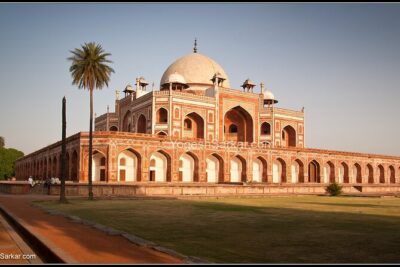

Private Car and Drive for Golden Triangle (4N/5D)
Read our review →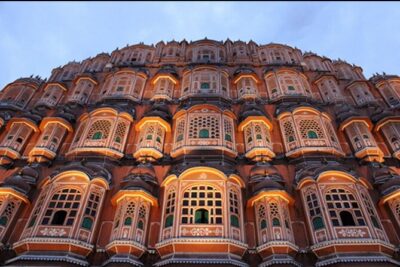
Private Golden Triangle Tour Delhi Agra Jaipur ( Top Rated )
Read our review →Browse the lists this tour appears in