
Reviewed · GOLDEN TRIANGLE TOURS
3 Days Golden Triangle Tour
Three cities, two nights, one very full itinerary. This private Golden Triangle tour gives you a practical way to see Delhi, Agra, and Jaipur without arranging every train, car, hotel, guide, and monument ticket yourself. I like the air-conditioned private vehicle and the plan to provide a guide in each city, with Gaurav Kashyap in Delhi, Abdul Qadir in Agra, and Bipin in Jaipur among the named guides connected with the experience.
I also like the hotel pickup, daily breakfasts, and two-night stay when you choose the hotel option. The tradeoff is pace: you cover a great deal in only three days, so long drives and early starts leave little room for wandering or extra sights.
In This Review
- Key points to know before booking
- Why this three-day route works
- Delhi begins with tombs, towers, and imperial avenues
- Humayun’s Tomb
- Qutub Minar
- India Gate and Rashtrapati Bhavan
- Jama Masjid and Chandni Chowk
- Agra puts the Taj Mahal at center stage
- The Taj Mahal
- Agra Fort
- Fatehpur Sikri
- Jaipur brings forts, palaces, and precision instruments
- Amber Palace
- City Palace of Jaipur
- Hawa Mahal
- Jal Mahal
- Jantar Mantar
- What the guides add to the experience
- What $181 per person really covers
- The pace, comfort, and practical limits
- Who should book this Golden Triangle tour?
- FAQ
- How long is the Golden Triangle tour?
- Which cities does the tour visit?
- What time does the tour start?
- Is the tour private?
- Is hotel pickup and drop-off included?
- Is accommodation included?
- Are monument entrance fees included?
- Is the Taj Mahal open every day?
- What meals are included?
Key points to know before booking
- Three major cities in three days: Delhi, Agra, and Jaipur are linked in one efficient route.
- Private air-conditioned transport: Your group travels by private vehicle for sightseeing and transfers.
- Separate guides by city: You receive local commentary rather than one guide trying to cover every destination.
- The Taj Mahal is a major timing issue: It closes to all visitors on Fridays, so check your dates carefully.
- Hotel and ticket options affect the price: Accommodation and monument tickets depend on the option you select.
- The tour suits short visits: It works best if you want India’s famous sights first and have limited time.
Why this three-day route works
India’s Golden Triangle connects three very different places. Delhi gives you Mughal monuments, British-era buildings, old markets, and grand avenues. Agra brings the Taj Mahal and Agra Fort. Jaipur adds Rajput palaces, hill forts, painted facades, and the remarkable Jantar Mantar observatory.
The route is ambitious, but the private format makes it easier to manage. You are not tied to a large group’s pace, and hotel pickup and drop-off remove much of the daily guesswork. You can ask for help with timing, elderly family members, or practical concerns along the way. One highly praised part of the experience is the guides’ willingness to accommodate older parents and respond quickly to questions.
The tour begins at 8:00 am. That fixed start gives you a useful amount of sightseeing time, though you should expect full days. The vehicle is air-conditioned and used for all transfers and sightseeing. That matters in India, where the comfort of your car can shape how you feel after several hours on the road.
More Golden Triangle Tours in New Delhi:
- 3-Days Private Golden Triangle Tour: Delhi, Agra & Jaipur by Car
★ 5.0 · 1,107 reviews - 3-Days Private Golden Triangle Tour: Delhi, Agra & Jaipur by Car
★ 5.0 · 1,098 reviews - 3-Day Delhi, Agra and Jaipur Private Tour – India Golden Triangle
★ 5.0 · 812 reviews
Delhi begins with tombs, towers, and imperial avenues
Your first day covers several of Delhi’s most important sights. It is a broad introduction rather than a slow study of one neighborhood, so your guide’s explanations matter.
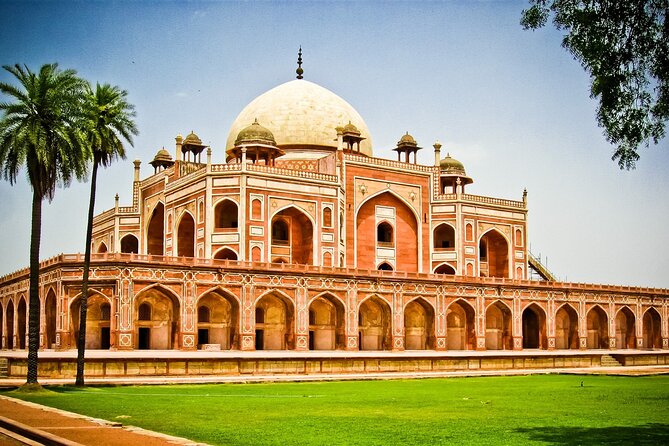
Humayun’s Tomb
Humayun’s Tomb is a UNESCO World Heritage Site and one of the most important early Mughal buildings in Delhi. The tomb’s formal gardens, symmetry, red sandstone, and white details offer a useful introduction to the architecture that later reached its most famous expression at the Taj Mahal.
You have about an hour here. That is enough to see the main structure and grounds, but you may want more time if you enjoy architectural details or photography. The monument ticket is not automatically included in every option, so check the package you select.
Qutub Minar
The Qutub Minar rises 73 meters, or about 240 feet, above the surrounding complex. Made from red sandstone and marble, it is one of Delhi’s most recognizable historic landmarks and the tallest brick minaret in the world.
The one-hour visit lets you see the tower and the wider archaeological site. Your guide can help explain the complex rather than leaving you focused only on the tower itself. Again, the listed admission is separate unless you choose the option that includes monument tickets.
A few more options to weigh up in New Delhi
- Old & New Delhi City Tour – Half or Full Day Options Available
★ 5.0 · 4,811 reviews - Same Day Taj Mahal, Agra Fort & Baby Taj Tour from Delhi by Car
★ 5.0 · 4,304 reviews - Taj Mahal Day Tour from Delhi by Superfast Train – TOP RATED TOUR
★ 5.0 · 4,166 reviews - Full Day Taj Mahal, Agra Fort & Baby Taj Tour from Delhi by Car
★ 5.0 · 3,647 reviews
India Gate and Rashtrapati Bhavan
India Gate gives you a short stop in central New Delhi. The monument, designed by Edwin Lutyens and begun in 1921, commemorates Indian soldiers who died serving in the British Indian Army.
The stop lasts about 30 minutes and admission is free. You will also pass or stop near Rashtrapati Bhavan, the President’s House, with its grand imperial design by Lutyens and Herbert Baker. These two sights help explain Delhi’s role as a planned capital, but they are mainly viewed from outside, so do not expect an interior tour.
Jama Masjid and Chandni Chowk
Jama Masjid brings you into Old Delhi and its Mughal setting. Built between 1650 and 1656 under Shah Jahan, the mosque is one of the city’s major religious and architectural landmarks. Allow an hour, and dress with appropriate respect for a place of worship.
The day ends around Chandni Chowk, where you can see a traditional commercial side of Old Delhi. The market area is known for spices, dried fruit, silver jewelry, and colorful saris. You get about an hour here, but the experience is more about observing the scene than checking off another monument. Keep your belongings secure and stay aware of your surroundings in crowded market streets.
Delhi’s first day asks you to switch gears several times: tomb, minaret, national monument, mosque, and market. I like that range. The drawback is that the itinerary can feel like a sampler, especially if you want long visits at Humayun’s Tomb or in Old Delhi.
Agra puts the Taj Mahal at center stage
The second day focuses on Agra and the Mughal monuments that define the city. The Taj Mahal is the main event, but Agra Fort gives you the political and personal story behind it.
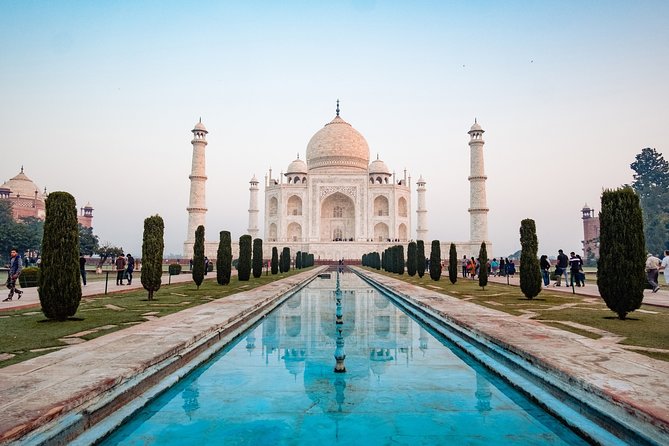
The Taj Mahal
You have about two hours at the Taj Mahal. That is a sensible amount of time for the main approach, the mausoleum, the gardens, and photographs. The white marble changes character with the light, so your guide’s timing and the day’s schedule can make a real difference.
The Taj Mahal was built between 1631 and 1653 under Shah Jahan as a mausoleum. It is more than a famous photograph. The balance of the building, the carved marble, and the careful garden plan reward a slower look, even when the overall tour moves quickly.
The Taj Mahal closes on Fridays. This is the single most important date restriction in the tour. If your three-day schedule includes a Friday visit, the central sight of the trip will not be available, so confirm your dates before paying.
The attraction ticket is not included in every package. The tour information describes monument admission as included only when you select the relevant option. Read the price details closely, since $181 per person may refer to a package with particular inclusions rather than every possible extra.
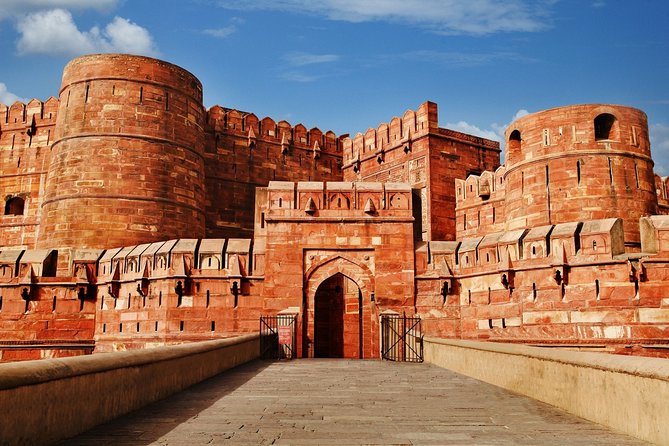
Agra Fort
Agra Fort takes about an hour. Akbar built the massive red sandstone fort in the 16th century, and Shah Jahan later added marble decoration. Its position beside the Yamuna River and its huge defensive walls give you a different view of Mughal power from the delicate Taj Mahal.
The fort also adds human detail to the Taj story. Shah Jahan spent his final years confined there by his son, with a view toward the mausoleum. Your guide can connect the fort’s courtyards and palaces to the people who used them.
The fort is substantial, so an hour will not cover every corner. I would focus on the main palaces, courtyards, and views rather than trying to inspect the entire complex.
Fatehpur Sikri
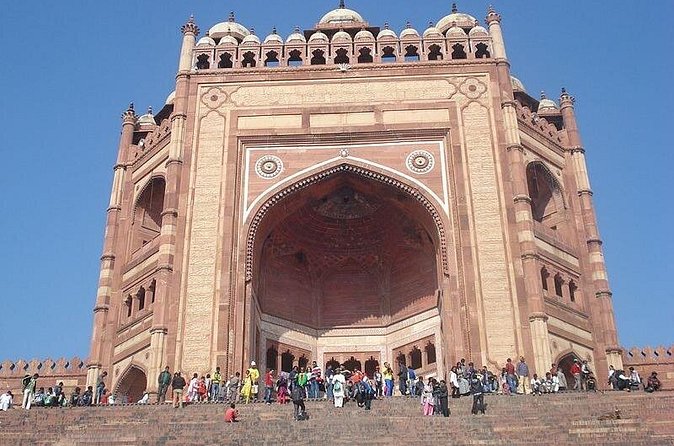
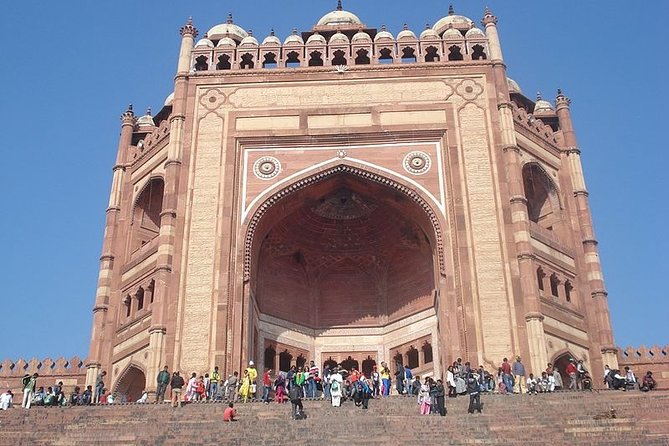
Fatehpur Sikri lies about 40 kilometers west of Agra and served as the Mughal capital from 1572 to 1585 during Akbar’s reign. Its short period as a capital makes it an unusual stop. You see a planned royal city that was occupied for only a limited time.
The visit lasts about an hour. Fatehpur Sikri is included in the sightseeing route, but the admission listing shows free entry in the supplied details. Allow your guide to explain the purpose of the different buildings, since the site can otherwise feel like a collection of courtyards and red sandstone walls.
This day has a strong historical rhythm, but it also involves road time and three major sites. You will appreciate having a private car between stops. You can rest in air conditioning instead of worrying about the next connection.
Jaipur brings forts, palaces, and precision instruments
The third day belongs to Jaipur, Rajasthan’s Pink City. The itinerary gives you the major sights, though the schedule remains tight. You will see the city through royal buildings, a lakeside palace, and an 18th-century scientific complex.
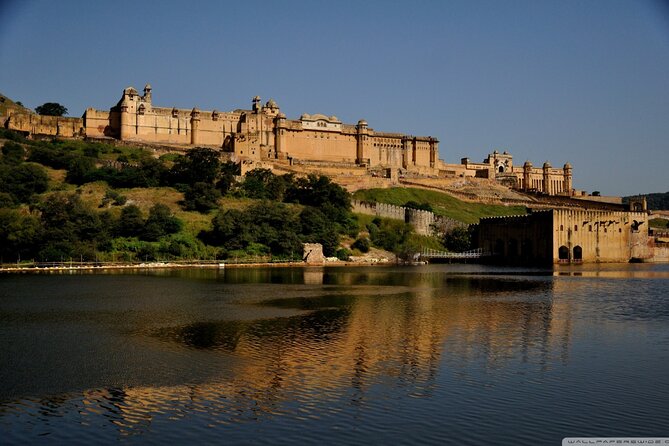
Amber Palace
Amber Palace, also called Amer Fort, is about 11 kilometers from Jaipur. It was built in 1592 by Raja Man Singh, and Amber served as the state capital before Jaipur was established.
You have two hours here, the longest stop of the day. Use that time for the palace courtyards, decorative rooms, and views from the fort complex. The site’s setting above the city adds to the visit, but the walk through a large fort can be tiring, especially in heat. If you are traveling with older relatives, tell the guide early so the pace can be adjusted where possible.
Admission is not automatically included in every option. Check this before booking if you want the simplest possible budget.
City Palace of Jaipur
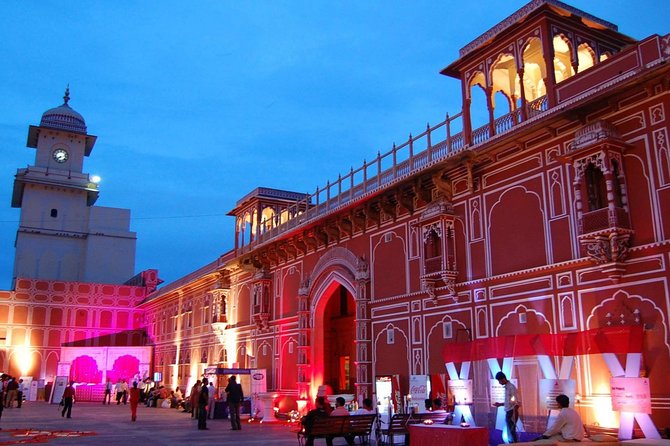
The City Palace sits in the center of the Pink City and was the seat of the Maharaja. The complex includes Chandra Mahal, Mubarak Mahal, and other royal buildings.
The visit lasts about an hour. That gives you a useful look at the palace compound, though not enough time for every room or collection if all areas are open. The City Palace helps you see Jaipur as a working royal center rather than only a city of painted streets and photo stops.
Hawa Mahal
Hawa Mahal, or the Palace of Winds, is a 30-minute stop. The five-story facade was built in 1799 by Maharaja Sawai Pratap Singh and is designed with many small windows.
From outside, the facade is one of Jaipur’s most familiar sights. The short visit is enough for photographs and an explanation of its design, but it is not a long palace tour. Keep your expectations matched to the schedule.
Jal Mahal
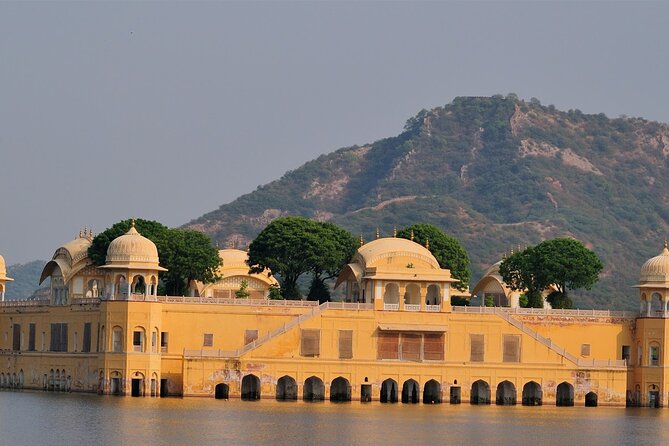
Jal Mahal sits in the middle of Man Sagar Lake, about four kilometers from Jaipur on the Amer Jaipur road. You have around 20 minutes here, making it a brief viewing stop rather than an interior visit.
The palace’s position in the water makes it a welcome change from the forts and courtyards. Since the stop is short, use it for the view and photographs rather than expecting a detailed visit inside.
Jantar Mantar
Jantar Mantar is an astronomical observation site built in the early 18th century. The complex contains about 20 fixed masonry instruments, each designed for scientific observation.
You have one hour here. This is one of Jaipur’s most distinctive sights because it shows the technical side of the royal court. The instruments are large and easier to understand with a guide, so this is a place where commentary adds real value.
The final day covers a lot of ground. Amber Palace receives proper time, but Hawa Mahal and Jal Mahal are quick stops. If you want free time for shopping or a relaxed meal in Jaipur, this schedule may leave you wanting more.
What the guides add to the experience
A guide in each city is one of the strongest features of this tour. Delhi, Agra, and Jaipur have different political and cultural backgrounds, and one person cannot easily explain all three with equal depth.
The guide names associated with the experience include Gaurav Kashyap for Delhi, Abdul Qadir for Agra, and Bipin for Jaipur. You may receive a different assignment, but the city-by-city format is useful. It gives you local context at each major stop and allows the guide to focus on the place in front of you.
The strongest praise centers on patience, clear answers, and help for older family members. That is worth noting if you are bringing parents or anyone who needs a gentler pace. Since this is a private activity for only your group, you can raise concerns directly rather than trying to keep up with a large coach group.
What $181 per person really covers
At about $181 per person, the tour can offer good value if you want transport, guides, sightseeing, and accommodation arranged together. The price is especially useful for a short visit, since arranging three cities independently can involve several separate payments and choices.
You need to check which package you are buying. Two nights of twin-sharing accommodation with breakfast are included only when you choose the option with hotels. Monument entrance fees are also included only when you select the option that includes admission tickets.
The package includes all taxes, private air-conditioned transfers and sightseeing, professional private guides, hotel pickup and drop-off, and breakfasts with the hotel option. Lunch, dinner, and drinks are not included, so keep money and time available for meals.
Group discounts may be available. Since the activity is private, the per-person price can make more sense for two or more people sharing the vehicle and guides. If you are traveling alone, compare the solo price with the cost of arranging Delhi, Agra, and Jaipur separately.
The pace, comfort, and practical limits
This is a sightseeing-first tour. You will see the major monuments, but you will not have much unplanned time. The private vehicle is a major comfort point, particularly between Delhi and Agra and then toward Jaipur, though the schedule still involves road travel.
Hotel pickup and drop-off simplify the start and finish. The meeting time is 8:00 am, and confirmation is received when you book. Most people can participate, but the itinerary includes large historic complexes and several hours of daily sightseeing, so tell the operator about mobility concerns before departure.
The tour is not all-inclusive in the resort sense. You pay separately for lunch, dinner, and drinks. You should also confirm the hotel and admission-ticket option, since those choices change what is covered.
Cancellation is relatively flexible if you plan ahead. You can receive a full refund by canceling at least six full days before the local start time. Cancellation two to six full days ahead allows a 50 percent refund, while cancellations less than two full days ahead are not refunded.
Who should book this Golden Triangle tour?
I would choose this tour if you have only three days and want India’s best-known sights with the basic logistics handled. It is a good match for first-time visitors, families, older relatives, and anyone who prefers a private car and guide over piecing together transport alone.
I would hesitate if you prefer slow travel, long meals, independent wandering, or several hours in each museum. The route is efficient, not leisurely. Jaipur in particular gives you a strong first look, but little spare time beyond the scheduled monuments.
Book only after checking three details: your Taj Mahal date, the hotel inclusion, and the monument-ticket inclusion. If all three match your needs, the combination of private transport, local guides, breakfasts, and a focused route makes the $181 starting price worth serious consideration. If Friday is your Agra day or you want a relaxed pace, choose another schedule.
FAQ
How long is the Golden Triangle tour?
The tour lasts approximately three days and includes two nights.
Which cities does the tour visit?
It visits New Delhi, Agra, and Jaipur.
What time does the tour start?
The stated start time is 8:00 am.
Is the tour private?
Yes. Only your group participates in the private tour or activity.
Is hotel pickup and drop-off included?
Yes, hotel pickup and drop-off are included.
Is accommodation included?
Two nights of twin-sharing accommodation with breakfast are included if you choose the option that includes hotels.
Are monument entrance fees included?
Monument entrance fees are included only if you select the option with admission tickets.
Is the Taj Mahal open every day?
No. The Taj Mahal remains closed to all visitors on Fridays.
What meals are included?
Breakfast is included with the hotel option. Lunch, dinner, and drinks are not included.
Just added in New Delhi
- Five Days Golden Triangle Tour with Ranthambore Delhi Agra Jaipur★ 5.0 · 11 reviews
- 5 Days Golden Triangle Tour with Ranthambore India★ 5.0 · 10 reviews
- 5 Days Golden Triangle Tour with Ranthambore Delhi Agra Jaipur★ 5.0 · 11 reviews
- 5-Day Private Luxury Golden Triangle Tour From Delhi★ 5.0 · 45 reviews
- Delhi, Agra, Jaipur & Ranthambhore Tiger Safari 5-Day Tour★ 5.0 · 47 reviews
- Private 5 Days Golden Triangle Tour – Visit Delhi Agra and Jaipur★ 5.0 · 26 reviews
- 5-Day Private Delhi, Agra and Jaipur with Ranthambhore Tiger Tour From Delhi★ 5.0 · 44 reviews
- 5-Day Private Golden Triangle Tour: Delhi, Agra, and Jaipur★ 5.0 · 62 reviews
Golden Triangle Tours, compared.
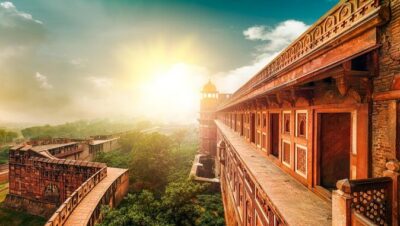
3-Days Private Golden Triangle Tour: Delhi, Agra & Jaipur by Car
Read our review →3-Days Private Golden Triangle Tour: Delhi, Agra & Jaipur by Car
Read our review →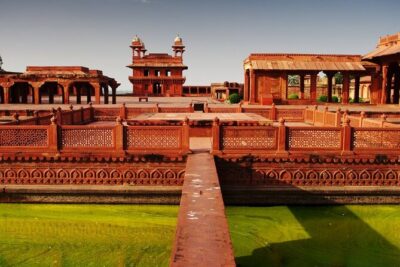
3-Day Delhi, Agra and Jaipur Private Tour – India Golden Triangle
Read our review →
Four-Day Private Luxury Golden Triangle Tour to Agra and Jaipur From New Delhi
Read our review →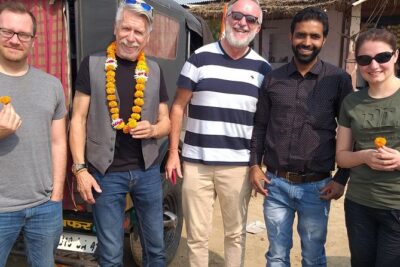
5 Nights 6 Days Private Golden Triangle Tour – Delhi Agra Jaipur
Read our review →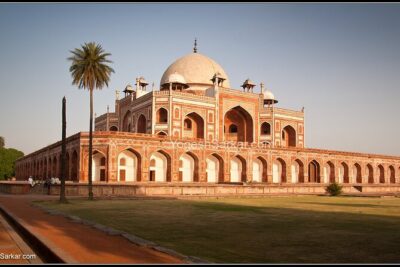

Private Car and Drive for Golden Triangle (4N/5D)
Read our review →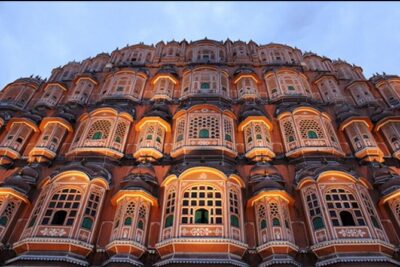
Private Golden Triangle Tour Delhi Agra Jaipur ( Top Rated )
Read our review →Browse the lists this tour appears in