
Reviewed · GOLDEN TRIANGLE TOURS
3-Day Private Golden Triangle Tour to Agra &Jaipur from New Delhi
The Taj Mahal is only the beginning. This three-day private Golden Triangle tour links Delhi, Agra, and Jaipur with a driver, approved guides, monument tickets, and optional hotel accommodation. I like the flexible Delhi pickup, available from 7 AM to 11 AM, and the fact that solo visitors can book a private vehicle rather than join a large group. I also like the clear route through India’s major Mughal and Rajput sights. The main drawback is the pace: Day 1 includes many Delhi stops, and the return to Delhi on Day 3 can take about five hours.
The advertised price of $11.50 per person deserves a careful look. It may apply to a particular booking option, group size, or tour arrangement, so check exactly what is included before paying. Hotels, admission tickets, transport, water, WiFi, taxes, and guides can add up quickly, making the package potentially good value when those inclusions apply.
In This Review
- Key points to know before booking
- Day 1: Delhi’s monuments from Qutub Minar to Chandni Chowk
- How to handle the packed Delhi schedule
- Day 2: Sunrise at the Taj Mahal and the road to Jaipur
- Day 3: Jaipur’s stepwell, palaces, and astronomical instruments
- Private transport, guides, and what is included
- Price, pace, and who gets the best value
- Should you book this Golden Triangle tour?
- FAQ
- Where can pickup be arranged?
- What pickup time can I choose?
- Is this a private tour?
- Are monument admission tickets included?
- Are hotels included?
- Can I book the tour without hotels?
- Is lunch included?
- What happens if the tour starts on Thursday?
- What should I bring?
Key points to know before booking
- Flexible Delhi-area pickup: Choose a start time between 7 AM and 11 AM from Delhi, Noida, Gurugram, Ghaziabad, or Faridabad.
- A private vehicle for your group: You travel with your own driver and private government-approved guide rather than joining a shared sightseeing group.
- Two Mughal capitals in one trip: Delhi and Agra provide the major historic sights, including the Taj Mahal, Agra Fort, Humayun’s Tomb, and Qutub Minar.
- Jaipur adds a different India: The Pink City brings royal palaces, astronomical instruments, colorful facades, and old stepwell architecture.
- Tickets are included: Monument admission is included when you select the applicable tour option, which saves time at busy entrances.
- A long final drive: You may reach Delhi around 9 PM on Day 3, though an earlier or later arrival can be requested.
Day 1: Delhi’s monuments from Qutub Minar to Chandni Chowk
Your first day begins with pickup anywhere in the listed Delhi-area districts. The broad pickup window is useful if you are arriving from a hotel, apartment, or airport-area property, but do not treat the day as leisurely. The schedule includes ten sightseeing stops before the drive to Agra.
Qutub Minar is a strong opening stop. This UNESCO World Heritage site rises from the Qutb complex, located on the site of Lal Kot, Delhi’s oldest fortified city. Allow about an hour to examine the minaret and surrounding remains. A guide adds value here because the complex includes several layers of Delhi’s early medieval past, not just one photogenic tower.
The Lotus Temple provides a change of mood. Its white, flower-shaped design houses a Baháʼí place of worship, and entry is free. The planned visit lasts about 30 minutes, so expect an exterior and brief visit rather than a long architectural study. The temple is closed on Mondays, an important detail when choosing your start date.
India Gate follows as a short stop of about 15 minutes. Designed by Edwin Lutyens, the arch honors Indian soldiers who died in the First World War. The nearby Parliament House is even shorter, around ten minutes, and is mainly a photo and orientation stop. These two visits help you see New Delhi’s planned civic center, but they are not full indoor tours.
At Raj Ghat, you pause for around 30 minutes at the memorial to Mahatma Gandhi. The site is quieter and more reflective than the traffic outside. Dress respectfully and expect to remove your shoes in areas where required.
Jama Masjid brings you into Old Delhi. Built by Shah Jahan between 1650 and 1656, it is one of India’s largest mosques. The visit is scheduled for about an hour, and admission is included. Modest clothing and respectful behavior matter here. Since this is an active religious site, your guide can help explain local rules and the best way to enter.
The nearby Chandni Chowk market is a short, half-hour introduction to Old Delhi’s crowded commercial streets. The official name in the itinerary is written as Pasar Chandni Chowk, but the place is the historic Chandni Chowk market near Old Delhi Railway Station. You should think of this as a quick taste, not a full market exploration. The Red Fort is at its eastern end, but it is not included as a separate stop on this tour.
Humayun’s Tomb is one of the day’s major sights. Commissioned by Humayun’s first wife, Bega Begum, in 1569 and 1570, the tomb is an important Mughal monument and a UNESCO World Heritage site. One hour gives you enough time to walk through the garden setting and see the building’s formal design. This stop also helps prepare you for the Taj Mahal, since Mughal tomb architecture developed through stages rather than appearing fully formed at Agra.
Swaminarayan Akshardham is planned for about an hour, with free admission listed. The temple and cultural campus is near the Noida border. It is closed every Monday, like the Lotus Temple, so a Monday Delhi itinerary needs adjustment. The complex can be a useful contrast to the earlier Mughal and colonial sites, showing a modern Hindu temple campus rather than a medieval monument.
After lunch at a local restaurant, you take the Yamuna Expressway toward Agra. The transfer is listed at about three hours, though traffic can change the timing. On arrival, you check into your Agra hotel and have the rest of the day at leisure. That free evening is welcome after such a full Delhi schedule.
More Golden Triangle Tours in New Delhi:
- 3-Days Private Golden Triangle Tour: Delhi, Agra & Jaipur by Car
★ 5.0 · 1,107 reviews - 3-Days Private Golden Triangle Tour: Delhi, Agra & Jaipur by Car
★ 5.0 · 1,098 reviews - 3-Day Delhi, Agra and Jaipur Private Tour – India Golden Triangle
★ 5.0 · 812 reviews
How to handle the packed Delhi schedule
Day 1 is ambitious. The listed stops total several hours, and that does not include traffic, lunch, entry procedures, or time between districts. You will see a lot, but you will not have the same depth at every place.
I would ask the operator to adjust the plan after booking if you want more time at a few major monuments. The tour allows you to add, remove, or change monuments by request. For many people, Qutub Minar, Humayun’s Tomb, Jama Masjid, and the Lotus Temple are enough for one day, while the short India Gate and Parliament House stops can remain quick roadside visits.
The private format is especially useful here. A driver can move your group between distant parts of Delhi, and a guide can keep the visits organized. Pickup times are described as flexible and punctual, which matters when a late start could push the Agra arrival well into the evening.
Day 2: Sunrise at the Taj Mahal and the road to Jaipur
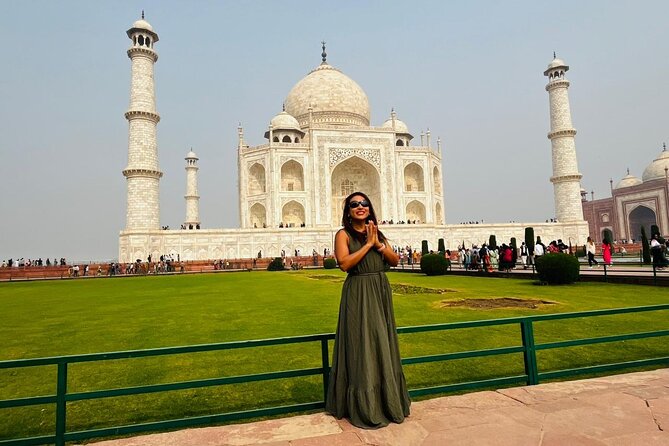
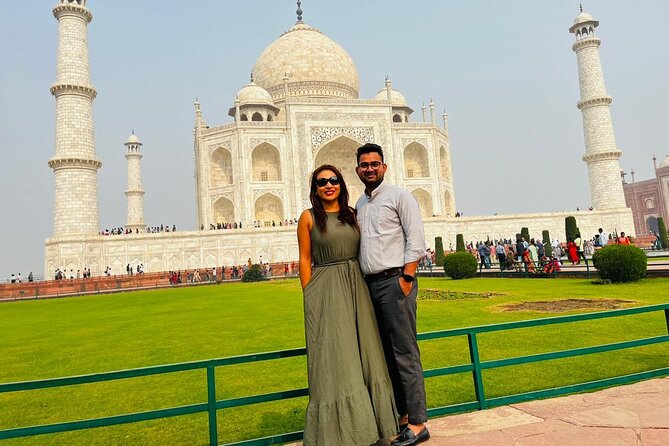
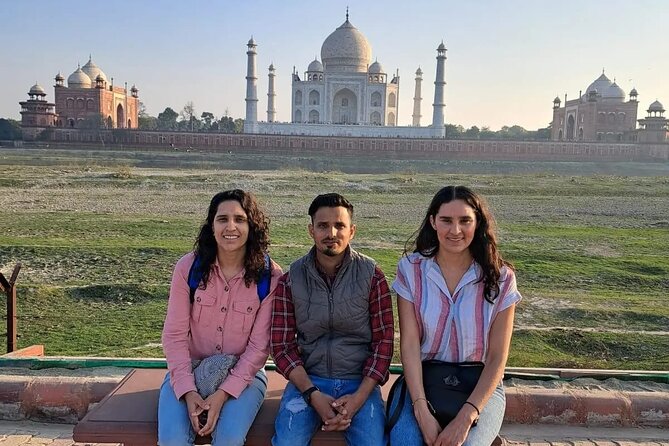
The Taj Mahal visit begins at dawn. This is the right time for the monument, not only because the light can be gentle, but because an early start leaves room for the rest of the day. The visit lasts about two hours, and admission is included.
The Taj Mahal was built by Mughal emperor Shah Jahan in memory of his wife Mumtaz Mahal, who died in 1631 after giving birth to their fourteenth child. Your guide can help put the famous white marble building into its human and dynastic setting. Take your time in the gardens and at the main viewing areas, while remembering that the early schedule can feel tiring after a long first day.
The sunrise visit depends on weather conditions. That does not mean the stop disappears, but poor weather can affect the view and the exact experience. A valid passport is required on the day of travel, so keep it accessible rather than packed deep in your luggage.
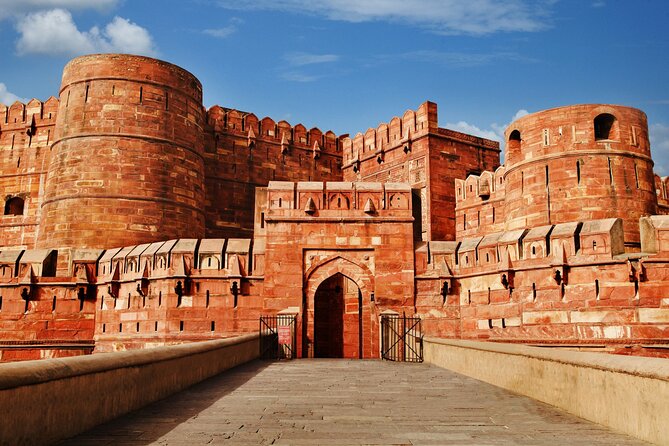
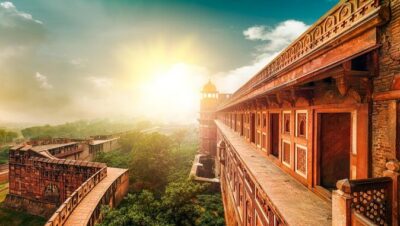
Agra Fort comes next, with about an hour and included admission. This UNESCO World Heritage site was the main residence of Mughal emperors until the capital moved to Delhi in 1638. Unlike the Taj Mahal, which is often approached as a single monument, Agra Fort gives you a larger sense of imperial life, defense, courtyards, and royal power.
Itmad-ud-Daulah takes around 30 minutes. Often called the Baby Taj, this tomb is regarded as an architectural inspiration for the Taj Mahal. The shorter visit fits well after Agra Fort, and the smaller scale lets you look closely at decorative details without another long walk through a huge complex.
After lunch, you continue to Fatehpur Sikri, about 40 kilometers from Agra. The former Mughal city offers a different kind of experience, with broad courtyards and grand structures that show the ambition of the Mughal court. The visit is scheduled for one hour, and admission is listed as free, though you should follow the guide’s instructions regarding any local site procedures.
The drive to Jaipur takes about four hours. This is the longest transfer of Day 2, and it can make the day feel like a sequence of monuments joined by highway time. You check into your Jaipur hotel on arrival, with the evening free.
That overnight stop is important. A day trip from Agra to Jaipur would be much harsher. Sleeping in Jaipur gives you a better chance to see the city’s main sights without returning to Agra or trying to cover the entire Golden Triangle from one base.
Day 3: Jaipur’s stepwell, palaces, and astronomical instruments
The final sightseeing day begins at Panna Meena ka Kund, an old stepwell believed to be about 1,000 years old. The visit lasts only 15 minutes, so consider it a quick architectural stop. Its geometric stairs and deep well show how practical water structures could also become striking public spaces.
Jal Mahal follows, also for about 15 minutes. The palace sits in Man Sagar Lake, and the building and lake were later renovated after the palace was first built in 1699. The stop is mainly for views and photographs from the shore. Since the palace is in the water, do not expect a long interior visit.
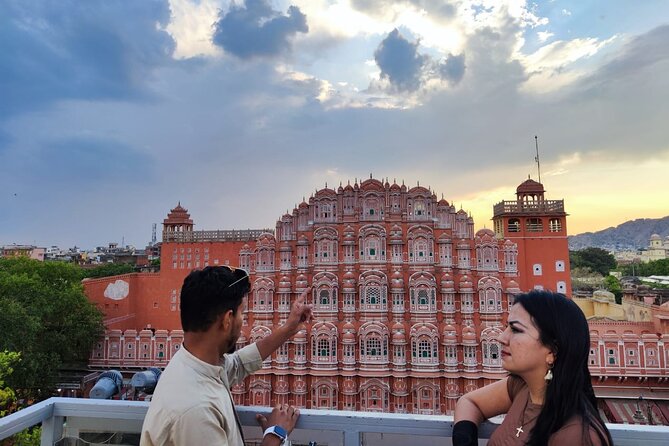
Hawa Mahal is another short stop. The Palace of Wind is built from red and pink sandstone beside Jaipur’s City Palace and extends toward the Zenana, or women’s chambers. Fifteen minutes is enough for an outside view, but not a full study of the building. Its famous facade is best understood as part of the old royal city rather than an isolated photo backdrop.
The City Palace receives about an hour and includes admission. It was both a royal residence and an administrative center for Jaipur’s rulers. This is one of the day’s main visits, so use the time to explore the palace areas open to the public and ask your guide how Jaipur’s royal government operated.
Jantar Mantar is the final major sight, with another hour and included admission. Built by Sawai Jai Singh, founder of Jaipur, the collection contains 19 astronomical instruments and was completed in 1734. The large stone instruments can look strange at first, but they become much clearer when a guide explains what each one measured and how the structures related to timekeeping and astronomy.
After sightseeing, the drive to Delhi takes about five hours. Arrival is expected around 9 PM, though you can request an earlier or later drop-off. You can also choose Jaipur Airport instead of returning to Delhi, which may help if you are continuing through Rajasthan or flying onward.
A few more options to weigh up in New Delhi
- Old & New Delhi City Tour – Half or Full Day Options Available
★ 5.0 · 4,811 reviews - Same Day Taj Mahal, Agra Fort & Baby Taj Tour from Delhi by Car
★ 5.0 · 4,304 reviews - Taj Mahal Day Tour from Delhi by Superfast Train – TOP RATED TOUR
★ 5.0 · 4,166 reviews - Full Day Taj Mahal, Agra Fort & Baby Taj Tour from Delhi by Car
★ 5.0 · 3,647 reviews
Private transport, guides, and what is included
The tour uses an air-conditioned vehicle with a private driver. Only your own group participates, which gives you more control than a shared coach tour. You can ask about changing the order or removing stops, a useful option when you know you prefer monuments over photo stops or markets over formal buildings.
A government-approved guide is provided, with all languages listed as available. The guide is not just a translator. At places such as Jantar Mantar, Fatehpur Sikri, and Humayun’s Tomb, clear explanation can turn unusual architecture into something meaningful.
Mineral water and WiFi on board are included, along with fees and taxes. Monument tickets are also included in the applicable package. Lunch is not included, so budget for meals at local restaurants on the road. Tips for the driver and guide are separate as well.
Hotel accommodation is included only with the option that includes hotels. The standard arrangement is twin sharing. Three people are generally placed in a triple-sharing room, while three people requesting two rooms pay an additional charge. If you choose the tour price without hotels, you arrange your own accommodation, with the first night in Agra and the second in Jaipur.
Price, pace, and who gets the best value
At $11.50 per person, the price appears unusually low for a private three-day tour with a vehicle, guides, monument tickets, water, WiFi, and possible hotel accommodation. I would not assume every listed inclusion applies to every booking option. Check the exact package, room arrangement, group size, and hotel terms before you compare prices.
The value improves for a group that shares one private vehicle and guide. You get door-to-door movement between three cities, fewer transport decisions, and a route that covers many headline sights. If you are booking alone, the private setup gives you comfort and flexibility, but the per-person cost may not be as attractive once the correct option is selected.
This tour suits a first visit to northern India, especially if you want the major monuments without arranging separate trains, taxis, guides, and admission tickets. It also suits solo visitors who value a private setup and want flexible pickup. It is less suitable if you prefer slow mornings, long market visits, or several hours at each monument.
Wear comfortable walking shoes. The tour involves forts, tombs, temple grounds, courtyards, and historic sites, and the early Taj Mahal start can make the first part of Day 2 demanding. Check your dates carefully too. If the tour starts on Thursday, the order changes to Delhi, Jaipur, Agra, Delhi because the Taj Mahal is closed on Fridays.
Should you book this Golden Triangle tour?
I would book it if your priority is efficient sightseeing with a private driver, included monument tickets, and two nights on the road. The route gives you the Taj Mahal, major Delhi monuments, Agra Fort, Fatehpur Sikri, and Jaipur’s royal center in three days.
Before booking, confirm the hotel-inclusive option, the exact price, room setup, pickup point, and Monday or Friday closures. Ask to trim the Delhi schedule if you want a calmer first day. Choose this tour for coverage and convenience, not for an unhurried study of every site.
FAQ
Where can pickup be arranged?
Pickup is offered from anywhere in Delhi, Noida, Gurugram, Ghaziabad, and Faridabad.
What pickup time can I choose?
You can choose a pickup time between 7 AM and 11 AM on the first day.
Is this a private tour?
Yes. The activity is private, and only your group participates.
Are monument admission tickets included?
Tickets to the monuments are included with the applicable tour option.
Are hotels included?
Two nights of accommodation are included when you book the option that includes hotels. The first night is in Agra and the second night is in Jaipur.
Can I book the tour without hotels?
Yes. The tour has an option without hotels, allowing you to arrange your own accommodation in Agra and Jaipur.
Is lunch included?
No. Lunch is not included, so you will pay separately for meals at local restaurants.
What happens if the tour starts on Thursday?
The route changes to Delhi, Jaipur, Agra, Delhi because the Taj Mahal is closed every Friday.
What should I bring?
Bring a passport valid on the day of travel and wear comfortable walking shoes. The Taj Mahal sunrise visit is subject to weather conditions.
Just added in New Delhi
- Five Days Golden Triangle Tour with Ranthambore Delhi Agra Jaipur★ 5.0 · 11 reviews
- 5 Days Golden Triangle Tour with Ranthambore India★ 5.0 · 10 reviews
- 5 Days Golden Triangle Tour with Ranthambore Delhi Agra Jaipur★ 5.0 · 11 reviews
- 5-Day Private Luxury Golden Triangle Tour From Delhi★ 5.0 · 45 reviews
- Delhi, Agra, Jaipur & Ranthambhore Tiger Safari 5-Day Tour★ 5.0 · 47 reviews
- 5-Day Private Delhi, Agra and Jaipur with Ranthambhore Tiger Tour From Delhi★ 5.0 · 44 reviews
- 5-Day Private Golden Triangle Tour: Delhi, Agra, and Jaipur★ 5.0 · 62 reviews
- Private 5 Days Golden Triangle Tour – Visit Delhi Agra and Jaipur★ 5.0 · 26 reviews
Golden Triangle Tours, compared.
3-Days Private Golden Triangle Tour: Delhi, Agra & Jaipur by Car
Read our review →3-Days Private Golden Triangle Tour: Delhi, Agra & Jaipur by Car
Read our review →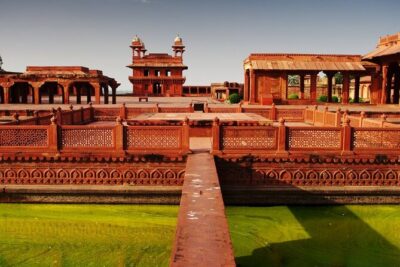
3-Day Delhi, Agra and Jaipur Private Tour – India Golden Triangle
Read our review →
Four-Day Private Luxury Golden Triangle Tour to Agra and Jaipur From New Delhi
Read our review →
5 Nights 6 Days Private Golden Triangle Tour – Delhi Agra Jaipur
Read our review →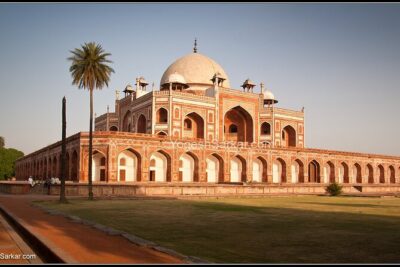

Private Car and Drive for Golden Triangle (4N/5D)
Read our review →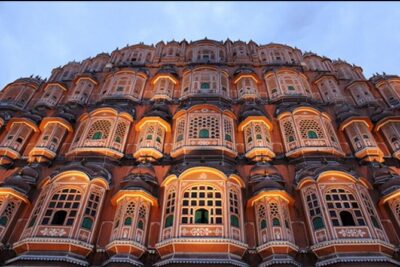
Private Golden Triangle Tour Delhi Agra Jaipur ( Top Rated )
Read our review →Browse the lists this tour appears in