
Reviewed · GOLDEN TRIANGLE TOURS
10-Day Private Golden Triangle Tour With Jodhpur Udaipur Pushkar
India comes at you fast. This 10-day private tour gives you time to absorb Delhi, Agra, Jaipur, Jodhpur, Udaipur, and Pushkar without changing hotels every night. I especially like the two Taj Mahal visits, at sunset and sunrise, and the steady support of a private driver.
I also like the mix of grand monuments and everyday places, from Chandni Chowk and Clock Tower Market to sacred Pushkar Lake. The main caution is the long road travel, especially between Jaipur, Udaipur, Jodhpur, Pushkar, and Delhi, plus about $150 per person in monument entrance fees beyond the tour price.
In This Review
- Key points at a glance
- What this 10-day route gets right
- Delhi begins with faith, architecture, and crowded streets
- Agra gives you the Taj Mahal twice
- Jaipur combines forts, science, and pink sandstone
- Udaipur slows the pace beside Lake Pichola
- Jodhpur brings blue streets and a great fort
- Pushkar closes the trip with worship at the lake
- What the $437.14 price really covers
- Who should book this private tour?
- Should you book it?
- FAQ
- Is accommodation included in the tour price?
- Are monument entrance fees included?
- What kind of transportation is provided?
- Is this a private tour?
- Can the tour pick me up at an airport or hotel?
- What happens if I need to cancel?
Key points at a glance
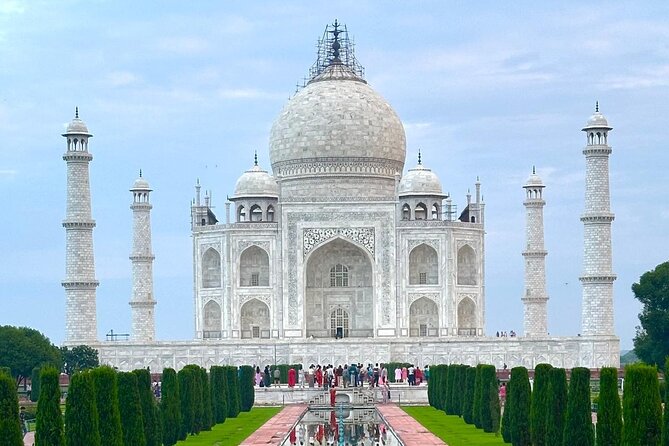
- Two different Taj Mahal views: See the monument at sunset from Mehtab Bagh, then return at sunrise when the light and crowds can be more favorable.
- A private car and driver throughout: Sedan, wagon, or minivan size depends on your group, and only your party takes part.
- Six major North Indian cities: Delhi, Agra, Jaipur, Jodhpur, Udaipur, and Pushkar create a broad introduction to Mughal, Rajput, Sikh, Hindu, and modern Indian culture.
- Local guides in each city: You get more than a driver, with guided visits at key sights in Delhi, Agra, Jaipur, and Rajasthan.
- The price needs a second look: The listed $437.14 per person includes transport, breakfast, and accommodation when that option is selected, but monument tickets are not included.
- A strong choice for first-time visitors: The route covers famous sights efficiently, but it is not a slow, single-region holiday.
What this 10-day route gets right
The appeal is simple: you see the classic Golden Triangle, then continue into Rajasthan. Delhi brings Mughal monuments and busy markets. Agra supplies the Taj Mahal. Jaipur adds forts and royal buildings. Jodhpur, Udaipur, and Pushkar then shift the mood toward desert royalty, lakeside palaces, and pilgrimage.
I like this structure because it gives you both headline attractions and smaller stops. You are not limited to a parade of famous buildings. Agrasen Ki Baoli, Chand Baori, a Sikh gurdwara, a stepwell beside Jaipur’s Amber Fort, and the market around Jodhpur’s clock tower all help show how varied North India can be.
The private format also matters. You do not have to wait for a large bus, and your driver can help keep the day moving. Several people specifically praised drivers named Vinod, Ashok, Surendra, Maan Singh, and Man Singh for safe driving, punctuality, kindness, and practical help. Driver assignments can change, but the pattern is clear: dependable road support is one of the tour’s strongest features.
The tradeoff is distance. India’s roads can turn a map line into a full day in the car. Day 6 takes you to Udaipur, and Day 8 sends you onward to Jodhpur before the route continues to Pushkar and Delhi. You will see a lot, but you should expect early starts, traffic delays, and long stretches between major sights.
More Golden Triangle Tours in New Delhi:
- 3-Days Private Golden Triangle Tour: Delhi, Agra & Jaipur by Car
★ 5.0 · 1,107 reviews - 3-Days Private Golden Triangle Tour: Delhi, Agra & Jaipur by Car
★ 5.0 · 1,098 reviews - 3-Day Delhi, Agra and Jaipur Private Tour – India Golden Triangle
★ 5.0 · 812 reviews
Delhi begins with faith, architecture, and crowded streets
The first day starts gently at Gurudwara Bangla Sahib, one of Delhi’s important Sikh places of worship. The visit is scheduled for 30 minutes and admission is free. Its story centers on the eighth Sikh Guru, who is said to have helped people suffering from smallpox and cholera by distributing water from the site’s tank.
You should dress respectfully and follow local instructions inside the gurdwara. This is a short stop, but it adds a living religious setting before the tour moves to monuments.
Agrasen Ki Baoli is another compact visit, also about 30 minutes. This protected stepwell drops into the earth through repeated rows of stone steps. It is a good first look at the water architecture found across northern India, though the stop is brief and the site itself is smaller than the great forts and palaces ahead.
Day 2 carries more weight. Qutub Minar is a UNESCO World Heritage site and rises 73 meters over five storeys. The tower dates to the beginning of the Delhi Sultanate, and you have about an hour to see it and the surrounding complex.
The Lotus Temple offers a sharp change in style. Built in 1986, its white, flower-like form is open to people of every religion. The planned visit lasts 30 minutes, so think of it as an architectural and quiet reflection stop rather than a long tour.
India Gate and Parliament House are viewed more briefly. India Gate is a war memorial dedicated to soldiers of British India who died in wartime. Parliament House, also known as Sansad Bhavan, contains the Lok Sabha and Rajya Sabha. These stops help place Delhi in its modern national setting, but the listed timing suggests quick photo and explanation visits.
Humayun’s Tomb deserves the full hour. Commissioned in 1558 by Empress Bega Begum for the Mughal emperor Humayun, it is an important early Mughal monument and a useful introduction to the forms later seen at the Taj Mahal.
The day finishes in Jama Masjid and Chandni Chowk. Jama Masjid was built by Shah Jahan between 1650 and 1656 and is one of India’s largest mosques. Nearby Chandni Chowk brings the sensory overload: spices, dried fruit, silver jewelry, colorful saris, narrow lanes, and small shops selling oils and other goods.
I would save energy for this final section. Chandni Chowk is not polished sightseeing, and that is precisely why it matters. You get a glimpse of working Delhi rather than only grand imperial buildings.
Agra gives you the Taj Mahal twice
Day 3 uses the Yamuna Expressway for the drive from Delhi to Agra, listed at about four hours. The private air-conditioned vehicle is especially useful here, since the route involves a substantial road transfer before the sightseeing begins.
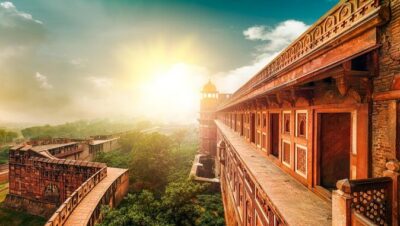
Agra Fort is the first major stop. Built by Akbar in red sandstone, the fort contains royal halls including the Diwan-e-Aam and Diwan-e-Khas. Allow an hour, and pay attention to the contrast between its heavy defensive walls and the refined palace spaces inside.
Itmad-ud-Daulah, often called the Baby Taj, takes another hour. Built between 1622 and 1628, this smaller Mughal mausoleum is known for its delicate design and decorative detail. It is not a substitute for the Taj Mahal, but it helps you notice the evolution of Mughal tomb architecture.
Mehtab Bagh provides a different angle across the Yamuna. The garden is scheduled for 30 minutes and is used for a sunset view of the Taj Mahal away from the main entrance crowd. This is one of the smartest features of the route. You see the monument as part of its setting, not only as a building approached through a ticket gate.
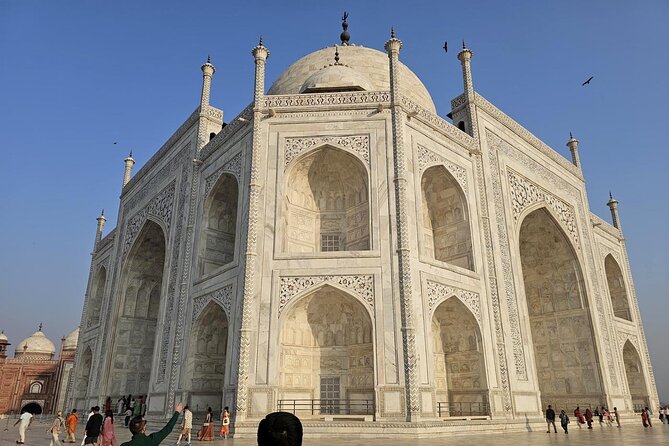
The next morning begins with the Taj Mahal itself. The sunrise visit lasts about two hours. The white marble can change tone as the light rises, and the early timing gives the monument a calmer setting than the middle of the day can provide. The schedule is demanding, but this is the sight for which an early alarm is worth considering.
Entrance fees are not included, despite the listed admission time at each stop. The tour states an estimated $150 per person for monument tickets in all cities. Budget for that amount in addition to the tour price, and confirm the current total at booking.
Jaipur combines forts, science, and pink sandstone
After the sunrise Taj Mahal visit, the route heads to Fatehpur Sikri, Akbar’s former capital. The red sandstone complex served as the Mughal capital for roughly a decade and includes palaces, courtyards, and religious buildings. One hour is enough for a guided overview, but the site can feel exposed in strong sun, so carry water and use the supplied bottled water sensibly.
Chand Baori at Abhaneri is a brief but memorable stop. This stepwell reaches around 30 meters below ground and is one of India’s largest and deepest. You have only 30 minutes, yet the repeated geometry of the steps makes it one of the most photogenic pauses on the road to Jaipur.
Day 4 finishes with hotel check-in in Jaipur. Day 5 is the city’s main sightseeing day, beginning at Panna Meena ka Kund. The visit lasts just 15 minutes, but it gives you another view of Rajasthan’s stepwell tradition near Amber Fort.
Amber Fort receives two hours and is likely the day’s main attraction. It served as Jaipur’s capital until 1728, and a guide can help make sense of its courtyards, palaces, and defensive position. The fort is extensive, so wear comfortable shoes and expect some walking.
Jal Mahal is a 15-minute photo stop at Man Sagar Lake. The palace appears to float in the water, though the schedule does not include an interior visit. It is a quick scenic pause between the hill fort and central Jaipur.
The City Palace gets an hour. Once the administrative and ceremonial seat of Jaipur’s maharaja, it offers a look at court life and royal collections. Jantar Mantar follows with another hour. This UNESCO-listed collection of 19 large astronomical instruments was built in 1734 by Sawai Jai Singh II, Jaipur’s founder.
Jantar Mantar is best with a guide. The instruments are easier to appreciate when you understand what they were designed to measure, rather than treating them as oversized stone sculptures.
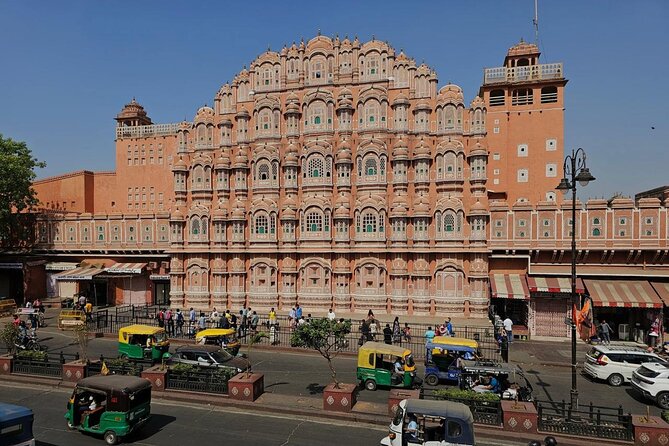
Hawa Mahal closes the day with 30 minutes. Its five-storey pink and red sandstone facade is the familiar Palace of Winds, built with screened openings that allowed royal women to observe street life. The stop is short, so you will mainly see the exterior and hear its purpose.
A few more options to weigh up in New Delhi
- Old & New Delhi City Tour – Half or Full Day Options Available
★ 5.0 · 4,811 reviews - Same Day Taj Mahal, Agra Fort & Baby Taj Tour from Delhi by Car
★ 5.0 · 4,304 reviews - Taj Mahal Day Tour from Delhi by Superfast Train – TOP RATED TOUR
★ 5.0 · 4,166 reviews - Full Day Taj Mahal, Agra Fort & Baby Taj Tour from Delhi by Car
★ 5.0 · 3,647 reviews
Udaipur slows the pace beside Lake Pichola
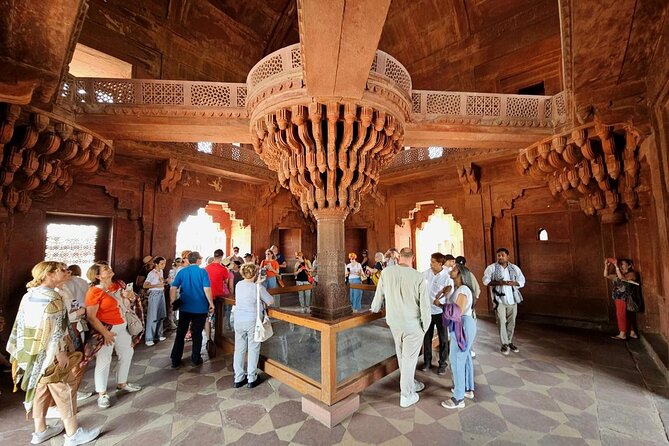
The transfer to Udaipur is one of the less detailed parts of the schedule. Day 6 is largely an arrival and hotel check-in day, with no major sightseeing listed. That is not a flaw if you need a pause after the packed Jaipur program. It is less satisfying if you expected a full day of touring.
Day 7 makes good use of Udaipur’s setting. Lake Pichola offers sightseeing and the option of a private boat ride, including a stop at Jagmandir Palace island. The stated visit lasts an hour. Boat rides are mentioned as an option, not clearly as part of the included package, so confirm the cost before you count on it.
The City Palace receives two hours and is located on the bank of the lake. Inside, you can see weapons, guns, sedan chairs, tiger cages, pictures, and other royal objects. The palace also gives you broad city views, making it one of the most worthwhile stops in Udaipur.
Jagdish Temple is a short visit in the Indo-Aryan style. It sits within the City Palace area and adds a religious dimension to the city’s royal story.
Bagore Ki Haveli Museum is scheduled for an hour. The description allows you to skip it if you prefer another attraction, which is a useful bit of flexibility in a private tour. You can ask your driver or guide to adjust the day if the palace and lake already fill your energy budget.
Jodhpur brings blue streets and a great fort
Day 8 is another major road day, taking you from Udaipur to Jodhpur. After hotel check-in, the route includes Clock Tower Market. The tower dates from the reign of Maharaja Sardar Singh, between the late 19th and early 20th centuries.
This market stop is less formal than a palace visit. You can look around local shops and get a taste of Jodhpur’s commercial center. Shopping is not stated as included, so keep purchases optional and avoid feeling that you must buy anything.
Mehrangarh Fort is the centerpiece of Day 9. Built in the 15th century on a rocky outcrop, it overlooks Jodhpur and now contains a museum with weapons, paintings, and royal palanquins. The planned visit is one hour, though you may wish it were longer. The fort is large and visually commanding, so a guide is valuable for connecting the rooms and objects to the city’s former rulers.
Umaid Bhawan Museum occupies part of one of the world’s largest private residences. The palace is built from golden-yellow sandstone and offers a different royal style from Mehrangarh’s older fortress architecture.
Jaswant Thada is a marble cenotaph and mausoleum for the rulers of Marwar. It is often compared with the Taj Mahal of Jodhpur, though its scale is much smaller. The one-hour visit gives you time for the memorial and its setting.
The route then continues to Pushkar for hotel check-in. This is a lot for one day, so I would treat the final transfer as a quiet evening rather than plan extra activities.
Pushkar closes the trip with worship at the lake
The final morning begins at Brahma Temple. The visit is brief, only 15 minutes, but the temple is significant for its architecture and its association with Brahma. The tour specifically explains why this is described as the only Brahma temple in the world.
Pushkar Lake and Brahma Ghat follow. Families come to the ghat for prayers, happiness rituals, and tributes to deceased relatives. You can take photographs, but do so respectfully, especially during worship. This is a religious site, not simply a scenic lakefront.
The drive back to New Delhi takes about five hours. That final transfer means the tour ends with a long road journey, so plan your departure flight or onward connection with plenty of space. The experience includes Delhi hotel or airport pickup and drop-off, but the exact final timing should be confirmed with the operator.
What the $437.14 price really covers
At $437.14 per person, the price looks low for ten days of private touring across six cities. The value is strongest if you choose the option that includes nine nights of accommodation with breakfast. You also receive private air-conditioned transport, a driver, hotel or airport transfers, bottled mineral water during journeys, and nine breakfasts.
The price does not include monument entrance tickets. The stated additional cost is $150 per person, which raises the practical sightseeing budget to about $587.14 before tips, insurance, personal spending, and any optional activities.
Tips for drivers and guides are excluded. Laundry, flights, train tickets, travel insurance, and anything not listed are also extra. Ask about the exact hotel category before paying, since the information confirms accommodation only when that option is selected, not a particular hotel standard.
Rooms are generally twin-sharing. Three-person bookings use triple-sharing by default, while three people wanting two rooms pay an additional charge. Vehicle size is based on group size: a four-seat sedan for one or two people, a six-seat wagon for three or four, and a 10-seat minivan for five to 10.
Who should book this private tour?
I would recommend it to a first-time visitor who wants India’s most famous sights with a private driver and city guides already arranged. Solo visitors also receive the benefit of a private setup, and one solo guest specifically felt safe and well cared for with the driver and organized transport.
It suits couples, families, and small groups that value control over the day. You can skip Bagore Ki Haveli Museum, and a private format makes small adjustments easier than on a large coach tour.
I would hesitate if you dislike long drives or want slow mornings. The schedule is full, and some stops last only 15 or 30 minutes. Udaipur’s arrival day is light, but the road transfers elsewhere can be tiring.
Communication appears to be a strong point. Contact with Gopal through WhatsApp was praised for clear planning, while guides such as Satish in Jaipur were remembered for making the visits enjoyable. The company can assign different drivers, but names repeatedly associated with good service include Vinod, Ashok, Surendra, Maan Singh, and Man Singh.
Should you book it?
Book this tour if you want a well-supported first look at North India and prefer a private car to figuring out trains, hotels, and intercity transfers yourself. The mix of Taj Mahal sunrise and sunset views, Delhi markets, Rajasthan forts, Udaipur’s lake, and Pushkar’s sacred sites gives you a strong first chapter in India.
Skip it if you want a relaxed Rajasthan holiday or prefer to travel independently. Before booking, confirm the hotel option, the current $150 monument-fee estimate, the guide arrangements, the optional Udaipur boat ride, and the long-transfer schedule. Cancellation is free with at least 24 hours’ notice, but cancellations within 24 hours are not refunded.
FAQ
Is accommodation included in the tour price?
Nine nights of accommodation with breakfast are included if you book the option that includes hotels. The listed package also includes nine breakfasts.
Are monument entrance fees included?
No. Monument entrance fees are listed as an additional cost of about $150 per person for all cities.
What kind of transportation is provided?
Transport is by private, air-conditioned vehicle with a driver. Groups of one or two use a four-seat sedan, groups of three or four use a six-seat wagon, and groups of five to 10 use a 10-seat minivan.
Is this a private tour?
Yes. Only your own group participates in the tour.
Can the tour pick me up at an airport or hotel?
Yes. Hotel or airport pickup and drop-off are included.
What happens if I need to cancel?
You receive a full refund if you cancel at least 24 hours before the experience start time. Cancellations or changes made within 24 hours are not accepted and are not refunded.
Just added in New Delhi
- Five Days Golden Triangle Tour with Ranthambore Delhi Agra Jaipur★ 5.0 · 11 reviews
- 5 Days Golden Triangle Tour with Ranthambore India★ 5.0 · 10 reviews
- 5 Days Golden Triangle Tour with Ranthambore Delhi Agra Jaipur★ 5.0 · 11 reviews
- 5-Day Private Luxury Golden Triangle Tour From Delhi★ 5.0 · 45 reviews
- Delhi, Agra, Jaipur & Ranthambhore Tiger Safari 5-Day Tour★ 5.0 · 47 reviews
- Private 5 Days Golden Triangle Tour – Visit Delhi Agra and Jaipur★ 5.0 · 26 reviews
- 5-Day Private Delhi, Agra and Jaipur with Ranthambhore Tiger Tour From Delhi★ 5.0 · 44 reviews
- 5-Day Private Golden Triangle Tour: Delhi, Agra, and Jaipur★ 5.0 · 62 reviews
Golden Triangle Tours, compared.
3-Days Private Golden Triangle Tour: Delhi, Agra & Jaipur by Car
Read our review →3-Days Private Golden Triangle Tour: Delhi, Agra & Jaipur by Car
Read our review →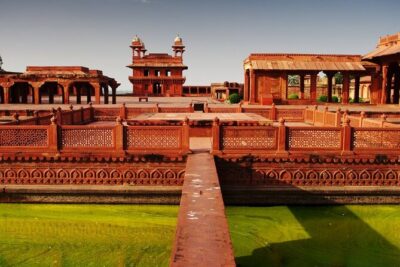
3-Day Delhi, Agra and Jaipur Private Tour – India Golden Triangle
Read our review →
Four-Day Private Luxury Golden Triangle Tour to Agra and Jaipur From New Delhi
Read our review →
5 Nights 6 Days Private Golden Triangle Tour – Delhi Agra Jaipur
Read our review →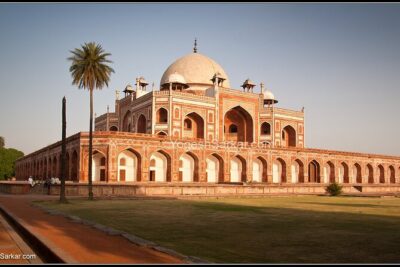
Private Car and Drive for Golden Triangle (4N/5D)
Read our review →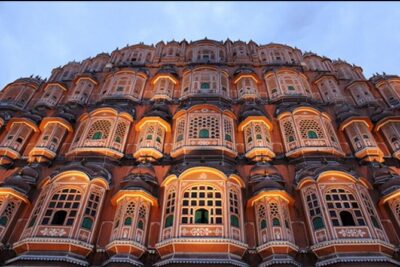
Private Golden Triangle Tour Delhi Agra Jaipur ( Top Rated )
Read our review →Browse the lists this tour appears in