
Reviewed · CITY TOURS AND SIGHTSEEING
Private City Tour to Old and New Delhi
Delhi rewards a plan, and this one covers plenty. I like the private air-conditioned car and the chance to see both Mughal-era Old Delhi and spacious New Delhi in one outing. I also like the small-group price: $65 covers up to five people. The main drawback is simple: the full route is ambitious, and traffic, queues, and opening hours may make eight stops feel rushed.
The tour runs for roughly four to eight hours and begins and ends at Connaught Place. You get bottled water and private transport, but entrance fees are extra. The listed entrance cost is $50 for two people, so check the current total before you set out.
In This Review
- The best parts of this Delhi day
- Why this private format works well in Delhi
- Qutub Minar begins the historic story
- Humayun’s Tomb points toward the Taj Mahal
- Lotus Temple offers a quiet pause
- India Gate shows New Delhi’s imperial scale
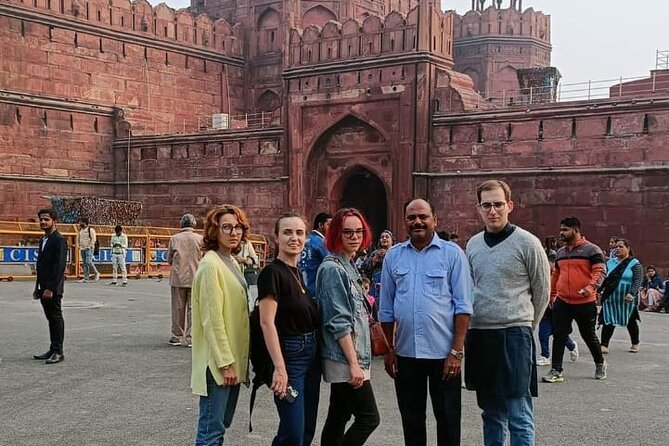
- Red Fort brings you into Shah Jahan’s Delhi
- Jama Masjid adds the sound and scale of Old Delhi
- Akshardham requires extra planning
- Lodhi Garden gives the day breathing room
- What the $65 price really buys you
- Timing, comfort, and the driver experience
- Who should book this tour?
- Should you book the Old and New Delhi tour?
- FAQ
- How much does the private Delhi tour cost?
- How long does the tour last?
- Where does the tour start and end?
- Is hotel pickup included?
- Are entrance tickets included?
- Can I bring a camera into Akshardham?
- Is this a shared tour?
- What is included in the vehicle service?
The best parts of this Delhi day
- Eight major sights in one private ride: Qutub Minar, Humayun’s Tomb, Lotus Temple, India Gate, Red Fort, Jama Masjid, Akshardham, and Lodhi Garden.
- A useful Old Delhi and New Delhi split: You move from Mughal monuments and crowded historic streets to grand imperial avenues, gardens, and modern religious architecture.
- Flexible private transport: Your group of up to five does not share the vehicle with strangers, and the schedule can be adjusted if time allows.
- Strong local service reputation: Ashok and his team have been praised for polite drivers, timely transport, English-speaking staff, and helpful local suggestions. Drivers named in past customer accounts include Harish, Raj, and Anants, though you should not assume a particular person will be assigned.
- Good value for families or friends: At $65 per group, the base price is especially attractive when several people share the vehicle.
- Important practical catch: Akshardham does not allow bags, cameras, or electronic devices inside, so plan that stop carefully.
Why this private format works well in Delhi
Delhi is not a city that rewards random wandering on a tight schedule. Its major sights are spread across a wide area, and the difference between Old Delhi and New Delhi is as much about streets and scale as it is about monuments.
A private car gives you shelter from heat, dust, and traffic fumes between stops. It also saves you from arranging several separate rides. The air-conditioned vehicle is included, as is bottled water, and the activity is limited to your own group.
That matters most if you are traveling with family, sharing the cost with friends, or visiting Delhi during a short stop. A group of five can make the $65 vehicle charge very reasonable. The value is less striking for one person, especially after adding admission fees.
The schedule is listed as four to eight hours, while the stop times add up to about six and a half hours. That tells you something useful: the route is possible as a full-day outing, but it is not a relaxed, linger-at-every-monument plan. If you want time for photos, security checks, a meal, or local shopping, ask the driver to help you choose priorities.
Pickup is offered, but the published meeting point is Connaught Place in New Delhi. The tour returns there at the end. Confirm the exact pickup arrangement when booking, especially if you are staying outside central Delhi.
More Sightseeing Tours in New Delhi
- Old & New Delhi City Tour – Half or Full Day Options Available
★ 5.0 · 4,811 reviews - Old & New Delhi Full or Half Day Sightseeing Tour
★ 5.0 · 1,900 reviews - Old & New Delhi Private City Tour – Traveler’s Choice (Top Rated)
★ 5.0 · 746 reviews
Qutub Minar begins the historic story
The Qutub Minar is a strong first stop because it immediately gives you a sense of Delhi’s early Sultanate period. The red sandstone and marble tower rises 73 meters, or about 240 feet, and narrows dramatically from its broad base to its top.
Construction began in the early 13th century under Qutub-ud-din Aibak, founder of the Delhi Sultanate. His successor, Iltutmish, completed much of the work, while later rulers added to and repaired the complex. The result is not just a tall tower, but a site where several stages of Delhi’s political history meet.
Allow about an hour. The admission ticket is not included, and the grounds contain more than the tower itself. The Indo-Islamic Afghan design, carved surfaces, surrounding ruins, and the famous Iron Pillar make this a worthwhile stop even if you are not usually drawn to monuments.
I would pay attention to how the site combines religious, political, and engineering importance. It is easy to photograph the tower and move on, but the surrounding remains help explain how Delhi grew through successive ruling dynasties.
Humayun’s Tomb points toward the Taj Mahal
Humayun’s Tomb is one of the finest stops on the route. Built for Mughal Emperor Humayun, the tomb was commissioned by his widow, Empress Bega Begum, and completed in 1572.
The building is often described as a forerunner to the Taj Mahal. That comparison is useful, but it should not reduce the monument to a preview of another site. Its high central structure, formal garden setting, and blend of Persian and Indian design give it a character of its own.
Persian architect Mirak Mirza Ghiyas designed the tomb. The broad layout and careful symmetry show the Mughal interest in ordered gardens and grand memorials. I find this stop particularly helpful after Qutub Minar because the two sites show different periods and design ideas in the same city.
Plan for about an hour, with admission extra. The grounds make this a good place to slow down slightly, though the overall schedule may not allow a long visit. If you have to choose between lingering here and adding every later stop, I would give Humayun’s Tomb the time.
Lotus Temple offers a quiet pause
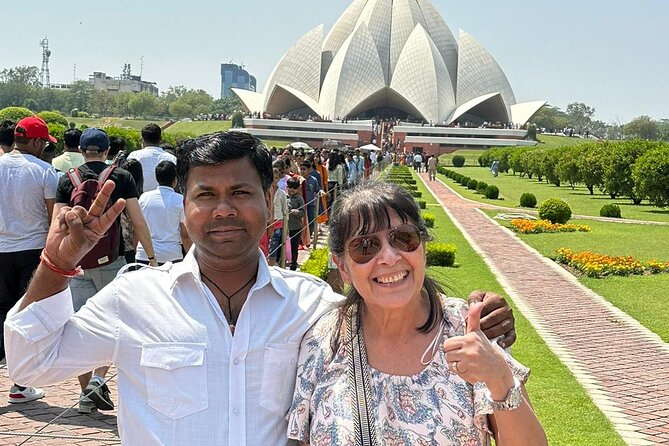
The Lotus Temple changes the tone of the day. This Bahá’í House of Worship welcomes people of all faiths and is intended for prayer and meditation rather than sightseeing alone.
The white marble building was designed by Iranian architect Fariborz Sahba and completed in 1986. Its petal-like form gives it an instantly recognizable outline, while the surrounding gardens provide a break from Delhi’s busy roads.
Admission is free, and the planned visit lasts about 30 minutes. Inside, silence is maintained, so this is not the place for a running commentary or a noisy group photo. You enter, sit quietly if you wish, and take in the building without a formal religious barrier.
That short stop is valuable because the day includes several large monuments with heavy historical and political weight. The Lotus Temple gives you a calmer experience and a clear example of Delhi’s religious variety.
A completely different kind of day out:
- Same Day Taj Mahal, Agra Fort & Baby Taj Tour from Delhi by Car
★ 5.0 · 4,304 reviews - Taj Mahal Day Tour from Delhi by Superfast Train – TOP RATED TOUR
★ 5.0 · 4,166 reviews - Full Day Taj Mahal, Agra Fort & Baby Taj Tour from Delhi by Car
★ 5.0 · 3,647 reviews - From Delhi: Taj Mahal & Agra Private Day Trip with Transfers
★ 4.9 · 3,181 reviews
India Gate shows New Delhi’s imperial scale
India Gate is one of the easiest places to understand New Delhi’s grand civic design. The 42-meter memorial was built to honor soldiers of the Indian Army who died in World War I. Its foundation stone was laid in 1921, and the structure was completed in 1931.
The red and yellow sandstone arch was designed with the Arc de Triomphe in Paris as an influence. Names of soldiers are inscribed on the memorial, and the Amar Jawan Jyoti, an eternal flame, is located at its base.
The visit is scheduled for about 30 minutes and admission is free. This is mainly an exterior stop, so you will not need the same amount of time as at Qutub Minar or Humayun’s Tomb.
The wider area helps you see the scale of New Delhi, which was planned under British rule with broad avenues and formal public spaces. It provides a useful contrast with the tight lanes and dense activity of Old Delhi later in the tour.
Red Fort brings you into Shah Jahan’s Delhi
The Red Fort is the central Old Delhi monument on this itinerary. Mughal Emperor Shah Jahan began construction in 1638, and the fort was completed in 1648. It served as the main residence of Mughal emperors for nearly two centuries.
The massive red sandstone walls are impressive from outside, but the interior is where the imperial story becomes more personal. The Diwan-i-Aam was used for public audiences, while the Diwan-i-Khas was reserved for private meetings and court business.
The architecture blends Persian, Timurid, and Indian influences. White marble details and carved decoration soften the heavy fort walls, showing that this was not only a defensive structure. It was also a palace and a carefully designed seat of power.
Plan on about an hour, with admission extra. Since the Red Fort is a major site, you may want to confirm its opening day and current entry rules before booking. The published schedule lists Monday availability, but monument hours can change, and a full route on a closed day would be a serious problem.
Jama Masjid adds the sound and scale of Old Delhi
Jama Masjid was commissioned by Shah Jahan, with construction beginning in 1650 and completion in 1656. It is one of the clearest examples of Mughal mosque design in the city, using red sandstone and white marble.
The mosque’s main eastern gateway, the Buland Darwaza, gives the complex a ceremonial entrance. The design brings together Persian, Timurid, and Indian ideas, much like the Red Fort built during the same emperor’s reign.
The planned visit is 30 minutes, and admission is not included. That short time may be enough for a quick look, but it will not allow for a slow architectural study or an extended visit inside. Dress and behavior should be respectful at this religious site, and follow any instructions given at the entrance.
Jama Masjid works best when paired with the Red Fort. The two sites belong to the same Mughal world, yet one was a royal residence and the other a place of communal worship. Together, they make Old Delhi’s past easier to read.
Akshardham requires extra planning
Swaminarayan Akshardham is the newest major religious site on the route. It opened in 2005 and was built by the Bochasanwasi Akshar Purushottam Swaminarayan Sanstha, also known as BAPS.
The central mandir is dedicated to Bhagwan Swaminarayan and includes intricate carving, 234 pillars, nine domes, and more than 20,000 statues of Hindu divine figures. The scale and detail make this a substantial stop, with about 90 minutes allocated.
Security rules are especially important here. You cannot take bags, cameras, or electronic devices into the temple complex. A secure facility is available for storing belongings, but you should not treat this as a quick photo stop.
Admission is extra, and the attraction’s procedures can take time. If Akshardham is a high priority, I would consider making it one of the day’s main stops rather than squeezing it between several other monuments. Its rules also mean you should carry only what you need.
Lodhi Garden gives the day breathing room
Lodhi Garden is the gentlest stop on the itinerary. Covering about 90 acres between Khan Market and Safdarjung’s Tomb, it contains monuments from the Lodhi Dynasty, which ruled parts of northern India during the 15th and 16th centuries.
You will find lawns, trees, flower beds, walking paths, and historic tombs within the garden. The combination is useful: you get a green public space used by local residents, along with older buildings that connect the modern city to an earlier Delhi.
The visit lasts about 30 minutes and admission is free. That is enough for a short walk and a look at the monuments, but not enough for a long rest or full exploration.
I like the inclusion of Lodhi Garden because it prevents the tour from becoming eight consecutive monument inspections. If the day has run late, though, this is the easiest stop to shorten or skip.
What the $65 price really buys you
The base charge is $65 per group of up to five people. That includes an air-conditioned vehicle and bottled water, but not entry tickets. The listed admission estimate is $50 for two people, so the final cost can be much higher than the headline price.
For two people, the transport price is fair if you value convenience and a private schedule. For four or five people, it becomes a particularly good deal because the vehicle cost is shared. The value is strongest for people who want to see far-flung sites in one day without organizing taxis or public transport between each one.
You should also budget for the fact that the stops do not all have the same entry arrangement. Lotus Temple, India Gate, and Lodhi Garden are listed as free, while Qutub Minar, Humayun’s Tomb, Red Fort, Jama Masjid, and Akshardham require separate admission.
The tour does not list meals, a formal guide, or shopping as included services. Past customers have praised Ashok’s organization, polite drivers, and local suggestions, including help finding typical Indian food and local shopping. Treat those as possible extras rather than guaranteed parts of this particular booking.
Timing, comfort, and the driver experience
The private format gives you more control than a large coach tour. You can ask for a shorter stop, spend more time at a favorite monument, or remove a site if the day becomes too tight.
Past accounts specifically praise Ashok as welcoming and reliable, along with drivers described as polite and English-speaking. Harish, Raj, and Anants are among the staff names associated with the company’s wider transport and touring services. Your assigned driver may be someone else, so confirm whether a guide is included if detailed historical explanation is important to you.
Delhi traffic is a real part of the experience. The route crosses large distances, and the four-to-eight-hour estimate leaves little room for major delays if you want to see every stop. An early start may help, but the published operating window is Monday from 10 a.m. to 4 p.m., so confirm the exact date and timing before relying on that assumption.
The vehicle and bottled water are practical inclusions. The car is not just a luxury here: it lets you reset between crowded streets, large sites, and security checks.
Who should book this tour?
I would recommend it to first-time visitors with limited time, families, couples who prefer private transport, and small groups that want a broad introduction to Delhi. It is also useful if you want Old Delhi and New Delhi covered in one outing rather than split across separate days.
It suits you less if you want long, quiet visits at each monument or a highly specialized history tour. The itinerary is broad by design. You see the city’s major chapters, but the schedule leaves limited time for extended walks, museums, or unplanned stops.
The tour is also a good fit if you prefer a driver-led day with local assistance. The company’s service record points to reliable transport and helpful staff, though you should clarify exactly what commentary and guiding are included.
Should you book the Old and New Delhi tour?
Book it if your priority is coverage, comfort, and a private vehicle at a reasonable group price. Qutub Minar, Humayun’s Tomb, the Red Fort, and Jama Masjid give you strong historical foundations, while the Lotus Temple, India Gate, Akshardham, and Lodhi Garden show other sides of the capital.
Before paying, confirm the current Monday hours, total entrance fees, pickup point, and whether a dedicated guide will accompany you. I would also ask how the operator handles the eight-stop schedule and which sights should be dropped if traffic cuts into the day.
If you accept a brisk pace, this is a practical way to get your bearings fast. If you want depth, choose three or four stops and use the private format to spend more time at the places that matter most to you.
FAQ
How much does the private Delhi tour cost?
The tour costs $65 per group of up to five people. Entrance fees are not included, and the listed admission estimate is $50 for two people.
How long does the tour last?
The experience lasts approximately four to eight hours. The scheduled stop times together add up to about six and a half hours.
Where does the tour start and end?
The published meeting point is Connaught Place, New Delhi. The activity ends back at the meeting point.
Is hotel pickup included?
Pickup is offered, but the provided details identify Connaught Place as the meeting point. Confirm the exact pickup arrangement when booking.
Are entrance tickets included?
No. Admission tickets are not included for Qutub Minar, Humayun’s Tomb, Red Fort, Jama Masjid, or Akshardham. Lotus Temple, India Gate, and Lodhi Garden are listed as free.
Can I bring a camera into Akshardham?
No. Visitors are not allowed to carry bags, cameras, or electronic devices inside the Akshardham temple complex. A secure storage facility is available.
Is this a shared tour?
No. This is a private activity for your group only, with a maximum group size of five people.
What is included in the vehicle service?
An air-conditioned vehicle and bottled water are included.
Just added in New Delhi
- Old Town Delhi Walking Tour (2 Hours Guided Tour with Local)★ 4.5 · 22 reviews
- Yoga class in Delhi★ 5.0 · 29 reviews
- Unveil Old Delhi’s Food, Spice Market & Heritage Walk★ 5.0 · 26 reviews
- Vegetarian : Private Cooking Class in Delhi home ( Learn 7 meal)★ 5.0 · 58 reviews
- Private Taj Mahal & Agra Fort Tour, Dine with a View★ 5.0 · 27 reviews
- Tour to Akshardham temple with Guide and Delhi Transfer★ 5.0 · 26 reviews
- Private Tour of Taj mahal from Delhi by Train in 90 Min★ 5.0 · 46 reviews
- Private 2-Day Agra & Delhi Tour by Car–Includes Taj Mahal Sunrise★ 5.0 · 11 reviews
City Tours and Sightseeing, compared.

Old & New Delhi City Tour – Half or Full Day Options Available
Read our review →
Old & New Delhi City Tour – Choose Half or Full Day Experience
Read our review →
Old & New Delhi Full or Half Day Sightseeing Tour
Read our review →
Private Full Day Sightseeing Tour By Car with Guide
Read our review →
Private Mumbai Sightseeing Tour (Traveller’s Choice Award Winner)
Read our review →
Highlights of Mumbai Sightseeing Tour: TRAVELLERS CHOICE AWARDED
Read our review →
Old & New Delhi Private City Tour – Traveler’s Choice (Top Rated)
Read our review →Browse the lists this tour appears in