
Reviewed · MARKETS AND BAZAARS
Mumbai Morning Market Tour of Flowers, Fish, and More
Mumbai wakes before the sun. This early tour shows you why. For about $19, you move through fish, vegetable, fruit, and flower markets while the city is still cool and relatively quiet. I especially like the local train ride and the chance to see ordinary work rather than only famous sights. I also like the guides’ care with street crossings, crowded lanes, and explanations of local customs. The drawback is simple: you must start very early, and the fish market can be wet, slippery, and strong-smelling.
The three to three-and-a-half-hour route packs a great deal into one morning. You begin at Sassoon Dock, continue through central Mumbai, visit Dhobi Ghat, and finish around Dadar’s produce and flower markets. Guides such as Jawwad, Subhan, Jay, Sharon, Abhi, Chirag, and Ayan have earned especially warm praise for clear English, patience, and practical help.
In This Review
- What makes this Mumbai morning tour worth your time
- Starting before Mumbai wakes up
- Sassoon Dock: Mumbai’s fish market in full operation
- Churchgate, CSMT, and the railway connection
- Dhobi Ghat: laundry as a city service
- Dadar’s fruit and vegetable market
- Dadar Flower Market: the most photogenic finish
- How the transport works
- The guides make the difference
- What the $19 price really covers
- Who should book it, and who should think twice
- Final verdict: a useful first morning in Mumbai
- FAQ
- How long does the Mumbai morning market tour last?
- What time does the tour start?
- Where is the meeting point?
- Is hotel pickup available?
- What language does the guide speak?
- Which markets are visited?
- Is Dhobi Ghat included?
- Does the tour include a local train ride?
- Are food and drinks included?
- What should I wear to the fish market?
- Can I cancel the booking?
What makes this Mumbai morning tour worth your time
- Sassoon Dock at dawn: See fish unloaded, auctioned, cleaned, and prepared for the day.
- A real local train ride: Your guide helps you use Mumbai’s railway system before the morning crowds become heavier.
- Four working markets in one route: Fish, fruit, vegetables, and flowers each have a different mood, smell, and rhythm.
- Dhobi Ghat explained properly: Watch laundry workers handle clothes from homes, hotels, and hospitals.
- A small taste of local life: Chai, a street snack, or a samosa may be added during the morning, though food and drinks are not included.
- Transport that saves time: Hotel pickup may be available, with a driver and vehicle used between some stops.
Starting before Mumbai wakes up
The exact start time depends on the option you choose. Several early departures are offered, including times around 5:00, 5:30, 6:00, and 7:00 a.m. The earlier you go, the more likely you are to catch the fish market at its working peak. The 7:00 a.m. option can still work well if you prefer to miss some of the heaviest activity.
Hotel pickup is optional, and the listed meeting point is PizzaExpress Colaba, near the Gateway of India. If you meet there, confirm the time and location carefully because this is not a tour where arriving late is easy. Some guides contact guests through WhatsApp the day before, which is helpful for an early start.
I would choose hotel pickup if it is offered at your accommodation. Mumbai traffic can become difficult later in the morning, and having a driver handle the first transfer lets you save energy for the markets. The route also includes walking, stairs or station movement, and close attention around vehicles, carts, and crowds.
More Markets and Bazaars in Mumbai
- Mumbai: Street Food and Night Markets Tour
★ 4.9 · 719 reviews - Mumbai Street Food & Night Markets
★ 5.0 · 225 reviews - Mumbai Street Food and Evening Bazaar Tour
★ 5.0 · 172 reviews
Sassoon Dock: Mumbai’s fish market in full operation
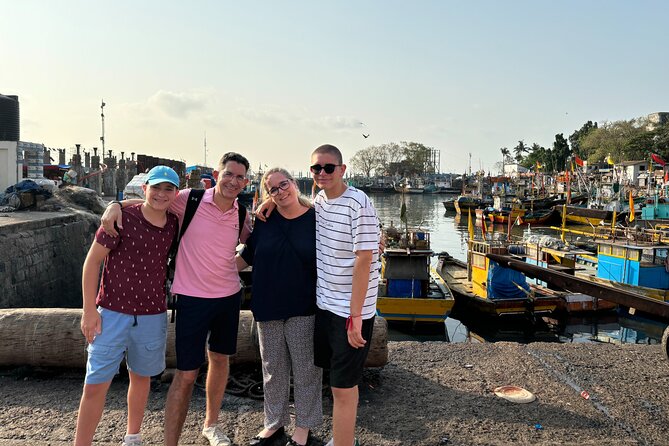
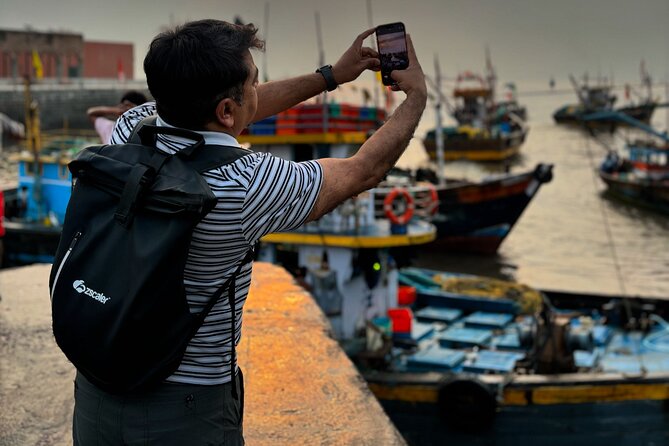
Sassoon Dock is the most intense part of the morning. Women sell fresh fish while men display the day’s catch, and you may see auctions taking place as buyers negotiate over seafood. Prawns, shrimp, and other fish are cleaned and prepared for sale, giving you a close look at the work behind Mumbai’s seafood trade.
This is not a polished food hall. Expect wet floors, fish scales, strong odors, and active workers who are focused on business. That is exactly why a guide matters. Jawwad, Jay, Subhan, and the other guides are praised for explaining how the market works while helping people move safely through tight spaces.
Wear sturdy shoes with a good grip. Choose clothing that you do not mind getting splashed, and avoid delicate footwear or anything you want to keep perfectly fresh. If you are sensitive to smells, this stop may test you. The reward is an honest look at a major part of daily commerce that you would be unlikely to understand from the street outside.
The sunrise timing adds to the experience. You see the market during its working hours, not after it has been cleaned and emptied for sightseeing. At the same time, the exact level of activity changes with the start time, so do not expect the same scene on every departure.
Churchgate, CSMT, and the railway connection
The route includes a short visit at Churchgate Railway Station, listed at about 15 minutes. The wider tour description also names the iconic Chhatrapati Shivaji Maharaj Terminus, often called CSMT, among the included sights. Because the detailed route lists Churchgate while the inclusions mention CSMT, check the exact plan for your departure if seeing one particular station matters to you.
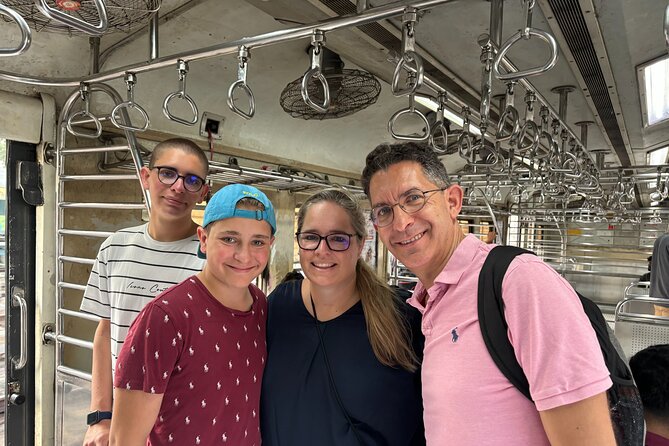
The railway portion is not only transport. It gives you a quick lesson in how Mumbai moves. Your guide can show you how to follow the station system and help you board at a suitable time. Several people found this one of the most useful parts because it turns an intimidating city system into something you can understand and use with more confidence.
The train ride is short, so keep your expectations realistic. This is not a long scenic railway journey. It is a practical slice of city life, added to a route that already includes several markets. Trains become more crowded as the morning advances, which is one reason the early schedule matters.
Dhobi Ghat: laundry as a city service
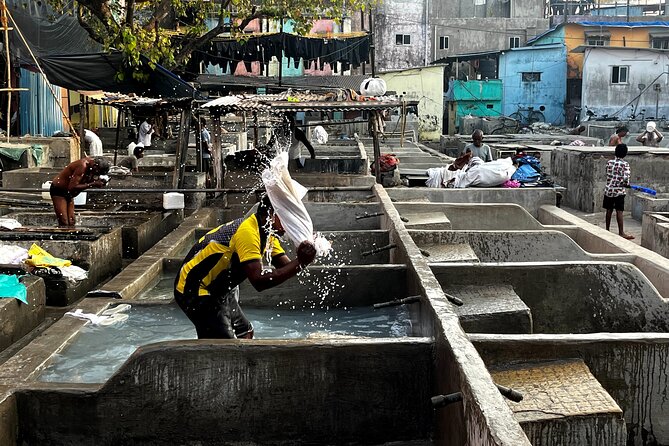
At Dhobi Ghat, you see one of Mumbai’s best-known working institutions. Washers handle more than 2,000 pieces of clothing each day, serving hotels, hospitals, and private homes. The stop usually takes about 30 minutes and includes a guided visit and time for photographs.
From a visitor’s point of view, the appeal is seeing the system behind an ordinary service. Laundry is easy to overlook, but in a city as large as Mumbai, it supports homes and businesses on a huge scale. Your guide explains the work and the place in a way that helps you understand its role rather than simply taking a quick photograph.
This stop is less sensory than Sassoon Dock, but it supplies useful context. The tour moves from food supply to transport to laundry, showing three different kinds of work that keep the city running. That variety is one of the route’s strengths.
A completely different kind of day out:
- Dharavi slum tour in Mumbai by Female tour guides of the slum
★ 5.0 · 1,976 reviews - Mumbai: Full-Day Sightseeing Tour of Mumbai
★ 4.9 · 1,822 reviews - Private Mumbai Sightseeing Tour (Traveller’s Choice Award Winner)
★ 5.0 · 1,565 reviews - Elephanta Caves & Island Guided Private Tour
★ 5.0 · 1,327 reviews
Dadar’s fruit and vegetable market
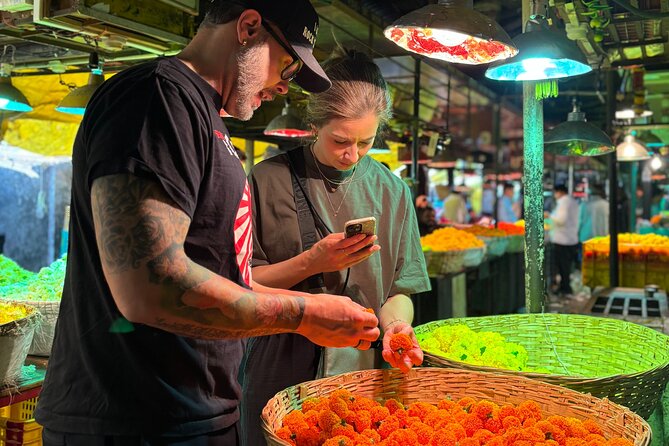
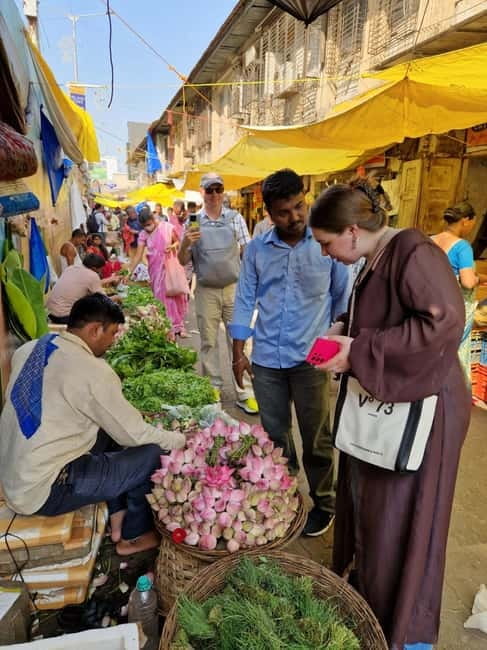
The Dadar fruit and vegetable market brings a different set of sights and smells. Instead of seafood and wet floors, you get heaps of produce, coriander, chilies, fruit, carts, vendors, and buyers preparing for the day.
The tour allows about 30 minutes here. That is enough time for your guide to point out products, explain selling practices, and help you read the market without blocking the workers. The market is active, so stay close to your guide and keep your belongings secure in the ordinary way you would in any crowded public place.
I like this stop because it gives the fish market a useful comparison. Both places deal in fresh food, but the handling, smells, colors, and pace feel quite different. The guide’s explanations turn a quick walk past stalls into a lesson about how food reaches Mumbai households and businesses.
Some people also stop for a street snack during the morning. Samosa, chai, and vada pav have been mentioned as possible highlights, but food and drinks are not included in the stated price. Treat these as optional purchases, not guaranteed components of the package.
Dadar Flower Market: the most photogenic finish
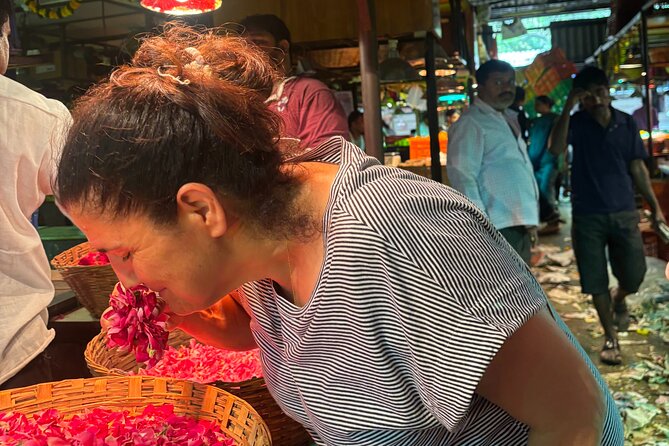
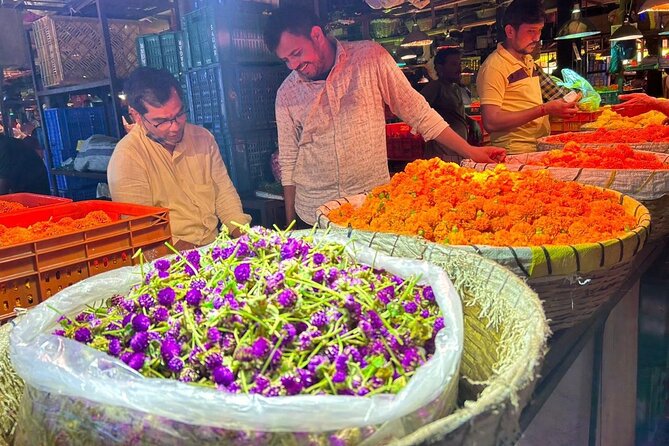
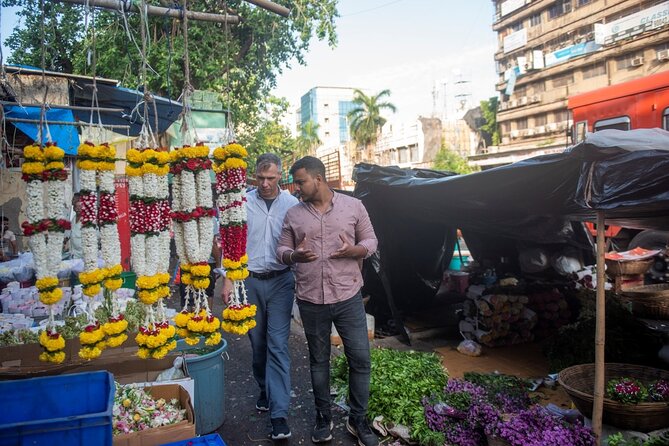
The Dadar Flower Market is likely to be the gentlest and most colorful stop after the fish market. Flowers are sold in large quantities, and the air changes from the salty, sharp smell of seafood to the softer fragrance of fresh blooms.
You get about 30 minutes for the market, including a guided visit and photo time. This is a good place to slow down and notice details: colors, garlands, bundles, and the way vendors arrange their goods for buyers. The tour finishes at or near Flower Market Dadar, so this can also be a useful place to continue your own morning afterward.
Do not expect a quiet garden. It is still a working market, with people buying and selling rather than posing for photographs. Ask before photographing individuals, and follow your guide’s lead around stalls. A respectful approach makes the visit better for everyone.
How the transport works
The package includes transport and a local train ride, though the precise balance depends on the selected option and pickup arrangement. The route may use a taxi, private vehicle, local train, or other local transport between stops. This helps the tour cover several districts in a short time.
The drivers receive strong praise, too. People specifically appreciated drivers such as Saddam, Deepak, Pranav, Satyam, Wasim, and Praneo for punctuality, calm driving, and comfortable vehicles. That matters in Mumbai, where the road portion could otherwise eat up much of a three-hour tour.
The train portion is the more memorable choice. You are not simply driven from one photo stop to another. You get a brief, guided experience of the system used by residents every day. If you have never used a Mumbai local train, the guide’s help with stations and movement can make the experience feel manageable.
The trade-off is that the schedule is tight. Each stop lasts roughly 15 to 40 minutes, and road or train delays can affect how long you spend at the final markets. The guides appear willing to adjust the route when possible. One family received a shorter version because a child was unwell, while other groups moved quickly enough to add an extra stop. Flexibility is useful, but it cannot guarantee every listed stop if time is lost.
The guides make the difference
The strongest part of this experience is the guide. Names frequently praised include Jawwad, also called Jay, Subhan, Sharon, Abhi, Chirag, Ayan, Javed, Yash, and others. The repeated strengths are clear English, local knowledge, patience, and careful attention to safety.
A good guide is particularly valuable at a fish market. You need someone to explain what is happening without getting in the way, translate when needed, and help you cross streets or keep together in crowds. Several people also appreciated guides who answered many questions instead of rushing through prepared facts.
The tour can feel personal even when more than one guest is present. Guides have adapted the pace, found breakfast options, helped guests reach a station after the official end, and adjusted stops for individual needs. You should still remain close to the group. One account makes clear that wandering off for photographs can make communication harder.
English is the stated tour language. If you want a guide who explains history, buildings, work practices, and customs rather than merely pointing out stalls, this is where the tour earns its price.
What the $19 price really covers
At $19 per person, this is good value if your goal is to see several working parts of Mumbai in one morning. The cost includes the guide, transport, hotel pickup and drop-off where selected, market visits, and the local train experience. You also avoid having to work out the route yourself before dawn.
The value is not in spending a long time at one attraction. It comes from combining places that are spread across the city and would be difficult to link efficiently on your own. A taxi, train tickets, navigation, translation, and local guidance would take time and effort even before you reached the first market.
Food and drinks are not included. Budget a little extra if you want chai, samosa, vada pav, or another street breakfast. The small tea stop is a pleasant addition, but it should not be treated as a paid meal.
At three to three-and-a-half hours, the tour is also easy to fit into a busy Mumbai visit. You finish early enough to continue sightseeing, rest after the early start, or explore around Dadar. The low price makes it especially appealing for solo visitors who want local context without paying for a full private day.
Who should book it, and who should think twice
I would recommend this tour to first-time visitors who want daily Mumbai life, not only grand buildings and formal attractions. It also suits returning visitors who have already seen the major sights and want a different morning. Local residents may find something new here too, as one participant from India discovered.
It is a strong choice if you enjoy food markets, photography, public transport, street scenes, and conversations about how a city functions. It is also useful if you are nervous about Mumbai’s trains or crowded roads and want an introduction with help close by.
Think twice if you dislike strong smells, wet markets, early alarms, or walking in crowded places. The tour is not a relaxed brunch outing. You need sensible shoes, modest practical clothing, and the willingness to follow a working market’s pace.
The early hour is a feature, not a flaw, but it does demand planning. If jet lag has you awake before dawn, this could be a smart first-day activity. If you need a slow start, choose the latest available option and accept that you may see a quieter fish market.
Final verdict: a useful first morning in Mumbai
I would book this tour if I wanted a quick, well-supported introduction to Mumbai’s working life. The fish market supplies the shock of the new, Dhobi Ghat adds social and economic context, the produce markets bring color and energy, and the train ride gives you a small but valuable piece of local independence.
The main caution is to confirm your start time, pickup details, and exact station stops. Bring sturdy shoes, keep your camera ready, and leave room in your morning for a chai or snack at your own expense. For $19, the combination of transport, guidance, markets, and local train travel is a practical deal.
Book it if you want Mumbai before the tourist day begins. Skip it only if you need comfort, quiet, or a late breakfast more than you want an honest look at how the city works.
FAQ
How long does the Mumbai morning market tour last?
The tour lasts about three to three-and-a-half hours.
What time does the tour start?
Starting times depend on the option selected. Available departures may include early times around 5:00, 5:30, 6:00, and 7:00 a.m. Check availability for the exact time.
Where is the meeting point?
The listed meeting point is PizzaExpress Colaba, near the Gateway of India.
Is hotel pickup available?
Yes, hotel pickup and drop-off are included when you select the pickup option. Without that option, you meet the guide and driver at the stated meeting point.
What language does the guide speak?
The tour is conducted in English.
Which markets are visited?
The route includes Sassoon Dock Fish Market, Dadar Fruit and Vegetable Market, and Dadar Flower Market.
Is Dhobi Ghat included?
Yes. The tour includes a guided visit and photo stop at Dhobi Ghat.
Does the tour include a local train ride?
Yes. A local train ride is included in the tour package.
Are food and drinks included?
No. Food and drinks are not included, though you may have the chance to buy chai or a street snack during the morning.
What should I wear to the fish market?
Wear robust, comfortable shoes and clothing that can handle wet or strong-smelling conditions. The fish market may have wet floors and powerful odors.
Can I cancel the booking?
You can cancel up to 24 hours in advance for a full refund. The reserve-now, pay-later option allows you to hold a place without paying immediately.
Just added in Mumbai
- Mumbai Airport to Mumbai Hotels : Private Transfers★ 5.0 · 13 reviews
- Mumbai Sightseeing Tour★ 5.0 · 11 reviews
- Mumbai 800 Year Worli Village: Talking Goddess, Old Fort & more★ 5.0 · 94 reviews
- Customize private tour with pickup★ 5.0 · 95 reviews
- Mumbai Spice Markets and Bazaars Tour with Guide and Transport★ 5.0 · 42 reviews
- Gufran’s Slum Home Tour in the Mumbai Slums★ 5.0 · 19 reviews
- Private Guided Bandra Half Day City Tour in AC Vehicle★ 5.0 · 72 reviews
- The Famous Bollywood Tour of Mumbai★ 5.0 · 97 reviews
Markets and Bazaars, compared.

Delhi Food Walk: Rickshaw Ride, Street Eats & Market Tour
Read our review →
Old Delhi Street Food Tour – Explore Spices in Chandni Chowk
Read our review →
Private Heritage Walking Tour in Jaisalmer Fort and Old Bazaar
Read our review →
Old Delhi Food-Spice Market-Temples Tour Soon Featured on NETFLIX
Read our review →
Chandni Chowk Delhi Food Tour with 15+ Tastings
Read our review →
Browse the lists this tour appears in