
Reviewed · HIKING AND TREKKING
Medium Hard Trekking (munnar valley Trekking & Tours )
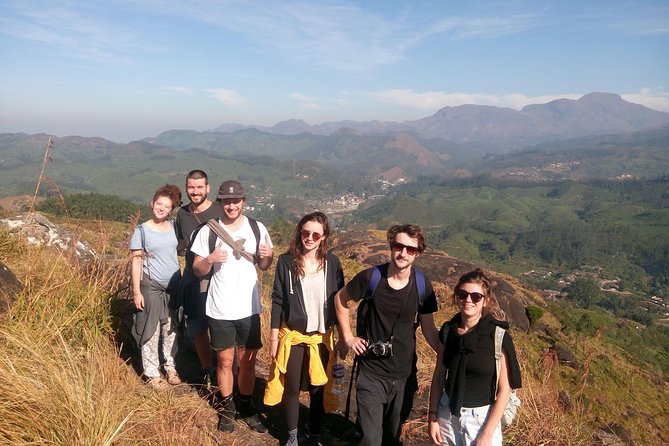
Tea country rewards steady feet. This four-hour Munnar trek climbs from 1,530 metres through tea plantations, forest, grassland, and rocky ground, reaching 2,100 metres for wide views over the valley. I like the clear route and the small-group limit of 10, which should make the walk more personal than a crowded coach excursion. The main consideration is fitness: 10 kilometres over three mountains is a real morning hike, not a gentle stroll.
I also like that the $8 price includes a guide, plantation entry, fruit, snacks, and water. Guide Praveen is singled out for his care with safety and his willingness to share local culture, adding human detail to a scenic walk. The early start and possible weather changes mean you should arrive ready to walk, with proper shoes and a flexible attitude.
In This Review
- Key points to know before you go
- Starting near Moolakadai at 8:30 am
- Tea plantations provide the first taste of Munnar
- The climb to 2,100 metres is the main reward
- Three mountains make the return more than a simple descent
- What the $8 price really covers
- The guide can shape the whole morning
- Preparing for a medium-hard Munnar trek
- Who will enjoy this route most
- Booking, cancellation, and practical value
- Should you book the Munnar Valley trek?
- FAQ
- Where does the Munnar trek start?
- What time does the trek begin?
- How long is the trekking route?
- How high does the trek climb?
- What is included in the price?
- What happens if bad weather cancels the trek?
Key points to know before you go
- A 10-kilometre route in four hours: You walk continuously from 8:30 am until about 12:30 pm, with a short refreshment break near the high point.
- Three distinct mountain environments: The route passes tea fields, forest, grassland, and exposed rocks rather than following one repeated track.
- A high point at 2,100 metres: The best views come after climbing from the 1,530-metre starting point.
- Praveen may guide your walk: His safety-conscious approach and cultural explanations are a strong part of the experience.
- Small groups only: The activity accepts a maximum of 10 people, useful on narrower or rougher stretches.
- Good value at $8: Plantation entry, a guide, fruit, snacks, and a water bottle are included.
Starting near Moolakadai at 8:30 am
The walk begins at Rijo Villa, also called Nature Glade Cottage, near the KSRTC bus stand on Amman Temple Street, behind Sree Paravathi in Moolakadai, Munnar. The activity returns to this same meeting point, so you do not need to arrange a separate ride back from the hills.
That return arrangement matters. After four hours and 10 kilometres, you can finish where you started rather than trying to find transport from an unfamiliar trail endpoint. The meeting point is near public transportation, which helps if you are staying elsewhere in Munnar and need to reach the start without a private vehicle.
Settle the practical details before 8:30 am. The route starts on foot, and the schedule is fairly tight: the first climb takes about two hours, the break begins around 10:30 am, and the return section runs from about 11:30 am to 12:30 pm. Arriving late could cut into your time on the trail.
The starting elevation is listed as 1,530 metres, so this is already a highland walk before the climb begins. You gain roughly 570 metres to reach the highest point at 2,100 metres. That change is enough to make the route feel like a proper mountain outing, especially when combined with the distance and uneven ground.
More Hiking and Trekking in Munnar
- Mountain Hiking in Munnar (half day) By Munnar Info
★ 5.0 · 390 reviews - Half day trekking (munnar valley Trekking & Tours )
★ 5.0 · 310 reviews - Full day in hiking in Munnar (By Munnar Info)
★ 5.0 · 176 reviews
Tea plantations provide the first taste of Munnar
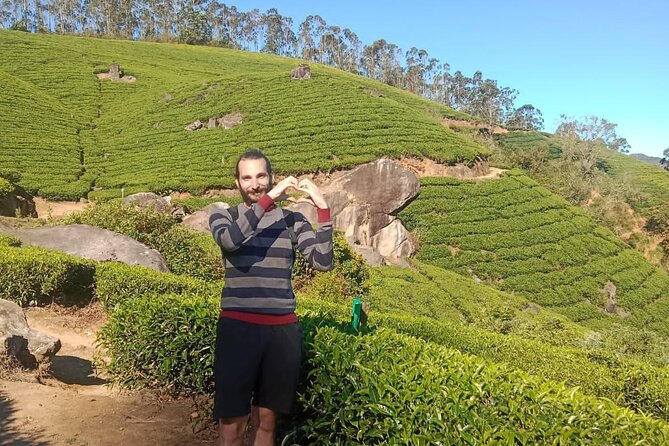
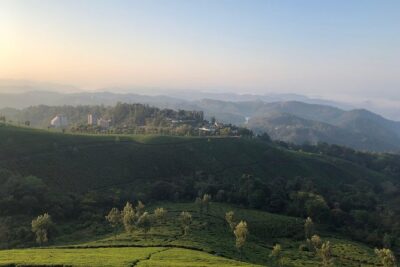
The opening section leads through tea plantation paths. This is a fine way to meet Munnar because the tea fields are not just a roadside photo stop. You move through a working agricultural setting, seeing how the famous green slopes shape the area and frame the hills.
The route then shifts between plantation, forest, grassland, and rocks. That variety keeps the first two hours from becoming a repetitive uphill walk. You get changing textures underfoot and changing views as the path moves from cultivated land into more open and natural sections.
A guide adds real value here. Praveen has been praised for taking care with safety and for explaining local culture and the surrounding environment. That kind of conversation can turn a walk from a sequence of viewpoints into a better understanding of the place you are passing through.
Still, you should not expect a polished walkway. The description specifically includes rocks and grassland, and the trip is labeled medium hard. Conditions can vary with weather, so sturdy walking shoes are more sensible than casual sandals. The route is not presented as suitable for every ability level, and a moderate level of physical fitness is required.
The climb to 2,100 metres is the main reward
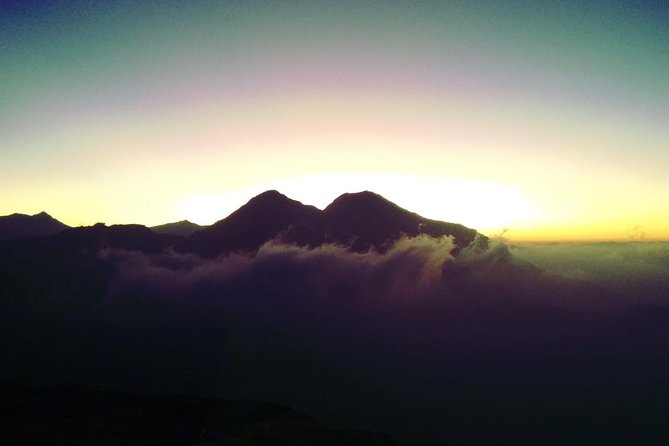
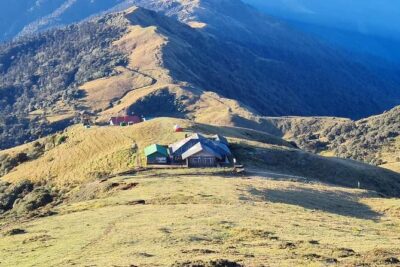
The first major goal is the top of the mountain, reached at about 10:30 am. From the starting elevation of 1,530 metres, the trail rises through the mixed terrain to 2,100 metres. This is where you get the tea plantation view and broader nature views that make the climb worthwhile.
The high point gives you a chance to pause rather than rushing straight into the return. Fruit and snacks are provided, along with a water bottle as part of the trip. That break is modest, but it is well timed after two hours of uphill walking.
I like this structure because the route has a clear target. You know why you are climbing, and the pause at the top gives the morning a natural center. The views should be strongest here, although the exact visibility will depend on the weather.
Do not judge the difficulty only by the four-hour duration. Ten kilometres can feel demanding when the route includes a climb, three mountains, forest paths, and rocky sections. If you walk regularly and can manage a moderate hike, the outing should be within reach. If you prefer flat paths or need frequent stops, this may feel too ambitious.
Three mountains make the return more than a simple descent
After the snack break, the walk resumes at about 11:30 am. The second section passes through three mountains, forest, grassland, and tea plantation before returning to the starting point around 12:30 pm.
This is an important detail. The return is not described as a direct downhill route. You continue across varied highland terrain, so the final two hours still require energy. The reward is a fuller look at the area, with the route changing again as you move between forest and cultivated tea land.
The combination of forest and open grassland should also create a different feel from the first climb. Forest sections can offer shade, while open areas provide more room for views. Rocky stretches demand attention, particularly if the ground is damp.
Because the group is limited to 10 people, the guide can keep a better eye on the pace and the rougher sections. That does not remove the need to look after yourself, but it is useful on a route where the surface changes often. Praveen’s reported concern for safety is especially relevant here.
The planned finish is 12:30 pm, giving you the afternoon free for another Munnar activity, a meal, or rest. If you are building a busy sightseeing day, remember that your legs may need a slower afternoon after this walk.
A completely different kind of day out:
- Munnar Tea Trail Tour with Factory Experience ( By Munnar Info)
★ 5.0 · 458 reviews - Anakulam Wild Elephant Village life tour ( By Munnar Info)
★ 5.0 · 344 reviews - Wild Elephant Anakulam & Waterfalls Tour(munnar valley Trekking)
★ 5.0 · 98 reviews - Half Day Hiking in Munnar Trekking Tour
★ 5.0 · 89 reviews
What the $8 price really covers
At $8, this is unusually inexpensive for a guided outdoor activity. The price includes entry to the tea plantation, a guide, fruit, snacks, and a water bottle. You are paying not only for access to the route but also for someone to lead you through it.
The plantation entry is useful because it avoids treating the tea fields as scenery viewed only from a public road. The guide is the most important inclusion. A local guide can help with direction, safety, and cultural context, and the experience with Praveen suggests that the human side of the walk can be as memorable as the views.
Fruit and snacks are small inclusions, but they matter on a four-hour hike. You still need to begin with breakfast and should not assume the supplied food replaces a meal. The water bottle is helpful, though the supplied information does not state whether extra water is available, so bringing your own additional water is a sensible precaution.
The low price also means you should keep expectations realistic. This is a guided trekking outing, not a luxury excursion with transport, a large meal, specialist equipment, or a long list of services. Its value comes from the route, the guide, and the access to tea country rather than from comfort.
The guide can shape the whole morning
The strongest personal praise centers on Praveen. He is described as considerate, attentive to safety, and generous with explanations about his culture and environment. Those qualities matter on a walk where the route crosses several types of ground and where the scenery is tied closely to local life.
A good guide also helps set the pace. The published schedule expects the group to reach the high point by 10:30 am, take a break, and complete the second section by 12:30 pm. That timing leaves little room for a very slow pace, so clear communication with the guide is useful if you need a brief pause.
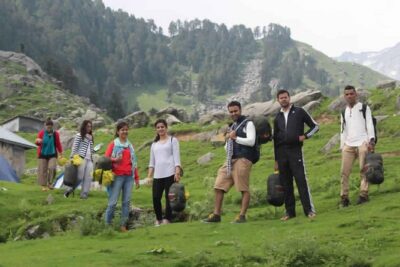
The group cap of 10 supports a more direct exchange. You are not one person in a large crowd moving from one photo stop to the next. You can ask questions, hear explanations, and keep closer to the group on uneven sections.
The cultural element deserves attention. This is not advertised as a formal history tour, and you should not expect a museum-style lecture. Instead, the value is in the informal sharing of local culture and the environment while you are walking through them.
Preparing for a medium-hard Munnar trek

Wear footwear with a firm grip. The route includes rocks, grassland, forest, and plantation paths, so smooth-soled shoes could make the walk less comfortable or less secure. The activity requires a moderate fitness level, and the 10-kilometre distance should guide your decision more than the low price.
Start with enough energy for two hours of climbing. The fruit and snacks come at the 2,100-metre point, not at the beginning, and the supplied information does not promise a full breakfast. A small personal snack is reasonable if you know you get hungry while walking.
Bring practical protection for a morning outdoors. The provided details confirm a water bottle is included, but do not specify additional supplies, so carrying extra water is wise. Weather can cancel the experience, and even when the trip runs, conditions can affect the trail surface and visibility.
You should also be comfortable with a fixed early schedule. The walk starts at 8:30 am, reaches the high point at about 10:30 am, resumes at 11:30 am, and ends around 12:30 pm. There is no suggestion of a casual, all-day pace with long unscheduled stops.
Who will enjoy this route most
I would recommend this trek to you if you want to see Munnar on foot rather than from a vehicle. It suits people who enjoy a moderate physical challenge and want several types of scenery in one morning: tea fields, forest, grassland, rocks, and mountain views.
It is also a good fit if local conversation matters to you. Praveen’s approach, as described, adds cultural exchange and careful attention to safety. The small maximum group size makes that more likely than on a large organized outing.
This is less suitable if you want a gentle nature walk, a short photo stop, or a guaranteed dry-weather outing. The route covers 10 kilometres and gains elevation, while the experience requires good weather. If the weather causes cancellation, you are offered another date or a full refund.
Families and mixed-ability groups should think carefully before booking. The available information says participants need moderate physical fitness, but it does not provide a minimum age, accessibility details, or a specific pace for children. Those questions should be confirmed before reserving if they affect your plans.
Booking, cancellation, and practical value
Confirmation is provided at the time of booking, and mobile tickets are accepted. The activity requires a minimum number of participants, although the exact minimum is not specified. It can also be canceled because of poor weather.
The cancellation terms are simple but strict close to departure. You receive a full refund if you cancel at least 24 hours before the 8:30 am start. Cancellations or changes made within 24 hours are not refunded or accepted.
That policy is fair for a small-group activity but leaves little room for last-minute changes. Since weather matters, check the forecast before the 24-hour deadline if your plans are flexible. If the operator cancels because of weather or because the minimum number is not reached, you are offered another date or experience, or a full refund.
At $8, the risk is relatively small, but the time and physical effort are not. Book it because you want the walk, not simply because it is cheap. The price is excellent for a guided four-hour route with plantation entry and refreshments, provided you are ready for the climb.
Should you book the Munnar Valley trek?
Book this experience if you want an affordable, active morning with genuine variety. The tea plantation access, 2,100-metre viewpoint, forest paths, rocky ground, and grassland sections give you a better sense of Munnar than a quick roadside stop.
I especially like the combination of a small group, a guide who takes safety seriously, and a route that returns to its starting point. The main warning is clear: this is a 10-kilometre medium-hard trek with elevation gain, not an easy walk.
Choose it when the weather looks sound, you can walk steadily for four hours, and you want local context along with mountain views. Skip it if you need flat, accessible paths or a flexible schedule. For fit walkers seeking strong value, this is one of the more practical ways to spend a morning in Munnar.
FAQ
Where does the Munnar trek start?
The trek starts at Rijo Villa, also called Nature Glade Cottage, near the KSRTC bus stand on Amman Temple Street, behind Sree Paravathi, Moolakadai, Munnar, Kerala 685612.
What time does the trek begin?
The activity starts at 8:30 am.
How long is the trekking route?
The walk lasts approximately four hours and covers about 10 kilometres.
How high does the trek climb?
The route starts at about 1,530 metres and reaches the top of the mountain at approximately 2,100 metres.
What is included in the price?
The price includes entry to the tea plantation, a guide, fruit, snacks, and a water bottle.
What happens if bad weather cancels the trek?
If poor weather causes cancellation, you are offered a different date or a full refund.
Just added in Munnar
- WE COOKS- Home Cooking Class in Munnar★ 5.0 · 18 reviews
- Anakkulam Wild Elephant Visiting(Jeep tour)★ 5.0 · 12 reviews
- Fullday Trekking in munnar (munnar valley Trekking & Tours)★ 5.0 · 20 reviews
- Transport Near BWI Dulles Reagan National Airports★ 5.0 · 11 reviews
- Trekking in Munnar★ 5.0 · 11 reviews
- Munnar Mountain Trekking★ 5.0 · 12 reviews
- Sunrise Tour in Top Station, Munnar ( By Munnar Info)★ 5.0 · 56 reviews
- Munnar Tea Trail Tour , Tea factory visit & Tea Tasting★ 5.0 · 25 reviews
Hiking and Trekking, compared.
Mountain Hiking in Munnar (half day) By Munnar Info
Read our review →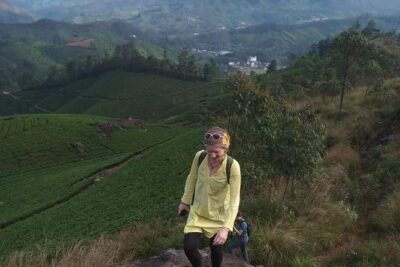
Half day trekking (munnar valley Trekking & Tours )
Read our review →

Wild Elephant Anakulam & Waterfalls Tour(munnar valley Trekking)
Read our review →
Browse the lists this tour appears in