Reviewed · JAIPUR TOURS
“Jaipur Cultural Walk: Explore life behind the pink walls”
Jaipur reveals itself on foot. This three-hour walk through the Old City takes you past artisan workshops, spice stalls, sweet makers, narrow lanes, and old architecture that a bus tour simply cannot reach. The small group, limited to eight people, keeps the pace personal and makes it easier to hear your guide among the city’s constant movement.
I like the chance to watch lacquer bangles, brass vessels, and other handicrafts being made in real workshops. I also like that tea, hot snacks, bottled water, and freshly made sweets are part of the experience, not extra purchases along the way. The main consideration is physical: you need moderate fitness for three hours of walking, and hotel pickup is not included in the group tour.
In This Review
- What makes this Jaipur walk worth considering
- Starting near Tripolia Gate
- Tripolia Bazar and Jaipur’s working craftspeople
- Chhoti Chaupar, chai, and side streets
- Badi Chaupar and the city’s food traditions
- Why the small group matters
- What you get for $30
- Who will enjoy this walk most
- Practical points before you book
- Should you book the Jaipur Cultural Walk?
- FAQ
- How long does the Jaipur Cultural Walk last?
- How much does the tour cost?
- How many people can join the tour?
- What is included in the tour?
- Is hotel pickup and drop-off included?
- Where does the walk begin?
- Where does the walk end?
- Is the tour suitable for people with limited mobility?
- What happens if I need to cancel?
What makes this Jaipur walk worth considering
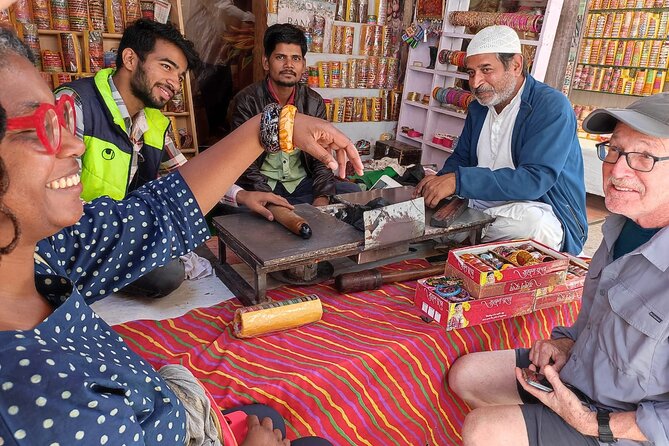
- Tripolia Bazar workshops: Watch local artisans work with lacquer, brass, and metal in designated craft areas.
- Small group of eight or fewer: You get a better chance to hear explanations and ask questions in crowded lanes.
- Masala chai and hot snacks: The break at Chhoti Chaupar adds a taste of everyday Jaipur.
- Fresh sweets and dairy treats: At Badi Chaupar, you visit a small confectionery operation and sample freshly cooked sweets.
- Old City meeting points: The walk begins opposite Tripolia Gate and ends near the City Palace parking area.
- Good value at $30: The price includes refreshments, food samples, bottled water, and a local guide for about three hours.
Starting near Tripolia Gate
The walk begins at the Government Maharaja Public Library on Chaura Rasta Road, opposite Tripolia Gate. This is a practical place to start because you are already at the edge of Jaipur’s old commercial quarter, close to Bapu Bazar and the pink-walled center.
You should plan to arrive with enough time to find the library and meet the group. The meeting point is near public transportation, but hotel pickup and drop-off are not included. That matters if you are staying outside the Old City or if you prefer door-to-door arrangements.
The tour uses a mobile ticket, so keep your booking confirmation easy to access. Since the walk is capped at eight people, it should feel more like a guided neighborhood stroll than a large procession. That small size is especially useful when the guide stops in a workshop or points out an architectural detail in a narrow lane.
Your guide may be Kumar, whose work has earned especially warm praise for explaining Jaipur’s customs, architecture, food, and religious traditions. He has also been noted for leading visitors away from the main tourist routes and into back streets and alleys. The exact guide can vary, but the experience is built around personal explanation rather than a headset or scripted bus commentary.
A few more options to weigh up in Jaipur
- Jaipur: Private Full Day Sightseeing Tour By Car with Guide
★ 4.9 · 1,839 reviews - 3-Hour Morning Bike Tour of Jaipur
★ 5.0 · 1,253 reviews - Jaipur: Private Sightseeing Day Tour with Guide by Car
★ 4.8 · 773 reviews
Tripolia Bazar and Jaipur’s working craftspeople
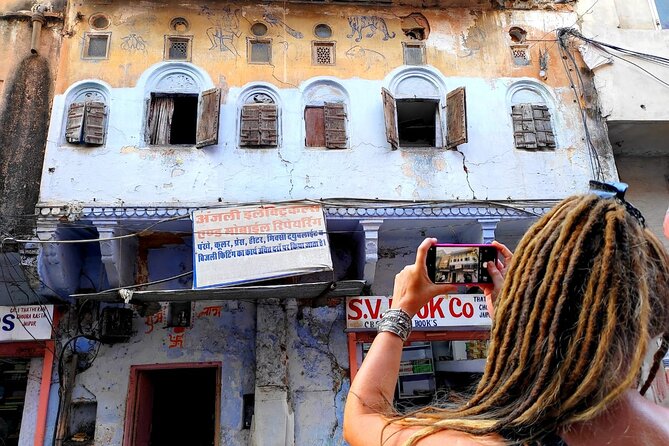
The first hour centers on Tripolia Bazar, one of the most useful parts of the walk for anyone interested in how Jaipur’s decorative goods are made. Instead of seeing finished souvenirs in a shop window, you get to watch artisans at work in designated areas of the downtown craft district.
The crafts listed for this stop include lacquer bangles and brass and metal vessels. These are not just objects associated with Jaipur’s tourist trade. They also show how local skills continue to support working businesses in the Old City.
Photography is allowed, which gives you a chance to record the process. Still, I would treat that permission as a courtesy rather than a command to photograph everything. Ask before focusing closely on an artisan, and let the guide explain what is happening before you move in with a phone or camera.
This stop should suit you if you like seeing production rather than simply shopping. The guide can help explain what you are looking at, which makes the bazar more meaningful than a quick pass through stalls filled with colorful goods.
The drawback is that craft markets are active commercial spaces. You may encounter sellers who hope you will buy something, and the atmosphere is not a quiet museum visit. If you dislike shopping pressure, stay clear about your intentions and focus on the workshops and explanations.
Chhoti Chaupar, chai, and side streets
The second hour moves toward Chhoti Chaupar, where the group takes a short tea break. Masala chai and freshly cooked hot snacks are included, giving you a simple taste of local food without having to choose a restaurant or judge a street stall on your own.
For many people, this will be one of the most enjoyable moments of the walk. Tea creates a natural pause after the first hour on foot, and the snack offers something more substantial than a passing photo stop. Bottled water is also included, which is useful in Jaipur’s heat and during a route where you may not want to keep searching for a shop.
After the break, the route turns into alleyways lined with a varied collection of everyday and decorative goods. The listed examples include incense, candles, and strings used for wall decoration. These details offer a better sense of home life and religious practice than a quick visit to a major monument.
I like this portion because it connects the grand image of Jaipur with ordinary shopping streets. The pink walls and historic architecture matter, but so do the small purchases people make for homes, temples, celebrations, and daily routines.
The walk does require attention to your footing and surroundings. Three hours in the Old City means crossing active streets and moving through crowded commercial areas. The tour is not suited to anyone seeking a mostly seated sightseeing experience.
Badi Chaupar and the city’s food traditions
The final hour brings you to Badi Chaupar and a small factory where confectioners prepare curd, cheese, and sweets from milk. You can taste freshly cooked sweets there, adding another food stop to the earlier tea and snack break.
This is a useful contrast with the craft workshop. At Tripolia Bazar, you see raw materials become household or decorative objects. Here, milk becomes familiar foods and sweets. Together, the stops show Jaipur through its working trades rather than only through royal buildings.
The sweet tasting is also a practical way to try local food in a guided setting. You are not left to guess what a dish contains or how it was prepared. The information provided describes the samples as clean and safe street food, though anyone with allergies or strict dietary needs should ask the guide before tasting.
From Badi Chaupar, you are guided through the spice bazar and flower market. The available description does not name each spice or flower, so I would not expect a formal cooking class or a fixed list of products. What you do get is a closer look at the smells, colors, and trade that shape daily life in the Old City.
This part may be especially appealing if you enjoy food markets more than formal monuments. It is also where the walk’s promise of life behind the pink walls becomes clearest. You are not only looking at Jaipur. You are watching people sell, prepare, make, and use ordinary goods.
A completely different kind of day out:
- Jaipur: Full-Day City Tour with Car, Guide & Skip-the-Line
★ 4.8 · 512 reviews - Full-Day Jaipur Private Sightseeing Tour by Car with Guide
★ 5.0 · 472 reviews - Pink City Cooking Class
★ 5.0 · 452 reviews - Private Elephant Sanctuary
★ 5.0 · 390 reviews
Why the small group matters
A maximum of eight participants is a real benefit here. In a market, even a group of fifteen can stretch across a lane and make conversation awkward. With fewer people, you can stay close to the guide, hear the explanation, and ask about a workshop, custom, or food sample while the group is stopped.
Small groups also make the walk less disruptive in working areas. You can watch an artisan without a large crowd forming around the station. The guide has a better chance to respond to individual interests, whether you care most about architecture, Hindu traditions, shopping, food, or local working life.
The experience is still a group tour, not a private walk. The guide’s attention is shared, and the pace may not match every person in the group. But for $30, a group of no more than eight offers a useful middle ground between a large organized outing and the higher cost of a private guide.
What you get for $30
At $30 per person, this is not the cheapest way to walk around Jaipur’s Old City. You could visit the bazaars independently for little or no admission cost. The value comes from having someone explain what you are seeing, guide you through back streets, arrange the tasting stops, and help you avoid getting lost.
The included food and drinks improve the calculation. You receive coffee or tea, snacks, and bottled water, plus the chance to taste freshly cooked sweets. These are modest inclusions, but they remove several small expenses and give the walk a clearer structure.
I would consider the tour good value if you are new to Jaipur, want local context, or feel unsure about navigating the Old City alone. It is less compelling if you already know the bazaars well or mainly want to visit major landmarks such as forts and palaces. This walk focuses on neighborhood life, craft, food, and customs, not a full list of Jaipur’s headline sights.
The end point is the City Palace parking area near Gangori Bazaar and Kanwar Nagar. That location is useful because you can continue exploring the City Palace area afterward, subject to your own plans and admission arrangements. The tour itself does not include hotel transportation.
Who will enjoy this walk most
I would recommend this experience to curious, mobile visitors who want more than postcard views. It suits people who enjoy markets, food tastings, small workshops, and conversations about how a city works.
It is also a strong choice for anyone who wants cultural context without committing to a full-day tour. Three hours is long enough to see several sides of the Old City, but short enough to leave room for a palace, fort, museum, or relaxed meal later.
The walk may suit families with older children, couples, solo visitors, and small groups of friends. The key requirement is not age but mobility. The physical fitness guidance should be taken seriously because the activity is conducted on foot and includes market lanes rather than a series of vehicle drop-offs.
You may want to skip it if you need guaranteed hotel transportation, dislike food sampling, or prefer large monuments over ordinary streets. It is also less suitable during uncertain weather. The experience requires good weather and may be canceled if conditions are poor.
Practical points before you book
The tour is generally booked about five days ahead, so it is sensible to reserve before your Jaipur visit if your dates are fixed. Confirmation is received at booking, and the mobile ticket makes the reservation easy to carry without printed paperwork.
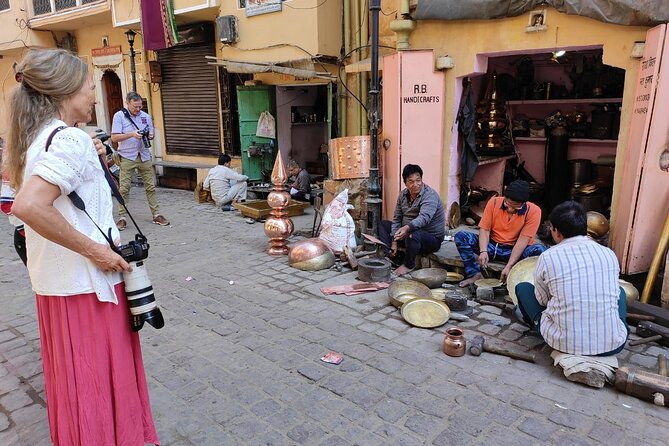
Wear comfortable walking shoes and bring a phone or camera if you want to record the workshops and streets. The supplied information does not specify a dress code, a precise start time, or the total walking distance, so check those details when booking.
Carry a little flexibility. Markets are working places, and the time spent at a craft station or food stop may depend on what is happening when you arrive. The three-hour duration is approximate, not a promise that every minute will follow a rigid schedule.
The cancellation terms are fair but firm. You receive a full refund if you cancel at least 24 hours before the start time. Changes or cancellations inside that window are not accepted and are not refunded. If bad weather causes the operator to cancel, you are offered another date or a full refund.
Should you book the Jaipur Cultural Walk?
Book it if you want to understand Jaipur through its lanes, workshops, foods, and local traditions. The strongest reasons are the small group, the chance to see artisans working, and the guided tastings of chai, snacks, and sweets.
I would not book it as your only Jaipur sightseeing experience. It does not replace the city’s major palaces, forts, or museums. Instead, it gives those grand sights a useful human setting by showing how people shop, make goods, prepare food, and use the Old City today.
For $30, the walk offers a focused introduction with a personal feel. If Kumar is leading your group, you may also benefit from his reported strength in explaining architecture, Hindu customs, local food, and the less-touristed streets. Bring comfortable shoes, expect a working market rather than a polished attraction, and this should be one of the better short introductions to everyday Jaipur.
FAQ
How long does the Jaipur Cultural Walk last?
The walk lasts approximately three hours.
How much does the tour cost?
The price is $30 per person.
How many people can join the tour?
The group has a maximum of eight participants.
What is included in the tour?
Coffee or tea, snacks, and bottled water are included.
Is hotel pickup and drop-off included?
No. Hotel pickup and drop-off are excluded from the group tour.
Where does the walk begin?
The tour starts at the Government Maharaja Public Library on Chaura Rasta Road, opposite Tripolia Gate, in Jaipur.
Where does the walk end?
The walk ends at the City Palace Parking Area near Gangori Bazaar and Kanwar Nagar.
Is the tour suitable for people with limited mobility?
The tour requires a moderate level of physical fitness because it is a walking experience lasting about three hours.
What happens if I need to cancel?
You can receive a full refund if you cancel at least 24 hours before the start time. Cancellations or changes made within 24 hours are not accepted or refunded. If poor weather causes the operator to cancel, you are offered a different date or a full refund.
Just added in Jaipur
- Jaipur Private Sightseeing Tour – All-Inclusive with Car & Guide★ 5.0 · 16 reviews
- Jaipur Private Tour 2 Days with Car & Guide★ 5.0 · 13 reviews
- Private Jaipur Tour with Guide & All Entry Tickets★ 5.0 · 20 reviews
- Yoga in Jaipur with Amit (Yogi on Travel)★ 5.0 · 17 reviews
- Vintage Walk Amer★ 5.0 · 11 reviews
- Private 4-Day Wildlife & Taj Mahal Tour from Jaipur to Delhi★ 5.0 · 23 reviews
- Wheel Pottery Workshop★ 4.5 · 19 reviews
- Ranthambore Tiger Safari Private Same Day Trip from Jaipur★ 5.0 · 18 reviews
Jaipur Tours, compared.

Private Full Day Sightseeing Tour By Car with Guide
Read our review →


Full-Day City Tour with Car, Guide & Skip-the-Line
Read our review →
Full-Day Jaipur Private Sightseeing Tour by Car with Guide
Read our review →