
Reviewed · PRIVATE CAR WITH DRIVER
Immersive culture tour of Pune by private car with guide and local lunch
Pune rewards curious visitors. This eight-hour private tour brings together the city’s religious traditions, Maratha power, social reform, art, and freedom movement in one well-planned day. I like the way transport, admission fees, and lunch are included, so you are not constantly reaching for your wallet. I also like the private format, which gives you room to ask questions and adjust the pace.
The possible drawback is that five major stops in one day can feel full, especially if you want long, quiet visits at every site. The tour begins at 8:30 a.m., and traffic between sights may affect the timing. Still, a private car makes this far easier than trying to connect these places on your own.
Ajit receives especially warm praise as a friendly guide with clear English and a strong grasp of Pune’s history, religion, food, and culture. The local lunch is another high point. At $117.34 per person, this is not a bargain-basement city tour, but it offers good value if you want a private vehicle, personal guidance, five admissions, and a full introduction to Pune in one day.
In This Review
- Key points to know before booking
- Why this route gives you a useful first look at Pune
- Dagdusheth Ganpati Temple begins the day with devotion
- Kelkar Museum turns one man’s collecting into a national story
- Shaniwar Wada brings the Peshwa era into focus
- Darshan Museum offers a different kind of cultural visit
- A local lunch gives the itinerary a welcome pause
- Aga Khan Palace connects Pune to India’s freedom movement
- What the private car and guide add
- Is $117.34 per person good value?
- Who should book this Pune tour?
- Final verdict: a smart first day in Pune
- FAQ
- How long does the Pune culture tour last?
- What time does the tour start?
- Is hotel pickup available?
- Is this a private tour?
- Which places are included?
- Are admission fees included?
- Is lunch included in the price?
- What happens if I need to cancel?
Key points to know before booking
- Five major Pune sights in about eight hours: The route covers Dagdusheth Ganpati Temple, Raja Dinkar Kelkar Museum, Shaniwar Wada, Darshan Museum, and Aga Khan Palace.
- A private car changes the day: Your group travels together, with hotel pickup offered and no strangers sharing the activity.
- Ajit is a standout guide: His explanations cover Pune’s history, freedom movement, religion, traditions, and food.
- Lunch is part of the experience: A local meal is included at no extra cost and has been singled out as a memorable part of the day.
- The tour mixes famous and less familiar places: You see major monuments along with museums and cultural sites you might not find easily by yourself.
- Plan for an early start: The meeting time is 8:30 a.m., with the full experience lasting roughly eight hours.
Why this route gives you a useful first look at Pune
Pune is not a city you understand from one monument. Its identity comes from several strands: devotion to Ganesh, Maratha rule, art collected from across India, spiritual teaching, and the independence movement. This tour connects those strands instead of treating Pune as a quick stop between other destinations.
I like that the route is not limited to palaces and old buildings. The museums add context, while the temples and lunch bring the day closer to daily culture. Your guide can explain how religion, politics, education, and social life overlap in the city.
The private setup matters here. At a crowded site, you can ask for a clearer explanation or pause to take in a detail without worrying about holding up a large group. You also have a better chance of shaping the day around your interests, though the precise flexibility will depend on traffic, opening conditions, and the time available.
More Private Tours in Pune:
- From Delhi: Taj Mahal & Agra Private Day Trip with Transfers
★ 4.9 · 3,181 reviews - Old & New Delhi Private Tour – Half or Full Day (Rated Excellent)
★ 5.0 · 2,226 reviews - Taj Mahal and Agra Private Car Tour from Delhi with 5* Lunch
★ 5.0 · 1,633 reviews
Dagdusheth Ganpati Temple begins the day with devotion
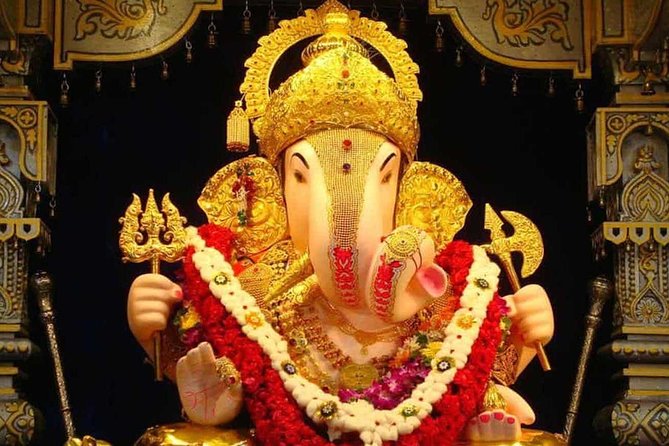
The first stop is Shrimant Dagdusheth Halwai Ganpati Mandir, usually called Dagdusheth. This is one of Pune’s best-known temples and is dedicated to Lord Ganesh, the elephant-headed Hindu deity associated with wisdom and good beginnings.
The temple was built in 1892 by a sweet maker who lost his son during a plague. That origin gives the site a human story before you even consider its religious importance. It is not simply an old structure to photograph. It reflects grief, faith, and the way a personal act of devotion grew into a major Pune institution.
You have about 30 minutes here, and admission is included. That is enough for an introduction, but not a leisurely study of every detail. Dress and behave respectfully, and expect this stop to feel more devotional than museum-like. Your guide can help explain the significance of Ganesh worship and the temple’s place in Pune life.
This is a strong opening because it gets you into the city’s cultural setting right away. If you prefer architecture alone, the visit may seem brief. If you want to understand how religion shapes public life, it gives the rest of the day a useful starting point.
Kelkar Museum turns one man’s collecting into a national story

Next comes the Raja Dinkar Kelkar Museum, with about an hour allotted. The museum is based on one of India’s largest individual collections. Raja Dinkar Kelkar traveled to remote parts of the country and gathered objects from many regions and traditions.
The value of this stop is its wide scope. Instead of focusing only on Pune, the collection helps you see the variety of Indian craft, domestic life, religious practice, and artistic expression. You may find objects that reveal how people worked, worshipped, decorated their homes, and marked important moments.
An hour is a sensible amount of time for a guided introduction, though anyone fascinated by museum collections could easily want longer. The guide makes a real difference because a large collection can otherwise become a parade of unfamiliar objects. Ask questions when a piece catches your eye, especially if you want links between the exhibit and regional customs.
I would treat this as a context-building stop rather than a place to rush through for photographs. It gives you a broader frame for the rest of your Pune visit. Admission is included, so you do not need to choose between this museum and another paid sight.
Shaniwar Wada brings the Peshwa era into focus
The route then moves to Shaniwar Wada, the former seat of power for the Peshwas, or prime ministers, of the Maratha Empire. The Marathas were a major force in India between the seventeenth and nineteenth centuries, and this site helps explain Pune’s political importance during that period.
You have about an hour here. The attraction is not just the remaining architecture. It is the story of power, ambition, court life, and the rise of Pune as a political center. The site also carries legends connected with the Peshwa period, which can make a guided visit more engaging than a walk around the walls alone.
The condition of a historic complex can sometimes surprise visitors who expect a complete palace. Go for the setting and the historical associations, not a perfectly preserved royal residence. Your guide’s storytelling is particularly useful here, since bare walls and open spaces do not explain themselves.
This was a highlight for several people who took the tour, and I can see why. Shaniwar Wada gives the day a strong historical center. After the devotional atmosphere of Dagdusheth and the broad collection at Kelkar Museum, you are now looking at the political story that shaped Pune.
A few more options to weigh up in Pune
- Best of Pune Private City Tour with Lunch and Transport
★ 5.0 · 17 reviews - Delhi to Agra and Taj Mahal Private Day Trip by Express Train with Lunch
★ 5.0 · 1,389 reviews - Taj Mahal & Agra Fort Private Day Trip From Delhi with 5* Lunch
★ 5.0 · 820 reviews - From Delhi: Private Taj Mahal & Agra Tour with 5* Lunch
★ 4.9 · 798 reviews
Darshan Museum offers a different kind of cultural visit
Darshan Museum shifts the subject from royal power to the life and teachings of Sadhu Vaswani, a spiritual leader. The museum focuses on his message of love, reverence, and improvement in human conduct.
This is a biographical and spiritual museum, so it may appeal most if you enjoy learning about modern religious figures and ideas. It also helps keep the tour from becoming a sequence of forts and palaces. Pune’s culture is not only found in old stone buildings. It is also expressed through spiritual movements and social teaching.
The scheduled visit lasts about an hour, with entry included. Give yourself time to take in the presentation rather than treating it as a quick stop between larger monuments. Your guide can provide useful background on Sadhu Vaswani and explain why the museum matters within Pune’s social and religious life.
This is one of the tour’s more specialized stops. Some people will find it thoughtful and distinctive, while others may prefer more conventional history. That difference is worth considering before booking. The tour works best when you want several sides of Pune, not only its most famous architecture.
A local lunch gives the itinerary a welcome pause
Lunch is included, and this is more important than it may sound. A full day of temples, museums, and monuments can become tiring, especially in a large city where driving time adds up. Sitting down for a local meal gives you a break and lets the cultural discussion continue in a less formal setting.
The exact restaurant and menu are not specified, so you should not book this expecting a particular dish or dining style. What is clear is that the meal comes at no extra cost and has been praised as delicious and, for some people, the best part of the day.
I like the fact that lunch is built into the tour rather than left as a problem to solve between stops. You can ask the guide about the food, local habits, and regional flavors. If you have dietary needs, raise them when booking or before the tour, since the supplied details do not explain how special requests are handled.
Aga Khan Palace connects Pune to India’s freedom movement
The final major stop is Aga Khan Palace, built in 1892 by Imam Sultan Muhammad Shah Aga Khan III. The palace is a national monument connected with India’s freedom movement, making it a fitting final chapter after the earlier lessons in faith, art, and political history.
You have about an hour here. The building and grounds provide a more spacious change of pace after the city’s temples and museums, but the main reason to visit is its connection to the independence struggle. The palace helps place Pune within the wider national story.
This is another site where a guide adds value. The significance is not always obvious from the exterior alone. Ask Ajit, if he is leading your visit, to connect the palace with the people and events associated with India’s freedom movement.
Aga Khan Palace was named as a highlight by people who took this tour, along with Shaniwar Wada. I would agree that the pairing gives the day a strong finish: one site represents Maratha political authority, while the other links Pune to modern India’s fight for independence.
What the private car and guide add
Hotel pickup is offered, and transportation between the stops is included. That makes the tour practical for a first day in Pune, when you may not yet know the city or feel ready to manage several separate rides.
The private format means only your group participates. This is useful if you want to ask many questions, need a slower pace, or are traveling with family or friends who have different levels of interest. One person who had to shorten the outing because of an unexpected personal event still managed to visit five locations, suggesting that the operator can make adjustments when circumstances change, though you should not assume every change will be possible.
The guide is central to the experience. Ajit is repeatedly praised for being friendly, helpful, and clear in English. His explanations reportedly cover history, culture, religion, traditions, food, and the freedom movement. That range matters because the itinerary crosses several subjects that could otherwise feel disconnected.
The tour also has a relaxed pace despite its full schedule. It is not an attraction checklist with two-minute photo stops. Still, five sites, lunch, and city driving make this a substantial day. If you want to linger at every museum object or spend hours at one palace, arrange a shorter private visit instead.
Is $117.34 per person good value?
At $117.34 per person, the tour costs more than joining a basic shared city ride. But the price includes a private vehicle, guide, hotel pickup, lunch, and admission fees at all listed stops. Those inclusions add up quickly if you arrange the same day independently.
The strongest value comes from saving planning time. You do not need to work out the order of sights, find transport between them, locate a suitable lunch, or buy five separate admissions. You also get a person who can explain why each place matters.
The value is less convincing if you already know Pune well, have your own car and driver, or mainly want unstructured time. You would be paying for guidance and convenience that you may not need. For a first visit, though, the private attention and broad range of sights make the cost easier to justify.
The tour is booked an average of 33 days ahead, so advance planning is sensible. Confirmation is provided at booking, and free cancellation is available if you cancel at least 24 hours before the 8:30 a.m. start. Changes made inside that window are not accepted, and poor weather can lead to a different date or a full refund.
Who should book this Pune tour?
I would recommend it most strongly to first-time visitors who want a broad introduction without spending days organizing separate visits. It also suits couples, families, and small groups who value a private car and the freedom to ask questions.
It is a good choice if you want:
- A mix of religion, art, political history, and the freedom movement
- A guide who can explain Indian culture in clear English
- A local lunch included in the price
- Hotel pickup and admission fees handled for you
- A relaxed private day rather than a large group outing
You may want another style of visit if you prefer one subject in depth, such as Maratha architecture or contemporary Pune art. The route covers a lot, but its strength is variety rather than exhaustive time at one location.
Final verdict: a smart first day in Pune
I would book this tour if I had one day to get oriented in Pune and wanted more than a drive past monuments. The route shows how devotion, collecting, empire, spiritual teaching, and independence fit into the city’s story.
Its best features are the private car, the included lunch and admissions, and the personal guidance associated with Ajit. The main tradeoff is a busy eight-hour schedule, with some stops necessarily limited to about an hour.
Book it when you want a well-rounded cultural introduction with little logistical work. Skip it if you already have a detailed Pune plan or prefer to spend an entire morning at one museum. For most first visits, this is a practical and personable way to begin.
FAQ
How long does the Pune culture tour last?
The tour lasts approximately eight hours.
What time does the tour start?
The stated start time is 8:30 a.m.
Is hotel pickup available?
Yes, pickup is offered as part of the experience.
Is this a private tour?
Yes. Only your group participates in the private activity.
Which places are included?
The route includes Dagdusheth Ganpati Temple, Raja Dinkar Kelkar Museum, Shaniwar Wada, Darshan Museum, and Aga Khan Palace, along with Darshan Museum.
Are admission fees included?
Yes, admission fees for the listed stops are included.
Is lunch included in the price?
Yes, lunch is provided at no extra cost. The meal is described as a local lunch.
What happens if I need to cancel?
You can receive a full refund if you cancel at least 24 hours before the local start time. Cancellations or changes made less than 24 hours before the start are not accepted for a refund. If poor weather causes the tour to be canceled, you will be offered another date or a full refund.
Just added in Pune
- Why Pune? : A Heritage Walk through Old Pune★ 5.0 · 26 reviews
- Sinhagad Fort Trip (Guided Half Day Sightseeing Tour)★ 5.0 · 29 reviews
- Pune to Lonavala Monsoon Drive in Private Vehicle★ 4.5 · 20 reviews
- Private Tajmahal Day Tour From Mumbai ,Pune ,Chennai with flights★ 5.0 · 23 reviews
- Immersive walking tour in Pune for cultural immersion with guide★ 5.0 · 35 reviews
- Best of Pune Private City Tour with Lunch and Transport★ 5.0 · 17 reviews
- Skip the Line: Meher Retreat Day Picnic Ticket, Near Pune★ 3.5 · 57 reviews
- Pune: Sacred Sites Half Day Tour with Snacks (AC Car Tour)★ 5.0 · 16 reviews
Private Car with Driver, compared.
Taj Mahal and Agra Private Car Tour from Delhi with 5* Lunch
Read our review →
Private Car and Drive for Golden Triangle (4N/5D)
Read our review →
Jaipur Sightseeing Tour with Private Car and Driver
Read our review →
Full-Day Jaipur Tour with Guide and Private Car
Read our review →
Private day tour of Jaipur with Driver and Guide
Read our review →
Private Udaipur Sightseeing Tour by Tuk-Tuk or Car with Driver
Read our review →Browse the lists this tour appears in