Reviewed · JAIPUR TOURS
Explore Jaipur Like Never Before
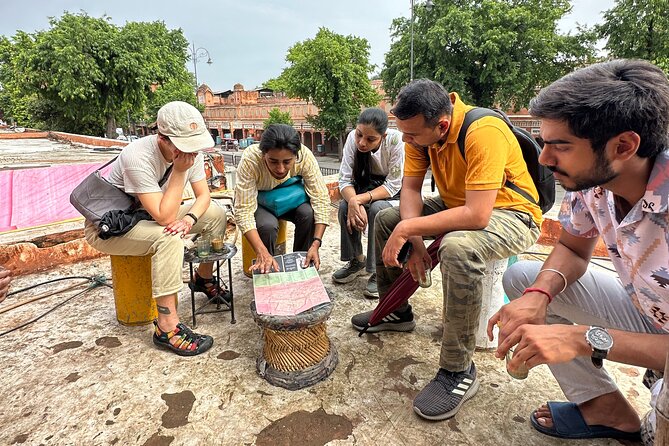
Jaipur has more to show than forts. This three-hour walking tour makes the Pink City’s daily life, design, markets, and royal stories the main event, rather than treating the city as a quick photo stop. Guide Shristi brings an Indian woman’s view to Hawa Mahal and explains why Jaipur’s famous pink is really terracotta pink.
I like the small maximum group of seven, which should make it easier to hear stories and ask questions in crowded lanes. I also like the route’s range: you move from the famous Hawa Mahal to working bazaar lanes and then to Jalebi Chowk, where royal life and spirituality meet. The main consideration is that this is a walking tour with several stops, so hot weather, uneven streets, and the three-hour pace may not suit everyone.
In This Review
- Key points to know before booking
- Why this Jaipur walk feels different
- Starting at Hawa Mahal, where the windows tell another story
- Walking through the Pink City’s terracotta streets
- Tripolia Bazaar and Jaipur’s working lanes
- Jalebi Chowk and the final royal connection
- Shristi’s storytelling is the heart of the experience
- Is $39.69 a fair price?
- Who will enjoy this tour most?
- Practical details that affect your day
- Should you book Explore Jaipur Like Never Before?
- FAQ
- How long does Explore Jaipur Like Never Before last?
- Where does the tour begin?
- Where does the tour end?
- How many people can join the tour?
- Is the tour available with a mobile ticket?
- What is the cancellation policy?
Key points to know before booking
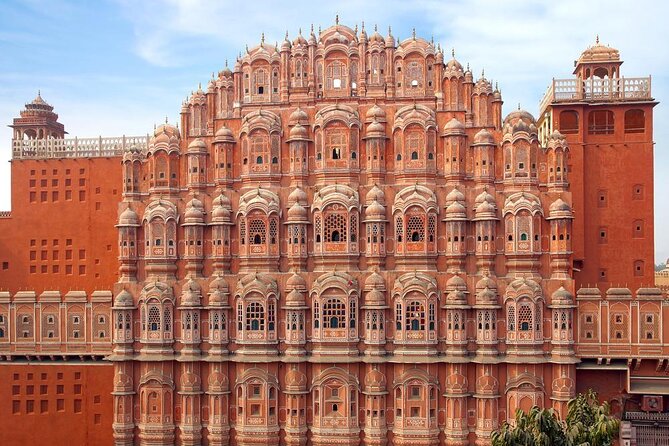
- Hawa Mahal with a different point of view: The tour looks beyond the familiar facade and considers why its royal windows mattered, especially from an Indian woman’s perspective.
- Jaipur’s famous pink is terracotta: Walking through the Pink City adds color, design, and city planning to the usual fort-and-palace story.
- Tripolia Bazaar goes beyond shopping: The route may lead through specialist lanes linked to silver making, stone cutting, and block printing.
- Jalebi Chowk connects royal life and spirituality: This final stop uses stories about soldiers and royal families to explain the character of the space.
- A small group keeps the walk personal: The tour accepts no more than seven people, a useful limit for narrow market lanes.
- Strong guide-led storytelling: Shristi is praised for her passion, enthusiasm, and ability to bring places to life through stories.
Why this Jaipur walk feels different

Jaipur is easy to reduce to a short list: forts, palaces, elephants, jewelry, and pink walls. This tour takes another route. It asks you to notice how the city works, how it was thought out, and how old customs still shape the streets.
That focus gives the walk a useful purpose. You are not only looking at monuments. You are hearing the logic, art, science, and social ideas connected to them. The experience is built around explanation, so it should appeal to you if you want context rather than a quick collection of photographs.
The route also gives you a mix of grand landmarks and ordinary city life. Hawa Mahal provides the famous image. Pink City streets show the planned character of Jaipur. Tripolia Bazaar brings you into working market lanes. Jalebi Chowk adds royal and spiritual stories.
The tour lasts about three hours and begins at Tripolia Gate in Tripolia Bazaar, near Badi Choupad and J.D.A. Market. It returns to the same meeting point. Since the route is on foot, you do not spend valuable time being driven between sights.
A few more options to weigh up in Jaipur
- Jaipur: Private Full Day Sightseeing Tour By Car with Guide
★ 4.9 · 1,839 reviews - 3-Hour Morning Bike Tour of Jaipur
★ 5.0 · 1,253 reviews - Jaipur: Private Sightseeing Day Tour with Guide by Car
★ 4.8 · 773 reviews
Starting at Hawa Mahal, where the windows tell another story
Hawa Mahal, or the Palace of Wind, is one of Jaipur’s best-known sights. Its many windows and ornate facade are familiar from guidebooks and photographs, but the opening part of this tour aims to give the building a less automatic reading.
The guide explains the royal windows from the perspective of an Indian woman. That matters because Hawa Mahal is often presented only as a pretty architectural screen. Here, the discussion turns toward the people who used the windows and the social reasons behind them.
You can expect about 30 minutes at this stop. Admission is included at no extra charge, and the focus is on interpretation rather than an extended palace visit. If you want a tour centered on entering every major monument, this will not be that experience. If you want the landmark to make more sense, the opening conversation is likely to be more useful.
Shristi’s style is a major part of the appeal. Her storytelling has been praised for making Jaipur’s sights easier to understand and for bringing the past into the present. That kind of guide can change how you look at a familiar facade. Instead of seeing only a pink wall with windows, you begin to ask who stood behind them, what they could see, and why the building took this form.
Walking through the Pink City’s terracotta streets
After Hawa Mahal, the route spends about an hour walking through the Pink City. This is the longest section, and it is where the tour’s central idea becomes clear: Jaipur’s color and design are not just decoration.
The city is often called pink, but the tour points out that the shade is more accurately terracotta pink. That small correction is useful. It encourages you to look closely at walls, streets, and buildings instead of accepting the city’s nickname as a complete description.
During this walk, Shristi shares logical and unusual stories about the city. The aim is to explain how Jaipur operates and how its design affects daily life. The information includes history, science, art, and the thinking behind the city, giving you more than dates and royal names.
This portion also has the most room for personal observation. You might find yourself noticing the difference between a landmark street and a side lane, or comparing the old city’s planned feel with its modern activity. The tour promises time to walk and absorb the atmosphere rather than racing from one landmark to another.
The drawback is simple: an hour of walking in Jaipur can be tiring, especially if conditions are hot. The supplied details do not specify the route’s surface, shade, or rest stops, so you should be prepared for a street-based outing rather than a slow indoor visit. Comfortable walking shoes and water are sensible choices, even though the tour information does not list a required dress or equipment policy.
Tripolia Bazaar and Jaipur’s working lanes
The 45-minute stop at Tripolia Bazaar gives the tour its most local feel. Many visitors see Jaipur’s markets as places to buy souvenirs. This route treats them as places where skills, trades, and neighborhood life are still visible.
The bazaar contains many by-lanes, including areas connected with silver making, stone cutting, and block printing. The tour may take you through such specialist lanes, showing how different crafts can gather in separate parts of the market.
That is valuable because it changes the market from a shopping backdrop into a living part of Jaipur. You may not need to buy anything to appreciate the work taking place around you. The stories help explain what makes each lane distinct and how the market fits into the city’s wider character.
This stop also gives you a chance to experience Jaipur at street level. The grand buildings tell you about rulers. The market lanes tell you about making, selling, and working. Together, they create a more balanced picture of the city.
Keep your expectations practical. The information does not promise a shopping discount, a craft demonstration, or a guaranteed purchase opportunity. It promises exploration of the bazaar lanes and the stories behind them. If you want a market walk with context, that is a good match. If you want a dedicated shopping tour, you may find the 45-minute visit too short.
A completely different kind of day out:
- Jaipur: Full-Day City Tour with Car, Guide & Skip-the-Line
★ 4.8 · 512 reviews - Full-Day Jaipur Private Sightseeing Tour by Car with Guide
★ 5.0 · 472 reviews - Pink City Cooking Class
★ 5.0 · 452 reviews - Private Elephant Sanctuary
★ 5.0 · 390 reviews
Jalebi Chowk and the final royal connection

The last stop is Jalebi Chowk, where you spend about 45 minutes. The space is linked with stories about soldiers and royal families, so the discussion shifts from craft and city planning toward power, ceremony, and daily royal life.
The tour also connects Jalebi Chowk with spirituality. That gives the ending a different tone from the opening at Hawa Mahal. You begin with a building and its windows, move through streets and markets, then finish with a place shaped by royal and spiritual connections.
This stop is a good reminder that Jaipur cannot be understood through architecture alone. The city’s spaces carried meaning for soldiers, rulers, families, and worshippers. Stories can help you picture those relationships more clearly than a bare description of walls and gates.
Because the tour ends back at Tripolia Gate, Jalebi Chowk also keeps the route easy to follow. You do not need to arrange a separate pickup at the end. The meeting point is in Tripolia Bazaar, at Tripolia Gate, near Badi Choupad and J.D.A. Market.
Shristi’s storytelling is the heart of the experience
The guide can make or break a walking tour, and Shristi is the central reason this one receives such strong praise. The available rating is five out of five from 15 reviews, with 100 percent recommending the experience. Those numbers are encouraging, though the sample is still small.
The most repeated positive detail is not a particular monument. It is Shristi’s way of guiding. She is described as passionate and enthusiastic, with storytelling that makes the sights and history easier to picture.
That approach fits this route. Much of the value comes from explanation: why Hawa Mahal is viewed from a woman’s perspective, why the city’s pink is terracotta, how specialist market lanes function, and what Jalebi Chowk meant to soldiers and royal families.
You should book this tour for the guide-led interpretation, not simply for access to sights. The admission tickets listed for the stops are free, so the $39.69 price per person pays mainly for Shristi’s time, planning, and local explanation. In a group capped at seven people, that can be fair value if you enjoy asking questions and learning how a place fits together.
Is $39.69 a fair price?
At $39.69 per person, this is not the cheapest way to walk around Jaipur. You could visit public streets and viewpoints independently at no admission cost. The question is what you would miss without a guide.
You would still see Hawa Mahal, Pink City streets, Tripolia Bazaar, and Jalebi Chowk. What you would not automatically have is a connected explanation of the city’s design, the social meaning of Hawa Mahal, the logic behind the color, the work of the market lanes, and the royal stories of Jalebi Chowk.
The small group improves the value. A maximum of seven people is more personal than a large coach-style outing, especially in narrow bazaars. You also avoid spending three hours on transport because the route begins and ends in the same central area.
The price makes the most sense for a first visit to Jaipur, particularly if you want an orientation walk near the old city. It is less compelling for someone who already knows Jaipur well or prefers to explore without a guide. Since the stops do not require admission tickets, you are paying for insight and company rather than entry.
Who will enjoy this tour most?

I would recommend this experience to you if you like walking, stories, and small details. It suits a first-time visitor who wants to understand Jaipur before exploring more forts and palaces on their own.
It is also a good choice if you want to see the city through more than a royal lens. The market lanes and the focus on craft add a useful counterpoint to Jaipur’s grand architecture. The attention to an Indian woman’s perspective at Hawa Mahal gives the tour another layer that a standard landmark introduction may skip.
The tour may also work well for solo visitors and couples who prefer a small group. With no more than seven people, the setting should make conversation with the guide easier than on a large group walk.
You should think carefully if long walks are difficult for you. Most people can participate, and the experience is near public transportation, but the route still involves roughly three hours on foot. The information does not specify seating, shade, or step-free conditions along the route. Service animals are allowed.
Practical details that affect your day
The experience uses a mobile ticket, and booking confirmation is provided at the time of booking. The meeting point is Tripolia Gate, Tripolia Bazaar, Badi Choupad, J.D.A. Market, Pink City, Jaipur, Rajasthan 302002.
The tour ends where it starts. That makes the outing easier to fit into a day of sightseeing, since you can plan around a known central point rather than guessing where a vehicle will leave you.
Free cancellation is available if you cancel at least 24 hours before the local start time. A cancellation made less than 24 hours before the start time is not refunded, and changes inside that period are not accepted.
The exact start time is not included in the supplied details, so check the booking information carefully before setting your day around it. Since this is a walking route through the old city, arriving at the stated meeting point with a little extra time is wise.
Should you book Explore Jaipur Like Never Before?
Book it if you want Jaipur explained through people, streets, craft, design, and stories, not only photographed monuments. The combination of Hawa Mahal, terracotta Pink City lanes, Tripolia Bazaar, and Jalebi Chowk gives you a well-shaped introduction to the old city.
The strongest reason to choose it is Shristi. Her energy and storytelling are the experience’s main asset, and the small group of seven or fewer gives that guiding style room to work.
Skip it if you want a private car, major fort interiors, or a shopping trip built around purchases. This is a three-hour walking tour, with free-admission stops and a price that mainly covers personal interpretation.
For a first look at Jaipur, I like the balance. You get the famous facade, but you also get the market lanes, the city’s terracotta color, royal stories, and a clearer sense of how Jaipur lives beyond its postcard image.
FAQ
How long does Explore Jaipur Like Never Before last?
The tour lasts approximately three hours.
Where does the tour begin?
It begins at Tripolia Gate in Tripolia Bazaar, Badi Choupad, J.D.A. Market, Pink City, Jaipur, Rajasthan 302002, India.
Where does the tour end?
The activity ends back at the meeting point.
How many people can join the tour?
The tour has a maximum of seven travelers.
Is the tour available with a mobile ticket?
Yes. A mobile ticket is available, and confirmation is provided at the time of booking.
What is the cancellation policy?
You can cancel for a full refund up to 24 hours before the experience start time. Cancellations or changes made less than 24 hours before the local start time are not accepted for a refund.
Just added in Jaipur
- Jaipur Private Tour 2 Days with Car & Guide★ 5.0 · 13 reviews
- Jaipur Private Sightseeing Tour – All-Inclusive with Car & Guide★ 5.0 · 16 reviews
- Private Jaipur Tour with Guide & All Entry Tickets★ 5.0 · 20 reviews
- Yoga in Jaipur with Amit (Yogi on Travel)★ 5.0 · 17 reviews
- Private 4-Day Wildlife & Taj Mahal Tour from Jaipur to Delhi★ 5.0 · 23 reviews
- Wheel Pottery Workshop★ 4.5 · 19 reviews
- Vintage Walk Amer★ 5.0 · 11 reviews
- Ranthambore Tiger Safari Private Same Day Trip from Jaipur★ 5.0 · 18 reviews
Jaipur Tours, compared.

Private Full Day Sightseeing Tour By Car with Guide
Read our review →


Full-Day City Tour with Car, Guide & Skip-the-Line
Read our review →
Full-Day Jaipur Private Sightseeing Tour by Car with Guide
Read our review →