
Reviewed · CHENNAI TOURS
British Architecture Walk in Chennai by Wonder tours
Chennai’s grandest buildings tell a complicated story. This three-hour private walk links railway stations, memorials, Fort St. George, Napier Bridge, and the University of Madras, showing how British design mixed with Indian forms across the old capital of Southern British India. I like the route’s wide range of architecture, and I like that a local guide gives the buildings context instead of leaving you to study façades alone. The main drawback is that several stops are viewed in a short time, and the route may be less comfortable during Chennai’s heat.
I also appreciate the included tea or coffee and local snack, a small touch that gives the walk a human pause. Guides named Rajesh and Nanda receive especially strong praise for friendly service and clear explanations. Before you go, confirm the exact starting point, since the route description begins with Chennai Central Railway Station while the stated meeting point is the Greater Chennai Corporation Office nearby.
In This Review
- Key points at a glance
- Why this Chennai walk works
- Starting near Chennai Central and Ripon Building
- Chennai Central Railway Station and the city’s transport story
- Southern Railway Headquarters and Indo-Saracenic design
- Victory War Memorial and the former Cupid’s Bow
- Fort St. George, St. Mary’s Church, and the colonial collection
- Napier Bridge and an everyday Chennai landmark
- University of Madras and Senate House
- What the $49 price includes
- Who will enjoy this walk most
- What guide quality adds to the experience
- Should you book the British Architecture Walk?
- FAQ
- How long does the British Architecture Walk in Chennai last?
- What landmarks are included?
- Is the tour private?
- Is food or drink included?
- Is hotel pickup and drop-off provided?
- Are camera fees and tips included?
Key points at a glance

- Seven major stops in about three hours: The walk covers Ripon Building, Chennai Central Railway Station, Southern Railway Headquarters, Victory War Memorial, Fort St. George, Napier Bridge, and the University of Madras.
- Architecture with mixed influences: You will see Gothic Revival, Indo-Saracenic, and British-era civic design rather than one single colonial style.
- A private walking experience: Only your group participates, which gives you a better chance to ask questions and set the pace.
- Strong guide praise: Rajesh and Nanda are repeatedly singled out for friendly service and good explanations of Chennai’s past.
- Useful central-city route: The walk brings together landmarks that are often spread across separate sightseeing plans.
- Included refreshments: Coffee or tea and a local snack are part of the price, while camera fees, tips, and incidental costs are extra.
Why this Chennai walk works
The appeal here is not simply a list of old buildings. Chennai’s British-era architecture shows how power, transport, religion, education, and public administration shaped the city. In a short distance, you move from a busy railway station to government buildings, a military fort, a war memorial, a bridge, and a university complex.
I like this kind of walking tour because the city becomes easier to read. A station is no longer just a place to catch a train. A memorial is not merely a photo stop. A university building reveals how education and administration were organized under British rule.
The tour is private, and that matters. You are not trying to hear a guide over a large crowd. If Rajesh or Nanda leads your walk, you can expect a guide who has been praised for being warm, professional, and willing to explain the city’s colonial period in clear terms.
The route is also efficient. Seven stops in three hours means you get a broad introduction rather than a long museum visit or a highly detailed architectural survey. You will likely spend more time listening, walking, and looking from the outside than examining every room and ornament.
A few more options to weigh up in Chennai
- Mahabalipuram tour by Tourism Ministry approved company
★ 5.0 · 405 reviews - Gods of Mylapore walking tour- tourism ministry approved company
★ 5.0 · 267 reviews - Mahabalipuram & Kanchipuram by tourism ministry approved company
★ 5.0 · 264 reviews
Starting near Chennai Central and Ripon Building
The stated meeting point is the Greater Chennai Corporation Office on Raja Muthiah Road in the Periamet area. The route itself begins around Chennai Central Railway Station and then moves toward the other landmarks. Since those details are not perfectly identical, I would confirm the meeting instructions with Wonder Tours before setting out.
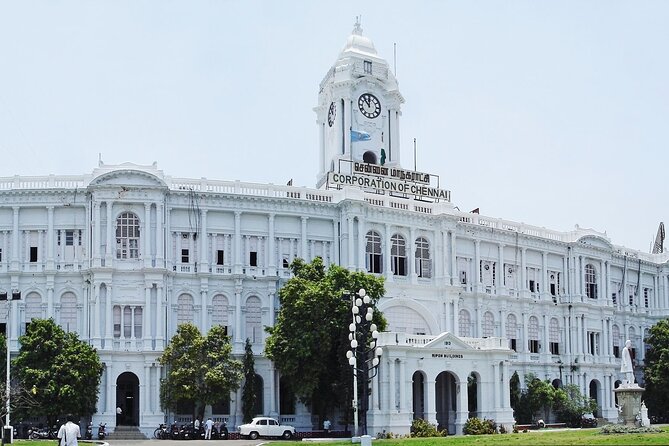
Ripon Building is one of the first important sights. Designed by G. S. T. Harris and built by Loganatha Mudaliar, it was named for Lord Ripon, a Governor-General of British India associated with local self-government. That background gives the building more weight than its handsome appearance alone.
You have about 15 minutes here, with admission included. That is enough time to hear the main story, view the exterior, and take photographs if permitted. It is not enough for a detailed architectural study, so I would treat Ripon Building as an introduction to Chennai’s civic architecture.
The building’s importance comes from its role in local government. You are looking at a structure connected to the city’s administration, not just a decorative public office. That helps explain why so many British-era buildings in Chennai were designed to project authority through scale, symmetry, and ornament.
Chennai Central Railway Station and the city’s transport story
The next stop is Chennai Central Railway Station, built in 1873 in the Gothic Revival style by British architect George Harding. Robert Chisholm later modified the station, adding another layer to its design history.
The station now handles more than 350,000 passengers each day. That number changes how you see the building. It is not an isolated monument preserved for tourists. It remains a working transport hub, and the surrounding movement is part of the scene.
You have around 30 minutes here. That gives the guide time to explain the station’s construction and later changes while you take in the contrast between grand historic design and present-day railway activity. If you enjoy transport history, this may be one of the most satisfying parts of the walk.
The practical point is simple: a functioning station can be noisy and crowded. Stay close to your guide and keep your belongings secure. The tour information describes admission as included, but it does not promise access to every part of the station, so expect a guided look rather than a behind-the-scenes railway visit.
Southern Railway Headquarters and Indo-Saracenic design
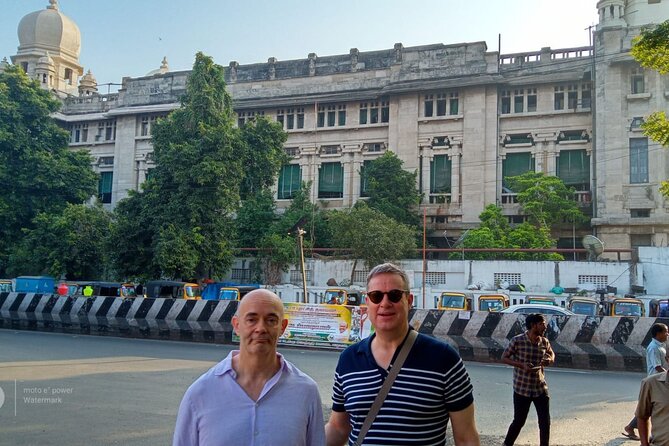
From Chennai Central, the walk continues to the Southern Railway Headquarters. Designed by N. Grayson and built by Samynada Pillai, the building was completed in 1921 and uses the Indo-Saracenic style.
This style is one of the best reasons to take the walk with a guide. The label alone does not tell you much. The building represents a deliberate mix of British planning and Indian architectural references, created during a period when colonial institutions used local motifs as part of their public image.
The stop lasts about 15 minutes. That makes it a quick architectural lesson, not an extended visit. You will want to focus on the building’s overall form and the way its details differ from the Gothic Revival style at Central Railway Station.
The close sequence of these two railway buildings is useful. You can compare them directly instead of seeing each one on a separate day. One reflects an earlier Gothic Revival approach, while the later headquarters shows a more blended Indo-Saracenic direction.
A completely different kind of day out:
- Chennai tour in car with guide-winner of traveller’s choice award
★ 5.0 · 258 reviews - Georgetown heritage walking tour in Chennai about the founding of Chennai
★ 5.0 · 144 reviews - Mahabalipuram Private tour from Chennai by car with guide and lunch by Wonder
★ 5.0 · 137 reviews - Mahabalipuram walking tour by tourism ministry approved company
★ 5.0 · 102 reviews
Victory War Memorial and the former Cupid’s Bow
The route then reaches Victory War Memorial, formerly called Cupid’s Bow. It commemorates the victory of the Allied Armies during World War I from 1914 to 1918 and was later known as the Victory War Memorial.
You have about 30 minutes here, which gives the guide room to explain the memorial’s purpose and name change. The stop adds a military and political layer to the walk. Until this point, the buildings have mainly represented transport and public administration. Here, the focus shifts to war, remembrance, and imperial-era public memory.
I would pay attention to the way a memorial selects what to remember and how to present it. The guide’s explanation can help place the monument within Chennai’s broader colonial story, rather than treating it as just another old structure.
As with the other stops, the attraction is the context. The memorial is valuable because it connects the city to events far beyond southern India. You may find the site quieter and more reflective than the railway stops, though the supplied details do not promise a particular interior visit or special ceremony.
Fort St. George, St. Mary’s Church, and the colonial collection
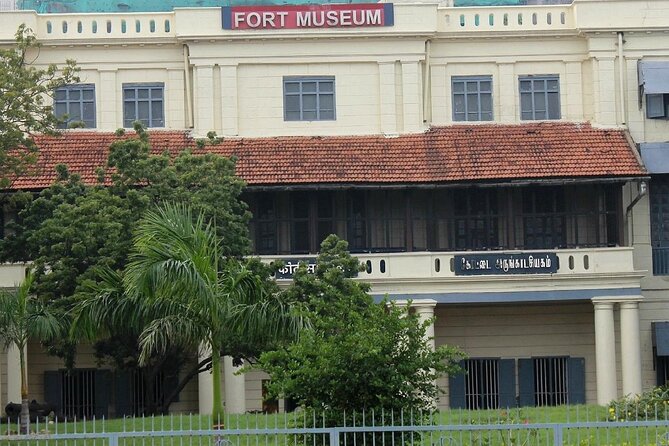
Fort St. George is the most substantial historic stop on the route. The visit includes St. Mary’s Church, described as the oldest Anglican church in India, along with a museum containing relics from the colonial period.
You have about 30 minutes here. That is a meaningful amount of time, but still fairly brief if you want to examine every object in the museum and church. If you are especially interested in military, religious, or colonial history, you may wish for more time.
Fort St. George gives the walk its strongest sense of place. Unlike a civic office or railway station, a fort makes the political purpose of British rule more visible. The church adds a religious dimension, while the museum provides physical objects linked to the colonial era.
The guide is especially useful here because the site can be read at several levels. You can look at the architecture, learn about the fort’s institutional role, and consider how the area functions as part of modern Chennai. The experience is not only about admiring old stone and ornament. It is also about understanding who built these places, who used them, and how their roles changed.
Admission is included according to the tour details, but camera and video camera fees are not. Ask before photographing inside the church or museum, and keep some money available for any site-specific charge.
Napier Bridge and an everyday Chennai landmark
Napier Bridge is a short stop, about 15 minutes, but it gives the tour a welcome change of scale. The bridge was widened, converted into a concrete structure, and opened to the public in July 1943. It is also frequently used by media as a visual symbol of Chennai.
You may find this stop less rewarding if you expect an elaborate historic monument. Its value is more practical and visual. The bridge connects the architecture walk to the living city, showing how a familiar piece of infrastructure can become part of a city’s public identity.
This is a good place for photographs, though traffic and local conditions may affect how long you can comfortably pause. The guide can explain the bridge’s development and why it appears so often in representations of Chennai.
I like the stop because it prevents the experience from becoming a parade of grand colonial buildings. A city’s identity is also shaped by bridges, roads, railway lines, and other structures people use every day.
University of Madras and Senate House
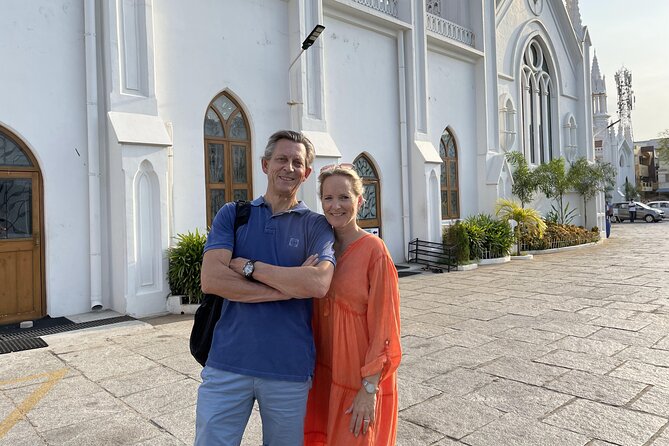
The final major landmark is the University of Madras, including the Senate House. The masterpiece was constructed between April 1874 and 1879 and includes a convocation hall, porticos, a parapet, meeting halls, and a library.
The Senate House served as the administrative center of the university. That makes it a fitting final stop. After seeing transport, government, war, religion, and military structures, you finish with education and higher administration.
You have around 30 minutes here, enough for the guide to explain the building’s layout and importance. The architectural details listed for the site suggest that this is one of the more elaborate buildings on the route, especially if you enjoy halls, porticos, and formal public spaces.
The university also helps complete the story of British-era Chennai. These buildings were not built for one purpose alone. Together, they show how colonial institutions organized the city and projected their authority through architecture.
What the $49 price includes
At $49 per person, the tour is not the cheapest way to see Chennai’s old buildings, but it offers reasonable value if you want a private guide. The price includes a local guide, the listed admissions, all taxes and handling charges, and a local snack with coffee or tea.
The private format is the key factor. Only your group takes part, so the cost buys more than transport between sights. You receive a guided explanation across seven locations, with room to ask questions and request clarification.
The three-hour duration also keeps the price easier to judge. You are paying for a focused introduction, not a full-day city tour. If you have only a short time in Chennai, the route covers a lot of ground without requiring separate planning for each landmark.
You should budget separately for tips, porterage, camera and video camera fees, and other incidental charges. Hotel pickup and drop-off are not included. Group discounts are available, which may improve the value if you are booking for several people.
The non-refundable booking rule is important. Once booked, the experience cannot be changed or refunded for a cancellation, so choose your date carefully.
Who will enjoy this walk most
I would recommend this tour most strongly to you if you enjoy architecture, city history, railway buildings, military sites, or guided sightseeing with a clear theme. It is also a useful first look at Chennai because the route introduces several parts of the city’s civic identity in one outing.
The private format suits couples, families, and small groups who prefer direct conversation with a guide. The tour information says most people can participate and that the route is near public transportation.
You may want a different plan if you dislike walking, prefer long visits at each museum, or want a tour centered on modern Chennai rather than its British-era buildings. Three hours is enough for breadth, but not for a slow study of every interior.
Chennai’s weather is another practical consideration. The route includes outdoor walking between stops, so carry water, wear comfortable shoes, and plan for heat. The tour details do not state a weather policy, so ask Wonder Tours if conditions look poor.
What guide quality adds to the experience
The most consistent praise goes to the guides. Rajesh is described as friendly and strong at explaining the history, while Nanda is praised for professional service, clear information, and a warm manner. That matters on an architecture walk, where a building’s appearance only tells part of the story.
A good guide can show you the difference between Gothic Revival and Indo-Saracenic design, explain why the railway buildings matter, and connect Fort St. George to the rest of the city. The strongest part of this experience is likely to be the explanation between stops, not simply the act of reaching each landmark.
The route also benefits from having a guide who can adjust the conversation to your interests. In a private group, you can ask for more detail about railways, churches, universities, or colonial administration instead of receiving a fixed speech aimed at a large crowd.
Should you book the British Architecture Walk?
Book it if you want a focused, private introduction to Chennai’s British-era buildings and prefer learning from a local guide rather than sightseeing alone. The combination of Central Railway Station, Southern Railway Headquarters, Fort St. George, and the University of Madras gives you a useful range of architecture and civic history.
The tour is especially good value for a small group using the discount and for anyone with limited time in Chennai. Rajesh and Nanda are names to request if available, given the repeated praise for their friendly and clear guiding.
Skip it if you want a relaxed pace, extensive museum time, or hotel transfers included. Confirm the meeting point, prepare for outdoor walking, and remember that camera fees, tips, and incidental expenses are separate. With those limits understood, this is a practical way to see Chennai’s colonial-era core without treating its buildings as mere photo backdrops.
FAQ
How long does the British Architecture Walk in Chennai last?
The walk lasts approximately three hours.
What landmarks are included?
The route includes Ripon Building, Chennai Central Railway Station, Southern Railway Headquarters, Victory War Memorial, Fort St. George, Napier Bridge, and the University of Madras.
Is the tour private?
Yes. Only your group participates in the activity.
Is food or drink included?
A local snack and coffee or tea are included in the tour price.
Is hotel pickup and drop-off provided?
No. Hotel pickup and drop-off are not included. The stated meeting point is the Greater Chennai Corporation Office at 53 Raja Muthiah Road in Chennai, and the activity ends back at the meeting point.
Are camera fees and tips included?
No. Camera and video camera fees, porterage, tips, and other incidental charges are not included.
Just added in Chennai
- Exploring Georgetown: A Heritage Walking Tour of Chennai★ 4.5 · 16 reviews
- Traditional Cooking Class in Chennai in a Local Home with Sundari★ 5.0 · 38 reviews
- Food Trail Through Sowcarpet Market: A Taste of Chennai★ 5.0 · 38 reviews
- St Thomas Trail in Chennai by Wonder tours★ 4.5 · 11 reviews
- Shopping and Bazaar trail in Chennai★ 5.0 · 23 reviews
- Colonial Charm & Cultural Treasures Chennai Sightseeing Tour★ 4.0 · 10 reviews
- Full-Day Private Tour to the Kanchipuram Temples from Chennai★ 5.0 · 73 reviews
- Experience Mylapore: Enriching Walking Trail Tour★ 5.0 · 18 reviews
Chennai Tours, compared.
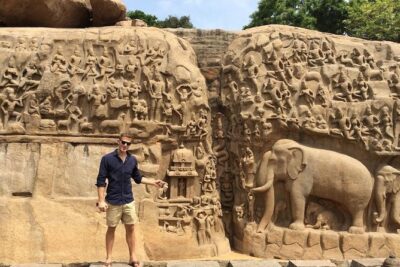
Mahabalipuram tour by Tourism Ministry approved company
Read our review →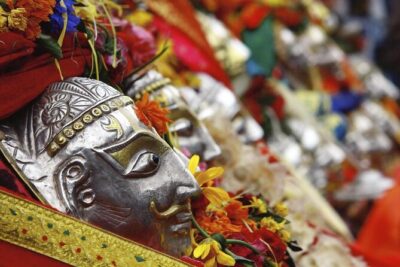
Gods of Mylapore walking tour- tourism ministry approved company
Read our review →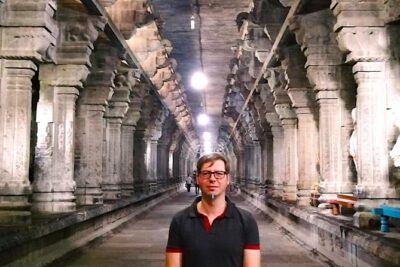
Mahabalipuram & Kanchipuram by tourism ministry approved company
Read our review →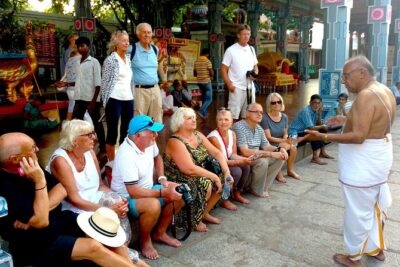
Chennai tour in car with guide-winner of traveller’s choice award
Read our review →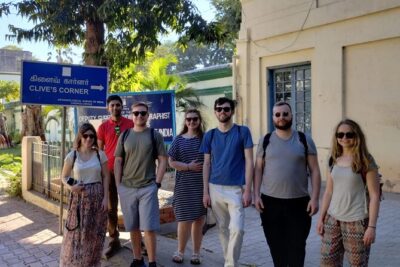
Georgetown heritage walking tour in Chennai about the founding of Chennai
Read our review →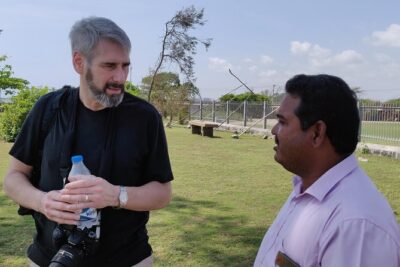
Mahabalipuram Private tour from Chennai by car with guide and lunch by Wonder
Read our review →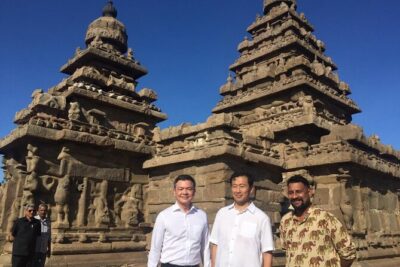
Mahabalipuram walking tour by tourism ministry approved company
Read our review →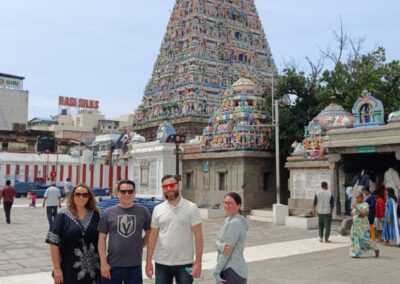
Browse the lists this tour appears in