
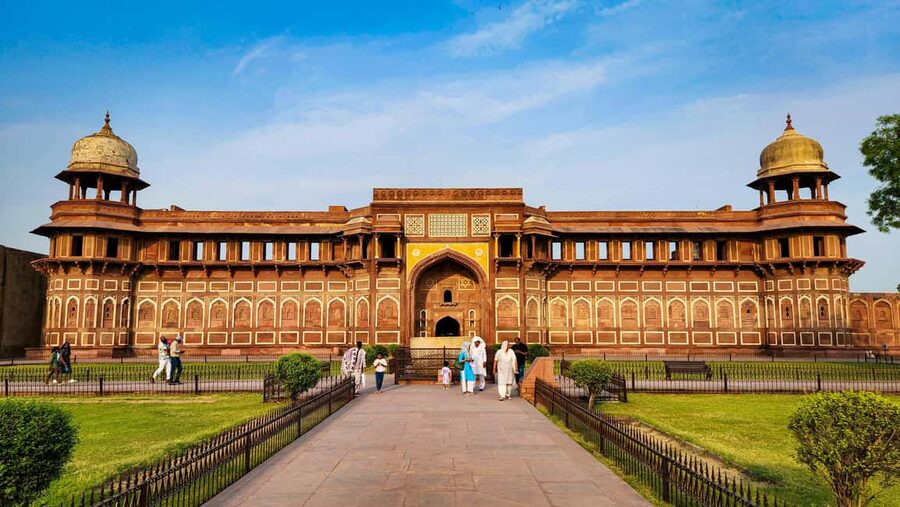
Reviewed · FORTS AND PALACES
Agra Fort: Guided UNESCO Heritage Walking Tour
A fort can tell two stories at once. I like the way this one-hour private tour joins military design with royal life, and I like the chance to see Shah Jahan’s final view of the Taj Mahal from Musamman Burj. The low $6 price also makes a guide an easy choice, especially if you want help finding the best details and photo spots.
The main consideration is time. Agra Fort is huge, and one hour gives you a focused introduction rather than a full exploration. You also arrange your own transport, and the tour does not include transfers or entry costs.
In This Review
- Key points at a glance
- Why Agra Fort deserves more than a quick photo
- Amar Singh Gate and the first look inside
- From Akbar’s stronghold to Shah Jahan’s palace
- Diwan-i-Am and the business of ruling
- Diwan-i-Khas and the private court
- Jahangiri Mahal and the palace blend
- Musamman Burj and the view Shah Jahan could not leave
- The mirrored palace and Anguri Bagh
- What the guide adds for $6
- Timing, walking, and what to bring
- Who should book this Agra Fort tour?
- Should you book it?
- FAQ
- How much does the Agra Fort guided tour cost?
- How long does the Agra Fort tour last?
- Is the tour private?
- Which languages are available?
- Is transportation included?
- Where do I meet the guide?
- Can I cancel the booking?
- Do I have to pay when I book?
- What should I bring?
- Can I visit the Taj Mahal on the same day?
Key points at a glance

- Enter through Amar Singh Gate: This is the visitor entrance and the starting point for your guided walk inside the fort.
- See Mughal court life: Visit the Diwan-i-Am, Diwan-i-Khas, and the royal quarters linked with Akbar, Jahangir, and Shah Jahan.
- Pause at Musamman Burj: Look toward the Taj Mahal from the place associated with Shah Jahan’s imprisonment by Aurangzeb.
- Look for the mirrored palace: If access is available, the reflective decoration offers one of the fort’s most unusual interiors.
- Walk through Anguri Bagh: Geometric garden beds show how royal leisure was planned within the fortified complex.
- Get personal help with photos and crowds: Guides such as Gagan and Shahid Khan have been praised for clear directions, good pacing, safety near the entrance, and memorable pictures.
Why Agra Fort deserves more than a quick photo
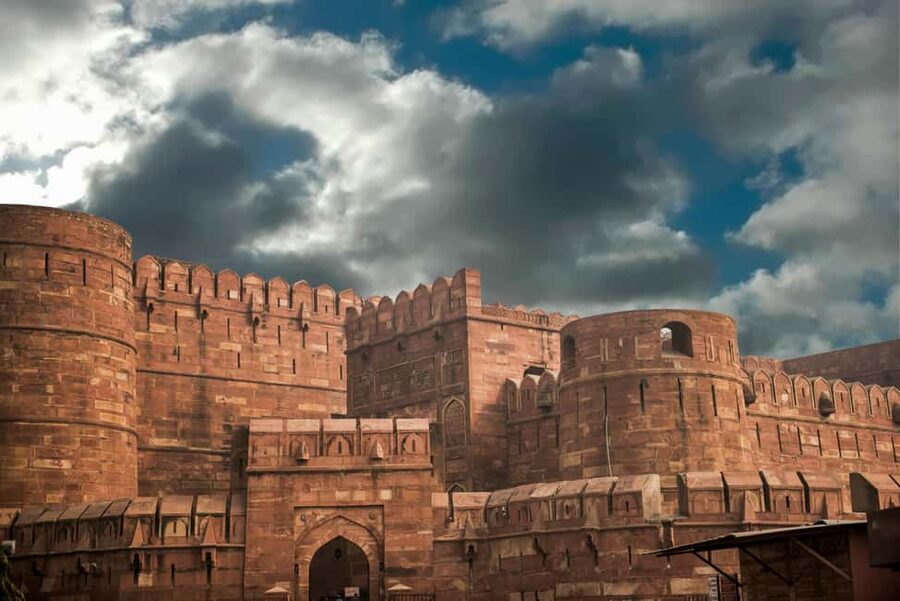
Most people come to Agra for the Taj Mahal. That is understandable, but Agra Fort gives you the political story behind the famous white monument.
The fort was not simply a defensive wall. It was a military base, imperial residence, administrative center, and stage for royal ceremony. Inside, thick red sandstone gives way to white marble, carved screens, arches, balconies, gardens, and palace rooms. The changing materials tell you how Mughal power developed over time.
I find this contrast useful. The Taj Mahal presents one polished expression of Mughal art. Agra Fort shows the machinery of empire: where rulers received petitions, met nobles, guarded treasure, lived with their families, and watched the city below.
A guide adds real value here because many of the important features are easy to miss. A carved window may look decorative until you understand who used it. A hall may seem empty until you picture it filled with officials and petitioners. In a one-hour visit, clear explanation helps you spend your limited time well.
The tour is offered as a private group experience in English or Hindi. That matters if you want to ask questions, pause for photographs, or move at a pace that suits your group rather than a large crowd.
More Forts and Palaces in Agra
- Agra: Skip-the-Line Taj Mahal & Agra Fort Private Tour
★ 4.9 · 1,546 reviews - Taj Mahal, Agra Fort, Baby Taj & Mehtab Bagh Private City Tour
★ 5.0 · 391 reviews - Skip-the-Line Guided Taj Mahal & Agra Fort Tour with Add-ons
★ 5.0 · 339 reviews
Amar Singh Gate and the first look inside
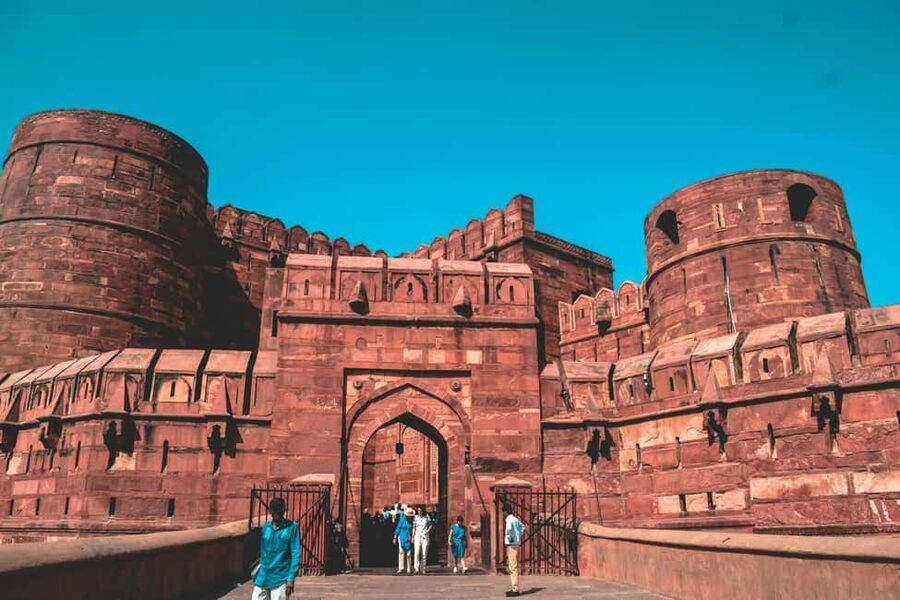
Your visit begins at Amar Singh Gate, the only entrance used by visitors. Expect security checks here, and avoid bringing a large bag or prohibited items. Photography is allowed, but drones and tripods are usually not permitted without special permission.
The gate itself helps set the tone. Agra Fort was built to protect imperial power, so the approach feels more defensive than the open gardens around the Taj Mahal. Your guide can explain how the fort was designed to control movement and protect the rulers within.
This is also the place where practical help can matter. The entrance area can be busy, and vendors or unofficial photographers may approach you. Gagan, one of the guides assigned to this experience, was praised for helping a visitor avoid scam photographers and vendors around the entrance. Shahid Khan was also praised for helping with a weekend rush and guiding his group through crowded areas.
That does not mean you should expect a special entrance arrangement. Entry tickets and transport are not included, and the tour description does not promise skip-the-line access. The useful part is having someone with you who can explain where to go and help you keep your attention on the fort.
From Akbar’s stronghold to Shah Jahan’s palace
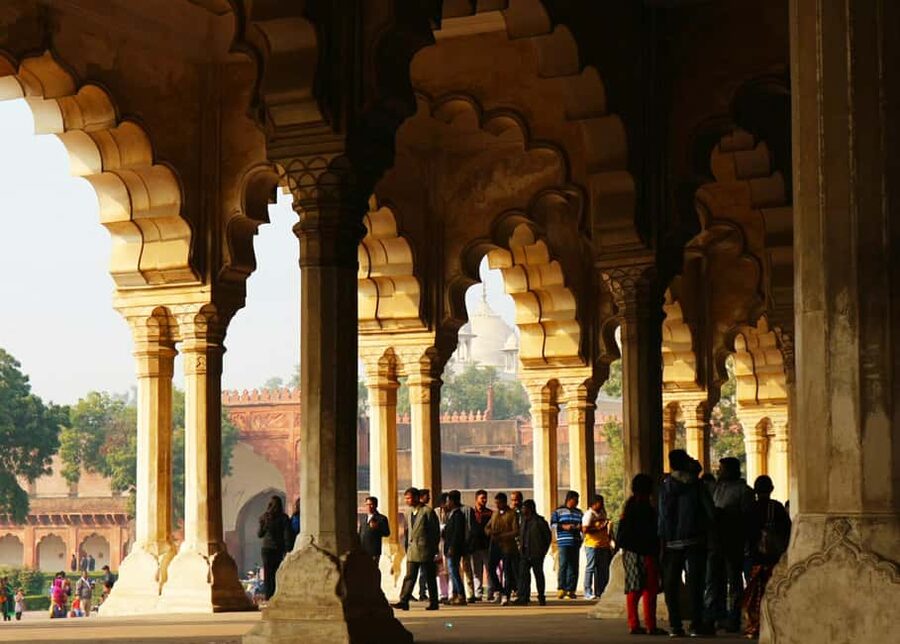
Agra Fort took shape under Mughal rulers including Akbar, Jahangir, and Shah Jahan. Your guide will connect the different parts of the complex to those rulers and explain how the fort changed from a powerful red sandstone citadel into a more refined palace center.
You will see a mix of Rajput, Persian, and Islamic design. Look for Mughal arches, ornate jharokhas, and marble carving. Jharokhas are projecting windows or balconies, and they are more than decoration. They helped shape how rulers were seen and how palace life connected with the outside world.
The changing architecture is one of the best reasons to take a guided walk. Without context, the fort can feel like a succession of courtyards and halls. With context, you can read the building as a record of imperial taste. Red sandstone suggests strength and permanence, while marble details bring a lighter, more intimate character to the royal quarters.
You may also hear about the Peacock Throne and the place where it once dazzled court audiences. This is one of those details that adds drama, but keep your expectations measured. The throne itself is not waiting inside the fort today. The value is in understanding how the court used architecture, ceremony, and precious materials to display power.
Diwan-i-Am and the business of ruling
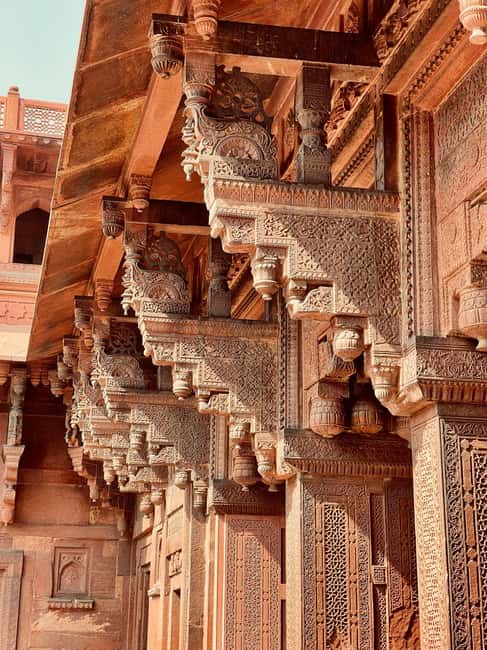
The Diwan-i-Am, or Hall of Public Audience, shows the formal side of Mughal government. This was a place where the emperor addressed subjects and heard petitions.
It is easy to focus only on the arches and pillars, but the hall worked as a political theater. Position mattered. Distance mattered. The layout separated the emperor from the people seeking his attention while still allowing him to appear accessible.
A good guide makes this kind of space easier to picture. Ask your guide to explain how the hall functioned, who might have appeared there, and how the arrangement reflected rank. Since the tour is private, you should have room to ask questions rather than simply follow a flag through the building.
The hall can also help you understand why Agra Fort was both palace and state headquarters. It was not a retreat away from government. It was where government happened.
More Walking Tours in Agra:
- Agra Walking Tour
★ 5.0 · 109 reviews - Agra: Street Food Walking Tour, Spice Market, & Tuk-tuk Ride
★ 4.9 · 102 reviews - Agra: Sadar Bazar Food Market Night Walking Tour by Tuk-Tuk
★ 4.9 · 25 reviews - Agra Old City Walking Tour, Private Heritage walking Guided Tour
★ 5.0 · 20 reviews
Diwan-i-Khas and the private court
The Diwan-i-Khas, or Hall of Private Audience, presents a more restricted setting. Here, the emperor met important officials, nobles, and special visitors.
The difference between the public and private halls is central to the fort’s design. One hall managed a ruler’s relationship with ordinary subjects. The other handled high-level meetings and elite ceremony. Your guide can point out how the scale, decoration, and setting supported those different roles.
This is a good place to slow down and notice the details rather than rush toward the next famous stop. Look at the arches and marble work. Notice how the palace areas feel more delicate than the outer fortifications. If you enjoy architecture, this section may be more rewarding than the broad courtyards because small design choices carry much of the story.
The one-hour limit does mean you may not linger as long as you wish. If you are especially interested in Mughal architecture, tell your guide early. A private tour gives you some control over priorities, but it cannot turn a one-hour visit into an all-day study.
Jahangiri Mahal and the palace blend
Jahangiri Mahal is one of the major palace buildings on the route. Its design helps show the meeting of Mughal and Rajput traditions within the fort.
Look for the balance between strong structural forms and finely worked details. Arches, balconies, carved stone, and open spaces give the building a practical yet ceremonial feel. The palace was made for royal life, but it also had to reflect the authority of the people who lived there.
The name connects the building with Jahangir, but the wider story is more complex than attaching one ruler to one room. Agra Fort developed over generations, and its buildings reflect changing needs and tastes. Your guide can help separate the different periods instead of treating the fort as one single project.
For you, the main benefit is scale. Jahangiri Mahal helps you see that the fort was not just a defensive shell around a palace. It was a functioning royal complex with spaces for ceremony, residence, movement, and gardens.
Musamman Burj and the view Shah Jahan could not leave
Musamman Burj is the emotional center of the walk. This is the spot associated with Shah Jahan’s imprisonment by his son Aurangzeb, where he spent his final days looking toward the Taj Mahal.
The view is beautiful, but the story is painful. Shah Jahan is closely linked with the Taj Mahal, yet his last years were spent confined within Agra Fort. From Musamman Burj, the monument was visible across the river, close enough to see but not reach.
This is where a short tour can have real weight. You are not only looking at another palace balcony. You are standing in a place shaped by family conflict, succession, power, and loss. Ask your guide to point out the Taj Mahal if visibility is good.
The view also gives you a useful sense of Agra’s geography. The Taj Mahal is about 2.5 kilometers away, so combining both sights in one day is practical. If you visit the fort first, the later Taj Mahal visit can feel more meaningful because you have already seen the imperial world that produced it.
The mirrored palace and Anguri Bagh
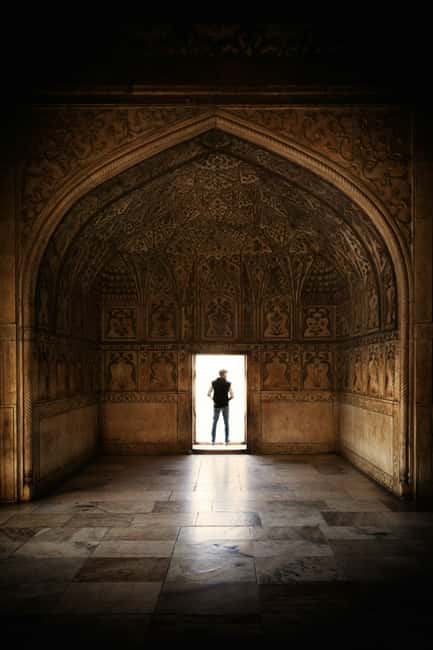
If access is available, the mirrored palace adds a completely different mood to the visit. Reflective surfaces catch the light and create a shimmering interior effect. It is a memorable contrast with the fort’s heavy walls and open courtyards.
Access can depend on current conditions, so treat this as a possible feature rather than a guarantee. Your guide should be able to tell you what is open during your visit. Photography is allowed in general, but follow any local instructions inside particular rooms.
Nearby, Anguri Bagh brings order and calm to the palace complex. Its geometric garden layout reflects the Mughal love of symmetry and planned water or planting arrangements. Even if the garden is not in peak condition, the design remains easy to read from above and around its edges.
The name refers to grapes, and the garden was associated with royal leisure. It gives you a glimpse of the softer side of fort life. Behind the walls and military defenses, the court also needed gardens, shade, and places to relax.
These are excellent photo areas. Shahid Khan was praised for knowing strong viewpoints and taking pictures for his group. Gagan was also praised for taking clear photos while explaining the site. You can ask your guide to help with composition, but keep the visit focused on the place rather than turning it into a photo session.
What the guide adds for $6
At $6 per person, this is unusually affordable for a private guided visit. The value does not come from transport, since you arrange that yourself. It comes from having a person explain the fort’s rooms, connect the rulers to the buildings, and help you avoid wasting time.
The supplied rating is 4.9 from 21 reviews, with repeated praise for the guides’ energy, clear communication, patience, and photo help. Gagan has 17 years of guiding experience, according to one booking account. Shahid Khan was described as active, enthusiastic, helpful during a weekend rush, and familiar with the best Taj Mahal viewpoints.
Those details suggest the guide can be useful beyond memorized dates. A good guide can help you decide where to pause, keep you oriented inside a large site, and make the story easier to remember. One guide even waited patiently when a group arrived very late, though you should not assume every delay will be handled the same way.
The tour is most valuable for first-time visitors, short-stay visitors, and anyone who wants the fort to make sense rather than simply photograph its walls. If you already know Mughal architecture well, you may prefer more time alone inside the complex.
Timing, walking, and what to bring
The advertised duration is one hour, but you should allow extra time for getting to Amar Singh Gate, security checks, and moving around the site. The fort has uneven surfaces and requires plenty of walking. Comfortable shoes are not optional if you want to enjoy the visit.
Bring a camera, but keep your equipment simple. Large bags may be refused, and tripods and drones are usually prohibited without special permission. A small bag makes the entrance easier and keeps your hands free for railings and uneven paths.
Your guide’s contact details are sent by WhatsApp, or by email if you do not use WhatsApp, one day before the tour. The provider’s WhatsApp number is also listed on the booking voucher. This is useful because the exact meeting instructions are not fixed in the information provided here. Check your messages before setting out.
The tour is a private group experience, with English and Hindi available. You can cancel up to 24 hours ahead for a full refund, and the reserve-now, pay-later option keeps you from paying at the time of booking. Those terms are helpful if your Agra schedule may change.
Who should book this Agra Fort tour?
I would choose this tour if you have about an hour, want a personal guide, and plan to see the Taj Mahal on the same day. It is also a good fit if you want help with photos, local navigation, and the fort’s major stories without paying for a long private sightseeing package.
Families may appreciate the private format and flexible pace. First-time visitors will benefit most because the guide can turn a large, complex site into a clear sequence of places: gate, court halls, palace, prison view, mirrored room, and garden.
I would think twice if you want a slow architectural study. One hour passes quickly, and the fort contains far more than this route can cover. You will also need to budget separately for transportation and any admission costs not included in the guided tour.
Should you book it?
Yes, if you want an inexpensive and focused introduction to Agra Fort. The combination of a private guide, major Mughal halls, Shah Jahan’s poignant viewpoint, and possible help with photos gives the $6 fee strong value.
Book it with realistic expectations: this is a guided overview, not a full-day fort exploration. Wear good shoes, travel light, confirm your meeting message, and pair it with the Taj Mahal while you are in Agra. If you do that, this short walk can add the political and personal story that the Taj Mahal alone cannot provide.
FAQ
How much does the Agra Fort guided tour cost?
The tour costs $6 per person.
How long does the Agra Fort tour last?
The guided tour lasts one hour.
Is the tour private?
Yes. It is offered for a private group.
Which languages are available?
Live guiding is available in English and Hindi.
Is transportation included?
No. Transfers are not included, so you must arrange your own transportation to Amar Singh Gate.
Where do I meet the guide?
You receive the guide’s contact details and meeting instructions through WhatsApp one day before the tour. If you do not use WhatsApp, the information is sent by email.
Can I cancel the booking?
Yes. You can cancel up to 24 hours in advance for a full refund.
Do I have to pay when I book?
No. The reserve-now, pay-later option lets you book without paying immediately.
What should I bring?
Bring comfortable shoes and a camera. The fort has uneven surfaces and requires plenty of walking.
Can I visit the Taj Mahal on the same day?
Yes. The Taj Mahal is about 2.5 kilometers away, so visiting both sites on the same day is practical.
Just added in Agra
- Taj Mahal Half Day Tour by Tuk Tuk★ 5.0 · 16 reviews
- 3-Hour Unimaginable Beauty of Taj Private Guided Tour★ 5.0 · 13 reviews
- Private Tour Guide For Taj Mahal And Agra Fort★ 5.0 · 17 reviews
- Taj Mahal Virtual Tour with Local Guide(Online Experience )★ 5.0 · 24 reviews
- From Agra: Skip-the-Line Taj Mahal & Agra Fort Private Day Tour★ 5.0 · 25 reviews
- Taj Mahal & Agra Fort Tour from Agra City★ 5.0 · 30 reviews
- Taj mahal Private Tour with Entry Ticket and Guide★ 5.0 · 42 reviews
- Taj Mahal & Agra Fort Tour with Fatehpur Sikri from Agra★ 5.0 · 13 reviews
Forts and Palaces, compared.

Same Day Taj Mahal, Agra Fort & Baby Taj Tour from Delhi by Car
Read our review →
Full Day Taj Mahal, Agra Fort & Baby Taj Tour from Delhi by Car
Read our review →
Same Day Taj Mahal, Fort & Baby Taj Tour from Delhi by Car
Read our review →

Sunrise Taj Mahal, Agra Fort & Baby Taj Tour from Delhi by Car
Read our review →
Taj Mahal Sunrise, Baby Taj & Agra Fort Day Tour
Read our review →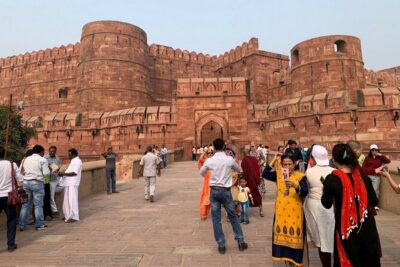
Skip-the-Line Taj Mahal & Agra Fort Private Tour
Read our review →
Taj Mahal, Agra Fort, Baby Taj Tour from Delhi by Superfast Train
Read our review →Browse the lists this tour appears in