
Reviewed · SHOW
Kochi: Kathakali, Theyyam, and Kalaripayattu Evening Show
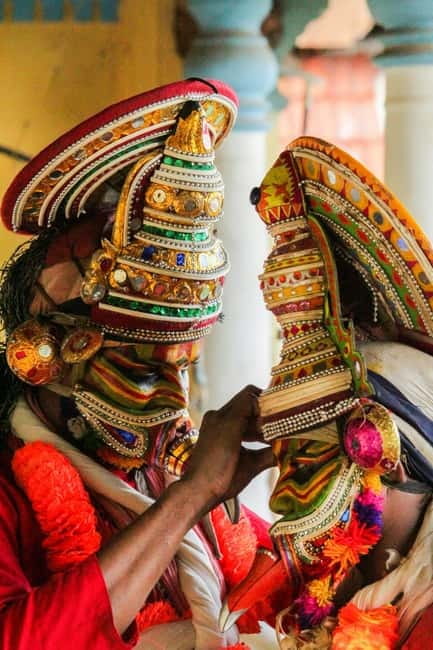
Kerala puts its legends onstage. This low-cost cultural evening brings together Kathakali makeup and storytelling with the force of live drums, ritual dance, and martial arts. I like the way the program explains what you are seeing before the action begins, and I also like the hotel pickup, which saves you from sorting out evening transport in Kochi. The main consideration is that this is a stage presentation of Theyyam, not a temple ritual in North Kerala, so the setting is cultural rather than devotional.
The program packs three very different art forms into one evening. Kalaripayattu is thrilling, while Kathakali gives you a better sense of how performers tell a story without ordinary speech. The show costs about $11 per person, excellent value if you want a focused introduction to Kerala’s performance traditions, though food and drinks are not included and the exact pickup and timing depend on the option you choose.
In This Review
- Key things to know before you go
- Why this evening works so well in Kochi
- Hotel pickup and the evening schedule
- The Kathakali makeup transformation
- Kathakali under oil lamps
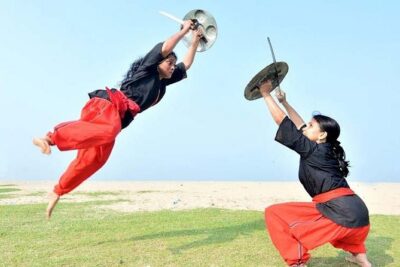
- Kalaripayattu brings the action
- Theyyam and the power of ritual
- Meeting the performers afterward
- Is $11 good value?
- Who should book this show?
- Final verdict: book it for a compact Kerala introduction
- FAQ
- How long does the Kochi cultural show last?
- What performances are included?
- Is hotel pickup available?
- Is the experience guided in English?
- Can I take photographs?
- Are food and drinks included?
- Is the show suitable for wheelchair users?
Key things to know before you go
- Kathakali makeup comes first: Watch performers build their dramatic faces with natural pigments before the main dance begins.
- The stories come from the Ramayana and Mahabharata: English explanations help you follow the characters, gestures, and conflicts.
- Theyyam changes the mood: Elaborate costume, painted features, drumbeats, and trance-like movement create the evening’s most surreal moment.
- Kalaripayattu brings speed and danger: Expect weapons, acrobatics, combat technique, and remarkable control from highly trained performers.
- Hotel transfers simplify the evening: Pickup and return are available from hotels in Kochi or Ernakulam, depending on the selected option.
- The format suits first-time visitors: Private or small-group options are available, with English-language guidance and time for photographs afterward.
Why this evening works so well in Kochi
Kochi offers plenty of ways to see Kerala, from waterfront walks to historic buildings and food stalls. This show gives you something different: a concentrated look at the state’s theatrical, ritual, and physical traditions in one sitting.
You are not simply watching a dance recital. Kathakali, Theyyam, and Kalaripayattu each use the body in a different way. Kathakali uses controlled eyes, facial expressions, hand signs, and stylized steps. Theyyam presents a dancer as a deity in a ritual form. Kalaripayattu turns the body into an instrument of speed, balance, and attack.
That variety is the program’s greatest strength. You can enjoy the evening even if you know nothing about Kerala’s art forms, because the English guidance explains the basics before the performances. The explanations matter. Without them, Kathakali’s large costumes and fixed expressions could seem puzzling. With them, you begin to read the gestures and recognize that the eyes can carry an entire scene.
The show has earned a 4.7 rating from 69 bookings, and the strongest praise centers on the artists’ skill, clear explanations, transport, and value. Those are the areas that matter most here. The program is not trying to replace a longer cultural trip through Kerala. It gives you a useful introduction in a manageable evening.
A few more options to weigh up in Kochi
- Skip the Line: Kerala Cultural Show Ticket
★ 5.0 · 27 reviews - Adventure Night With Cultural Show
★ 5.0 · 84 reviews - Arabian Night with Cultural Show
★ 5.0 · 28 reviews
Hotel pickup and the evening schedule
The experience includes round-trip transport from a hotel in Kochi or Ernakulam when you select the pickup option. The vehicle is air-conditioned, which is a welcome detail after a warm day in the city. Your driver takes you to the cultural theatre and waits to return you after the final performance.
The published duration can range from one to seven hours because options and transfer times vary. The cultural program itself is described as about three hours. One schedule places the makeup demonstration from 5 to 6 p.m., followed by performances from 6 to 8 p.m., but you should check the selected start time before booking.
That timing makes sense for a sightseeing day. You can spend the afternoon exploring Kochi, return to your hotel, and then head to the theatre without arranging a separate taxi. Pickup is optional, so you can also make your own way if you prefer.
Communication is handled through WhatsApp for pickup arrangements. That is useful because hotel locations and meeting points can be easier to confirm by message than through a vague written instruction. Still, give yourself enough time to get ready and be available at the agreed pickup point.
Small groups and private options are offered. A smaller setting can make the explanations easier to hear and may give you a better chance to speak with performers afterward. The exact group size depends on the option you book.
The Kathakali makeup transformation
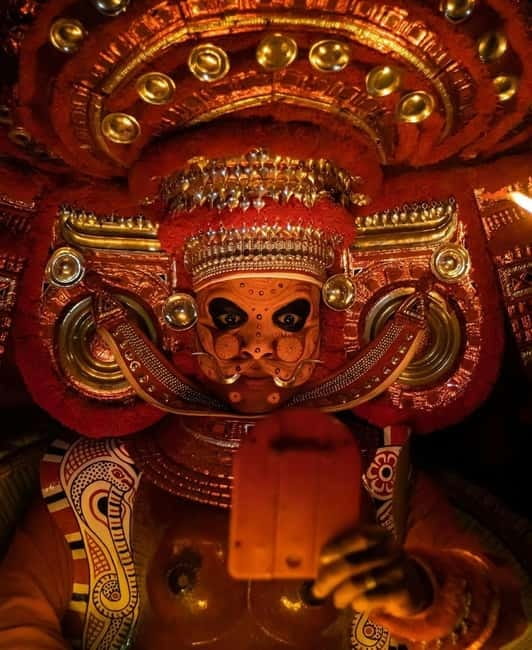
The evening begins with one of its most revealing moments: the Kathakali makeup demonstration. Rather than seeing the finished characters appear under stage lights, you watch the transformation take shape.
Kathakali makeup is not a quick application of theatrical face paint. The face becomes part of the character’s identity. Strong colors, shaped details, and an elaborate costume help signal whether a figure is noble, divine, fierce, or threatening. The performer’s face can look almost mask-like from a distance, yet the eyes and facial muscles remain central to the storytelling.
This is where the English introduction earns its place. You learn how Kathakali performers use the face and eyes to express emotion. The nine emotional states, often called navarasas, give you a framework for understanding the performance. Anger, fear, wonder, love, humor, and other feelings are enlarged so they can reach the back of the room.
The makeup session also shows the patience behind the art. You see the performer before the costume and character are complete, then watch the visual identity develop layer by layer. It makes the later performance easier to appreciate because you understand that the character is carefully constructed long before the first dramatic gesture.
Bring your attention, not just your camera. Photography is allowed, but flash photography is forbidden. Flash would distract both the performers and the people sitting nearby, and it would spoil the dark, lamp-lit mood of the theatre.
Kathakali under oil lamps
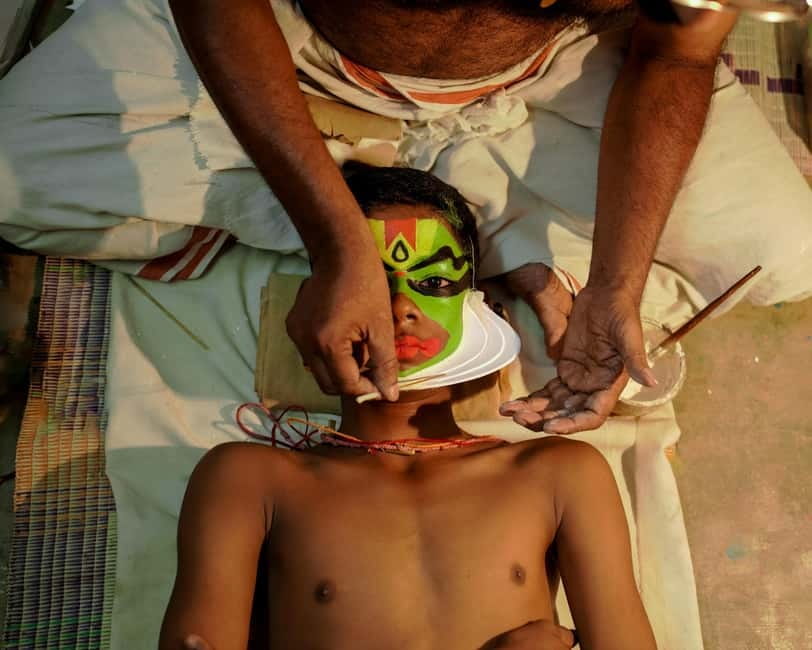
Once the makeup is complete, the Kathakali performance shifts the room into another world. Traditional oil lamps provide the warm light, while live percussion and vocalists drive the action.
The stories draw from major Indian epics, including the Ramayana and Mahabharata. These are not presented as ordinary spoken theatre. Performers communicate through mudras, which are formal hand gestures, along with eye movements, facial control, and deliberate body positions.
At first, the style may seem slow. That is part of its discipline. Kathakali asks you to watch small movements closely. A glance, a turn of the head, or a change around the eyes can show a character’s fear, rage, pride, or surprise. The gestures are large enough to read from a distance, but the emotional work is precise.
The musicians are essential. The drums do not simply provide background rhythm. They create tension, mark changes in the story, and give the performers a strong pulse to follow. The singer helps carry the narrative while the dancers express the characters physically.
I would pay special attention to the eyes. Several people praise the performers’ facial expressions, particularly their ability to tell the story through eye movement alone. That is a useful tip for the show: do not watch only the costume or the biggest gesture. The face often tells you what the character is thinking before the body reveals it.
Kathakali may suit you best if you enjoy theatre, mythology, dance, or visual detail. If you prefer a fast-moving show with constant action, the slower formal style may require patience. The earlier explanation helps, but you will still get more from it if you accept that this is a traditional performance language, not a modern stage musical.
A completely different kind of day out:
- Adventure Tuk Tuk Tour in kochi – A Private Guided Tour with Hotel Pick up
★ 5.0 · 579 reviews - Cochin: Backwater Village Eco Boat Cruise with Lunch
★ 4.8 · 502 reviews - Full Day Backwater Village Punting Boat Cruise
★ 5.0 · 393 reviews - Kochi: Private Tuk-Tuk City Tour with Hotel Pickup
★ 4.8 · 292 reviews
Kalaripayattu brings the action
The Kalaripayattu section provides a sharp change of pace. Often described as the mother of martial arts, Kalaripayattu is Kerala’s traditional combat system, built around physical conditioning, agility, weapons, and controlled movement.
The demonstration shows trained fighters working through combat techniques, weapon handling, acrobatics, and rapid movements. The change from Kathakali’s expressive control to Kalari’s explosive action keeps the evening from feeling repetitive.
This is the part most likely to make you sit forward. The performers move quickly, and the weapon work gives the presentation real tension. A single mistake could cause an injury, so the speed you see is matched by years of practice and precise control.
The performance is not a practical self-defense class, and you are not being invited to copy the movements. Its value is in watching a trained physical tradition presented with discipline. You see balance, timing, flexibility, and courage working together.
The martial arts section is especially good for families with older children, anyone interested in combat traditions, and people who find a long dance performance difficult. It gives the program a burst of action without losing the cultural focus.
Theyyam and the power of ritual
Theyyam is the evening’s most unusual element. This ritual dance comes from North Kerala, where it is traditionally connected with local worship and the presence of a deity. In this theatre setting, it is presented for cultural appreciation rather than as a full temple ceremony.
The performer wears dramatic makeup, a large headpiece, and a vivid costume. Drums and ritual chants create a strong pulse as the dancer takes on the character of a divine figure. The movement can feel trance-like, and the facial expression is often intense.
This section may affect you more strongly than you expect. The costume is striking, but the main force comes from the combination of sound, posture, expression, and repeated movement. The performer appears to shift from an individual into a larger-than-human figure.
Some people connect the image with fierce goddess forms such as Kali. The program’s English guidance helps explain the spiritual idea without asking you to treat a staged presentation as a private religious ceremony.
It is important to keep that distinction clear. You are seeing a theatrical version of a ritual form brought to Kochi’s stage. That makes it accessible, but it also means the atmosphere is not the same as attending Theyyam in its traditional setting in North Kerala.
Even so, it offers a useful introduction. You can see why Theyyam is often described as the dance of the gods, and you can observe the physical and emotional demands placed on the performer. The hypnotic drums, large headgear, painted face, and sudden changes in movement make this one of the most memorable parts of the evening.
Meeting the performers afterward
After the final presentation, you have time to interact with the artists and take photographs. This is a small but valuable part of the program because the costumes and makeup can otherwise create a distance between you and the people doing the work.
Ask about the makeup, the training, the instruments, or the meaning of a gesture if the format allows. The program is designed to give you more than a quick photo opportunity, with a chance to learn about the physical and spiritual commitment behind the art.
Keep your camera ready without using flash. Photography is permitted, but the restriction matters during both the makeup preparation and stage presentation.
The post-show meeting also helps put the evening into perspective. You have just seen performers move with extraordinary control, but afterward you can meet the people behind the characters. That human connection gives the spectacle some context.
Is $11 good value?
At about $11 per person, this is one of the easier cultural choices to justify in Kochi. The price includes the show and, depending on your selected option, round-trip hotel transfers, the makeup demonstration, English guidance, and the three performances.
The transport adds real value. A private taxi to a theatre and back could make a low-cost ticket less attractive, while an air-conditioned pickup makes the evening simpler. Check the booking option carefully because pickup, demonstrations, and individual performances are marked as dependent on the selected option.
Food and drinks are not included, so plan to eat before or after the show. The program is an evening cultural outing, not a dinner package.
One useful detail comes from the flexible transfer arrangement: it may be possible to skip the return ride if you want to remain in the area for dinner, but you should confirm this directly with the operator before making plans. The provider, Trip Buggy, is also described as responsive with pickup communication.
Free cancellation up to 24 hours before the start and reserve-now, pay-later booking make the plan easier to fit around changing schedules. Check the exact terms shown for your chosen option before paying.
Who should book this show?
I would recommend it if you want a clear first look at Kerala’s performing arts without committing to a long cultural program. It is particularly useful during a short Kochi stay, when you want to see something rooted in the region but have limited time.
It suits you if you enjoy:
- Mythology and traditional theatre
- Live music and percussion
- Dance based on gesture and facial expression
- Martial arts and weapons demonstrations
- Ritual costume and spiritual symbolism
- Small-group cultural activities with English guidance
Families, couples, solo visitors, and first-time visitors to Kerala can all find something appealing here. The Kalari performance gives the evening speed, while Kathakali and Theyyam provide visual and cultural depth.
You may want to skip it if you dislike stage performances, have little patience for formal dance, or expect a full religious ceremony. The Theyyam presentation is powerful, but it is still part of a theatre program. The experience is also not suitable for wheelchair users, according to the available access information.
Wear comfortable clothes. The show lasts several hours when the demonstration and performances are combined, and comfort matters more than dressing up.
Final verdict: book it for a compact Kerala introduction
I would book this show if you want strong value, easy transport, and three distinct traditions in one evening. The makeup demonstration gives Kathakali a human starting point, the epic stories provide structure, Kalaripayattu supplies the excitement, and Theyyam leaves you with the most haunting image.
Its limitation is also its purpose. You are receiving a stage introduction rather than visiting the traditional communities where these forms developed. But for $11, with hotel transfer options and English explanations, this is a practical way to make your Kochi evenings more meaningful.
Book it when you want culture that is visual, physical, and easy to follow. Choose another activity if you are seeking a quiet dinner, an intimate religious ceremony, or a full-day exploration of North Kerala’s Theyyam tradition.
FAQ
How long does the Kochi cultural show last?
The cultural showcase is described as about three hours. Total activity time can range from one to seven hours depending on the selected option, starting time, and hotel transfers.
What performances are included?
Depending on the option selected, you can see a Kathakali makeup demonstration, Kathakali, Kalaripayattu, and Theyyam.
Is hotel pickup available?
Yes. Round-trip transfers are available from hotels in Kochi or Ernakulam, depending on the option selected. Pickup is optional.
Is the experience guided in English?
Yes. English-language guidance is provided, including explanations of the art forms and what you are watching.
Can I take photographs?
Yes, photography is allowed. Flash photography is not permitted.
Are food and drinks included?
No. Food, drinks, and personal expenses are not included.
Is the show suitable for wheelchair users?
No. The experience is listed as not suitable for wheelchair users.
Just added in Kochi
- Walking Tour of Fortkochi★ 5.0 · 15 reviews
- Kochi Village Life Experience tour – The Real Tour of Kochi !★ 5.0 · 11 reviews
- Local and personalized Tours of Fort Kochi and Mattancherry by Tuk Tuk★ 5.0 · 31 reviews
- Village Bike Tour & Birdwatching★ 5.0 · 18 reviews
- Serene Munnar Retreat: Private Tour from Kochi to the Munnar Hill★ 5.0 · 11 reviews
- Tuk Tuk Cochin Tour★ 5.0 · 13 reviews
- Solo Kerala Private Tour Package ( 5 Nights) – Munnar, Thekkady, Houseboat★ 5.0 · 46 reviews
- Sunset Cruise with Village Life and Local Food★ 5.0 · 24 reviews
Show, compared.

Mohabbat the Taj show tickets and agra transfers
Read our review →
Overnight Stay in a luxury Camp with a cultural show & dinner.
Read our review →
Adiyogi 3D Light Show – A Spectacle of Light, Sound – Coimbatore
Read our review →Browse the lists this tour appears in