
Reviewed · FORTS AND PALACES
From Agra: Fatehpur Sikri Private Tour
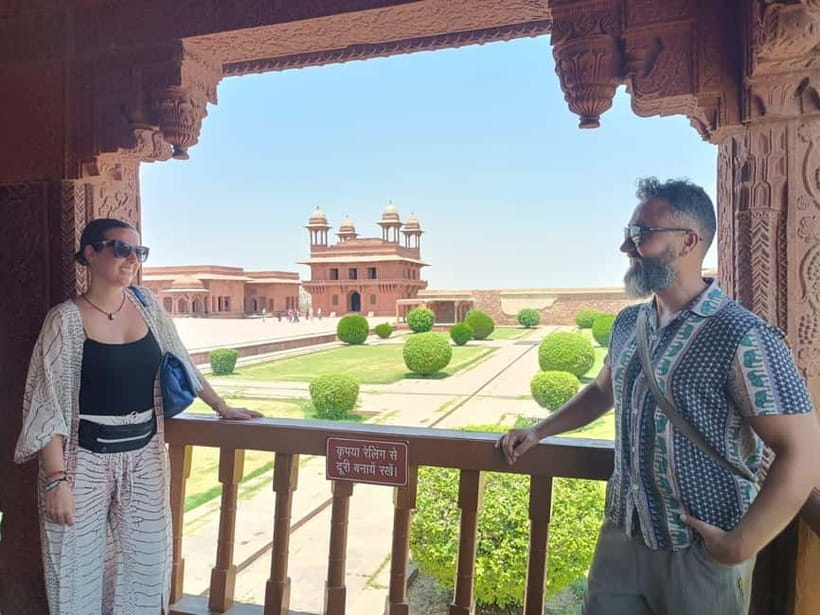
A forgotten Mughal capital rewards a closer look. This Fatehpur Sikri tour gives you private transport and a guide, so the long ride from Agra becomes useful time rather than a logistical chore. I especially like the chance to explore the complex at your own pace and the option to add Agra Fort and Taj Mahal entry tickets when that package is selected.
The price, about $16 per person, is strong value if you want a car, driver, guide, parking, and taxes bundled together. The main caution is time: the visit can run from five to eight hours, and one guest felt the stop at Fatehpur Sikri could have been longer. Also, one guest found repeated requests for a rating irritating, so expect some post-tour follow-up.
In This Review
- Key points to know before booking
- Why Fatehpur Sikri deserves your time
- Pickup from Agra and the road to the complex
- Buland Darwaza makes the first impression
- Jama Masjid and Salim Chishti’s tomb
- Diwan-i-Khas reveals the Mughal court
- Panch Mahal and Jodhabai’s Palace
- The optional bazaar adds a local note
- What the private guide changes
- Is $16 a good value?
- Timing, weather, and practical preparation
- Who should book this experience?
- Should you book it?
- FAQ
- How long does the Fatehpur Sikri tour take?
- Where can I be picked up?
- Where can I be dropped off?
- Is transportation included?
- Is the tour private?
- Which languages are available for the guide?
- Are food and drinks included?
- Are Taj Mahal and Agra Fort tickets included?
- Can I visit the Taj Mahal on a Friday?
Key points to know before booking
- Buland Darwaza is the visual knockout: The Gate of Victory is the grandest entrance in India and gives you an immediate sense of Akbar’s ambition.
- The private format matters: Your guide can spend more time on architecture, Mughal court life, or Sufi tradition, depending on what interests you.
- The drive is handled for you: An air-conditioned car collects you from a hotel or agreed location in Agra and returns you afterward.
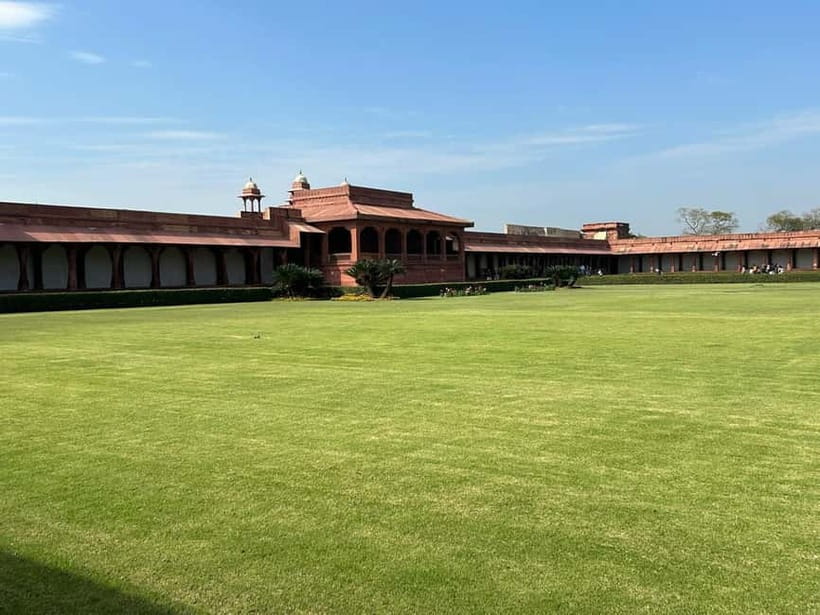
- The complex has more than one famous building: Jama Masjid, Diwan-i-Khas, Panch Mahal, Salim Chishti’s tomb, and Jodhabai’s Palace each show a different side of the site.
- Language choice is useful: Live guiding is available in English, French, and Spanish.
- Plan around Fridays: The Taj Mahal is closed on Fridays, an important detail if you combine this visit with Agra’s other major sights.
Why Fatehpur Sikri deserves your time
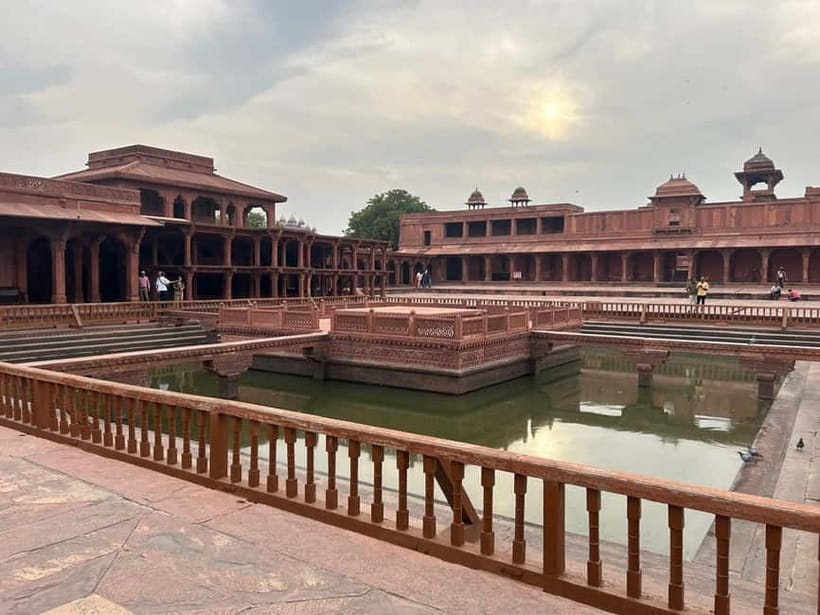
Fatehpur Sikri is more than a quick photo stop outside Agra. It was built under Mughal emperor Akbar and served as his capital before being abandoned as a working royal center. The surviving complex lets you walk through spaces built for prayer, royal audiences, administration, private life, and court ceremony.
I find the site especially rewarding because it feels like a complete royal plan rather than one isolated monument. You move from a huge public gateway to a mosque, from formal audience halls to delicate private buildings. A good guide helps you connect those spaces instead of treating them as a string of names.
The scale can also surprise you. Buland Darwaza gives the approach a dramatic start, but the smaller architectural details often hold your attention longer. Carved stone, courtyards, balconies, columns, and unusual building shapes show how Mughal design drew from several traditions.
This is where the private format earns its keep. You can ask why a building has its particular layout, how Akbar used the court spaces, or what makes the tomb of Salim Chishti important. You are not tied to a large group’s questions or pace.
More Forts and Palaces in Agra
- Agra: Skip-the-Line Taj Mahal & Agra Fort Private Tour
★ 4.9 · 1,546 reviews - Taj Mahal, Agra Fort, Baby Taj & Mehtab Bagh Private City Tour
★ 5.0 · 391 reviews - Skip-the-Line Guided Taj Mahal & Agra Fort Tour with Add-ons
★ 5.0 · 339 reviews
Pickup from Agra and the road to the complex
The standard arrangement includes pickup and drop-off from your Agra hotel or another agreed location. The car is air-conditioned, and the driver remains part of the experience while the guide accompanies you during the sightseeing portion.
That simple setup is valuable in Agra. You avoid arranging a separate taxi, negotiating another ride at the site, or trying to coordinate transport after several hours of walking. The driver named most often in the supplied feedback is Sahil, described as punctual, polite, patient, and careful behind the wheel.
The listed pickup and drop-off choices include Agra, Fatehpur Sikri, and Jaipur. However, the included pickup description specifically refers to Agra hotels or requested locations in Agra. If you are starting in Jaipur or ending somewhere other than Agra, confirm the exact transport plan before paying.
The full experience is advertised at five to eight hours, with about six hours allocated to the main visit. That range gives the operator some room to adjust the day, but you should not assume every minute will be spent inside the monument complex. Travel time, entry arrangements, and any optional bazaar visit can affect the schedule.
Buland Darwaza makes the first impression
Buland Darwaza, or the Gate of Victory, is one of the main entrances to Fatehpur Sikri and the most imposing opening in the complex. Its height and broad approach make it difficult to miss. I would pay attention here before rushing onward, since the gateway sets the tone for the entire visit.
This is a good place to ask your guide about Akbar’s power and the role of ceremonial entrances. A gate this grand was not just a practical doorway. It announced authority before you reached the mosque and palace areas.
The site offers skip-the-line access through a separate entrance. That can save useful time, particularly when you have a fixed vehicle schedule or plan to continue elsewhere in Agra. Still, skip-the-line entry does not mean you should race through the first courtyard. Let your guide orient you before moving deeper into the complex.
Jama Masjid and Salim Chishti’s tomb
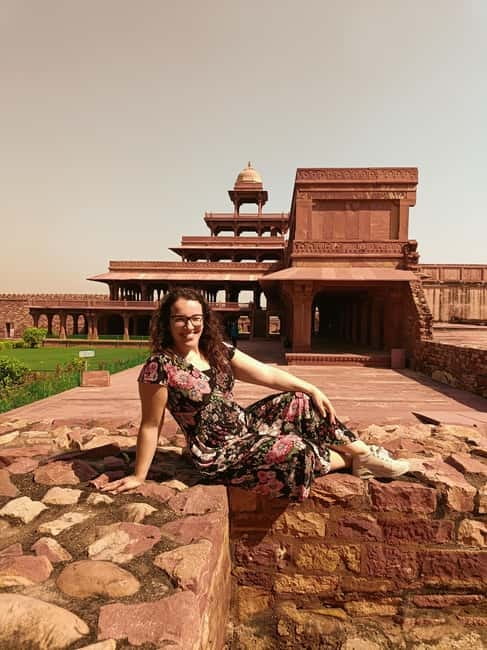
Jama Masjid brings a religious focus to the visit. It is described as one of the Mughal era’s architectural marvels, and it forms an important part of the complex rather than serving as background scenery.
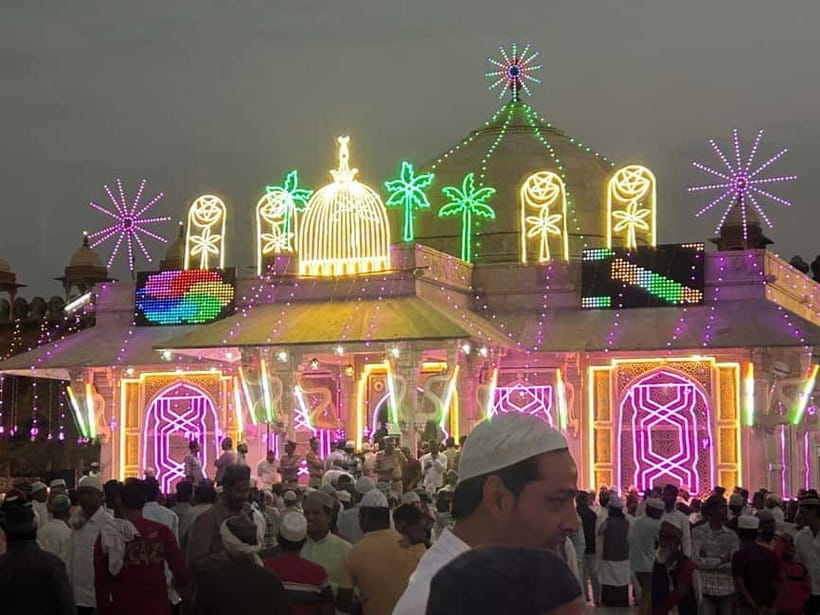
The tomb of Salim Chishti adds another layer. Salim Chishti was a prominent Sufi saint, and the tomb remains a sacred site within Fatehpur Sikri. This is one of the moments when a guide is particularly helpful. The building is not simply another attractive structure to photograph. Its significance comes from the religious connection and its place in Akbar’s story.
I would keep your behavior respectful here. The complex contains both royal architecture and active sacred meaning. Listen to local instructions, dress sensibly, and avoid treating every space as a photo set.
The supplied feedback gives special credit to guides at Fatehpur Sikri. One guide named Ansar was praised for making the historical sites engaging, while another guide, Ilsad, received particular approval for his work at Fatehpur Sikri. The guide assigned to you may differ, but the available guide languages are English, French, and Spanish.
More Private Tours in Agra
- Skip the line with Private Tour Guide for Taj Mahal & Agra Fort
★ 5.0 · 236 reviews - Private Transfer Agra to Jaipur with Fatehpur Sikri
★ 5.0 · 135 reviews - Agra: Skip-the-Line Taj Mahal & Agra Fort Private Tour
★ 5.0 · 124 reviews - Agra: Skip the Line Taj Mahal and Agra Fort Private Tour
★ 5.0 · 123 reviews
Diwan-i-Khas reveals the Mughal court
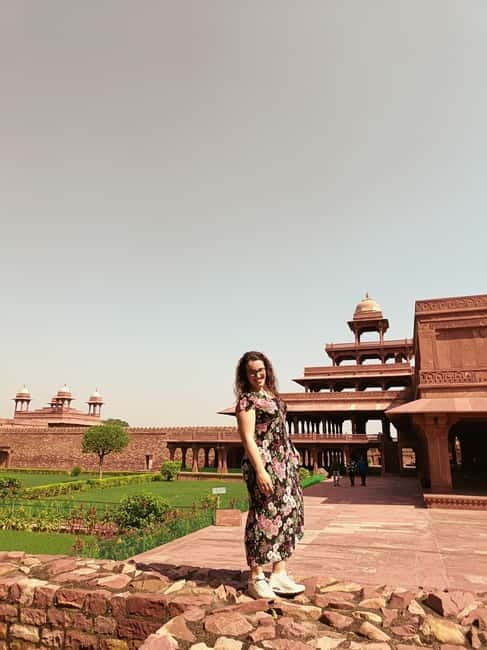
Diwan-i-Khas was the Hall of Private Audiences, where Akbar met with close advisers. This stop helps you picture the complex as a functioning court, not only as a collection of elegant ruins.
The value here comes from interpretation. Without context, a hall can look like another courtyard with columns. With a guide, you can focus on how access, position, and architecture reflected the emperor’s authority.
This is a good part of the tour for asking questions. You might want to know who could enter, how private audiences differed from public ones, or how the building related to the rest of the royal center. Since this is a private tour, your guide can spend more or less time here based on your interest.
That flexibility is one of the clearest benefits over a large group. If court administration interests you, you can stay with the subject. If your attention is fading after several buildings, you can move along without waiting for strangers.
Panch Mahal and Jodhabai’s Palace
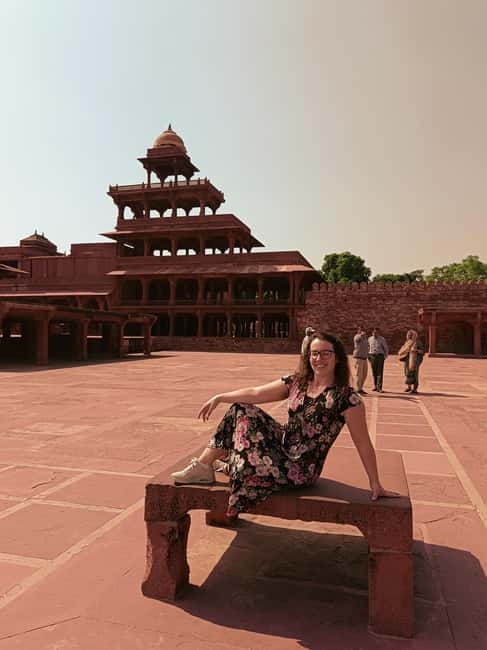
Panch Mahal is a five-story palace with views across the surrounding area. Its open, tiered form differs from the heavier gateway and formal audience spaces, making it one of the more memorable structures in the complex.
The views help you understand the location of Fatehpur Sikri as a planned royal center. You can also use this stop as a natural pause after the denser architectural explanations. Ask your guide how the building was used, since the supplied information identifies it as a palace but does not provide a detailed function for every level.
Jodhabai’s Palace is associated with Akbar’s wife, Jodha Bai, and offers another look at Mughal residential architecture. The name is widely used for the building, though the tour description carefully calls it a believed residence. I appreciate that distinction. You should enjoy the story without treating every traditional attribution as an absolute fact.
Together, Panch Mahal and Jodhabai’s Palace show why a guide matters. One building draws your eye upward through its layered design. The other invites you to consider domestic royal life, planning, and privacy.
The optional bazaar adds a local note
You can choose to explore the local bazaar during the outing. This is optional, which is useful because not every visitor wants to add shopping or street activity to a monument-focused day.
I would consider the bazaar if you want a taste of daily commerce beyond the polished royal complex. It can add movement and local character to a day otherwise centered on Mughal architecture. The tradeoff is time. If you have only the shorter five-hour version, an extra stop may reduce the minutes available inside Fatehpur Sikri.
Ask your driver or guide how long the bazaar visit will take before agreeing. You should also make clear if you want to browse casually rather than shop. The supplied details do not specify particular stores, prices, or included purchases, so treat this as an optional walk rather than a guaranteed shopping program.
What the private guide changes
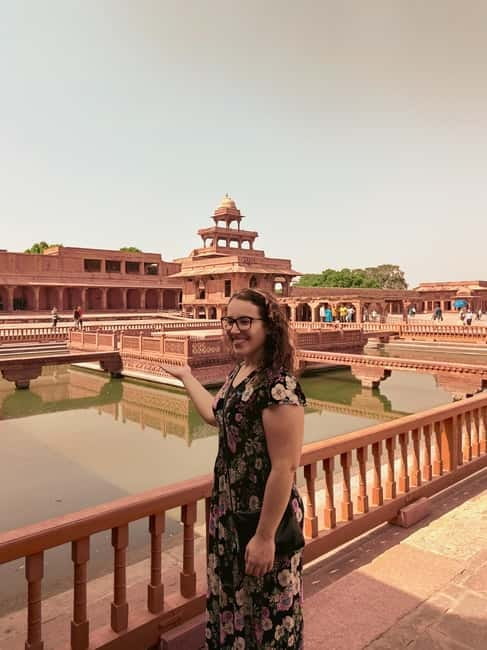
The guide is more than a person who points out buildings. At Fatehpur Sikri, the site’s value depends heavily on knowing what you are looking at and why it was built.
A private guide can adjust the day to your interests. You might focus on Akbar’s court, Mughal architectural design, religious buildings, or the Sufi connection at Salim Chishti’s tomb. You also have room to ask follow-up questions, something that is harder in a large group.
The tour is described as a small group limited to 15 participants, while also being marketed as private. That wording can leave some uncertainty about the exact operating format. I would confirm whether your booking means a truly private party or a small shared group, especially if that distinction matters to you.
The available feedback is encouraging about communication. Guides were described as speaking good or excellent English, and one guide explained the site in both English and Spanish. French is also listed as an available language. The company representative was reported to remain in contact during the day, which can help if pickup details change.
Is $16 a good value?
At roughly $16 per person, the price is low for a guided excursion that includes an air-conditioned car, a professional guide, parking, and taxes. If you are traveling alone, the value depends on whether the vehicle cost is shared or charged through the booking structure. For two or more people, the package becomes easier to justify.
The price does not include food or drinks. Bring your own water and plan for a meal outside the package. The information provided does not identify a restaurant stop, so do not assume lunch is part of the schedule.
Entry arrangements need careful attention. Skip-the-line access is highlighted, and Taj Mahal and Agra Fort skip-the-line tickets are included only if you select that option. Those sites are not automatically part of every Fatehpur Sikri booking.
One guest completed Fatehpur Sikri, Agra Fort, and the Taj Mahal with the same service, using station pickup and hotel drop-off. That suggests the provider can arrange a broader Agra day in some cases, but you should select the correct option rather than assume those monuments are included.
Timing, weather, and practical preparation
Bring your passport or another accepted ID card. You should also wear comfortable shoes because the experience involves sightseeing across a large historic complex, though the supplied details do not specify walking distances or accessibility arrangements.
The duration can vary from five to eight hours. If you care about spending extra time at the palace buildings, tell the guide early. One guest found the transport very comfortable and the Fatehpur Sikri visit good, but would have preferred more time at the site.
Weather can affect the experience. One visit took place in heavy fog, which reduced the views around Panch Mahal, though the guest still considered the trip worthwhile. If your day is misty, the architectural details may matter more than distant views.
The Taj Mahal is closed on Fridays. This does not stop you from visiting Fatehpur Sikri on Friday, but it matters if you are combining the tour with Taj Mahal entry. Check the selected package carefully and build your day around the closure.
Cancellation is flexible: you can cancel up to 24 hours ahead for a full refund, and reserve now while paying later. Those terms help if your Agra schedule is still shifting.
Who should book this experience?
I would recommend it to first-time visitors who want Fatehpur Sikri explained rather than simply photographed. It also suits couples, families, and small parties that value hotel pickup and do not want to negotiate separate transport.
The tour is a good match if you want to combine the complex with Agra Fort or the Taj Mahal, provided you choose the correct ticket option and allow enough time. It is also useful for visitors arriving by train, since one reported arrangement included pickup from the station and drop-off at a hotel.
I would be more cautious if you want a very slow archaeological visit. The five to eight-hour schedule may feel compressed, especially if you add the bazaar or other Agra monuments. Confirm the exact departure time, sightseeing length, and drop-off location before booking.
Should you book it?
Book this tour if you want simple transport, a flexible guide, and strong value for a half-day visit from Agra. The 4.8 rating from 30 ratings, praise for drivers such as Sahil, and positive comments about guides including Ansar and Ilsad support the choice.
Choose a longer or more customized arrangement if Fatehpur Sikri is your main priority and you want plenty of time for every courtyard. Also confirm whether your booking is fully private or limited to a small group, and check if Agra Fort or Taj Mahal tickets are actually included.
For most visitors, this is a practical way to reach one of northern India’s most rewarding Mughal sites without turning the day into a transport puzzle.
FAQ
How long does the Fatehpur Sikri tour take?
The activity lasts between five and eight hours, depending on the selected schedule. The main guided visit is listed as about six hours.
Where can I be picked up?
Pickup is included from your hotel or desired location in Agra. The listed pickup choices also include Jaipur and Fatehpur Sikri, so confirm the exact arrangement if you are not starting in Agra.
Where can I be dropped off?
The listed drop-off choices are Agra, Fatehpur Sikri, and Jaipur. Confirm your preferred location when booking.
Is transportation included?
Yes. The tour includes an air-conditioned car, a driver, parking, and taxes.
Is the tour private?
The experience is described as a private tour, while the activity information also gives a small-group limit of 15 participants. Confirm the exact format for your selected booking.
Which languages are available for the guide?
Live guiding is available in English, French, and Spanish.
Are food and drinks included?
No. Food and drinks are not included in the tour price.
Are Taj Mahal and Agra Fort tickets included?
Skip-the-line tickets for the Taj Mahal and Agra Fort are included only if you choose the option that contains them. They are not automatically included in every booking.
Can I visit the Taj Mahal on a Friday?
No. The Taj Mahal is closed on Fridays. You can still visit Fatehpur Sikri, but you should plan any Taj Mahal visit for another day.
Just added in Agra
- Taj Mahal Half Day Tour by Tuk Tuk★ 5.0 · 16 reviews
- 3-Hour Unimaginable Beauty of Taj Private Guided Tour★ 5.0 · 13 reviews
- Private Tour Guide For Taj Mahal And Agra Fort★ 5.0 · 17 reviews
- Taj Mahal Virtual Tour with Local Guide(Online Experience )★ 5.0 · 24 reviews
- From Agra: Skip-the-Line Taj Mahal & Agra Fort Private Day Tour★ 5.0 · 25 reviews
- Taj Mahal & Agra Fort Tour from Agra City★ 5.0 · 30 reviews
- Taj mahal Private Tour with Entry Ticket and Guide★ 5.0 · 42 reviews
- Taj Mahal & Agra Fort Tour with Fatehpur Sikri from Agra★ 5.0 · 13 reviews
Forts and Palaces, compared.

Same Day Taj Mahal, Agra Fort & Baby Taj Tour from Delhi by Car
Read our review →
Full Day Taj Mahal, Agra Fort & Baby Taj Tour from Delhi by Car
Read our review →
Same Day Taj Mahal, Fort & Baby Taj Tour from Delhi by Car
Read our review →

Sunrise Taj Mahal, Agra Fort & Baby Taj Tour from Delhi by Car
Read our review →
Taj Mahal Sunrise, Baby Taj & Agra Fort Day Tour
Read our review →
Skip-the-Line Taj Mahal & Agra Fort Private Tour
Read our review →
Taj Mahal, Agra Fort, Baby Taj Tour from Delhi by Superfast Train
Read our review →Browse the lists this tour appears in