
Reviewed · FORTS AND PALACES
Fort Cochin Heritage Tour by The Kochi Heritage Project
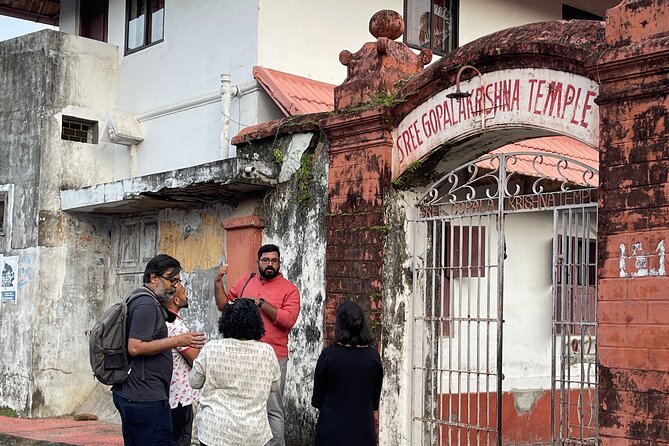
Kochi tells its best stories on foot. This small-group walk connects Chinese fishing nets, Portuguese forts, Dutch buildings, British ambitions, food, faith, and local legends into one clear introduction to Fort Kochi. I like the way it covers 3,000 years of history without treating the town as a row of disconnected sights. I also like the planned stop for tea, coffee, and snacks in a Dutch-themed hotel.
The main consideration is the walking format. You spend two to three hours outdoors, and the tour requires good weather. You will not enter most heritage monuments, and there is no private transport, so this suits you best if you want context, stories, and street-level details rather than a long list of indoor attractions.
In This Review
- Key points before you book
- Why Fort Kochi makes a good walking classroom
- Chinese Fishing Nets and the first taste of Cochin’s trade story
- Vasco da Gama Square and the Portuguese arrival
- David Hall, Dutch design, and a surprising Ayurveda connection
- Parade Ground, where tea, cricket, and art meet
- Fort Kochi Beach and the British struggle for control
- Princess Street gives the walk a modern finish
- What the $27.96 price really covers
- Who will get the most from this Fort Kochi walk
- Should you book the Fort Cochin Heritage Tour?
- FAQ
- How long does the Fort Cochin Heritage Tour last?
- How much does the tour cost?
- Where does the tour begin?
- Where does the tour end?
- What is included in the tour?
- Is private transportation included?
- How many people can join the tour?
- Can I cancel for a full refund?
Key points before you book
- A compact tour with a broad story: You move from ancient trade links to Portuguese, Dutch, and British rule, then finish in modern Fort Kochi.
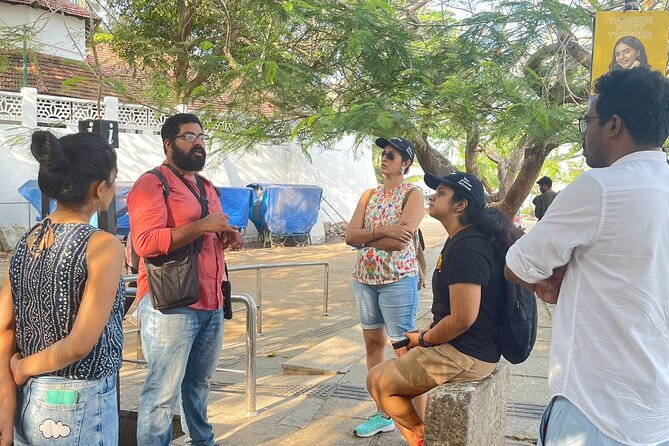
- Local storytelling matters here: Johann, who is from Fort Kochi, leads the experience and brings research and personal connection to the subject.
- Only eight people maximum: The small group should make it easier to hear the guide and ask questions.
- Tea, coffee, and snacks are included: The refreshment stop adds a welcome pause during the walk.
- The route ends on Princess Street: You finish among cafés, art shops, and colonial-era buildings, a handy place to continue exploring.
- Good value for history-minded visitors: At $27.96 per person, the price pays for interpretation and local insight, not transport or monument admissions.
Why Fort Kochi makes a good walking classroom
Fort Kochi is not a place you understand by checking off one church, one square, and one beach. Its meaning sits in the connections between them. A street can point to Portuguese power, a building can reveal Dutch planning, and a food reference can show how outside influence became part of Kerala life.
This tour gives you that larger picture. It explains how Cochin developed from a major trading port, once known as the Emporium of the World, into the place later called the Queen of the Arabian Sea. The story then moves into modern Kochi, now known for tourism and contemporary art.
I find that useful because Fort Kochi can look deceptively simple at first. You see old façades, fishing nets, and broad streets, but without background, the area can become a collection of attractive pictures. A good guide helps you see the forces behind those pictures: trade, religion, military control, language, food, and changing ideas of the city.
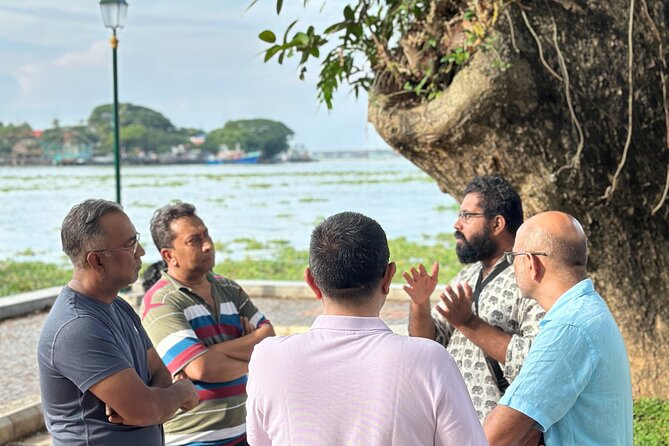
The experience is led by Johann, a Fort Kochi local who has researched the subject closely. The strongest praise attached to this tour focuses on his passion, authenticity, and storytelling. That matters in a place where local memory and historical fact often sit side by side.
The group limit of eight is another practical advantage. You are not trying to follow a guide through traffic while standing behind a crowd. A small group also gives you a better chance to ask about details that catch your eye.
More Forts and Palaces in Kochi
- Private Fort kochi Tuk-Tuk Tour
★ 5.0 · 149 reviews - Half-Day Private Tuk Tuk Tour in Fort Kochi
★ 5.0 · 147 reviews - Kochi Tour Guide -A Heritage walking tour in Fort kochi and Mattancherry !
★ 5.0 · 143 reviews
Chinese Fishing Nets and the first taste of Cochin’s trade story
The walk begins at the Folklore Cultural Theatre bus stand building in Fort Kochi. The first stop is the Chinese Fishing Nets, one of Kochi’s most recognizable sights.
You spend about 15 minutes here. Admission is free, and the focus is not simply on taking a photograph. The guide explains the stories linking Chinese sailors with the Malabar coast, giving you an early sense of how long-distance contact shaped the area.
This is a smart opening stop because the nets introduce the main idea of the tour: Kochi has always looked outward. The city’s story is tied to merchants, sailors, spices, religious communities, and political powers arriving from elsewhere.
The stop is short, so do not expect a long technical explanation of how the nets operate. The value is in setting the scene. You get an icon, a quick historical connection, and a reason to pay attention to the trading world that follows.
Vasco da Gama Square and the Portuguese arrival
From the fishing nets, the route continues to Vasco da Gama Square for roughly 20 minutes. Here the story shifts to the Portuguese search for pepper and Christian communities in India.
The square provides a natural place to discuss the Portuguese arrival and the start of European competition on the Malabar coast. This part of the tour is especially useful if you know the broad names but not the sequence of events. The guide links exploration, commerce, religion, and political ambition rather than presenting the Portuguese as simple explorers passing through.
You also hear about the beginnings of a European city in India and the old fort town associated with Santa Cruz. That helps explain why Fort Kochi feels different from many other parts of Kochi. The streets and buildings are not just old. They reflect a period when European powers tried to build their own controlled town on Indian soil.
The Portuguese section does not avoid harder subjects. It includes the Portuguese slave trade and stories of protective spirits passed down through generations. I appreciate that combination. You get the official story of empire, but also the less formal stories that communities preserve through belief and memory.
The discussion of Portuguese influence extends into Kerala culture, cuisine, and language. This is one of the most useful parts for you as a visitor because influence is easier to understand when it appears in ordinary life, not just in military dates. Food and words can carry history long after political control has ended.
David Hall, Dutch design, and a surprising Ayurveda connection
David Hall Gallery and Cafe is the longest named stop, with about 30 minutes set aside for it. Admission is free.
The building offers a way to see Dutch architectural influence in Cochin. Here, the tour moves beyond Portuguese beginnings and shows how another European power reshaped the town. The architecture becomes evidence of changing control, not just a backdrop for photographs.
The stop also links a 17th-century treatise with Ayurveda. That is an appealing detail because it shows how the tour crosses between architecture, medicine, scholarship, and local tradition. You are not only hearing about who ruled the town. You are also hearing about ideas that continued to matter beyond the period in which they were written.
David Hall also functions as a refreshment setting. Coffee, tea, and snacks at a Dutch-themed hotel are included, giving you a chance to pause, sit down, and take in the surroundings. After walking through several layers of history, this break should feel useful rather than decorative.
Keep your expectations clear. The experience does not promise entry into a long list of heritage monuments. David Hall is included, but most other historic sites are discussed from the route rather than visited inside. If indoor access is your top priority, you may want a separate heritage-site visit later.
A completely different kind of day out:
- Adventure Tuk Tuk Tour in kochi – A Private Guided Tour with Hotel Pick up
★ 5.0 · 579 reviews - Cochin: Backwater Village Eco Boat Cruise with Lunch
★ 4.8 · 502 reviews - Full Day Backwater Village Punting Boat Cruise
★ 5.0 · 393 reviews - Kochi: Private Tuk-Tuk City Tour with Hotel Pickup
★ 4.8 · 292 reviews
Parade Ground, where tea, cricket, and art meet
The walk then reaches Parade Ground for about 15 minutes. The subjects here widen again, taking in tea, cricket, and art festivals.
That mix tells you something about the way Fort Kochi has changed. The town’s identity is not frozen in the colonial period. Former European spaces have gained new meanings through sport, public events, and the arts.
This stop may feel less visually dramatic than the fishing nets or the beach, but its role is important. It helps you connect the old fort town with present-day Kochi, including the city’s reputation as a contemporary art center.
I like this kind of stop because it prevents the tour from becoming a parade of old buildings. You get a sense of how public spaces continue to shape city life. The explanation also gives you more context for Fort Kochi’s galleries, cafés, and art activity.
The 15-minute timing keeps the visit moving. If you want long stops for photography, you may find the pace brisk. The reward is a broad story within a manageable two to three hours.
Fort Kochi Beach and the British struggle for control
Fort Kochi Beach receives about 30 minutes, making it one of the longer stops. The focus turns to the British and their fight for supremacy in the Indian subcontinent.
The beach gives the guide room to explain another phase of foreign competition. By this point, you can see that Kochi’s history was shaped by repeated contests over trade routes, political influence, and access to valuable goods.
This is not presented as a simple change of flags. The earlier Portuguese and Dutch chapters help you understand that British power arrived in a place already shaped by European intervention and local relationships. That layered approach is more useful than treating each colonial period as an isolated block.
The waterfront also provides a natural change of pace. You have spent much of the walk among streets and buildings, so the open setting helps the story breathe. The beach is a good place to reflect on why this small part of Kochi mattered to powers operating far beyond India.
As with the other outdoor stops, conditions matter. The tour can be canceled for poor weather, and you should be ready for sun or rain. The provider does not supply umbrellas, raincoats, hats, face masks, or sanitizer, so bring what you personally need.
Princess Street gives the walk a modern finish
The tour winds down on Princess Street. This is a fitting end because it brings together the old and new sides of Fort Kochi.
The street is lined with colorful Portuguese- and Dutch-era buildings, cafés, art boutiques, and independent shops. You finish at Princess Street rather than returning to the starting point, so you can continue exploring from there.
That ending is practical. You can have a meal, browse, or use the street as a base for more independent sightseeing. It also means you should plan your day around the route rather than assuming you will finish where you began.
The final section reinforces the tour’s main point: Fort Kochi is not only a museum of colonial buildings. It is a living neighborhood where older architecture now supports cafés, galleries, shops, and cultural activity.
What the $27.96 price really covers
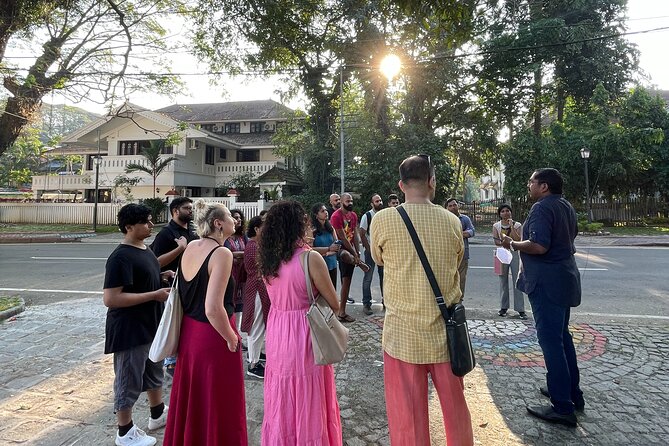
At $27.96 per person, this is a fair price if you value interpretation. You are paying for a local storyteller, a small group, a planned route, and a refreshment break. The experience also saves you the work of connecting the historical pieces yourself.
The value is less compelling if you mainly want transportation or entrance tickets. Private transport is not included, and sightseeing points outside the chosen route are not part of the experience. Most heritage monuments are viewed from outside unless specifically included.
Admission to the listed stops is free, so the fee is not being used for a bundle of expensive tickets. That is not a weakness by itself. In Fort Kochi, the added value comes from knowing why a place matters and how each period connects to the next.
The group maximum of eight helps justify the cost. A small group usually makes a walking history tour easier to follow, particularly when the guide is telling detailed stories rather than delivering a short set of facts.
Who will get the most from this Fort Kochi walk
I would choose this tour if you are visiting Kochi for the first time and want a strong orientation to Fort Kochi. It suits you especially well if you like history presented through people, food, architecture, language, and local stories.
It is also a good fit for curious visitors who want more than the usual photo stops. The tour covers Portuguese trade and religion, the slave trade, Dutch architecture, Ayurveda, British power, tea, cricket, and contemporary art. That range gives you many threads to follow after the walk ends.
The pace and length should work well if you want a substantial introduction without giving up an entire day. The two to three hour duration leaves time for lunch, independent sightseeing, or another part of Kochi afterward.
You may want to skip it if you dislike outdoor walking, need guaranteed indoor access, or want a private vehicle. It also may not suit you if your main goal is to enter every major church, palace, or museum. This is a storytelling walk through the old town, not a full admissions tour.
Most people can participate, and service animals are allowed. The route is near public transportation, but private transport is not supplied. You receive a mobile ticket, and confirmation is sent within 48 hours, subject to availability.
The cancellation terms are reasonable but firm. You receive a full refund if you cancel at least 24 hours before the start time. Cancellations or changes within 24 hours are not refunded or accepted. Weather and minimum group requirements can also affect the departure, with a different date or a full refund offered if the operator cancels.
Should you book the Fort Cochin Heritage Tour?
I would book it if you want Fort Kochi to make sense, not merely look attractive. The strongest reasons are Johann’s local connection, the unusually broad historical range, the small group, and the included tea, coffee, and snacks.
The tour has a clear limit: you spend most of the time outside, and you will not enter a wide range of monuments. Pack for the weather, wear comfortable shoes, and keep some time afterward for Princess Street.
With a 5.0 rating from 85 reviews and a 100 percent recommendation rate, it has a strong record. Those numbers matter, but the fit matters more. If you enjoy thoughtful storytelling and a walk through the forces that shaped Kochi, $27.96 is a sensible use of a morning or afternoon.
FAQ
How long does the Fort Cochin Heritage Tour last?
The tour lasts approximately two to three hours.
How much does the tour cost?
The listed price is $27.96 per person.
Where does the tour begin?
The tour begins at the Folklore Cultural Theatre bus stand building in Fort Kochi, Kochi, Kerala 682001, India.
Where does the tour end?
The tour ends on Princess Street, Fort Nagar, Fort Kochi, Kochi, Kerala 682001, India.
What is included in the tour?
The experience includes a local storyteller, visits to Indo-European heritage structures and establishments along the route, plus coffee or tea, refreshments, and snacks at a Dutch-themed hotel.
Is private transportation included?
No. Private transportation is not included, and sightseeing points outside the selected route are not covered.
How many people can join the tour?
The maximum group size is eight people.
Can I cancel for a full refund?
Yes. You must cancel at least 24 hours before the experience start time for a full refund. Cancellations or changes made within 24 hours are not accepted and are not refunded. The tour may also be rescheduled or refunded if poor weather or insufficient numbers cause the operator to cancel.
Just added in Kochi
- Walking Tour of Fortkochi★ 5.0 · 15 reviews
- Kochi Village Life Experience tour – The Real Tour of Kochi !★ 5.0 · 11 reviews
- Local and personalized Tours of Fort Kochi and Mattancherry by Tuk Tuk★ 5.0 · 31 reviews
- Village Bike Tour & Birdwatching★ 5.0 · 18 reviews
- Serene Munnar Retreat: Private Tour from Kochi to the Munnar Hill★ 5.0 · 11 reviews
- Tuk Tuk Cochin Tour★ 5.0 · 13 reviews
- Sunrise Cruise with Village Life and Local Food★ 5.0 · 82 reviews
- Solo Kerala Private Tour Package ( 5 Nights) – Munnar, Thekkady, Houseboat★ 5.0 · 46 reviews
Forts and Palaces, compared.

Same Day Taj Mahal, Agra Fort & Baby Taj Tour from Delhi by Car
Read our review →
Full Day Taj Mahal, Agra Fort & Baby Taj Tour from Delhi by Car
Read our review →
Same Day Taj Mahal, Fort & Baby Taj Tour from Delhi by Car
Read our review →

Sunrise Taj Mahal, Agra Fort & Baby Taj Tour from Delhi by Car
Read our review →
Taj Mahal Sunrise, Baby Taj & Agra Fort Day Tour
Read our review →
Skip-the-Line Taj Mahal & Agra Fort Private Tour
Read our review →
Taj Mahal, Agra Fort, Baby Taj Tour from Delhi by Superfast Train
Read our review →Browse the lists this tour appears in