
Reviewed · FORTS AND PALACES
Agra To Jaipur Drop Via Fatehpur Sikri & Chand Baori, Step Well
Two great monuments break up the road.
This private Agra to Jaipur transfer turns a necessary travel day into a worthwhile sightseeing trip. I like the door-to-door pickup and drop-off, which can be arranged from hotels, railway stations, the airport, restaurants, or another address. I also like the combination of Fatehpur Sikri and Chand Baori, two very different sites that show Mughal court life and ancient Indian engineering.
The main point to consider is the car size. A standard sedan works for two people with modest luggage, but eight or more bags can make the cabin and boot feel cramped. Guide quality can also vary, particularly at Chand Baori, so keep your expectations practical.
In This Review
- Key points before you book
- Why this transfer works better than a plain road trip
- Starting in Agra with a private pickup
- Fatehpur Sikri: two hours inside Akbar’s abandoned capital
- Courtyards, palaces, and the House of Dreams
- The mosque and the white marble tomb
- Chand Baori: India’s great geometric stepwell
- Lunch, road time, and the real eight-hour schedule
- Arriving in Jaipur with your luggage intact
- What the $146.06 price really buys you
- Who will enjoy this route most
- Practical tips for a smoother day
- FAQ
- How long does the Agra to Jaipur transfer take?
- Is this a private tour?
- What is included in the price?
- Where can I be picked up in Agra?
- Where can I be dropped off in Jaipur?
- How far in advance can I cancel?
- Should you book it?
Key points before you book
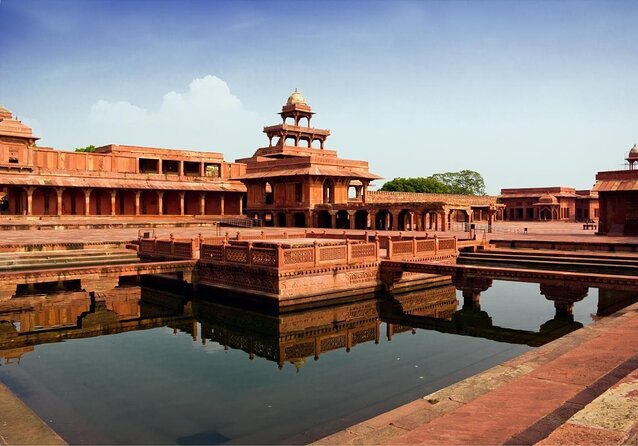
- Two major stops in one road journey: Visit the UNESCO-listed former Mughal capital at Fatehpur Sikri and the extraordinary Chand Baori stepwell before reaching Jaipur.
- Private travel for up to two people: Your group gets its own air-conditioned vehicle, driver, and flexible pickup and drop-off within Agra and Jaipur.
- Fatehpur Sikri includes a long guided visit: Allow about two hours to see the palace buildings, mosque, gateways, courtyards, and tomb of Sheikh Salim Chisti.
- Chand Baori is a short but memorable stop: Thirty minutes is enough to view the famous geometric steps, though you may want more time for photographs.
- Tickets and English-speaking guides are included: The package is designed to keep the day simple, but guide quality is not perfectly consistent.
- Plan for heat, luggage, and lunch: Wear shoes with a good grip, carry water, and choose your own meal stop if you prefer to control the cost.
Why this transfer works better than a plain road trip
Agra and Jaipur are two of northern India’s major tourist cities, and the journey between them can otherwise become a long stretch of highway. This tour gives the road day a clear purpose. You leave Agra, spend meaningful time at two historic sites, and finish at your chosen Jaipur address.
The private setup matters. You do not have to wait for strangers, follow a large coach, or carry your luggage through several changes of transport. The driver stays with the car and luggage while you visit the monuments. That arrangement gives you peace of mind, especially on a transfer day.
The stated price is $146.06 per group of up to two people. That is not the cheapest way to get from Agra to Jaipur, but it covers a private air-conditioned vehicle, entry tickets, and English-speaking guides. For two people, the cost can be reasonable when you value convenience and want to see both sites without arranging separate transport.
You should still clarify the vehicle type if you are carrying a large amount of luggage. The operator generally uses a sedan for two people. That is fine for normal bags, but a group carrying eight or more pieces may find the space tight.
More Forts and Palaces in Agra
- Agra: Skip-the-Line Taj Mahal & Agra Fort Private Tour
★ 4.9 · 1,546 reviews - Taj Mahal, Agra Fort, Baby Taj & Mehtab Bagh Private City Tour
★ 5.0 · 391 reviews - Skip-the-Line Guided Taj Mahal & Agra Fort Tour with Add-ons
★ 5.0 · 339 reviews
Starting in Agra with a private pickup
Pickup is available from any location in Agra. That includes a hotel, railway station, airport, restaurant, or private address. The exact pickup time is important because the day has several moving parts, so confirm it carefully before departure.
Communication is one of the stronger parts of the service. The company sends a WhatsApp message before the trip to confirm the pickup and drop-off details, and the driver may introduce himself by message as well. Several bookings have involved short-notice arrangements, with the company organizing a driver and guides quickly.
Drivers are generally praised for arriving on time, driving safely, and remaining polite. Names mentioned in the feedback include Govind, who was described as courteous and careful. Another driver was praised for being attentive throughout the day and for making occasional photo stops near villages.
There is one useful distinction to keep in mind. The driver is primarily your transport provider, not necessarily your sightseeing guide. One passenger reported that the driver spoke little or no English and had some difficulty with directions, even though he drove well. If detailed conversation during the road sections matters to you, confirm the language ability in advance.
Fatehpur Sikri: two hours inside Akbar’s abandoned capital
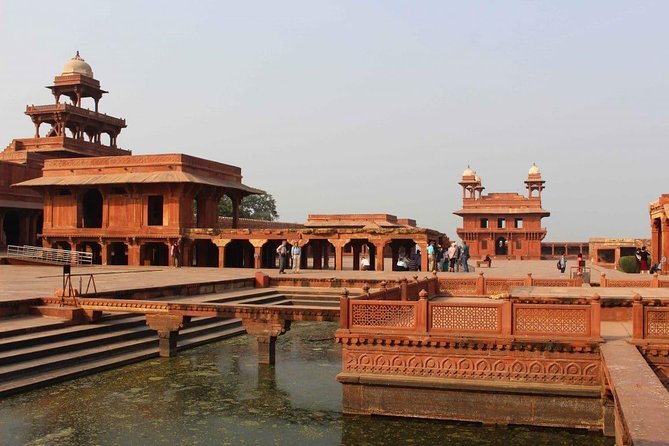
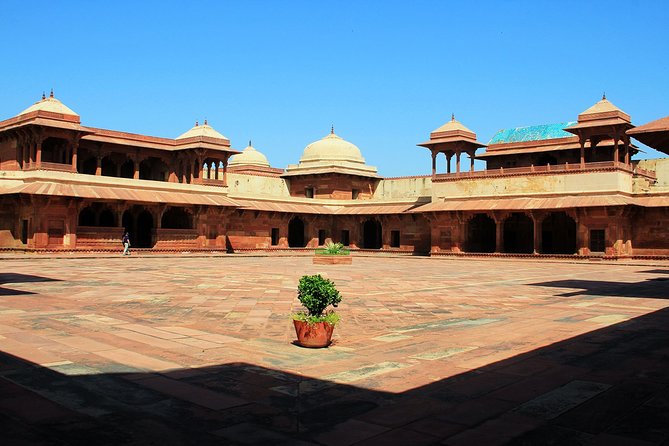
Fatehpur Sikri is the major stop, and the two-hour visit can feel full rather than leisurely. The city was built by Emperor Akbar in the sixteenth century and served as his capital for a short period. Its red sandstone buildings remain remarkably expressive, with broad courtyards, carved details, airy pavilions, and massive gateways.
A local English-speaking guide meets you at the site when that option is selected. The guide system is useful here because the complex contains many buildings with similar colors and shapes, yet very different functions. A good guide helps you understand which spaces were used for public business, private meetings, worship, royal residence, and entertainment.
The visit can include the Shahi Darwaza, a formal royal entrance built to impress. Its scale and carvings give you an immediate sense of Mughal authority. The Buland Darwaza, built by Akbar in 1601 after his victory in Gujarat, is even more dramatic. At 54 meters high, it is one of the grandest gateways in Mughal architecture.
Inside the complex, the Diwan-i-Aam was the hall of public audience. This was where Akbar heard complaints and petitions. The open courtyard and pillared arrangement make the building feel public and accessible, even though the emperor’s position was clearly central.
The Diwan-i-Khas is famous for its unusual central pillar. Stone bridges radiate from the carved column, creating one of the site’s most memorable architectural details. This was a room for private audiences and discussion, and its design gives you a glimpse of how architecture could express political ideas.
Courtyards, palaces, and the House of Dreams
The royal residential buildings give Fatehpur Sikri much of its character. Jodha Bai’s Palace combines Rajput and Mughal design, with a large courtyard and carved decoration. The building is often used to explain the cultural connections within Akbar’s court.
Nearby, Birbal Bhavan is a finely proportioned residence associated with Akbar’s trusted minister Birbal. Its symmetrical layout and stonework reward a slower look. Your guide can help separate established history from labels that may have been attached later.
The Turkish Sultana’s House has an Indo-Turkish style, elegant arches, and fine decorative work. The Panch Mahal is more open and airy, with five levels of pillars. It was used for relaxation and is linked with the royal women’s quarters. From its upper levels, you can take in broad views over the surrounding area.
The Anup Talao is an ornamental pool surrounded by pavilions. It was used for musical performances and court gatherings. The Khwabgah, or House of Dreams, was Akbar’s private chamber for rest and reflection. These smaller spaces help balance the grand gates and public halls.
The complex also includes the Khazana, or treasury. It has three rooms with thick rubble masonry walls and was likely used for imperial valuables and documents. It was once incorrectly labeled Ankh Michauli, so this is a good place to listen closely to the guide’s explanation rather than relying only on signs.
A completely different kind of day out:
- Agra: Taj Mahal Express Entry Tickets
★ 4.8 · 684 reviews - Agra: Taj Mahal and Mausoleum Guided Tour with Skip-the-Line
★ 4.8 · 631 reviews - Private Guided Taj Mahal Tour with Skip The Line Entry Ticket
★ 5.0 · 562 reviews - Agra: Taj Mahal & Mausoleum Skip-the-Line Tour with Options
★ 4.9 · 456 reviews
The mosque and the white marble tomb
The Jama Masjid is one of the largest mosques in India. Akbar built it in 1571, and its Persian-influenced decoration adds a religious focus to the palace-centered parts of the visit.
Within the mosque complex, the Tomb of Sheikh Salim Chisti is a striking change of material and mood. Its white marble surface, delicate decoration, and precious stone details contrast with the surrounding red sandstone. The tomb honors the Sufi saint whose blessing was associated with the birth of Akbar’s son.
You should dress and behave respectfully in the mosque and tomb area. The site is still a place of religious importance, not only an archaeological monument. Follow local instructions and be prepared to remove shoes if required.
Other parts of the old city include the Caravan Sarai, a resting place for merchants and their caravans, and the nearly six-kilometer fort wall. Hathi Pol, or Elephant Gate, was built wide enough for royal elephants to pass. The Hiran Minar is linked with Akbar’s favorite elephant and has an unusual, easily recognized form.
There is also a rectangular building with long arcaded porches that is often identified as stables. Its position beside Jodha Bai’s Palace makes that explanation uncertain. Details like this make a guide valuable because Fatehpur Sikri is full of traditional names and interpretations that are not always as clear-cut as they appear.
Chand Baori: India’s great geometric stepwell
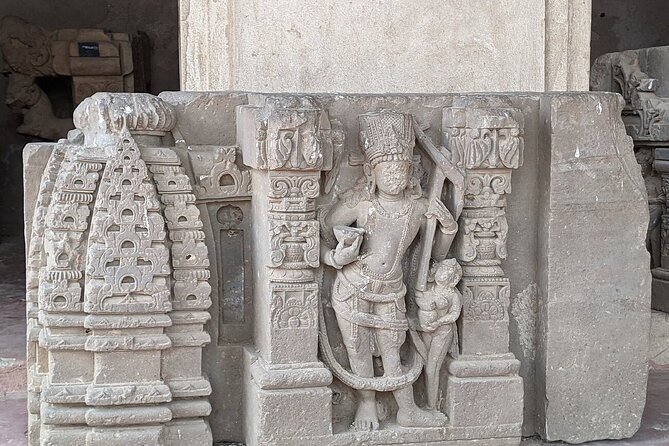
After Fatehpur Sikri, the tour continues to Abhaneri for Chand Baori. The visit is much shorter, listed at about 30 minutes, but the stepwell is likely to be the visual highlight of the day.
Chand Baori was built more than 1,000 years ago and is one of the deepest and largest stepwells in the world. From the viewing area, you see row after row of narrow steps descending in precise patterns. The repeating geometry is the point. It looks almost too exact to have been made by hand.
The stepwell also shows the practical side of historic architecture. This was not simply a decorative structure. Stepwells provided access to water and used their depth to offer cooler conditions below ground. The design combines utility, symmetry, and careful stone construction.
The official stop is brief, so use your time well. Take a moment to look straight down into the stepped sides, then study the smaller architectural details around the edges. The nearby Harshad Mata Temple may also be included in the local visit, as one stop on this route included a quick tour there.
Wear proper footwear. The ground and steps can be awkward, and sensible shoes will make it easier to move around safely. The site may also have goats nearby, so watch where you step and keep an eye on your belongings.
Guide quality at Chand Baori can be less predictable than at Fatehpur Sikri. The guide may be friendly and helpful, but the explanation can feel less polished, especially compared with a strong guide at the larger monument. A little reading beforehand will help you get more from the stop.
Lunch, road time, and the real eight-hour schedule
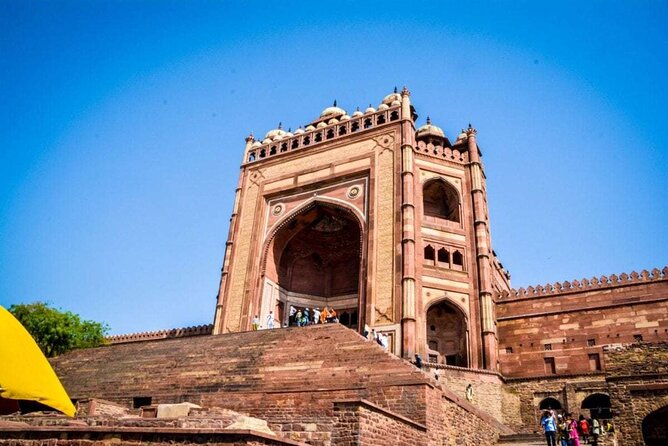
The tour is advertised at about eight hours, but the actual day can vary with traffic, pickup location, sightseeing pace, lunch, and your final Jaipur address. You should treat eight hours as an estimate, not a guarantee.
Food and drinks are not included. A lunch stop can be arranged along the way, but you are free to choose where to eat. One important practical lesson is to ask to see several options before settling on a restaurant. A stop selected by the driver may be comfortable or convenient, but it can also be more expensive than expected.
One passenger reported paying too much for lunch and then waiting while the driver ate at a different local place. That does not mean every meal stop will be poor value, but it does mean you should speak up. If you want a quick meal, a particular budget, or a vegetarian option, say so clearly.
Bring water, especially during the hot months. Fatehpur Sikri involves walking between several courtyards and buildings, and the red sandstone can make the heat feel stronger. You will enjoy the architecture more if you pace yourself rather than rushing through every room.
Arriving in Jaipur with your luggage intact
The final drop-off can be arranged at a Jaipur hotel, railway station, airport, restaurant, or another address. Door-to-door service is a major reason to choose this experience over a train or a basic taxi transfer.
The driver remains responsible for the vehicle while you are sightseeing, which means you do not have to leave bags unattended at the monuments. At the end of the day, the car can take you directly to your next base.
For two people with one or two normal-sized bags each, a sedan should be manageable. If you have several large suitcases, ask about a larger vehicle before booking. The price is for a group of up to two, but passenger count does not tell the whole story. Luggage volume is what determines comfort.
What the $146.06 price really buys you
The strongest value here is not simply the driving distance. You are paying for a private transfer, an air-conditioned car, two sightseeing stops, entrance tickets, and guides at the monuments. You also gain the convenience of choosing your start and end addresses.
That package is useful if you want a low-stress travel day and do not want to arrange tickets, local guides, and transport separately. It is less attractive if you are traveling on a strict budget, have plenty of time, or prefer to explore each site alone.
The cost is easier to justify for two people sharing the vehicle. Solo visitors pay the same group rate, so the per-person value is weaker. For a couple or two friends moving between Agra and Jaipur, the combination of transport and sightseeing is more sensible.
Shopping and personal expenses are not included. Be careful around souvenir stops. If you do not want to shop, say no clearly and keep the day focused on the monuments.
Who will enjoy this route most
I would choose this experience if you want to connect Agra and Jaipur without giving up a full day to transport. It suits first-time visitors who want historical context, private travel, and a guide waiting at each major stop.
It also works well for people who dislike large group tours. Only your party participates, and the schedule can be easier to manage. Families and older passengers may appreciate the door-to-door arrangement, though the uneven surfaces and walking at Fatehpur Sikri still require a reasonable level of mobility.
I would hesitate if you carry a great deal of luggage, need a large vehicle, or want a slow, deeply detailed visit at each monument. Chand Baori receives only about 30 minutes, and Fatehpur Sikri’s large complex can easily absorb more than two hours.
The experience is recommended by 95 percent of the published audience and has a 4.8 rating from 37 reviews. The pattern is clear: drivers are usually the strongest part, transport is often punctual and safe, and Fatehpur Sikri guides can be excellent. The main cautions are inconsistent guide quality at Chand Baori, occasional language limitations with drivers, lunch pricing, and sedan space for heavy luggage.
Practical tips for a smoother day
- Confirm your pickup address and final Jaipur address by WhatsApp.
- Tell the company how many bags you have, not only how many people are traveling.
- Wear comfortable shoes with a firm grip for both sites.
- Carry water and protect yourself from the heat.
- Ask where lunch will be and confirm that you may choose another restaurant.
- Keep some time for photographs at Chand Baori, even though the stop is short.
- If you want a detailed explanation, request an English-speaking guide in advance.
- Do not assume the driver is also your history guide.
- If you are not interested in souvenir shopping, say so before the journey begins.
- Consider an early start if you want cooler conditions and fewer people in your photographs.
Free cancellation is available if you cancel at least 24 hours before the experience begins. Changes or cancellations within 24 hours are not accepted for a refund, and cut-off times use local time.
FAQ
How long does the Agra to Jaipur transfer take?
The experience lasts approximately eight hours, including the pickup, visits to Fatehpur Sikri and Chand Baori, and the final drop-off in Jaipur. Traffic, lunch, and your exact addresses can affect the total time.
Is this a private tour?
Yes. This is a private activity for your group only, with a private air-conditioned vehicle and driver.
What is included in the price?
The price includes the private Agra to Jaipur transfer, entry tickets, and an English-speaking tour guide. Food, drinks, accommodation, shopping, tips, and personal expenses are not included.
Where can I be picked up in Agra?
Pickup is available from any location in Agra, including a hotel, railway station, airport, restaurant, or another preferred address.
Where can I be dropped off in Jaipur?
You can be dropped at any location in Jaipur, including a hotel, railway station, airport, restaurant, or another requested address.
How far in advance can I cancel?
You can cancel at least 24 hours before the start time for a full refund. Cancellations or changes made less than 24 hours before the start time are not refundable.
Should you book it?
Book this tour if you want a private Agra to Jaipur transfer with two worthwhile monuments built into the day. The driver service, flexible addresses, prepaid tickets, and waiting guides remove much of the usual hassle.
I would book it with two conditions: confirm the car size if you have more than five bags, and agree on lunch before stopping. If you can handle the heat, wear good shoes, and accept that the Chand Baori guide may be less polished, this is a practical and rewarding way to travel from Agra to Jaipur.
Just added in Agra
- Taj Mahal Half Day Tour by Tuk Tuk★ 5.0 · 16 reviews
- 3-Hour Unimaginable Beauty of Taj Private Guided Tour★ 5.0 · 13 reviews
- Private Tour Guide For Taj Mahal And Agra Fort★ 5.0 · 17 reviews
- Taj Mahal Virtual Tour with Local Guide(Online Experience )★ 5.0 · 24 reviews
- Taj mahal Private Tour with Entry Ticket and Guide★ 5.0 · 42 reviews
- From Agra: Skip-the-Line Taj Mahal & Agra Fort Private Day Tour★ 5.0 · 25 reviews
- Taj Mahal & Agra Fort Tour from Agra City★ 5.0 · 30 reviews
- Taj Mahal & Agra Fort Tour with Fatehpur Sikri from Agra★ 5.0 · 13 reviews
Forts and Palaces, compared.

Same Day Taj Mahal, Agra Fort & Baby Taj Tour from Delhi by Car
Read our review →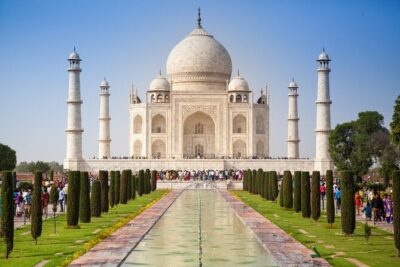
Full Day Taj Mahal, Agra Fort & Baby Taj Tour from Delhi by Car
Read our review →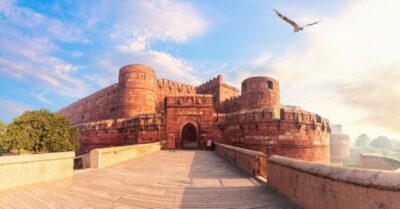
Same Day Taj Mahal, Fort & Baby Taj Tour from Delhi by Car
Read our review →

Sunrise Taj Mahal, Agra Fort & Baby Taj Tour from Delhi by Car
Read our review →
Taj Mahal Sunrise, Baby Taj & Agra Fort Day Tour
Read our review →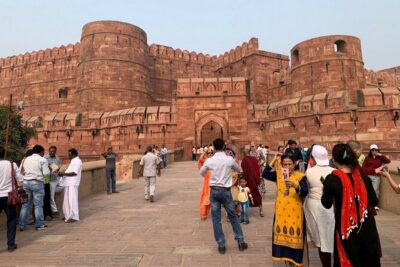
Skip-the-Line Taj Mahal & Agra Fort Private Tour
Read our review →
Taj Mahal, Agra Fort, Baby Taj Tour from Delhi by Superfast Train
Read our review →Browse the lists this tour appears in