
Reviewed · AGRA TOURS
Agra, The City through Poetry
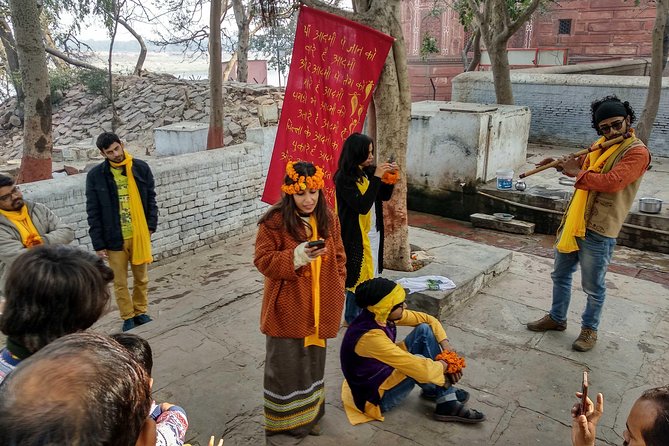
Agra reads differently after sunset. This private poetry walk looks past the Taj Mahal and into the old city, where Urdu verse, Mughal-era streets, calligraphy, and local religious sites give you a more human view of Agra. I especially like the small private format and the chance to hear poetry connected to the exact places you visit.
I also like the 5 p.m. start, which suits Agra’s heat and gives the walk a calmer evening mood. The main consideration is that you need a moderate level of fitness for two to three hours on foot, and poetry lovers will get more from it than visitors seeking a standard monument tour.
In This Review
- Key details worth knowing
- Why Agra’s old city deserves your evening
- Starting at Jama Masjid at 5 p.m.
- Ghalib’s birthplace and the rise of Urdu poetry
- Urdu calligraphy in a working setting
- Walking the old silk-route shopping street
- Khankhana Katra and another literary layer
- A route that crosses cultures
- What the private format adds
- The handout makes the experience easier to remember
- Who will get the most from this Agra walk?
- Booking, timing, and cancellation advice
- Should you book Agra, The City through Poetry?
- FAQ
- Where does the poetry walk begin?
- What time does the tour start?
- How long does the experience last?
- Where does the tour end?
- Is this a private tour?
- What level of fitness is needed?
- Which poets are included?
- Does the tour include a calligraphy visit?
- What is included after the walk?
- What is the cancellation policy?
Key details worth knowing
- You begin at Jama Masjid: The meeting point is in Agra’s old commercial center, near Kinari Bazar and Subash Bazar.
- You visit Ghalib’s birthplace: The walk links one of Urdu poetry’s best-known names with Agra’s late Mughal literary world.
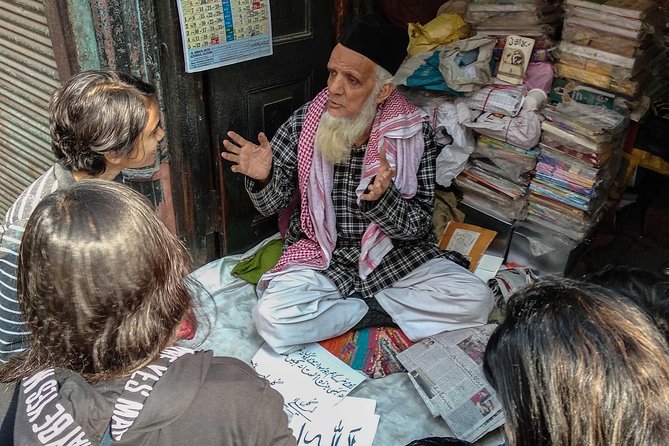
- You see Urdu calligraphy in practice: A workshop adds a visual side to the discussion of language and literature.
- You walk a 16th-century shopping street: The route connects poetry with trade, daily life, and Agra’s place along the silk route.
- You read verses by Nazir Akbarabadi: His work helps explain the social and economic life of the city.
- You receive a poetry handout: The included verses and photographs give you something useful to keep after the walk.
Why Agra’s old city deserves your evening
Most first visits to Agra revolve around the Taj Mahal, Agra Fort, and perhaps a few famous tombs. Those places matter, but they can leave you with a grand, polished picture of the city. This walk takes you into a less staged part of Agra, where the focus is on people, language, faith, commerce, and memory.
I like that the experience treats poetry as a doorway into the city rather than as a classroom subject. You are not simply given dates and names. You move through streets connected to writers, read selected verses, and see how literature reflected the world around it.
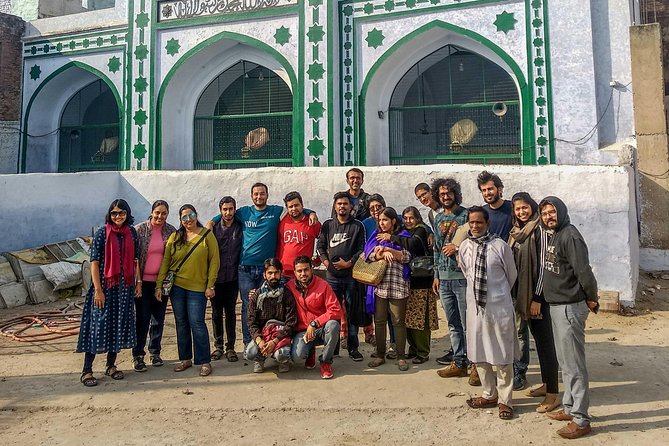
The guide can adjust the pace because this is a private activity. You can ask questions as they come up, stop for photographs, or spend longer on a subject that catches your interest. That flexibility is useful in an old city, where a narrow lane, a shopfront, or a small architectural detail may deserve more attention than the schedule allows.
The route is also described as crossing sites connected with multiple religions. That gives the walk a wider cultural frame. Agra is not only a Mughal imperial center or a destination built around one monument. It is also a city shaped by many communities and layers of belief.
A few more options to weigh up in Agra
- Agra: Skip-the-Line Taj Mahal & Agra Fort Private Tour
★ 4.9 · 1,546 reviews - Agra: Taj Mahal Express Entry Tickets
★ 4.8 · 684 reviews - Agra: Taj Mahal and Mausoleum Guided Tour with Skip-the-Line
★ 4.8 · 631 reviews
Starting at Jama Masjid at 5 p.m.
The walk starts at Jama Masjid Agra, near Subash Bazar, Kinari Bazar, Hing ki Mandi, and Mantola. This location puts you close to the old city’s commercial core, so you begin among the streets that have long connected worship, shopping, and daily business.
The 5 p.m. start is practical. Agra can be hot, and an evening departure avoids the harshest part of the day. It also gives the experience a natural rhythm: you start with the city still active, then continue as the light softens.
You should arrive ready to walk rather than expecting a vehicle-based tour. The activity lasts about two to three hours and requires moderate physical fitness. The supplied information does not give a detailed accessibility description, so anyone with mobility concerns should ask the operator before booking.
Jama Masjid is more than a convenient meeting point here. It sets the tone for a walk that connects religion, literature, and civic life. From there, the route moves toward places associated with poets and the development of Urdu culture.
Ghalib’s birthplace and the rise of Urdu poetry
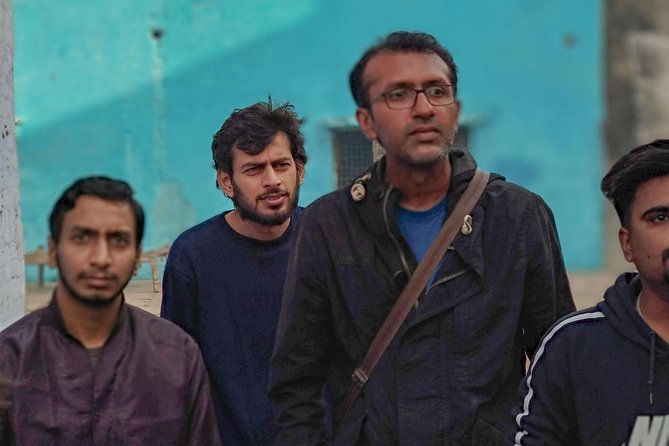
One of the strongest stops is Mirza Ghalib’s birthplace. The guide introduces Ghalib’s writing style and explains his place in the emergence of Urdu poetry during the late Mughal period.
That context gives the visit real value. You are not just seeing a house connected to a famous name. You are considering how a language and literary tradition developed during a period of major political and cultural change.
The stop is likely to appeal most to anyone interested in poetry, language, or Mughal-era culture. You do not need to arrive as an Urdu expert. The private format gives you room to ask basic questions and request explanations of unfamiliar terms.
Still, keep your expectations measured. The supplied details do not promise a large museum, extensive displays, or a long interior visit. The value comes from the guide’s explanation and the connection between the place and the poet, not necessarily from a major collection of objects.
The guide named in the available feedback is Kaleem. He was praised for his genuine care for Agra, its people, and its culture. That detail matters on a tour like this, because the quality depends heavily on how naturally the guide connects literary names with ordinary city life.
Urdu calligraphy in a working setting
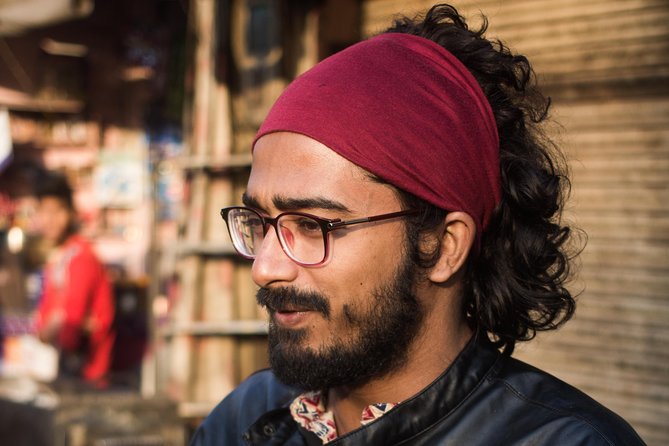
The calligraphy workshop adds an important visual element. Urdu is known for its distinctive calligraphic script, and seeing the writing discussed in relation to an actual workshop can make the language easier to appreciate.
I like this part because poetry is not only about sound or meaning. On the page, the script itself has shape and movement. A visit to the workshop lets you discuss how language and literature developed during Mughal rule while also seeing the skill involved in writing Urdu by hand.
This stop should be especially useful if you enjoy crafts, lettering, or the physical side of books and manuscripts. It breaks up the walking and gives you a different way to understand the culture being discussed.
The experience is described as a visit to a calligraphy workshop, but no specific demonstration, purchase, or hands-on lesson is promised. I would treat it as an educational stop rather than assume you will create your own piece or receive a souvenir.
Because the tour is private, you can ask the guide to explain the script at a level that suits you. That is much easier than trying to follow a fixed group presentation while standing at the back.
A completely different kind of day out:
- Private Guided Taj Mahal Tour with Skip The Line Entry Ticket
★ 5.0 · 562 reviews - Agra: Taj Mahal & Mausoleum Skip-the-Line Tour with Options
★ 4.9 · 456 reviews - Private Guided Tour of Agra
★ 5.0 · 420 reviews - Taj Mahal, Agra Fort, Baby Taj & Mehtab Bagh Private City Tour
★ 5.0 · 391 reviews
Walking the old silk-route shopping street
The route continues along a 16th-century shopping street that was once an important part of the silk route. This is where the poetry walk becomes a social history walk, linking literature with trade and urban life.
The street gives you a chance to see Agra as a working city rather than only a collection of royal buildings. Shops, lanes, and commercial activity help explain the setting in which poets wrote and readers lived.
You will read verses by Nazir Akbarabadi along the way. His poetry is used to explore the city’s social and economic details, which makes him a particularly good choice for this route. His work helps shift your attention from emperors and monuments to food, work, markets, customs, and the daily texture of city life.
That change in focus is one of the best reasons to book this experience. Many Agra tours explain what rulers built. This one asks what the city felt like to the people who lived and worked in it.
The practical drawback is that old-city walking can be crowded and uneven. The information confirms that the tour requires moderate fitness, but it does not give a precise distance or surface description. Wear comfortable shoes, keep your belongings secure, and avoid bringing anything that makes walking awkward.
Khankhana Katra and another literary layer
The itinerary also includes Khankhana Katra, where the guide reads verses associated with Abdur Rahim Khankhana. This adds another literary figure to the walk and broadens the story beyond Ghalib and Nazir Akbarabadi.
The stop is useful because it shows that Agra’s literary connections span different periods and voices. You are not following a single poet’s biography. Instead, you are moving through a sequence of writers whose work helps explain the city’s cultural development.
The information provided does not spell out every activity at Khankhana Katra, so I would expect a guided interpretation and poetry reading rather than a long formal museum visit. The strength of the stop will depend on your interest in the verses and the guide’s ability to place them in context.
This is another point where a private tour helps. You can ask why a particular poet matters, how the verse relates to Agra, or how the literary tradition changed over time. On a larger group walk, those questions might be rushed.
A route that crosses cultures
A particularly appealing feature is the way the route visits more than one kind of religious and cultural site. One review described a walk through five or more places connected with multiple religions, with historical context tied back to Agra’s wider story.
That approach makes the experience feel broader than a poetry recital. You get a look at how literature sits beside religious life, commerce, architecture, and neighborhood identity. It also gives you a more balanced picture of Agra, a city that cannot be understood through Mughal monuments alone.
I would pay close attention to the guide’s explanations at these points. The listed route gives you the framework, but the conversation is what turns separate stops into a coherent experience.
The tour is not designed as a full survey of every community or monument in Agra. It offers a focused cultural walk using poetry as the connecting thread. If you want detailed architectural tours of Jama Masjid or other major buildings, you may need a separate experience.
What the private format adds
This is a private activity, so only your group participates. That is a major advantage for a subject that can be personal and interpretive.
You can ask as many questions as you like, move at your preferred pace, and request help with photographs. If you are traveling with family or friends, you do not have to match the speed or interests of strangers.
The private format also helps with the poetry itself. A guide can explain a verse, pause for a question, or offer more background without worrying about keeping a large group moving. If one poet interests you more than another, you can make that clear.
The tradeoff is price. At $44.28 per person, this costs more than a basic shared walking tour might cost, though the supplied information does not provide a direct comparison. For a small group, the price can be reasonable because it includes a private guide, a two-to-three-hour route, cultural interpretation, and the flexibility to ask questions.
I would judge the value by your interests. If you only want quick sightseeing, the price may feel high for a walking tour. If you want a personal introduction to Agra’s poetry, language, and old-city culture, the private structure makes more sense.
The handout makes the experience easier to remember
You receive a handout with selected poetry verses and photographs. That is a small but useful feature.
Poetry discussed while walking can disappear quickly, especially when you are also watching traffic, taking pictures, and keeping track of the route. Having the verses afterward lets you revisit the material at your own pace.
The photographs should also help connect the writing with the places you saw. I would keep the handout with your travel notes, especially if you plan to read more about Urdu poetry after leaving Agra.
Do not treat the handout as a substitute for the walk. Its value comes from having already heard the poems in their local setting. On its own, a printed selection would tell you far less.
Who will get the most from this Agra walk?
I would recommend this experience to:
- First-time visitors who have already planned the Taj Mahal and want a different side of Agra
- Readers interested in Urdu poetry, language, or Mughal-era literature
- Couples, families, or friends who prefer a private pace
- Visitors who enjoy walking through old commercial districts
- Anyone who wants a guide-led cultural experience rather than another monument checklist
It may be less suitable if you dislike poetry, have difficulty walking for two to three hours, or want a tour centered on major architectural interiors. The route is also dependent on good weather, so the evening plan can change if conditions are poor.
The experience is often booked about 86 days ahead. That does not mean you must reserve that early, but it suggests you should not leave it until the final day if this is important to your Agra plans.
Booking, timing, and cancellation advice
You receive confirmation when booking, and a mobile ticket is available. The meeting point is near public transportation, but the activity begins and ends at Jama Masjid, so you should plan your transport around that location rather than assume a hotel pickup is included.
Free cancellation is available if you cancel at least 24 hours before the 5 p.m. start time. Within 24 hours, refunds are not available and changes are not accepted. If poor weather causes cancellation, you can receive another date or a full refund. The same applies if the minimum number of participants is not met, with the option of another date or experience.
The operator is Agra Heritage Walks. The available rating is 4.9 out of 5, with 100 percent recommending the experience, based on 15 ratings. That is a small sample, so I would treat it as encouraging rather than absolute proof, but the praise for guide Kaleem’s connection to Agra is especially relevant.
Should you book Agra, The City through Poetry?
Book it if you want Agra to be more than a stop for the Taj Mahal. The combination of Jama Masjid, Ghalib’s birthplace, Urdu calligraphy, the old shopping street, Nazir Akbarabadi’s verses, and Khankhana Katra gives you a thoughtful way to meet the city through its words and neighborhoods.
I would choose this for an evening when you have already seen the major monuments or want to balance them with local culture. At $44.28 per person, it offers its best value to small groups who will use the private format, ask questions, and take time with the poetry.
Skip it if you want a fast, highly visual sightseeing tour or cannot comfortably walk for several hours. For the right reader, though, this is a rare chance to hear Agra speak in its own literary voice.
FAQ
Where does the poetry walk begin?
It begins at Jama Masjid Agra, located near Subash Bazar, Kinari Bazar, Hing ki Mandi, Mantola, and other parts of Agra’s old city.
What time does the tour start?
The scheduled start time is 5 p.m.
How long does the experience last?
The walk lasts approximately two to three hours.
Where does the tour end?
The activity ends back at the Jama Masjid meeting point.
Is this a private tour?
Yes. Only your group participates in the activity.
What level of fitness is needed?
A moderate level of physical fitness is required because the experience is a walking tour lasting about two to three hours.
Which poets are included?
The walk discusses Mirza Ghalib, Nazir Akbarabadi, Abdur Rahim Khankhana, and new and emerging talents.
Does the tour include a calligraphy visit?
Yes. The route includes a visit to a calligraphy workshop where you discuss Urdu script, language, and literature during Mughal rule.
What is included after the walk?
You take home a handout containing selected poetry verses and photographs.
What is the cancellation policy?
You can cancel at least 24 hours before the start time for a full refund. Cancellations or changes made within 24 hours are not accepted and are not refunded.
Just added in Agra
- Taj Mahal Half Day Tour by Tuk Tuk★ 5.0 · 16 reviews
- 3-Hour Unimaginable Beauty of Taj Private Guided Tour★ 5.0 · 13 reviews
- Private Tour Guide For Taj Mahal And Agra Fort★ 5.0 · 17 reviews
- Taj Mahal Virtual Tour with Local Guide(Online Experience )★ 5.0 · 24 reviews
- From Agra: Skip-the-Line Taj Mahal & Agra Fort Private Day Tour★ 5.0 · 25 reviews
- Taj Mahal & Agra Fort Tour from Agra City★ 5.0 · 30 reviews
- Taj mahal Private Tour with Entry Ticket and Guide★ 5.0 · 42 reviews
- Taj Mahal & Agra Fort Tour with Fatehpur Sikri from Agra★ 5.0 · 13 reviews
Agra Tours, compared.
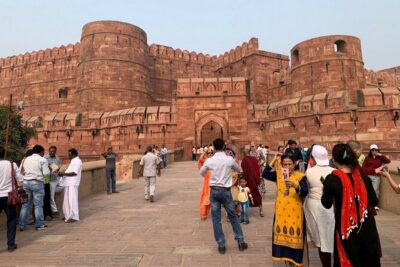
Skip-the-Line Taj Mahal & Agra Fort Private Tour
Read our review →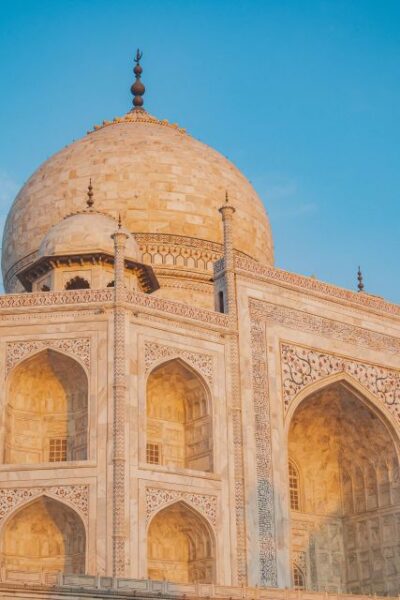

Taj Mahal and Mausoleum Guided Tour with Skip-the-Line
Read our review →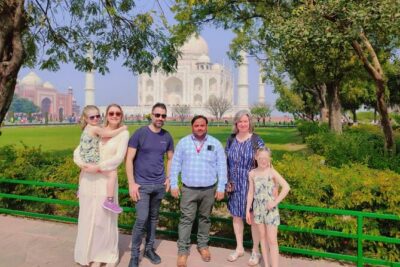
Private Guided Taj Mahal Tour with Skip The Line Entry Ticket
Read our review →
Taj Mahal & Mausoleum Skip-the-Line Tour with Options
Read our review →

Taj Mahal, Agra Fort, Baby Taj & Mehtab Bagh Private City Tour
Read our review →
Taj Mahal Skip-the-Line Guided Tour with Optional Add-ons
Read our review →Browse the lists this tour appears in