
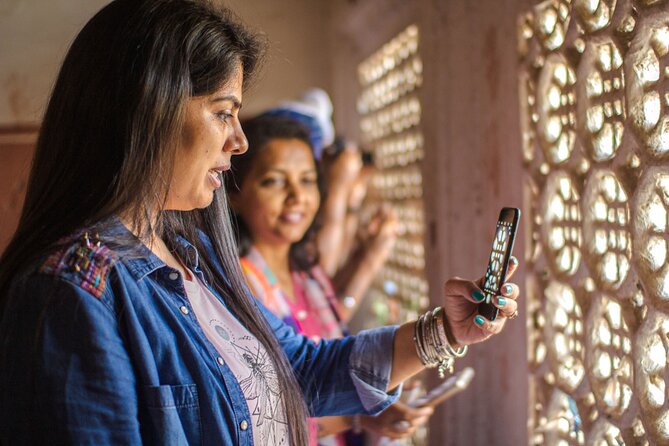
Reviewed · AGRA TOURS
Agra 101 City Walk
Agra has more to offer than the Taj Mahal. This private, three-hour walk takes you into old markets, mosques, temples, courtyards, and 18th-century streets that are easy to miss from a car. I like the small-scale pace and the chance to see daily life close up. I also like that local snacks are included, giving the walk a taste of Agra beyond its monuments. The main drawback is simple: three hours on foot through old city lanes may feel tiring in heat, traffic, or crowded market areas.
You meet at Jama Masjid and return there at the end, so the route is easy to understand. Your guide can help with photos, explain the city as you go, and adjust the pace for your private group. Guides such as Arhaan, Tahir, and Kaleem have been praised for their storytelling, though your assigned guide may be someone else.
This is not a polished sightseeing circuit with grand entrances and long stops. It is a street-level look at Agra, with spice shops, old facades, rooftop views, local homes, and stories of poets and courtesans. If you want Agra to feel like a living city rather than a stop between famous monuments, this walk makes a strong case.
In This Review
- Key points to know before you book
- Why this walk matters beyond the Taj Mahal
- Starting at Jama Masjid in Agra
- Rawatpara: spices, temples, and a rooftop
- Fuvara and Agra’s old walled city
- The former courtesan market near Gudri Mansoor Khan
- Rawat Para Road and a local rooftop view
- Kala Mahal and the birthplace of Mirza Ghalib
- Ending back at Jama Masjid
- What the guide adds to the experience
- How much walking and effort should you expect?
- Who should book the Agra 101 City Walk?
- Should you book this Agra walk?
- FAQ
- How long does the Agra 101 City Walk last?
- Where does the tour begin?
- Where does the tour end?
- Is this a private tour?
- What is the price?
- Is the Taj Mahal included as a stop?
- Are local snacks included?
- Can the guide take photographs?
- Is the tour available every day?
- What is the cancellation policy?
Key points to know before you book
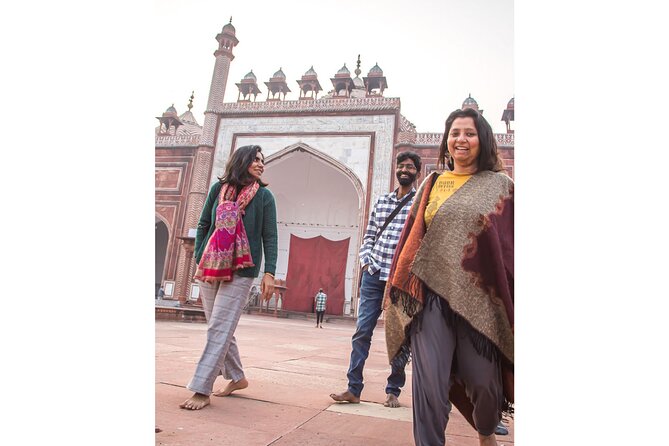
- Jama Masjid begins and ends the walk: The meeting point is beside this historic mosque, with the route looping back after roughly three hours.
- Rawatpara brings the strongest market atmosphere: You visit a 15th-century spice market, medieval temples, and a rooftop while learning how trade shaped the old city.
- The walk enters places you would likely pass by: Certain homes, temples, old buildings, and an antique marble shop form part of the route.
- A rooftop in Rawat Para gives you a broad city view: You also hear about local life and meet people in this 15th-century neighborhood.
- Kala Mahal connects Agra with Urdu poetry: The route visits the birthplace of Mirza Ghalib and old bungalow facades.
- The tour is private and flexible: Only your group takes part, and you can move at a pace that suits you.
Why this walk matters beyond the Taj Mahal
Agra can be an odd city to visit. The Taj Mahal is so powerful that it can swallow the rest of the place. You see the monument, take your photographs, and then it is easy to leave without understanding the streets that support the city around it.
The Agra 101 City Walk takes the opposite approach. It puts you at street level, where the city’s older layers are easier to notice. You pass through market lanes, hear stories attached to specific buildings, and look at Agra through its mosques, temples, homes, food, poets, and local trade.
I especially like this approach for a second day in Agra. After the scale and formal beauty of the Taj Mahal or Fatehpur Sikri, a walk through ordinary streets gives you a different sense of place. It is less about collecting major sights and more about learning how the historic city fits together.
The tour costs $41.12 per person. That is not the cheapest way to walk around Agra, but the price has better value if you are traveling with a small private group and want interpretation rather than just directions. You are paying for a guide, a planned route, local context, photo help, snacks, and access to places you may not know how to find on your own.
A few more options to weigh up in Agra
- Agra: Skip-the-Line Taj Mahal & Agra Fort Private Tour
★ 4.9 · 1,546 reviews - Agra: Taj Mahal Express Entry Tickets
★ 4.8 · 684 reviews - Agra: Taj Mahal and Mausoleum Guided Tour with Skip-the-Line
★ 4.8 · 631 reviews
Starting at Jama Masjid in Agra
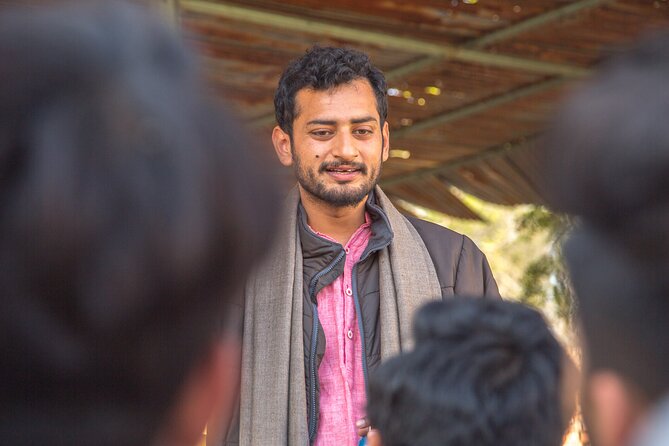
The walk begins at Jama Masjid, where the guide gives you a short introduction to Agra and explains how the outing will work. You then spend about 20 minutes at the mosque.
The mosque provides a useful starting point because it places you near the old city and gives the guide a clear way to explain Agra’s past. Rather than beginning with a long lecture, the walk moves into the city through stories connected to the places around you.
Admission is listed as free. You should still dress and behave appropriately for a religious site. Modest clothing is the sensible choice, and your guide can help you understand what is expected before you enter.
The starting point is practical, but you should allow time to find Jama Masjid. The tour uses a walking meeting point, not a hotel pickup, and the activity returns to the same place at the end.
Rawatpara: spices, temples, and a rooftop
The next stop is Rawatpara, a 15th-century spice market with a long connection to Agra’s trade. You spend about 30 minutes here, looking at spices, visiting medieval temples, and climbing to a rooftop.
This is one of the most appealing parts of the route because the setting does several jobs at once. You see commerce, religious buildings, older architecture, and a view from above. The spices are not just a colorful backdrop. They help explain how markets shaped the city and why this part of Agra mattered.
The rooftop also changes your view of the streets below. At ground level, old-city lanes can feel narrow and busy. From above, you get a wider sense of the area and can better understand how the historic quarters fit together.
The climb may be uncomfortable if you have limited mobility, and the tour does not promise an elevator. The route is built around walking and stairs, so wear shoes with a firm grip and expect uneven surfaces.
Fuvara and Agra’s old walled city
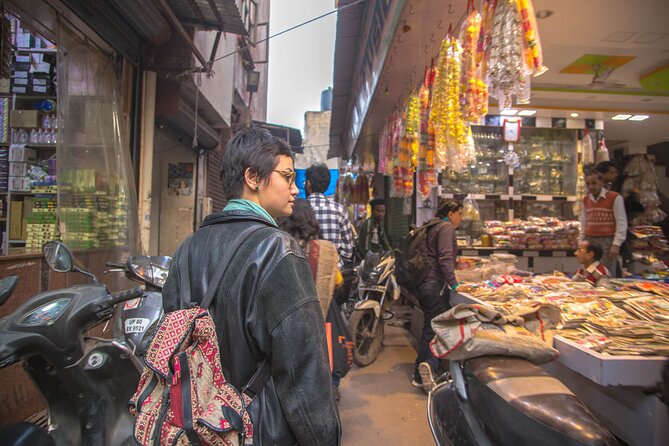
At Fuvara, you spend roughly 40 minutes passing through the historic walled city. This section includes 18th-century buildings, visits inside certain homes and temples, and an old marble shop displaying carved work.
For me, this is the part that most clearly explains why a guided walk helps. From a vehicle, old facades can flash past in seconds. On foot, you can stop, look upward, and hear why a particular building matters.
The chance to enter selected homes and temples gives the route a personal quality. You are not only looking at monuments from behind a barrier. You are seeing how older spaces connect with the life of the neighborhood.
The marble shop adds another link to Agra’s artistic traditions. The information provided does not promise a purchase or a demonstration, so treat it as a cultural stop rather than a shopping obligation. That is good news if you prefer to look without pressure.
The buildings may be worn, and that is part of the setting. Do not expect every historic facade to be restored or museum-ready. You are seeing an old quarter as it exists, with age and decay included.
A completely different kind of day out:
- Private Guided Taj Mahal Tour with Skip The Line Entry Ticket
★ 5.0 · 562 reviews - Agra: Taj Mahal & Mausoleum Skip-the-Line Tour with Options
★ 4.9 · 456 reviews - Private Guided Tour of Agra
★ 5.0 · 420 reviews - Taj Mahal, Agra Fort, Baby Taj & Mehtab Bagh Private City Tour
★ 5.0 · 391 reviews
The former courtesan market near Gudri Mansoor Khan
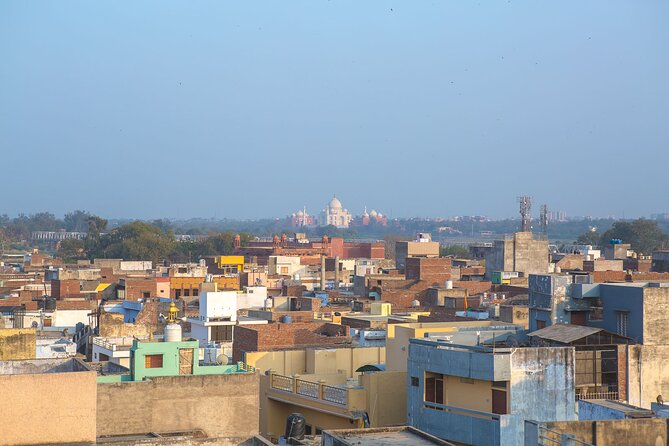
The stop near the Police Station Gudri Mansoor Khan covers what was once a courtesan market within the fort city. You spend about 20 minutes here while the guide explains the history of the area.
This is the sort of stop that can add weight to a city walk. Agra’s past was not made only by emperors, architects, and royal ceremonies. Markets, performers, working people, and communities connected to the fort also shaped the city.
The guide’s role matters here. A location with little obvious decoration may mean little without explanation. The stop depends on storytelling rather than a grand building you can photograph from every angle.
That also means your experience will vary with the guide. Arhaan has been praised for linking Agra’s past with its present, while Tahir and Kaleem have also received strong personal praise for their stories and easy manner. The company has several guides, so you should not assume one particular person will lead your walk.
Rawat Para Road and a local rooftop view
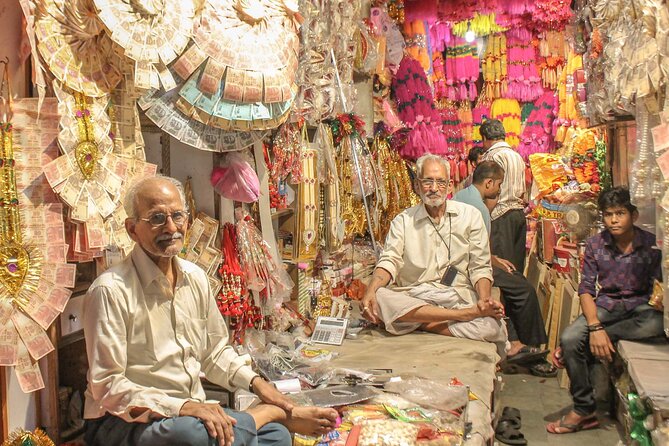
The route returns to the Rawat Para area for another 30-minute stop. You enter this 15th-century neighborhood, climb onto the roof of a local home, and look across the city.
This rooftop stop is more than a photo break. You hear about how people live in the area, listen to local stories, and interact with people from the neighborhood. That gives you a more direct connection to present-day Agra than a standard monument visit usually provides.
A rooftop in a lived-in neighborhood also calls for courtesy. Follow your guide’s lead about where you may stand, what you may photograph, and how to speak with local residents. The experience is stronger when you remember that this is someone’s home, not a viewing platform built for tourism.
You should also expect a simple setting rather than a purpose-built attraction. The charm comes from access and conversation, not polished facilities. If you want a broad city view with an informal local setting, this is a good fit.
Kala Mahal and the birthplace of Mirza Ghalib
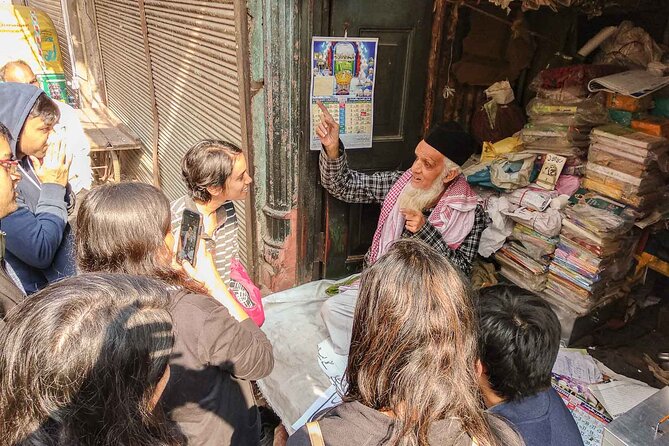
The final major stop is Kala Mahal in Rawatpara, where you visit the birthplace of Mirza Ghalib, one of the best-known Urdu poets. The stop lasts about 30 minutes and also includes views of beautiful 18th-century bungalow facades.
This gives the walk a welcome change of subject. After markets, religious sites, and old trade routes, the route turns to literature and the people who gave Agra a cultural life beyond courtly architecture.
You do not need to be an Urdu poetry expert to appreciate the stop. The value is in seeing a real place connected to a major literary figure and understanding that Agra’s identity includes poets as well as palaces and tombs.
The old bungalow fronts are another reason to slow down. They reward careful looking, especially if you enjoy doors, balconies, plasterwork, and the traces left by changing families and fortunes. The information supplied does not specify interior access to every building, so expect to view some facades from the street.
Ending back at Jama Masjid
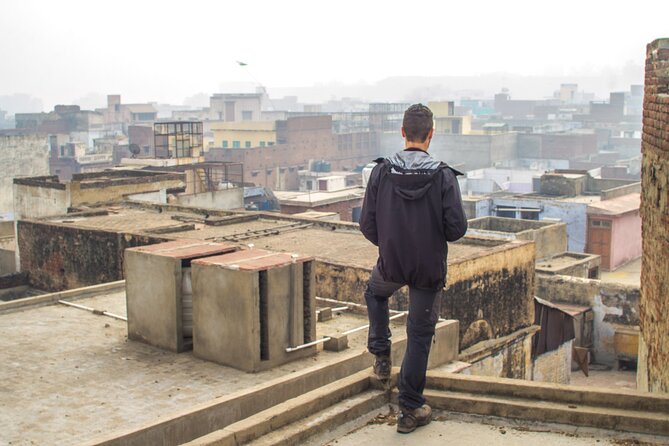
The walk ends at Jama Masjid after a final 10-minute return section. Finishing where you began keeps the route straightforward and avoids the problem of ending in an unfamiliar part of town.
The total duration is approximately three hours. That is long enough to cover several distinct parts of Agra without turning the experience into an all-day march. Still, you should plan around the weather. The tour operates from 8:00 a.m. to 5:00 p.m., and walking in the middle of the day can be demanding.
A private format helps here. You can ask questions, pause for photographs, or move more slowly than a large group. It also lets the guide shape the conversation around your interests, within the planned route.
The tour includes local snacks. The exact snacks are not specified, so do not book it expecting a particular dish. Think of this as a small but welcome taste of the city during the walk.
What the guide adds to the experience
The strongest part of this outing is the guide’s storytelling. The route includes places that may not look important at first glance, so clear explanations make the difference between a pleasant stroll and a meaningful one.
Past guide feedback highlights Arhaan’s enthusiasm and his ability to connect Agra’s history with the present. Tahir has been praised for finding places visitors would not locate alone, and Kaleem for creating a relaxed atmosphere without overloading people with facts.
That last point is important. A good city walk should not feel like a three-hour examination. The best version of this tour gives you enough history to understand the streets, then leaves room for questions, photos, food, and observation.
Your guide can also help take photographs during the outing. This is useful if you are traveling as a couple or family and want more than quick selfies. It is a small service, but one that can make a private walk feel more personal.
How much walking and effort should you expect?
The tour is designed as a walking experience, not a short stroll between vehicle stops. You pass through market lanes, old neighborhoods, religious sites, rooftops, and historic streets, with at least some stair climbing.
Most people can participate, and service animals are allowed. The route is near public transportation, which helps with arrival and departure. The available details do not specify the exact distance, surface conditions, or accessibility of every building, so ask before booking if stairs or uneven streets are a concern.
Bring water, wear comfortable shoes, and keep your belongings secure in market areas. The private format means you can usually discuss your pace with the guide, but it does not remove the physical demands of walking through an old city.
Who should book the Agra 101 City Walk?
I would choose this tour if you have already seen, or plan to see, Agra’s major monuments and want more local context. It suits people who enjoy markets, architecture, religious spaces, oral history, and small details more than formal museum displays.
It is also a good choice for couples, families, and small private groups that prefer conversation over a fixed group schedule. The photo help and flexible pace are useful extras.
You may want to skip it if you dislike walking in busy old-city areas, climbing rooftops, or visiting lived-in neighborhoods. It is also not the right pick if your only goal is a fast tour of Agra’s headline sights. The Taj Mahal is not listed as a stop on this route, and the experience focuses on the city around the famous monument.
Booking is flexible in one useful way: you can cancel for a full refund up to 24 hours before the start time. Cancellations or changes within 24 hours are not refundable.
Should you book this Agra walk?
Yes, if you want to understand Agra beyond its postcard monuments. For $41.12 per person, you receive a private three-hour route through old markets, mosques, temples, homes, rooftops, literary history, and local food.
The best reason to book is the combination of access and explanation. You can walk past old buildings on your own, but a strong guide helps you notice what you are seeing and connects each place to Agra’s larger story.
I would schedule it when you have enough time to slow down, wear practical shoes, and accept that the city may be noisy, worn, and imperfect. That is precisely where this walk earns its value.
FAQ
How long does the Agra 101 City Walk last?
The walk lasts approximately three hours.
Where does the tour begin?
It begins at Jama Masjid in Agra, Uttar Pradesh.
Where does the tour end?
The activity ends back at Jama Masjid, the original meeting point.
Is this a private tour?
Yes. Only your group participates in the activity.
What is the price?
The listed price is $41.12 per person.
Is the Taj Mahal included as a stop?
The scheduled route focuses on old Agra neighborhoods, markets, mosques, temples, rooftops, historic buildings, and Kala Mahal. The Taj Mahal is not listed as a stop.
Are local snacks included?
Yes. Local snacks are included, although the specific snacks are not stated.
Can the guide take photographs?
Yes. The guide can help take photos of you during the walk.
Is the tour available every day?
The listed operating schedule is Monday through Sunday, from 8:00 a.m. to 5:00 p.m., for the stated booking period.
What is the cancellation policy?
You can cancel at least 24 hours before the start time for a full refund. Cancellations or changes made less than 24 hours before the start time are not accepted for a refund.
Just added in Agra
- Taj Mahal Half Day Tour by Tuk Tuk★ 5.0 · 16 reviews
- 3-Hour Unimaginable Beauty of Taj Private Guided Tour★ 5.0 · 13 reviews
- Private Tour Guide For Taj Mahal And Agra Fort★ 5.0 · 17 reviews
- Taj Mahal Virtual Tour with Local Guide(Online Experience )★ 5.0 · 24 reviews
- From Agra: Skip-the-Line Taj Mahal & Agra Fort Private Day Tour★ 5.0 · 25 reviews
- Taj Mahal & Agra Fort Tour from Agra City★ 5.0 · 30 reviews
- Taj mahal Private Tour with Entry Ticket and Guide★ 5.0 · 42 reviews
- Taj Mahal & Agra Fort Tour with Fatehpur Sikri from Agra★ 5.0 · 13 reviews
Agra Tours, compared.
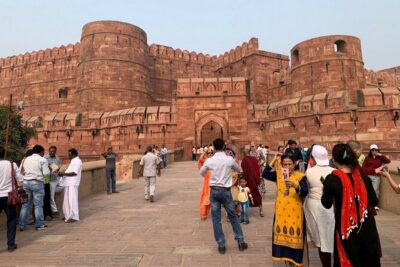
Skip-the-Line Taj Mahal & Agra Fort Private Tour
Read our review →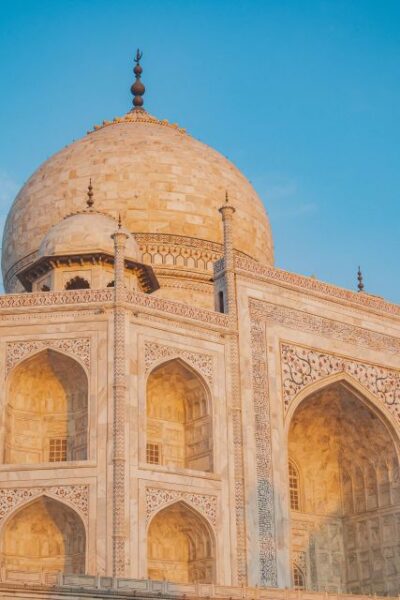

Taj Mahal and Mausoleum Guided Tour with Skip-the-Line
Read our review →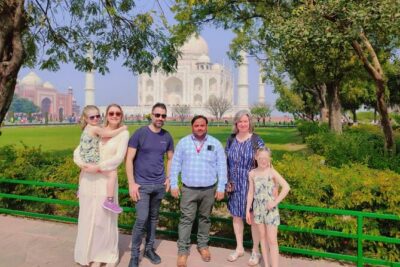
Private Guided Taj Mahal Tour with Skip The Line Entry Ticket
Read our review →
Taj Mahal & Mausoleum Skip-the-Line Tour with Options
Read our review →

Taj Mahal, Agra Fort, Baby Taj & Mehtab Bagh Private City Tour
Read our review →
Taj Mahal Skip-the-Line Guided Tour with Optional Add-ons
Read our review →Browse the lists this tour appears in